
Raising Chickens for Beginners: Costs, Breeds, Coop Setup and Care

Raising chickens is one of the easiest ways to start producing your own food. A small backyard flock gives you fresh eggs, cuts down on kitchen scraps, adds nitrogen-rich manure to your compost, and keeps insects in check. But beginners often underestimate the setup cost and daily care involved. This guide covers everything you need to know before bringing home your first chicks: what it really costs, what equipment you need, the best breeds for beginners, and how to care for your flock through the first year.
Before You Start: Check the Rules
Before buying anything, check your local regulations. Many towns and cities allow backyard hens but set limits on:
- Number of birds (often 3–6 hens in residential areas)
- Roosters (frequently banned because of noise)
- Coop placement (minimum distance from property lines or neighbors’ homes)
- Permits (some councils require registration)
If you live in a planned community, check your HOA or lease too. In Great Britain, all poultry keepers must now register their birds with the government, even if they only keep a few hens. Rules vary widely in the US, Canada and Australia, so call your local council or check the city website.
How Much Does Raising Chickens Cost?
This is the question most beginners ask, and the honest answer is that startup costs are the biggest expense. Here’s a realistic breakdown for a flock of 4–6 hens (USD, approximate; prices vary by region):
| Item | Typical cost range |
|---|---|
| Chicks (day-old, per bird) | $3–$8 (rare breeds cost more) |
| Point-of-lay pullets (per bird) | $20–$50 |
| Coop (DIY) | $200–$800 |
| Coop (pre-built, quality) | $500–$2,000+ |
| Run fencing / hardware cloth | $100–$400 |
| Brooder setup (heat plate, bin, bedding) | $60–$150 |
| Feeder and waterer | $30–$100 |
| Feed (per hen, per month) | About $3–$6 |
| Bedding (pine shavings/straw, monthly) | $10–$25 |
Realistic startup total: roughly $500–$1,500 for a small, well-built setup. After that, ongoing costs are mostly feed and bedding.
Will you save money on eggs? Usually not in the first year. A good laying hen eats about ¼ lb (around 110 g) of feed a day, which is roughly 7–8 lb a month. Backyard eggs often cost about the same as premium free-range eggs from the store. The real value is freshness, knowing how your food is produced, and the other benefits of a flock. If you want to turn chickens into income, read our guide to the most profitable farm animals.
Best Chicken Breeds for Beginners
Choose hardy, calm, reliable layers. These breeds are consistently recommended for first-time keepers:
| Breed | Eggs per year (approx.) | Egg color | Temperament | Cold hardy? |
|---|---|---|---|---|
| Rhode Island Red | 250–300 | Brown | Tough, active | Yes |
| Buff Orpington | 180–250 | Light brown | Very docile, good with kids | Yes |
| Barred Plymouth Rock | 200–280 | Brown | Friendly, calm | Yes |
| Australorp | 250–300 | Brown | Gentle, quiet | Yes |
| Leghorn | 280–320 | White | Flighty, active | Moderate |
| Easter Egger | 200–280 | Blue/green | Friendly, varied | Yes |
Start with at least 3 hens. Chickens are flock animals and get stressed when kept alone. You don’t need a rooster for eggs. Hens lay without one; you only need a rooster if you want fertilized eggs to hatch chicks.
Chicks or Grown Hens?
- Day-old chicks: Cheapest and friendliest (they grow up handled), but need a brooder for 6–8 weeks and won’t lay until around 18–24 weeks old.
- Point-of-lay pullets: Young hens around 16–20 weeks old, about to start laying. More expensive, but you get eggs within weeks and skip the brooder stage.
For absolute beginners who want eggs quickly, point-of-lay pullets are the easier start.
Setting Up the Coop and Run
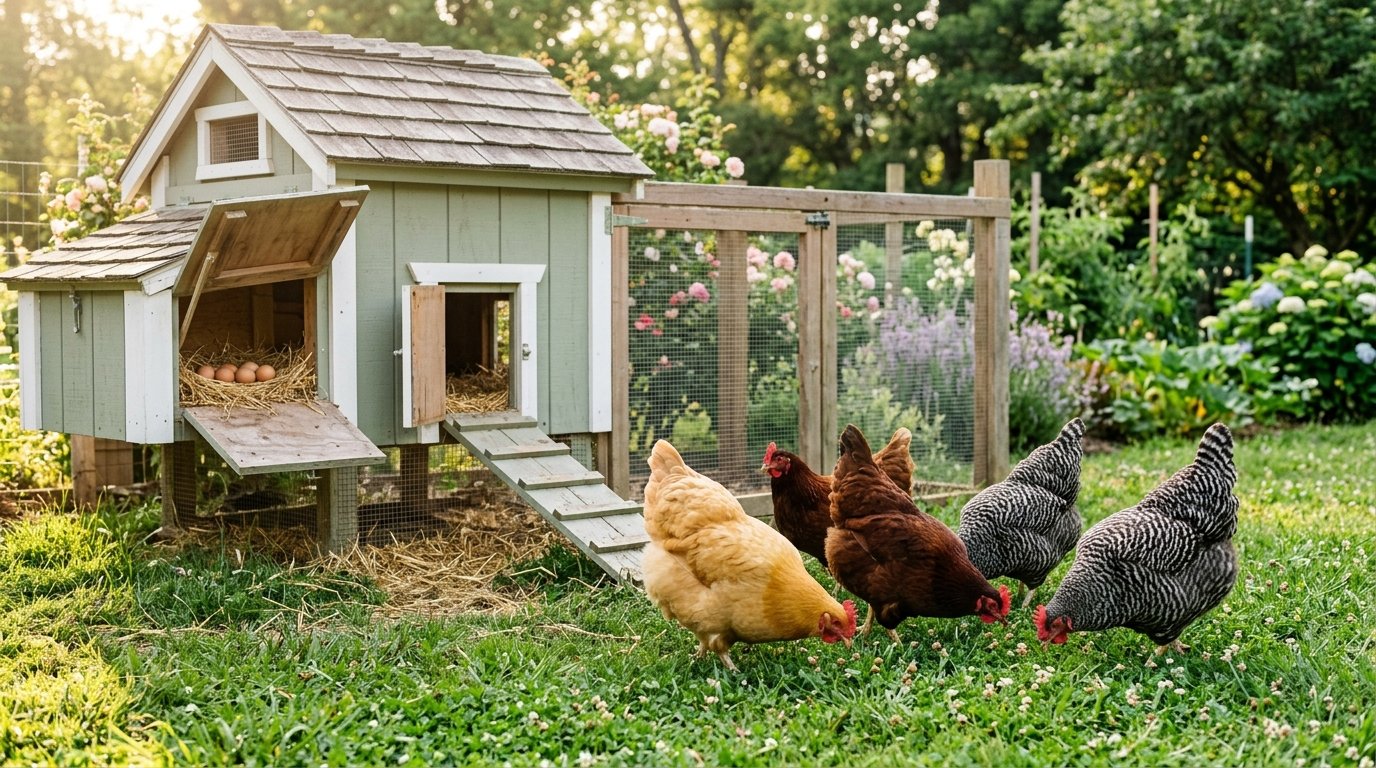
A good coop keeps chickens safe from predators and weather. Use these space guidelines:
- Coop floor space: at least 4 sq ft (0.4 m²) per standard-size bird
- Run space: at least 10 sq ft (1 m²) per bird; more is better
- Roost bar: 8–10 in (20–25 cm) of perch per bird, higher than the nest boxes
- Nest boxes: one box per 4–5 hens, about 12 × 12 in (30 × 30 cm)
- Ventilation: vents near the roof to release moisture and ammonia, without drafts at roost level
Predator-proofing is non-negotiable. Foxes, raccoons, dogs, hawks, rats and weasels will all target a flock. Use ½-inch hardware cloth, not chicken wire (chicken wire keeps chickens in but doesn’t keep predators out). Bury it 12 in deep or add a 2 ft apron around the run to stop digging, and lock the coop every night with latches a raccoon can’t open.
Raising Chicks: The Brooder Stage
- Heat: Chicks need about 95°F (35°C) in week one, dropping about 5°F (3°C) each week until they’re fully feathered at around 6 weeks. Radiant heat plates are safer than heat lamps, which are a common cause of coop fires.
- Watch their behavior: Chicks huddled under the heat are cold. Chicks spread to the edges and panting are too hot.
- Feed: Use chick starter crumble (around 18–20% protein) from day one.
- Water: Use a shallow chick waterer. Dip each chick’s beak in the water when you bring them home so they learn where it is.
- Bedding: Pine shavings, not cedar (cedar fumes can harm chicks). Avoid slick newspaper, which can cause splayed legs.
- Pasty butt: Check chick vents daily for dried droppings and gently clean them with warm water if needed.
Feeding Adult Chickens
- Switch to layer feed (about 16% protein with added calcium) at around 18 weeks or when the first egg appears.
- Offer oyster shell free-choice in a separate dish for strong eggshells.
- Provide grit if your birds don’t free-range, so they can grind their food.
- Kitchen scraps and treats should be no more than about 10% of the diet. Avoid raw or dried beans, avocado skin and pit, moldy food, and very salty or sugary scraps.
- Fresh, clean water at all times. A hen can drink around a pint (roughly 500 ml) a day, more in hot weather.
Daily, Weekly and Monthly Chicken Care
| How often | Tasks |
|---|---|
| Daily | Let out in the morning, check food and water, collect eggs, quick health check, lock up at dusk |
| Weekly | Spot-clean the coop, refresh nest box bedding, scrub waterers |
| Monthly | Full bedding change (or manage deep litter), check for mites and lice, inspect fencing for holes |
| Seasonally | Deep clean, winter-proof water, plan for molting (feathers drop and laying pauses in autumn) |
Keeping Your Flock Healthy
A healthy hen is alert, active, and has bright eyes and a red comb (in laying birds). Watch for these warning signs:
- Hunched posture, puffed feathers, or sitting alone
- Diarrhea or blood in droppings
- Sneezing, bubbly eyes, or rattling breathing
- Sudden drop in eating or laying (outside molt or winter)
Isolate sick birds right away and contact a vet who treats poultry. Quarantine any new birds for about 30 days before adding them to your flock.
Food safety note: poultry can carry Salmonella even when they look healthy. Wash your hands after handling birds, eggs or equipment, keep chickens out of the kitchen, and supervise young children closely.
When Will My Hens Start Laying?
Most hens start laying between 18 and 24 weeks old, depending on breed and season. Laying slows naturally in autumn and winter as daylight shortens. Hens need about 14–16 hours of light for peak production. Production is highest in the first 2 years, then gradually declines.
FAQ: Raising Chickens for Beginners
How many chickens should a beginner get?
Three to six hens is ideal. It’s a manageable number and enough for a family’s eggs: 4 good layers give roughly 2 dozen eggs a week in peak season.
Do chickens need a rooster to lay eggs?
No. Hens lay eggs with or without a rooster. A rooster is only needed for fertilized eggs.
Is raising chickens hard?
Day-to-day care takes about 10–15 minutes. The hard parts are building a predator-proof setup and arranging care when you travel.
Can chickens stay outside in winter?
Cold-hardy breeds handle winter well in a dry, draft-free, ventilated coop. The biggest winter problems are frozen water and moisture, not the cold itself.
How long do chickens live?
Backyard hens often live 6–10 years, though egg production drops significantly after the first few years.
Chickens fit perfectly into a small homestead. See how they work alongside a garden, orchard and compost system in our guide to homesteading on one acre.


2 Comments