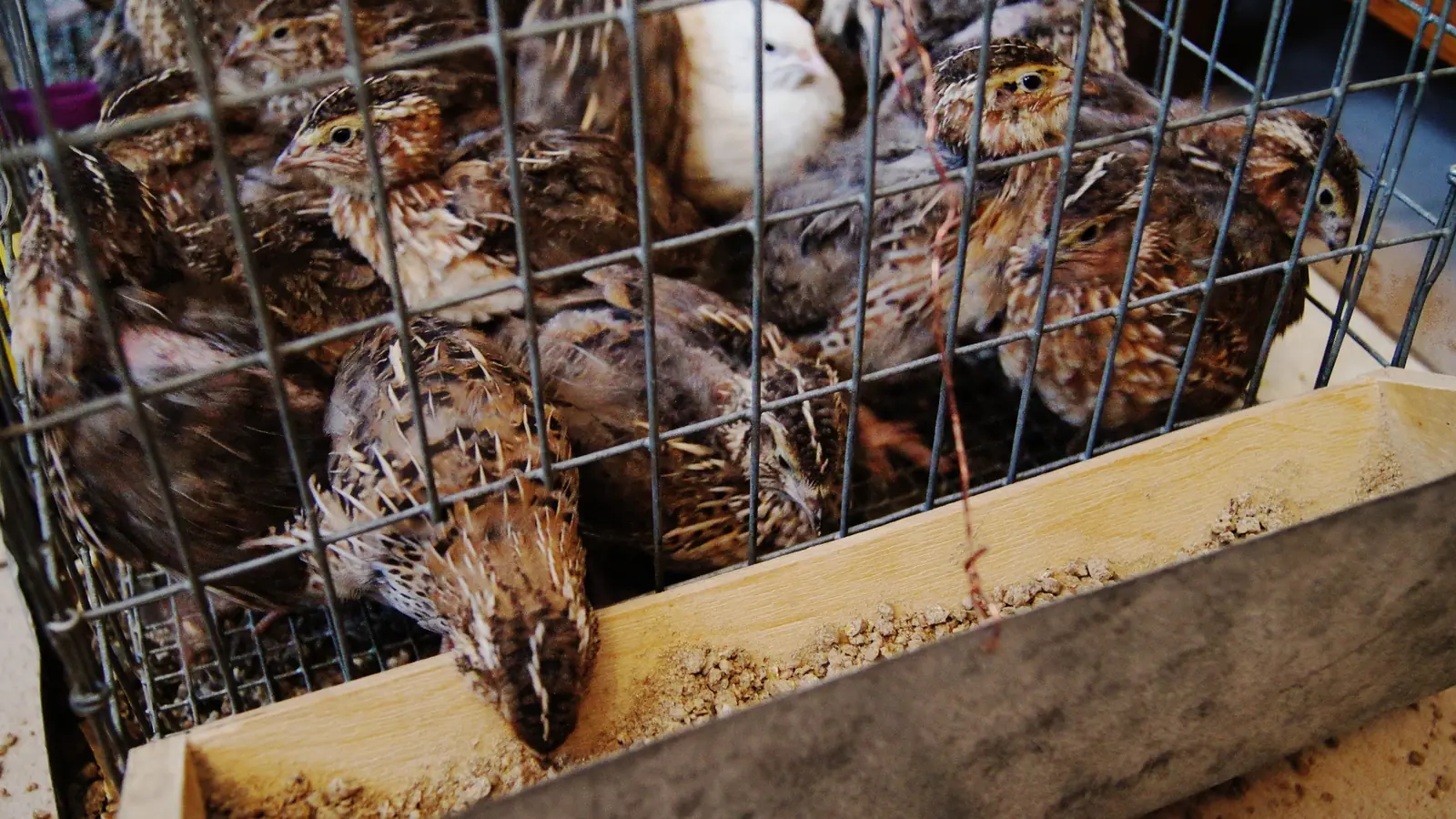

Last updated: September 2026
This guide contains affiliate links. As an Amazon Associate, FarmingAround earns from qualifying purchases, at no extra cost to you.
Raising quail for eggs is one of the easiest ways to produce your own eggs in a small space. Japanese (Coturnix) quail start laying at about 6 to 8 weeks old, and a well-kept hen can lay around 200 eggs in her first year. They need a secure cage or hutch, game bird feed, clean water and 14 to 18 hours of light a day.
Quail are small, quiet and cheap to feed compared with chickens, which makes them popular with balcony keepers, suburban homesteaders and anyone short on room. This guide covers choosing birds, housing, feeding, lighting, health care, collecting eggs and a realistic plan for your first year.
Key takeaways
- Choose Coturnix quail for eggs: they lay within 2 months, while bobwhites take about 20 weeks.
- Feed a game bird or turkey feed: at least 24% protein for chicks and about 18–24% for laying hens, with extra calcium.
- Give 14–18 hours of light a day or laying slows down or stops in autumn and winter.
- Predator-proof housing and daily cleaning prevent most losses. Check local rules before you buy.
In this guide
- Why Raise Quail for Eggs?
- Choosing the Right Quail
- Housing and Space
- Feeding Quail for Egg Production
- Lighting for Year-Round Laying
- Raising Quail Chicks
- Collecting and Using Quail Eggs
- Keeping Quail Healthy
- Check the Rules Before You Start
- A Realistic First-Year Plan
- Quick Reference: Raising Quail for Eggs
- FAQ
Why Raise Quail for Eggs?
Quail suit people who want fresh eggs but don’t have the space, budget or neighbors for a flock of chickens. Here’s what makes them appealing:
- Fast start: Coturnix quail mature in about six weeks and can lay by seven weeks, according to the Cooperative Extension poultry team. Chickens usually take several months.
- Small footprint: a small group lives happily in a hutch or cage that would barely fit two hens.
- Quiet: hens make soft calls. Males crow, but far more quietly than a rooster.
- Low feed use: an adult Japanese quail eats only about 14–18 g (0.5–0.6 oz) of feed a day.
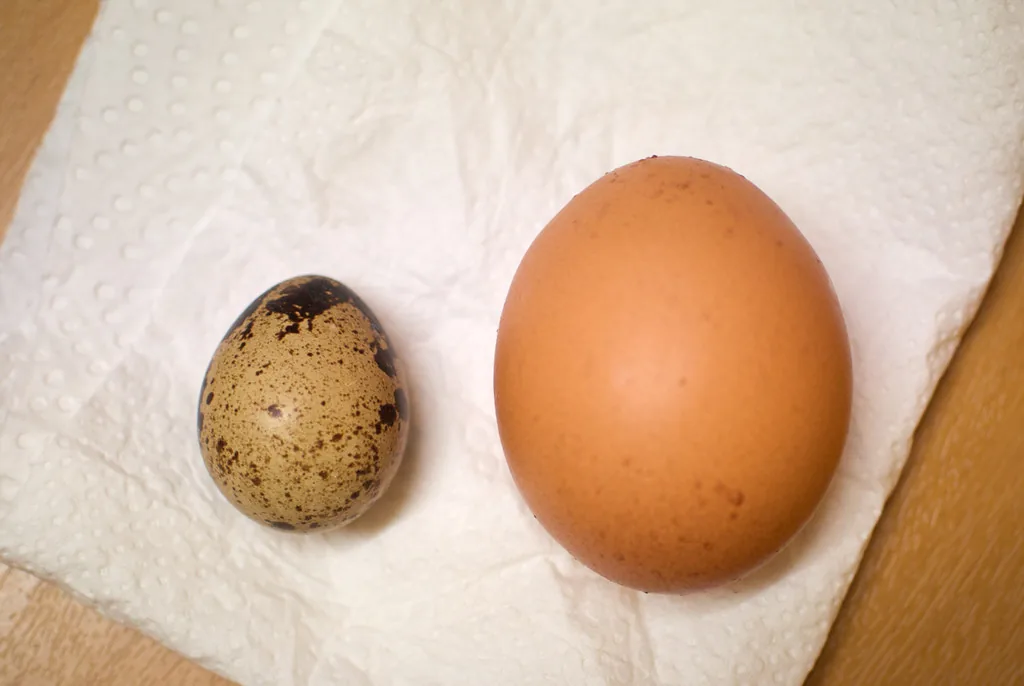
- Good eggs: a quail egg weighs about 10 g (0.35 oz), so roughly five quail eggs equal one chicken egg.
The trade-off is a shorter productive life. Quail usually live only 2 to 2½ years, and hens lay economically for about a year, so most keepers hatch or buy replacement birds regularly. If you’re weighing quail against other small livestock, our guide to the most profitable farm animals compares them side by side.
Choosing the Right Quail
For eggs, the answer is almost always Coturnix quail, also called Japanese or Pharaoh quail. They’ve been selectively bred for egg or meat production for a long time. Other species exist, but they’re a poor fit for egg keeping:
| Type | Main use | Starts laying | Egg keeping? |
|---|---|---|---|
| Coturnix (Japanese) quail | Eggs and meat | About 6–8 weeks | Best choice |
| Jumbo Coturnix | Meat (heavier, 250–300 g / 9–10.5 oz) | Varies by line | Works, but eats more |
| Bobwhite quail | Hunting preserves, dog training, release | About 20 weeks | Poor; seasonal and slower |
| Button quail | Pets and aviaries | Varies | Tiny eggs; not practical |
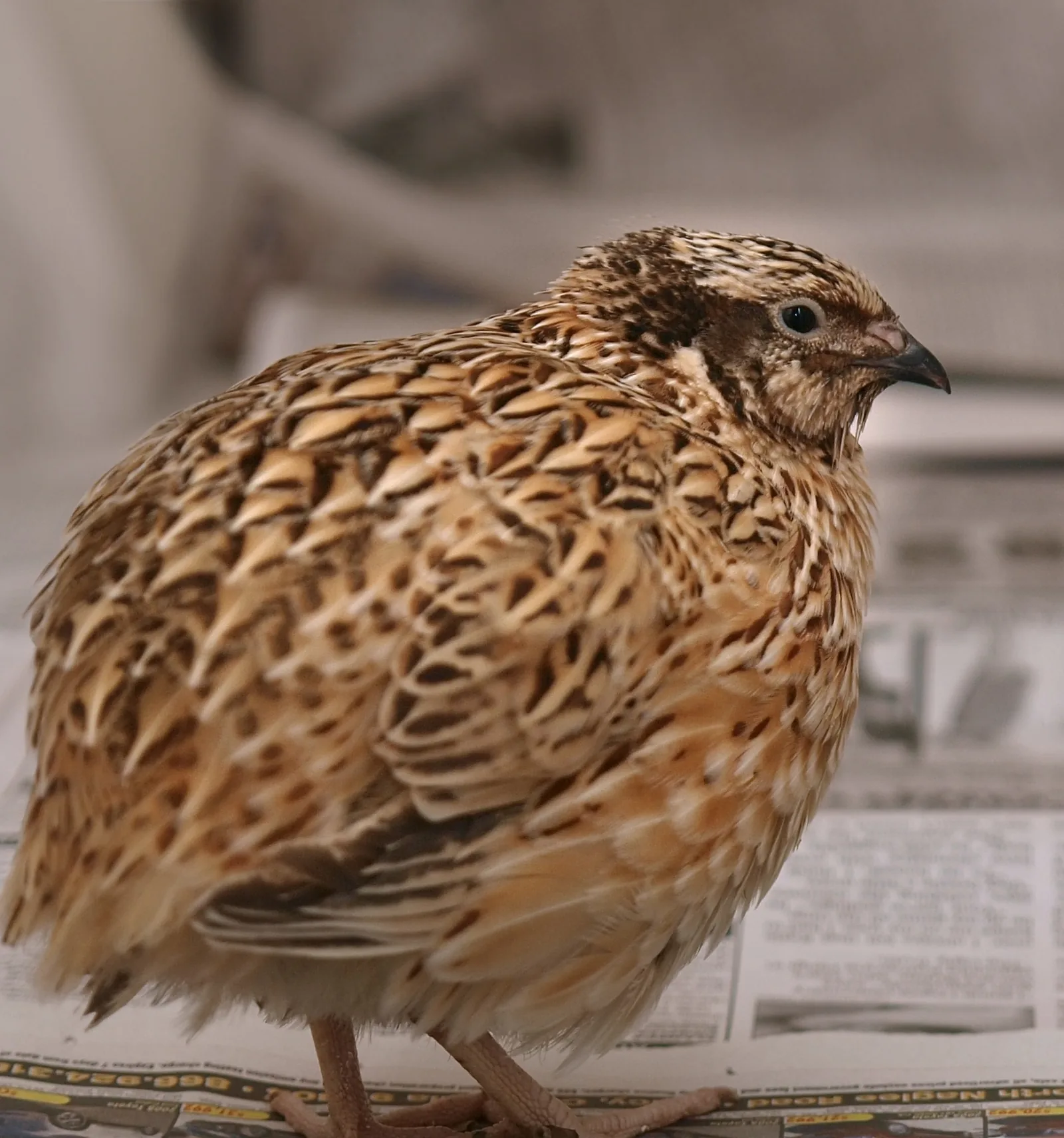
Adult Coturnix males weigh about 100–140 g (3.5–4.9 oz) and females are slightly heavier at 120–160 g (4.2–5.6 oz). You can tell the sexes apart at a few weeks old: hens have a pale, black-speckled breast, while males have a plain rusty-brown breast and a foam-producing gland above the vent.
How Many Quail Do You Need?
Work backward from how many eggs you eat. Because quail eggs are small, plan on about five to replace each chicken egg in a recipe. A household that wants the equivalent of a few chicken eggs a day usually starts with 6–12 hens. You don’t need a male for eggs; hens lay without one, and the eggs simply won’t be fertile. Add a male only if you want to hatch your own replacements (one male for every two or three hens is the usual ratio).
Housing and Space
Quail kept for eggs are usually housed in cages or hutches rather than loose on the ground. In an open pen, quail don’t build nests and hide eggs in the litter, while a cage keeps eggs cleaner and easier to collect.
- Space: commercial minimums are tiny (NSW Department of Primary Industries lists about 145 cm², or 0.16 sq ft, per bird on litter). Most backyard keepers give far more room, commonly around 1 sq ft (0.09 m²) per bird, which reduces stress and pecking.
- A solid roof: quail flush straight upward when startled. A solid or low, padded roof prevents head injuries.
- Fine mesh: use small welded mesh, about 1/4 in (7 mm), so feet don’t slip through and predators can’t reach in.
- Shelter: keep them dry, draft-free and well ventilated, with shade in summer. Cover or insulate hutches in cold snaps, as you would when you winterize a chicken coop.
- Predator proofing: cats, rats, snakes, raccoons and hawks all take quail. Everything should be fully enclosed and latched.
Floor type is a personal choice. Wire floors keep birds clean and let eggs roll away, but can cause foot problems. Solid floors with dry litter such as pine shavings or straw are gentler on feet but need regular cleaning.
Pro tip: give your quail a shallow tray of fine sand or dry soil for dust bathing. It keeps feathers in good condition and helps with mites.
Feeding Quail for Egg Production
Quail need more protein than chickens. Mississippi State University Extension recommends these minimums for Coturnix quail:
| Stage | Feed | Protein | Calcium |
|---|---|---|---|
| Chicks, 0–6 weeks | Game bird or turkey starter | 24% or more | About 0.85% |
| Laying hens, 6 weeks + | Game bird layer or breeder feed | 18% or more (many keepers use 20–24%) | About 2.5–3% |
Many backyard keepers feed a game bird or turkey starter throughout and offer crushed oyster shell or shell grit free choice for laying hens. Chicken layer feed is usually too low in protein for quail. Starter crumbles can be too big for newly hatched chicks, so grind them finer for the first few days.
Game bird feeds are complete, so keep treats small. A few greens, mealworms or chopped vegetables are fine, but they shouldn’t replace feed. Store feed somewhere cool and dry, and throw away anything moldy: moldy feed can kill quail.
Water
Quail need clean water at all times. Change it daily and scrub drinkers often. Chicks can drown in open water, so put pebbles or marbles in the drinker tray for the first week or two, or use nipple drinkers for adults (one nipple for every five birds or so).
Lighting for Year-Round Laying
Day length drives laying. Japanese quail need 14 to 18 hours of light a day to keep producing eggs, so in autumn, winter and early spring you’ll need to add light. A simple LED bulb on a timer works well: switch it on early in the morning so the birds settle naturally at dusk. Keep the light gentle rather than bright, since strong light can increase pecking.
If you’d rather give your birds a winter rest, skip the extra light and accept fewer eggs until spring. In the Southern Hemisphere the pattern is the same but reversed: expect laying to drop from about April to August without added light.
Raising Quail Chicks
Most people start with day-old chicks or hatching eggs, since Coturnix hens rarely go broody. Eggs hatch in 17–18 days in an incubator. Chicks weigh only 6–7 g at hatch and need steady warmth:
| Age | Brooder temperature at chick level |
|---|---|
| Week 1 | 90–95°F (32–35°C) |
| Week 2 | 85–90°F (29–32°C) |
| Week 3 | 80–85°F (27–29°C) |
| Week 4 | 75–80°F (24–27°C) |
| Week 5 + | Room temperature around 70°F (21°C) |
Watch the chicks rather than the thermometer: huddling under the heat and loud peeping mean they’re cold; spreading to the edges and panting mean they’re too hot. Round off brooder corners so chicks can’t pile up, cover wire floors with rough paper for the first week, and block small gaps, because tiny quail chicks escape through surprisingly small holes.
Watch: Raising Coturnix Quail
This video from Homestead Evolution walks through keeping Coturnix quail for eggs and meat on a homestead.
Collecting and Using Quail Eggs
Collect eggs every day, ideally at the same time. Coturnix eggs are speckled brown, often with a chalky blue coating, and the pattern is unique to each hen. The shell is thick for its size but the eggs still crack easily in handling, so store them pointed end down in a carton.
Hard-boiled quail eggs are notoriously hard to peel because the shell sticks to the white. Rolling the egg gently to crack the shell all over first helps. For hatching eggs, don’t wash them, store them at a cool room temperature around 15°C (59°F) rather than in the fridge, and set them within a week.
If you plan to sell eggs, check your local food-safety and labeling rules first. They vary by state and country.
Keeping Quail Healthy
Quail are fairly disease resistant when kept clean, dry and uncrowded. These are the problems to know about:
- Ulcerative enteritis (“quail disease”): a bacterial gut disease that can kill most of a group within days, according to the Merck Veterinary Manual. Signs include hunched posture, ruffled feathers and watery droppings. Good hygiene and not mixing in new birds are the main defenses.
- Coccidiosis: a parasite that thrives in damp litter and causes diarrhea and poor growth. Keep bedding dry. Medicated game bird starters with an approved coccidiostat help prevent it.
- Pecking and cannibalism: more common in crowded cages and bright light. Give more space, dim the light and add fiber and grit.
- Bumblefoot: swollen footpads from small injuries. Use suitable mesh or soft, dry litter.
- Respiratory disease and bird flu: sneezing, discharge, a drop in laying or sudden deaths need a vet’s attention. Quarantine new birds for 30 days and keep wild birds away from feed and water. Our bird flu guide for backyard flocks explains the steps.
Sudden deaths? Remove dead birds right away, isolate any sick ones and contact a poultry vet or your local extension office for a diagnosis before treating. Don’t guess at medicines.
Check the Rules Before You Start
Rules differ widely. Some US states treat certain quail species as game birds that need a permit (Oregon, for example, requires a license for bobwhite but not for Japanese quail), and many towns treat quail as poultry under zoning rules. In England and Wales, anyone keeping poultry, including a few pet birds, must register with the government within a month. Check your local council, state wildlife agency or HOA before you buy.
A Realistic First-Year Plan
- Month 1 – set up: check local rules, build or buy a hutch, and source game bird feed, drinkers and a brooder.
- Month 1–2 – brood chicks: buy chicks or hatch eggs (17–18 days). Keep them warm for the first 4–5 weeks.
- Weeks 6–8 – first eggs: move birds to their laying hutch, switch to layer feed with extra calcium, and add light if days are short.
- Months 3–12 – steady laying: collect daily, clean weekly, and keep notes on egg numbers so you spot problems early.
- Around month 10–12 – plan replacements: hatch or buy a new batch so young hens are laying before the older ones slow down.
If quail go well, many keepers add a few hens next. Our guide to raising chickens for beginners covers the bigger step up.
Helpful gear for this guide
Handy picks that match the advice above.
Links go to Amazon. Prices and availability change, so check reviews and fit for your setup before buying.
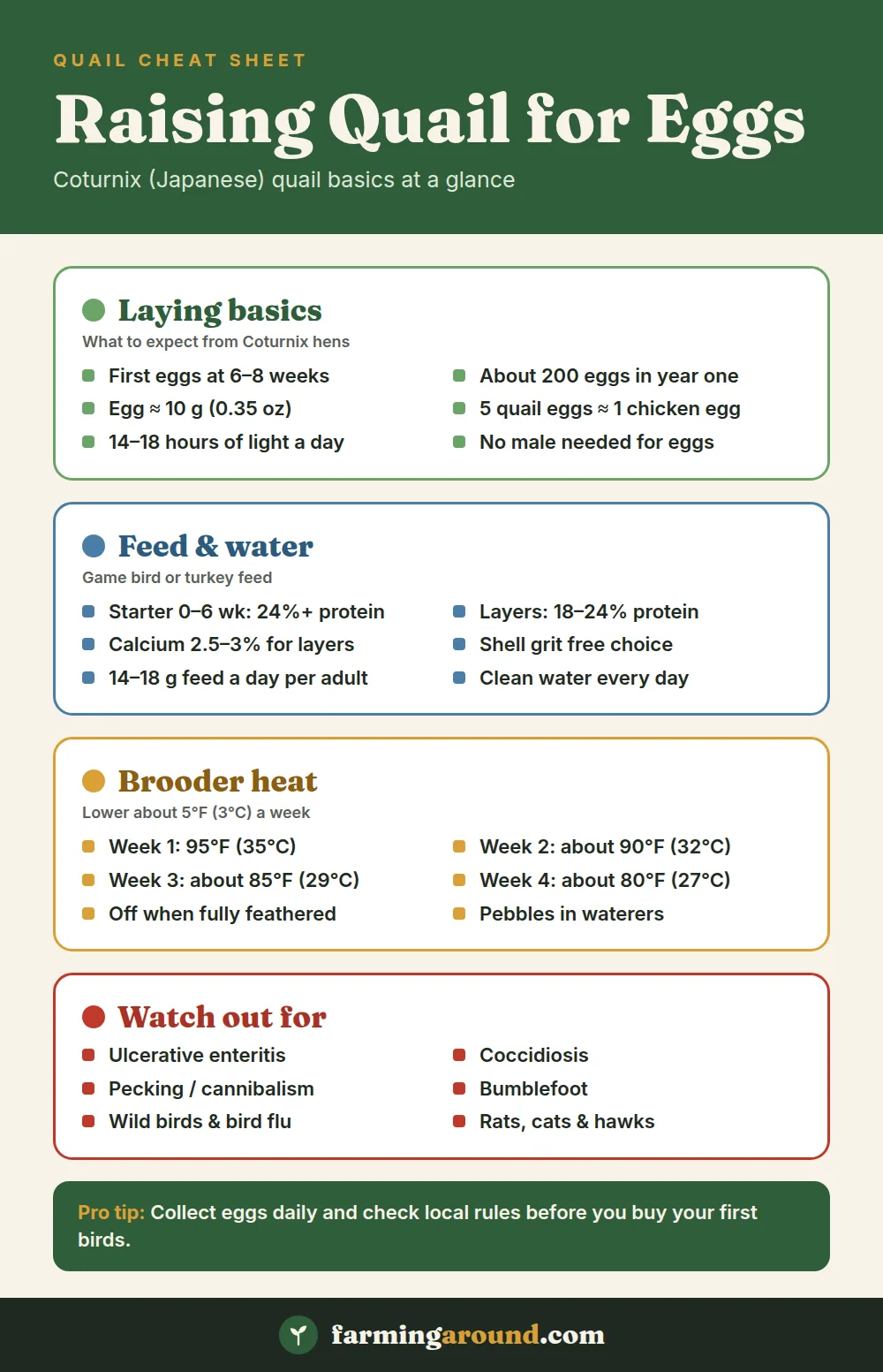
Quick Reference: Raising Quail for Eggs
FAQ
How many eggs does a quail lay a day?
A healthy Coturnix hen in full lay can lay close to one egg a day during peak season. Over her first year, about 200 eggs is a realistic figure with good care and enough light.
How old are quail when they start laying?
Coturnix quail usually begin laying at 6 to 8 weeks old and are in full production by about 50 days. Bobwhite quail don’t lay until around 20 weeks.
Do quail need a male to lay eggs?
No. Hens lay without a male. You only need one if you want fertile eggs for hatching, at about one male for every two or three hens.
Can quail eat chicken feed?
Chicken feed is usually too low in protein. Use a game bird or turkey feed with at least 24% protein for chicks and around 18–24% for laying hens.
Can quail free-range?
Not really. Quail don’t return to a coop like chickens do and will fly off when startled. Keep them in a secure hutch, cage or covered aviary.
How long do quail lay eggs?
Hens lay well for about a year, then production drops. Most quail live 2 to 2½ years, so plan to replace your layers roughly every year.
Sources
- Raising Japanese Quail in Small and Backyard Flocks (Cooperative Extension)
- Feeding Quail (Mississippi State University Extension)
- Brooding Chickens and Quail (Mississippi State University Extension)
- Ulcerative Enteritis in Poultry (Merck Veterinary Manual)
This guide is general information. For sick birds, medication or feed questions, talk to a vet who treats poultry or your local extension office.