

Last updated: November 2026
Veterinary care for chickens comes down to three things: find a vet who treats poultry before you need one, prevent problems with good biosecurity and regular health checks, and get a professional diagnosis (or a lab necropsy) when birds get sick or die unexpectedly. Backyard chickens are legally food animals, so most medicines need a vet’s prescription and come with egg and meat withdrawal times you must follow.
This guide walks you through finding a chicken vet, a simple at-home health check, the warning signs that mean “call today”, what a vet visit involves, how medication rules work for laying hens, what affects the cost, and how to use your state diagnostic lab.
Key takeaways
- Line up a vet early: a prescription requires an existing vet-client-patient relationship (VCPR).
- Check birds weekly by hand: eyes, nostrils, crop, vent, feet, feathers and body condition.
- Follow withdrawal times: chickens are food animals, so few drugs are approved and eggs may need discarding.
- Sudden deaths? Contact your vet, state veterinarian or diagnostic lab promptly; some diseases must be reported.
In this guide
How to Find a Chicken Vet
Many small-animal clinics don’t see poultry, so it pays to search before there’s an emergency. University of Wisconsin–Madison Extension points out that federal rules require a veterinarian-client-patient relationship before a vet can write any prescription. Having that relationship in place can save valuable time when a bird is sick.
Where to look:
- Avian and exotic animal vets, who often see pet birds and backyard chickens.
- Mixed-practice and livestock vets in rural areas, especially if they also treat goats, sheep or pigs.
- Your county extension office, where 4-H and agriculture agents often know which local vets see chickens.
- Feed stores and local poultry groups online, where other keepers share names.
- Veterinary school teaching hospitals, if one is within driving distance.
- Calling around. It takes time, but ask clinics directly whether they examine chickens, do farm calls, and handle after-hours emergencies.
Outside the US, the same approach works: in the UK look for a practice with a poultry or exotics interest, and in Australia, Canada and New Zealand ask livestock or bird vets and your state or provincial agriculture department.
Preventive Care Basics
Most flock health problems are cheaper to prevent than to treat. The foundations:
- Start with healthy birds. Buy chicks from reputable hatcheries that take part in the National Poultry Improvement Plan (NPIP) in the US, or equivalent schemes elsewhere.
- Vaccinate where it makes sense. Many hatcheries offer Marek’s disease vaccination at hatch. Ask your vet which other vaccines suit your area.
- Quarantine newcomers. Keep new or returning birds (from shows or swaps) apart from your flock for about 30 days and watch them closely.
- Practice biosecurity. Use dedicated coop boots, limit visitors, keep wild birds away from feed and water, and control rodents.
- Feed a complete ration. A proper starter, grower or layer feed matters more than any supplement. See what chickens can eat for safe treats.
- Keep housing clean, dry and well ventilated. Damp litter and ammonia build-up lead to respiratory and foot problems. Our guide on winterizing a chicken coop covers ventilation without drafts.
- Check for parasites. Look for mites and lice around the vent and under the wings regularly, and ask your vet about a fecal test before deworming.
Pro tip: keep a simple flock notebook with each bird’s hatch date, weight, vaccinations, any treatments and the dates you discarded eggs. Your vet will thank you.
The Weekly Health Check
Pick birds up calmly, ideally at dusk when they’re settled on the roost, and work from beak to tail:
| Check | Healthy | Watch for |
|---|---|---|
| Eyes and nostrils | Bright, clear, dry | Bubbles, discharge, swelling |
| Comb and wattles | Red and full in laying hens | Pale, purple or crusty patches |
| Breathing | Quiet | Gurgling, sneezing, open-mouth breathing |
| Crop (in the morning) | Empty before breakfast | Still full, squishy or sour-smelling |
| Body condition | Keel bone covered by firm muscle | Sharp keel (weight loss) or heavy fat |
| Vent | Moist, clean, pink | Pasty droppings, mites, swelling |
| Feet and legs | Smooth scales, no swelling | Raised scales, swollen footpad with a scab |
| Feathers and skin | Clean, no crawling insects | Lice, mites, bare patches (outside molt) |
Weighing birds every week or two on a digital kitchen scale catches slow weight loss long before you’d see it.
Watch: A Step-by-Step Chicken Health Exam
This short video from a veterinarian shows how to hold a chicken and go through a basic exam.
Signs a Chicken Needs a Vet
Chickens hide illness well, so by the time a bird looks sick, it often is. Call your vet promptly if you see:
- A bird standing hunched and fluffed up, sleeping during the day or separating from the flock
- Not eating or drinking
- Labored, noisy or open-mouth breathing, or swelling around the eyes and face
- Bloody, watery or very abnormal droppings
- Lameness, paralysis, twisted neck or loss of balance
- A hen straining with no egg, or a swollen, hot abdomen
- Wounds from predators or pecking
- A sudden, unexplained drop in egg laying across the flock
Several sudden deaths? Don’t wait. Sudden deaths, severe respiratory signs or a big drop in laying can point to avian influenza or virulent Newcastle disease, which must be reported. Contact your vet or state veterinarian right away (in the UK, contact Defra). Learn the signs in our bird flu guide for backyard chickens.
While you wait, move the sick bird to a quiet, warm hospital pen with water and feed, away from the flock, and wash your hands after handling it.
What Happens at a Vet Visit
- Transport: bring the bird in a ventilated carrier or crate lined with a towel, and keep it calm and out of direct sun.
- History: expect questions about age, diet, housing, new birds, egg production and how long signs have lasted. Bring your notebook and, if you can, a fresh dropping in a bag.
- Exam: the vet will check weight, body condition, crop, vent, breathing and feet.
- Tests: depending on the problem, fecal tests, swabs, bloodwork or X-rays.
- Treatment plan: this may include medication, wound care, or advice for the whole flock, not just the sick bird.
- Humane euthanasia: if a bird is suffering and unlikely to recover, a vet can euthanize it humanely. It’s also the best route if you want a lab to find the cause.
Medications and Egg Withdrawal
This is where backyard keepers most often get caught out. The American Veterinary Medical Association notes that backyard chickens, even pets, are still classed as food animals under state and federal law, and very few drugs are approved for them.
- Prescription only: in the US, medically important antibiotics for animals have moved from over-the-counter to prescription, under FDA guidance (GFI #263), and feed-grade antibiotics need a Veterinary Feed Directive. You need a vet with a valid VCPR to get them. The UK, Canada, Australia and the EU also restrict animal antibiotics to prescription use.
- Withdrawal times: many medicines leave residues in eggs and meat. Your vet will tell you how long to discard eggs and wait before slaughter. Follow it exactly.
- Extra-label use: using a drug in a way the label doesn’t cover is only legal under a vet’s direction, and they will set a safe withdrawal period.
- Don’t use leftover or dog and cat medicines on chickens without veterinary advice.
What Affects the Cost
Fees vary widely by region and practice, so call ahead and ask. The main factors are:
- Type of clinic: exotic and avian specialists may charge more than a rural mixed practice.
- Office visit or farm call: farm calls usually add a travel fee but let the vet see your setup and several birds at once.
- Emergency hours: after-hours visits cost more.
- Tests and imaging: lab work and X-rays add to the bill.
- Flock-level testing: a necropsy at a state diagnostic lab can be an affordable way to diagnose a problem affecting the whole flock.
Weigh the value of an individual bird against treatment costs honestly, and talk it through with your vet. Many vets will suggest a sensible plan that fits your budget.
Diagnostic Labs and Necropsy
When a bird dies and you don’t know why, a necropsy (an animal autopsy) can protect the rest of your flock. Most US states have an animal disease diagnostic laboratory, often at a land-grant university, that accepts backyard birds, and some states offer reduced fees for small flocks. AVMA also encourages vets to use extension veterinarians and diagnostic labs for poultry cases.
- Call your vet or the lab first to check fees, opening hours and how they want samples sent.
- Wearing gloves, double-bag the bird and keep it refrigerated, not frozen; freezing damages tissue and makes diagnosis harder.
- Get it to the lab as soon as possible, ideally within a day or two.
- Write down the flock’s history and signs to send with it.
Home First Aid Kit
A basic kit helps you stabilize a bird until you can reach the vet:
- Disposable gloves and hand sanitizer
- Self-adhesive vet wrap and gauze pads
- Sterile saline for flushing wounds and eyes
- A poultry-safe wound spray recommended by your vet
- Poultry electrolytes and vitamins for drinking water
- A digital scale, flashlight and small towel for restraint
- A crate or large box to use as a hospital pen
- Your vet’s number, after-hours number and the diagnostic lab’s details
Handle chickens with care for your own health too: wash your hands after touching birds, eggs or coop equipment, since live poultry can carry Salmonella. For more on setting up a healthy flock from day one, see our guide to raising chickens for beginners.
Helpful gear for this guide
Handy picks that match the advice above.
Links go to Amazon. Prices and availability change, so check reviews and fit for your setup before buying.
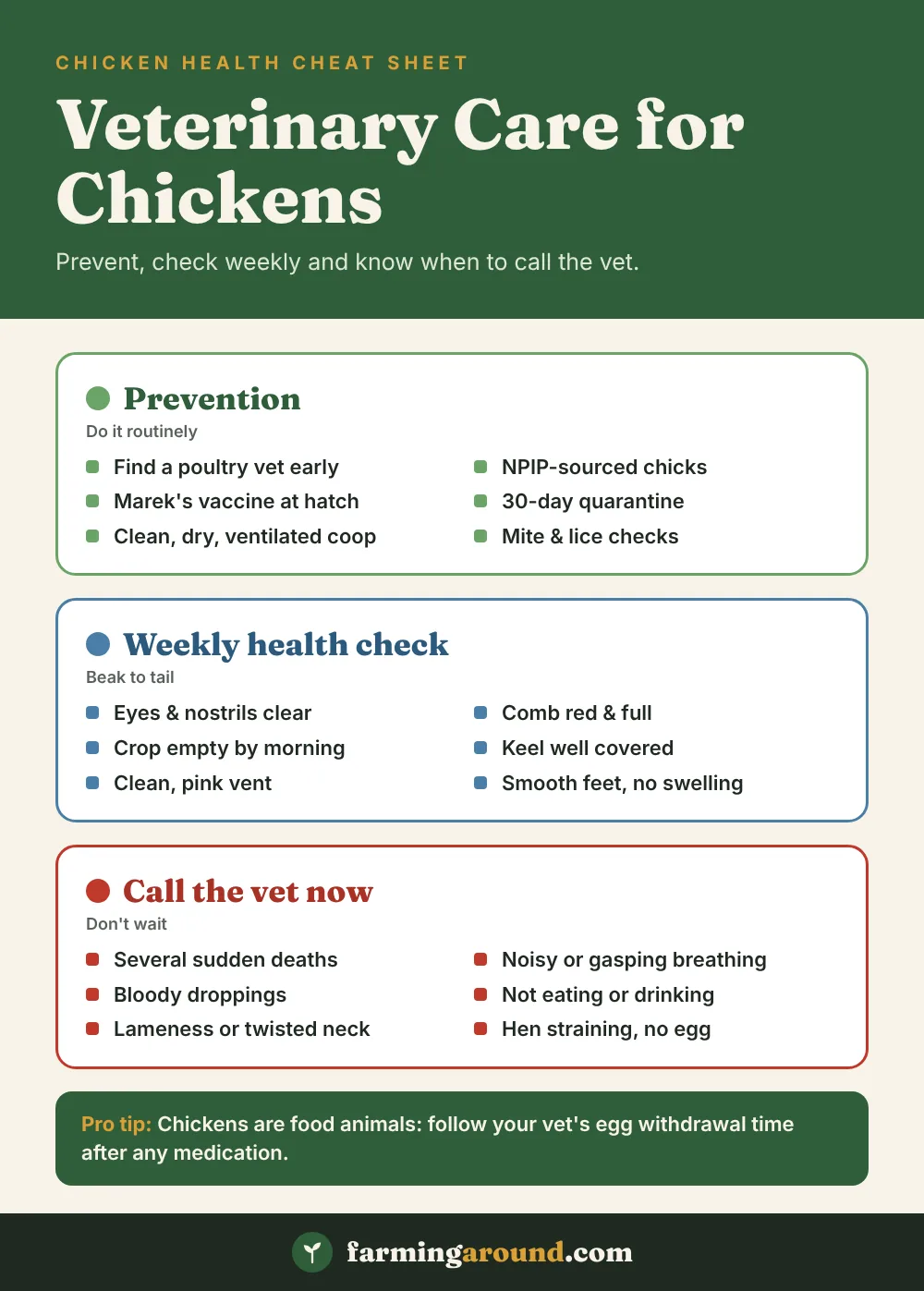
Quick Reference
Keep this chart in the coop or on the fridge:
FAQ
Do chickens need to go to the vet?
Not routinely like dogs and cats, but you should have a vet relationship in place for illness, injuries, prescriptions and flock health advice, plus a plan for diagnosing unexplained deaths.
Will a regular vet see chickens?
Some will. Many small-animal clinics don’t, but avian and exotic vets, mixed-practice vets and livestock vets often do. Call and ask before you need them.
Can I eat eggs from a chicken on antibiotics?
Not until the withdrawal period your vet gives you has passed. Discard eggs laid during treatment and for the full withdrawal time.
Can I buy antibiotics for my chickens without a vet?
In the US, medically important antibiotics for animals now require a prescription or Veterinary Feed Directive from a vet with a valid VCPR. Other English-speaking countries have similar rules.
Do backyard chickens need vaccines?
Many keepers buy chicks vaccinated against Marek’s disease at the hatchery. Whether other vaccines make sense depends on your area and flock, so ask a vet.
What should I do if a chicken dies suddenly?
Isolate the rest of the flock from the area, refrigerate the body (don’t freeze it), and call your vet or state diagnostic lab about a necropsy. Report multiple sudden deaths to your state veterinarian.
Sources
- University of Wisconsin–Madison Extension: Finding a Veterinarian for Your Chickens
- American Veterinary Medical Association: Backyard Chickens 101
- U.S. Food and Drug Administration: GFI #263 FAQ for Farmers and Ranchers
This guide is general information, not a diagnosis. Always consult a poultry veterinarian or your local extension office about a sick bird.
This guide contains affiliate links. As an Amazon Associate, FarmingAround earns from qualifying purchases, at no extra cost to you.
Get free farming guides in your inbox
Practical guides, seasonal tips and market updates. No spam, unsubscribe anytime.
Subscribe free
One Comment