Last updated: November 2026
A heated chicken waterer keeps your flock’s water just above freezing, so you are not breaking ice or hauling fresh buckets out twice a day. For most backyard flocks the simplest choice is an all-in-one plastic heated waterer with a built-in thermostat. If you already own a double-wall metal fount, a heated base is the cheaper fix. Nipple-style heated buckets are great for keeping water clean, but only if your birds already know how to use nipples.
Key takeaways
- Most backyard flocks: an all-in-one plastic heated waterer with a built-in thermostat is the simplest choice.
- Already own a double-wall metal fount? Add a heated base made for it, and never put a plastic fount on a metal-fount base.
- Plan on about one quart of water per hen per day; a 3-gallon waterer covers about 12 hens for a day.
- Put it in a covered run, not inside the coop, and check cords for chew marks every week.
In this guide
Why winter water matters more than winter heat
Adult chickens cope with cold far better than most new keepers expect. What they do not cope with is going without water. A hen’s egg is mostly water, and birds that cannot drink will eat less, stop laying and lose condition fast. Water also helps them digest the extra feed they eat to stay warm.
That is why a heated waterer is usually the one piece of winter “heat” every flock in a freezing climate should have, even if you never heat the coop itself. If you are still deciding about coop heat, read our guide to heating a chicken coop safely first, then come back here.
Quick picks
- Best all-round: Premier 1 All-Season Heated Poultry Waterer (3 gallon)
- Best hanging option: Farm Innovators HPF-100 Heated Poultry Waterer (3 gallon)
- Best for a small flock: Farm Innovators HB-60P Heated Poultry Waterer (2 gallon, 60W)
- Best if you already own a metal fount: Farm Innovators Heated Base for Double-Wall Metal Founts (125W)
- Best nipple-style option: 5 Gallon Heated Chicken Waterer Bucket with Horizontal Nipples
Comparison at a glance
| Product | Type | Best for | Key feature |
|---|---|---|---|
| Premier 1 All-Season (3 gal) | All-in-one plastic | Most backyard flocks | Year-round use |
| Farm Innovators HPF-100 (3 gal) | Hanging, thermostatic | Keeping bedding out of water | Hangs off the floor |
| Farm Innovators HB-60P (2 gal) | Small all-in-one, 60W | 2 to 5 hens or bantams | Light and easy to carry |
| Farm Innovators heated base | Base for metal founts, 125W | You already own a double-wall fount | Cheapest upgrade |
| 5 gal heated nipple bucket | Bucket with horizontal nipples | Nipple-trained flocks | Cleanest water |
The 5 types of heated chicken waterers
1. All-in-one plastic heated waterer
The heater is built into the base of a plastic fount, and a thermostat switches it on only when the water gets close to freezing. You fill it, plug it in, and you are done. This is the easiest setup for beginners and the one we recommend for most backyard flocks of 4 to 12 hens.
Pros: simplest setup, thermostat built in, nothing to assemble.
Cons: plastic can crack if dropped in deep cold; one cord to protect.
Our pick: Premier 1 All-Season Heated Poultry Waterer. It holds 3 gallons, which covers a typical backyard flock for a day or two, and it can be used year-round. For a hanging version that keeps bedding out of the water, the Farm Innovators HPF-100 is a solid alternative.
2. Small-flock heated waterer
If you keep 2 to 5 hens or bantams, a 2-gallon unit is lighter to carry and easier to clean. The Farm Innovators HB-60P is a simple 60W model made for exactly this.
3. Heated base for a metal fount
Galvanized double-wall founts are durable, but they freeze solid in winter. A heated base sits under the fount and keeps the water liquid. Only use a base with founts it is designed for, and never put a plastic fount on a base made for metal.
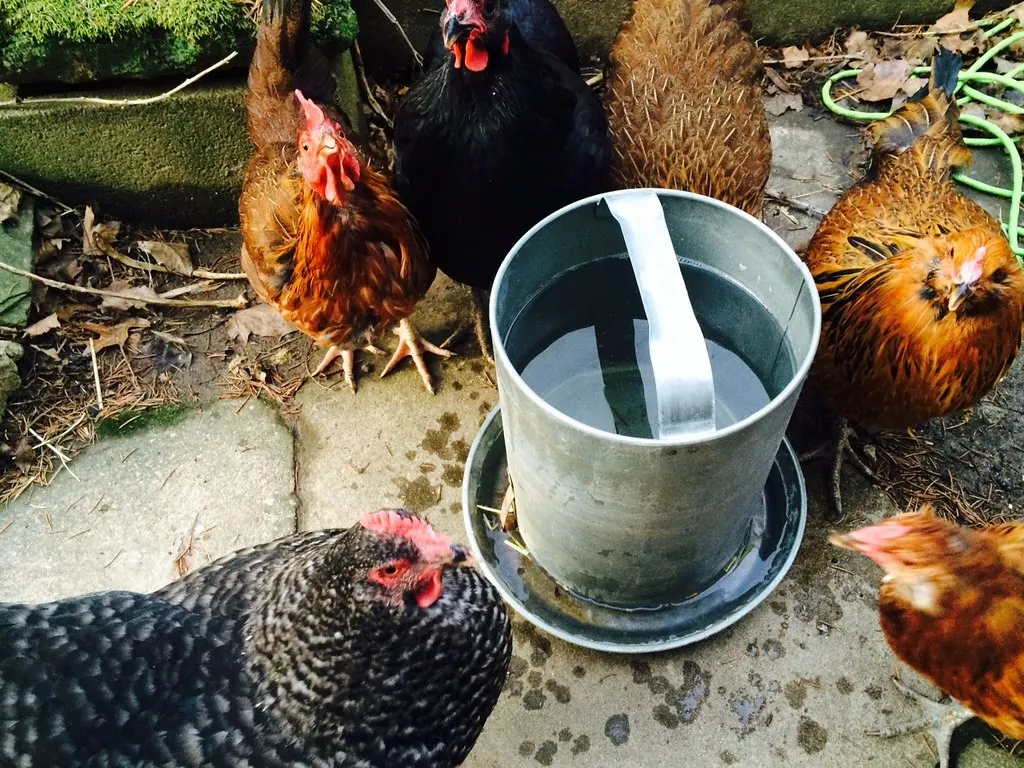
Pros: reuses a fount you already own, durable galvanized fount.
Cons: only for compatible founts; heavier to carry when full.
Our pick: Farm Innovators Heated Base for Double-Wall Metal Founts.
4. Heated nipple bucket
Nipple waterers keep water clean because birds cannot scratch bedding or droppings into it. Heated versions use horizontal nipples, which freeze less easily than vertical ones. The catch: hens that have never used nipples need a week or two to learn, so switch in autumn, not during a cold snap.
Pros: water stays clean, no bedding or droppings in it.
Cons: hens must learn nipples first; harder to check water level at a glance.
Option to consider: 5 Gallon Heated Chicken Waterer Bucket with 4 Horizontal Nipples.
5. DIY: bucket plus de-icer
Some keepers drop a livestock de-icer into a bucket. It works, but the open bucket gets dirty fast and small birds can fall in. For chickens, a purpose-built poultry waterer is cleaner and safer.

Watch: choosing a heated chicken waterer
The Happy Chicken Coop walks through what to look for in a heated waterer for winter.
How we chose
We looked for waterers made specifically for poultry, with a thermostat or low wattage so they only use power when needed, enough capacity for a typical backyard flock, and a design that is easy to fill and clean in cold weather. We left out products that are not made for animals and generic heaters with no clear safety guidance.
Pro tip: Switching to a heated nipple bucket? Do it in autumn. Hens that have never used nipples need a week or two to learn, and a cold snap is the wrong time to teach them.
What to look for
- Thermostat control. The heater should switch on near freezing and off again on mild days. It saves power and avoids warm, slimy water.
- Capacity. Plan on roughly one quart per hen per day. A 3-gallon waterer covers about 12 hens for a day.
- Height. Set the drinking lip at about the height of your hens’ backs. Hanging models or a stand keep bedding out.
- Cleaning. Wide openings are easier to scrub. You will clean it at least once a week.
- Cord protection. Hens peck at cords. Run them along the wall and out of reach.
Safety: power and fire
A heated waterer is far safer than a heat lamp, but anything electric in a dusty, dry coop needs care:
- Use a heavy-duty outdoor cord, such as a 12/3 gauge outdoor extension cord, and never daisy-chain cords.
- Plug into a GFCI outlet if you can.
- A Thermo Cube TC-3 thermostatically controlled outlet turns power on only when it is cold, which adds a second layer of control.
- Keep the waterer on a stable, level surface away from bedding piles.
- Check the cord and plug for chew marks or heat every week.
Extension cords are a temporary fix. University of Minnesota Extension advises using extension cords only temporarily, never as the permanent power supply to a coop, and having a licensed electrician handle any permanent coop wiring.
Where to put it
Most keepers put the heated waterer in the run, under a roof, rather than inside the coop. Water inside the coop raises humidity, and damp air is a bigger frostbite risk than cold air. If your run is open to snow, cover at least the corner where the waterer sits. See our guide on how to winterize a chicken coop for ventilation and moisture tips, and insulation for a chicken coop if you are in a very cold zone.
Moist air is the real winter enemy. Our guide to chicken coop ventilation explains how to keep the coop dry without drafts, and if you are upgrading winter gear, see our roundup of the best chicken feeders too.
Quick Reference

FAQ
Do chickens really need a heated waterer?
If your temperatures drop below freezing for more than a few hours at a time, yes, unless you can swap in fresh water several times a day. Hens need liquid water all day to keep eating and laying.
Are heated waterers safe in a coop?
Units made for poultry and used as directed are much safer than heat lamps. Use a proper outdoor cord, keep cords out of reach and check them weekly.
Can I use a heated base with a plastic waterer?
Only if the manufacturer says so. Most metal-fount bases get too warm for plastic founts and can warp them.
Will nipple waterers freeze?
Unheated ones freeze quickly. Heated buckets with horizontal nipples work in cold weather, but your hens need to learn nipples before winter.
Bottom line
For most backyard flocks, an all-in-one thermostatic waterer like the Premier 1 All-Season Heated Poultry Waterer is the easiest way to keep water liquid all winter. If you already own a metal fount, add a heated base. New to chickens? Start with our raising chickens for beginners guide.
Sources
- Caring for Chickens in Cold Weather (University of Minnesota Extension)
- Small Flock Housing (University of Maryland Extension)
For electrical work in or near the coop, use a licensed electrician. For flock health questions, contact a poultry vet or your local extension office.
This guide contains affiliate links. As an Amazon Associate, FarmingAround earns from qualifying purchases, at no extra cost to you.
Get free farming guides in your inbox
Practical guides, seasonal tips and market updates. No spam, unsubscribe anytime.
Subscribe free