

Last updated: October 2026
This guide contains affiliate links. As an Amazon Associate, FarmingAround earns from qualifying purchases, at no extra cost to you.
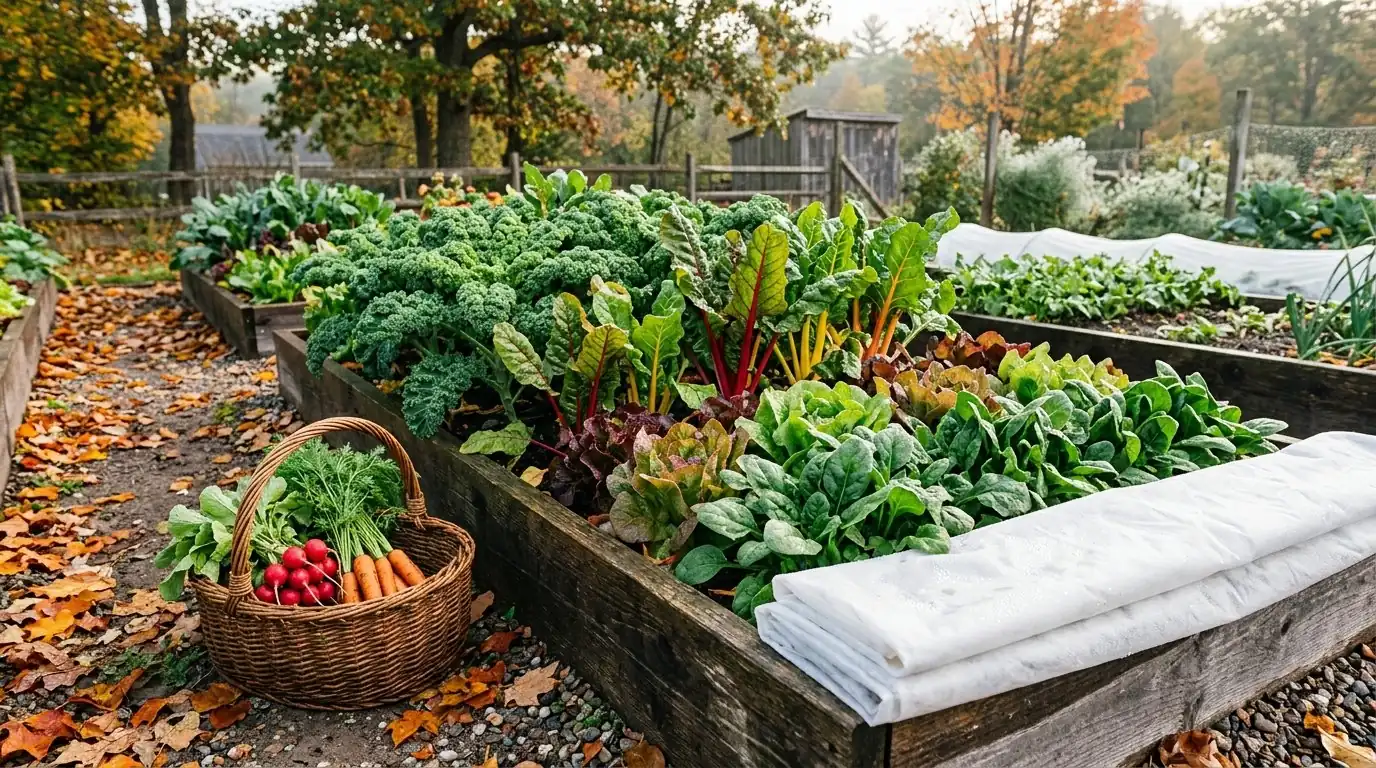
Your growing season doesn’t have to end when summer does. Many of the tastiest vegetables actually prefer cool weather: greens get sweeter after a light frost, and pests are far fewer. This guide covers the best fall garden vegetables to plant, when to plant them, and how to stretch your harvest into early winter. Once you are harvesting, this vegetarian meal prep guide shows how to turn a basket of greens and roots into a week of meals.
Key takeaways
- Timing: plant most fall crops 6–10 weeks before your average first frost, adding about 2 weeks for slower autumn growth.
- Best crops: fast greens and roots (radishes, arugula, spinach) plus frost-hardy kale, collards, cabbage and carrots.
- Frost makes them sweeter: kale, carrots and spinach taste better after a light frost.
- Extend the season with row covers, low tunnels and cold frames, and cover empty beds over winter.
In this guide
When to Plant a Fall Garden
Count backwards from your average first frost date. Most fall crops are planted 6–10 weeks before the first frost.
- Find your average first frost date (local extension office, national weather service or gardening apps).
- Check each crop’s days to maturity on the seed packet.
- Add about 2 weeks as a “fall factor”, because shorter, cooler days slow growth.
- Count back from your frost date to find your planting date.
Pro tip: Write your planting dates on a calendar as soon as you’ve counted back from your frost date. Fall sowing windows are short, and a two-week delay can be the difference between a full harvest and baby greens. Our vegetable planting calendar lists dates by zone.
Late in the season? Focus on fast crops like radishes, arugula, baby greens and spinach, use transplants instead of seed, and protect beds with row covers or cold frames. In mild climates (the southern US, much of Australia and coastal regions), autumn is prime planting time for a huge range of vegetables.
Best Fall Garden Vegetables
| Vegetable | Days to harvest (approx.) | Frost tolerance | Notes |
|---|---|---|---|
| Radishes | 25–35 | Light frost | Fastest crop; sow every 2 weeks |
| Arugula | 30–40 | Light frost | Peppery greens, fast and easy |
| Lettuce (leaf) | 30–50 | Light frost | Harvest as baby leaves for speed |
| Spinach | 35–45 | Hard frost | Very cold hardy; can overwinter |
| Bok choy | 40–50 | Light frost | Fast Asian green |
| Turnips | 40–60 | Hard frost | Eat both the roots and the greens |
| Kale | 50–65 | Hard frost | Sweeter after frost; harvests into winter |
| Swiss chard | 50–60 | Light to moderate frost | Colorful, productive |
| Beets | 50–60 | Light frost | Roots and greens |
| Carrots | 60–80 | Hard frost | Sweeter after cold; can store in the ground |
| Collards | 60–75 | Hard frost | Extremely cold tolerant |
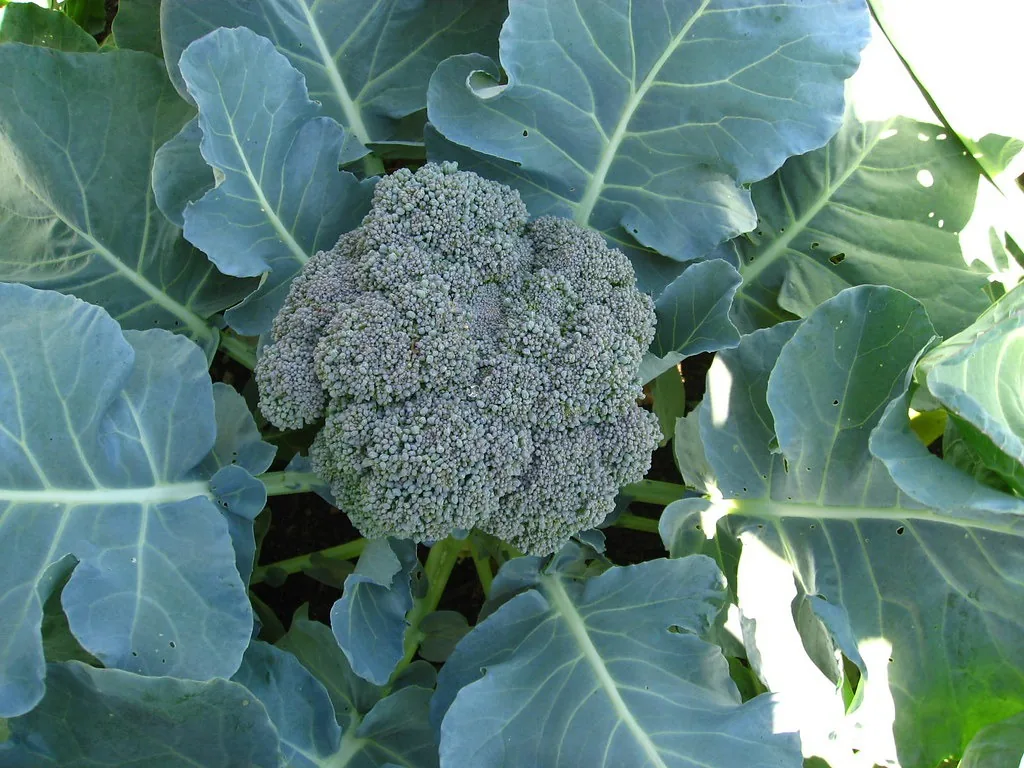
| Broccoli (transplants) | 55–80 | Light to moderate frost | Plant transplants in late summer |
| Cabbage (transplants) | 60–90 | Hard frost | Great for storage and sauerkraut |
| Garlic | Harvest next summer | Very hardy | Plant cloves in autumn |
Frost tolerance varies by variety. “Hard frost” crops generally handle temperatures in the mid-20s °F (around −4°C) with little damage, especially with protection.
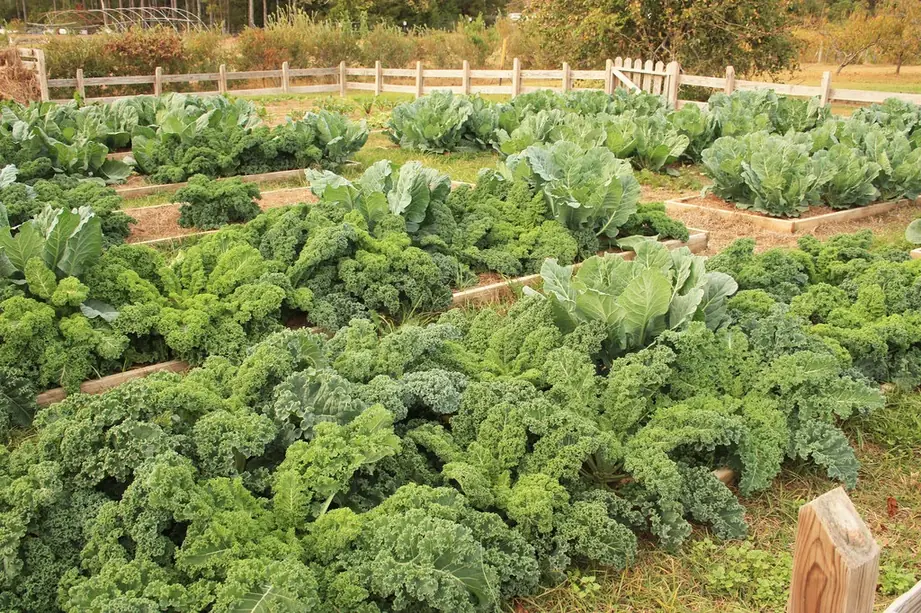
Watch: easy fall vegetables
Next Level Gardening covers easy fall vegetables from seed to harvest in this video.
Don’t Forget Garlic
Autumn is the only ideal time to plant garlic for a summer harvest. Plant cloves 4–6 weeks before the ground freezes. Our full guide: how to grow garlic.
Preparing Your Fall Garden Beds
- Clear spent summer crops and compost healthy plant material. Discard diseased plants rather than composting them.
- Add 1–2 in (2.5–5 cm) of compost. Summer crops use a lot of nutrients.
- Water well before sowing. Late summer soil is often dry.
- Shade new seedlings during hot spells with shade cloth; lettuce and spinach struggle to germinate in heat.
- Mulch between rows to keep soil moist and cool.
Heavy soil? See compost for clay soil.
How to Extend Your Fall Harvest
- Floating row covers: lightweight fabric adds a few degrees of frost protection.
- Low tunnels: hoops with plastic or row cover over beds let greens keep growing longer.
- Cold frames: a bottomless box with a clear lid is perfect for winter salads.
- Mulch root crops: a thick layer of straw over carrots and beets lets you harvest well into winter in many areas.
- Harvest smart: pick outer leaves of greens so plants keep producing.
When the harvest comes in, our guides to when to harvest vegetables and how to store vegetables help you pick at the right time and make it last.
Fall Garden Pests and Problems
- Cabbage worms and loopers: cover brassicas with fine netting early.
- Aphids: blast them off with water, and encourage beneficial insects.
- Slugs: more active in cool, damp weather. Hand-pick and use traps.
- Bolting: late heat waves can cause early flowering. Choose bolt-resistant varieties and provide shade.
Watch the first frost forecast. Tender summer crops such as tomatoes, peppers, beans and squash are killed by the first frost, while semi-hardy crops like lettuce and beets tolerate only light frost around 32°F (0°C). Cover them or harvest before a hard freeze around 28°F (−2°C).
What to Do With Empty Beds
Any bed you don’t replant should be covered, not left bare. Sow a winter cover crop or mulch with shredded leaves to protect and feed the soil until spring.
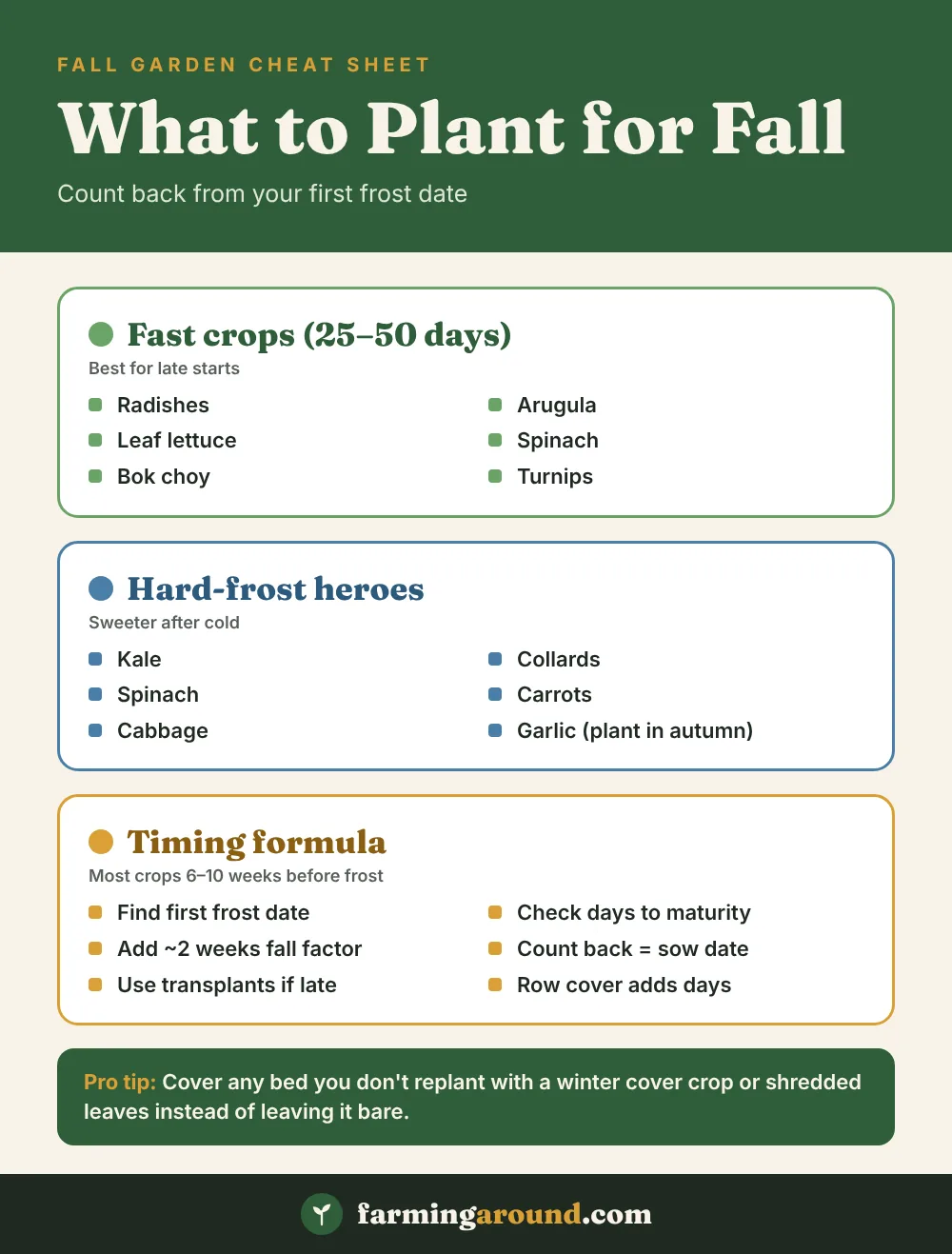
Quick Reference: Fall Garden at a Glance
Save this card for planning your autumn sowings.
Helpful gear for this guide
Handy picks that match the advice above.
Links go to Amazon. Prices and availability change, so check reviews and fit for your setup before buying.
FAQ: Fall Garden Vegetables
Is it too late to plant a fall garden?
Often not. Fast crops like radishes, arugula and baby spinach can still work, especially with row covers or a cold frame. Garlic is planted later in autumn.
What vegetables grow best in fall?
Leafy greens (spinach, kale, lettuce, chard), root crops (radishes, carrots, turnips, beets) and brassicas (broccoli, cabbage, collards).
Do fall vegetables taste better?
Many do. Cold temperatures cause plants like kale, carrots and spinach to convert starches to sugars, making them sweeter.
Can I grow a fall garden in containers?
Yes. Lettuce, spinach, radishes, arugula and kale all grow well in containers, which you can move to shelter on frosty nights.
Sources
- Planting a Fall Vegetable Garden (University of Illinois Extension)
- Fall Vegetable Gardening, G1343 (Nebraska Extension)
Frost dates and the best varieties vary by region. Check with your local extension office for your area.

9 Comments