

Last updated: October 2026
This guide contains affiliate links. As an Amazon Associate, FarmingAround earns from qualifying purchases, at no extra cost to you.
A raised bed vegetable garden is simply a frame of wood, metal or masonry filled with loose, rich soil that sits above the ground. The proven formula from extension services: build beds no wider than 4 feet (1.2 m) so you can reach the middle, give roots at least 12 inches (30 cm) of good soil, and put them where they get 6–8 hours of direct sun. Get those three right and almost any design will grow great vegetables.
This guide walks through bed sizes and layouts, the best (and worst) materials, what to fill a raised bed with and how much soil you’ll need, plus the planting, watering and upkeep that keep beds productive for years. It works for any climate, from USDA zone 3 to zone 11 and the Southern Hemisphere.
Key takeaways
- Size: 3–4 ft (90–120 cm) wide, 4–12 ft (1.2–3.6 m) long, with at least 12 in (30 cm) of soil.
- Materials: cedar, cypress, galvanized steel, block or brick all work. Skip creosote railroad ties and old tires.
- Fill: good topsoil blended with plenty of compost, or a bagged raised-bed mix; never plain garden soil alone.
- Upkeep: raised beds dry out faster, so plan drip or soaker-hose watering and top up 1–2 in (2.5–5 cm) of compost each year.
In this guide
- Why Grow Vegetables in Raised Beds?
- Raised Bed Size, Height and Layout
- Raised Bed Garden Design Ideas
- Best Materials for Raised Beds
- Build or Buy? Kits vs DIY and Costs
- What to Fill a Raised Bed With
- Planting a Raised Bed Vegetable Garden
- Watering, Feeding and Mulching
- Common Raised Bed Mistakes
- Raised Beds at a Glance
- FAQ
- Sources
Why Grow Vegetables in Raised Beds?
Raised beds solve the problems that make in-ground gardening hard. Extension publications from the University of Delaware and Alabama A&M and Auburn Universities list the same core benefits:
- Better drainage. Roots sit above soggy, compacted or rocky ground.
- Earlier planting. Raised soil warms faster in spring, and with row covers you can often plant up to two weeks earlier than in a conventional plot.
- Higher yields per square foot. Because you never walk on the soil, you can plant intensively instead of in wide rows.
- Fewer weeds and easier access. Less bending to weed, water and harvest, and you can work the bed soon after rain without compacting it.
- Gardening where you couldn’t before. Beds work on clay, slopes, rocky ground and even paved yards.
There are trade-offs. Raised beds dry out faster in summer, the frames and soil cost money, sprawling crops like watermelon don’t fit well, and growing the same crops in the same small beds year after year can build up soilborne diseases. Good planning handles all of these.
Raised Bed Size, Height and Layout
| Measurement | Recommended | Why |
|---|---|---|
| Width | 3–4 ft (90–120 cm); 2–3 ft (60–90 cm) against a fence or wall | You can reach the center without stepping on the soil |
| Length | 4–12 ft (1.2–3.6 m); 8 ft (2.4 m) is common | Longer beds are awkward to walk around |
| Frame height | 6–12 in (15–30 cm) for most gardens; up to waist height for easier access | Taller beds need more soil but less bending |
| Soil depth | At least 12 in (30 cm) of loose soil, counting loosened ground beneath | Room for roots of tomatoes, carrots and potatoes |
| Paths | About 2 ft (60 cm) for foot traffic; up to 4 ft (1.2 m) for wheelbarrows and carts | Easy access for tools and harvest baskets |
Siting: choose the sunniest spot you have, with at least 6 hours of direct sun (8 is better for tomatoes, peppers and squash), close to a hose or tap. Run long beds north to south so both sides get even light. Put tall crops and trellises on the north side of the bed in the Northern Hemisphere, or the south side in the Southern Hemisphere, so they don’t shade shorter plants.
Raised Bed Garden Design Ideas
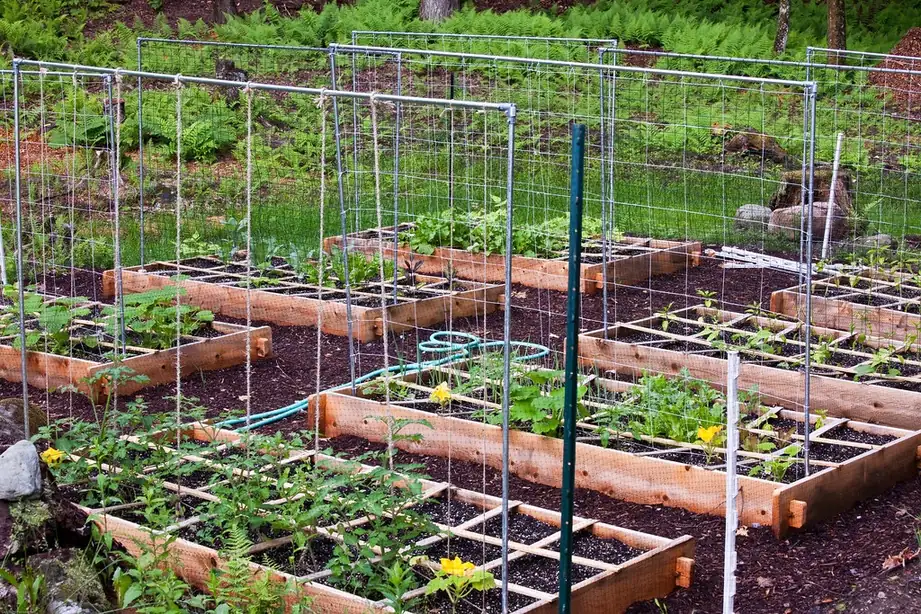
Start with one or two beds and add more once you know how much time you have. These layouts suit different spaces and goals:
- Classic 4 × 8 ft (1.2 × 2.4 m) bed. The workhorse. Two of them feed a lot of salads and summer crops for a small family.
- 4 × 4 ft (1.2 × 1.2 m) grid beds. Divided into 1 ft (30 cm) squares, each planted with one crop. Great for beginners and small yards.
- Rows of parallel beds. Identical beds with straight paths make crop rotation simple: move each crop family one bed along each year.
- L- or U-shaped beds. Fit corners and let you stand inside the curve. Keep each arm no more than 4 ft (1.2 m) wide.
- Narrow fence-line beds. 2 ft (60 cm) wide along a sunny fence, ideal for trellised beans, peas and cucumbers.
- Tall or elevated beds. Waist-high beds or tables for gardeners who can’t kneel or who garden from a wheelchair. Make sure deep beds can drain.
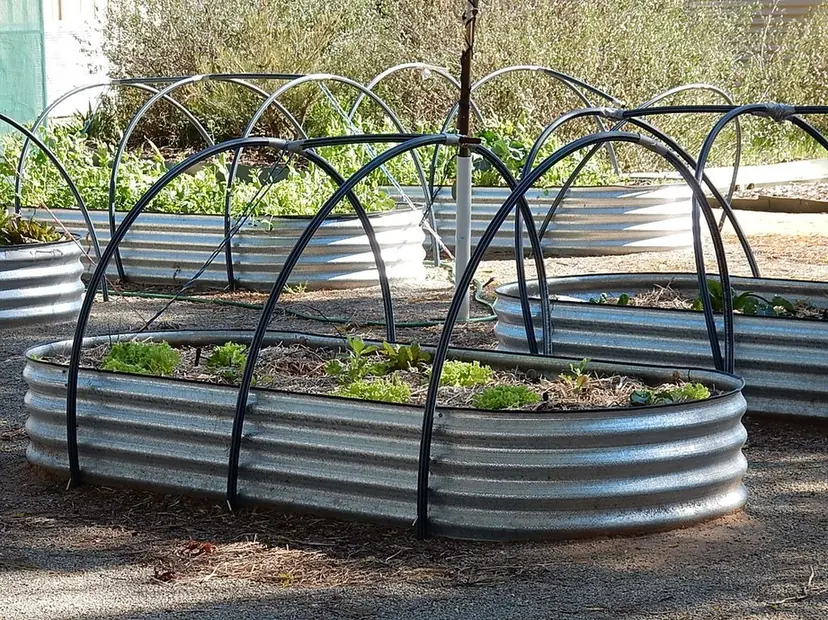
- Beds with hoops. Bend PVC or metal hoops over the bed to hold row cover in spring and fall, or netting against cabbage worms and birds.
Pro tip: Before you build, map out what you’ll grow using our companion planting chart. Knowing which crops share a bed well tells you how many beds you really need.
Best Materials for Raised Beds
| Material | Pros | Cons |
|---|---|---|
| Cedar or cypress | Naturally resists insects and decay; recommended by extension services; easy to cut | Costs more than pine; eventually rots |
| Pressure-treated pine (modern ACQ or similar) | Cheap, widely available, long-lasting | Extension services consider modern treated wood safe, but it isn’t accepted for certified organic gardens |
| Untreated pine or recycled lumber | Low cost | Pine rots in a few seasons; know where reclaimed wood came from |
| Galvanized steel kits | Very durable; quick to assemble; available in tall and round shapes | Higher upfront cost; sharp edges on cheap kits |
| Concrete blocks, bricks or stone | Permanent; nothing to rot | Heavy; hard to move; blocks take up bed space |
| Composite boards | Long-lasting, no rot | Pricey; check that the product is rated for ground contact |
About treated lumber: the old arsenic-based CCA treatment was phased out for residential use in the US at the end of 2003. Today’s ACQ-type preservatives are considered safe for vegetable beds by extension services. If you’d still rather keep roots away from the wood, staple plastic sheeting to the inside walls only. Never line the bottom, which blocks drainage.
Don’t use these for food beds: railroad ties or any wood treated with creosote or pentachlorophenol, and old tires. If you’re building on asphalt, concrete or ground that may be contaminated, lay a geotextile barrier fabric under the bed first.
Build or Buy? Kits vs DIY and Costs
DIY beds are the cheapest per square foot. A simple wooden bed is four boards screwed to corner posts: two 8 ft and two 4 ft boards make a 4 × 8 ft frame. Use exterior screws and 2 × 2 in or 4 × 4 in corner blocks for strength.
Kits cost more but include everything and go together in minutes. They’re a good fit for renters (many are easy to take apart), for tall beds, and for metal or composite materials that are hard to cut at home.
What does it cost? Prices vary hugely by material and region. Alabama Cooperative Extension’s 2024 raised bed guide put a 4 × 4 ft bed, 12 in tall, at roughly $60 for basic materials up to several hundred dollars for premium ones, with a 4 × 8 ft bed costing about twice as much. Remember to budget for soil, which is often the bigger expense for deep beds.
What to Fill a Raised Bed With
Raised beds need soil that drains freely but holds moisture and nutrients. Extension services recommend good-quality topsoil mixed with plenty of organic matter such as compost, or a bagged raised-bed mix. Many gardeners use roughly equal parts screened topsoil and compost. Avoid filling with plain clay garden soil (it compacts) or 100% potting mix (it shrinks and is costly in bulk).
- Test first. A soil test shows pH and nutrients. Most vegetables do best around pH 6.0–7.0.
- Clear and loosen the ground. Remove sod or smother it with cardboard, loosen the native soil with a fork and leave the surface rough so water and roots can move down.
- Blend the layers. Mix the first couple of inches of your fill into the loosened ground to avoid a sharp boundary that slows drainage.
- Fill to the top and water well. The mix will settle, so expect to add more.
- Top up every year with 1–2 in (2.5–5 cm) of compost as organic matter breaks down. Our guide to building a compost pile shows how to make your own.
How much soil do you need?
Multiply length × width × depth in feet to get cubic feet, then divide by 27 for cubic yards.
| Bed size | Depth | Soil needed |
|---|---|---|
| 4 × 4 ft (1.2 × 1.2 m) | 12 in (30 cm) | 16 cu ft, about 0.6 cu yd (0.45 m³) |
| 4 × 8 ft (1.2 × 2.4 m) | 12 in (30 cm) | 32 cu ft, about 1.2 cu yd (0.9 m³) |
| 4 × 8 ft (1.2 × 2.4 m) | 18 in (45 cm) | 48 cu ft, about 1.8 cu yd (1.4 m³) |
Building on heavy ground? See compost for clay soil for improving what’s underneath.
Planting a Raised Bed Vegetable Garden
When to build: fall or early winter is ideal, as the University of Delaware notes, because the soil settles by spring. In the Northern Hemisphere that means October–December; in the Southern Hemisphere, April–June. If you build in spring, simply plant once the bed is filled and watered.
When to plant: the same rules as any vegetable garden apply. Sow cool-season crops (peas, lettuce, spinach, radishes) a few weeks before your average last frost date, and plant warm-season crops (tomatoes, peppers, squash, beans) after frost danger has passed and the soil has warmed. Your USDA hardiness zone tells you how cold winters get, but frost dates set your planting calendar. Our vegetable planting calendar lays it out by zone.
Spacing: because you don’t walk on the soil, you can plant closer than in rows. Alabama Extension suggests roughly:
- 24 in (60 cm) apart: large plants such as tomatoes and squash.
- 12 in (30 cm) apart: cabbage, potatoes and sweet corn.
- 4–6 in (10–15 cm) apart: snap beans, peas and onions.
- Scattered thinly: leafy greens and small root crops, thinned as they grow.
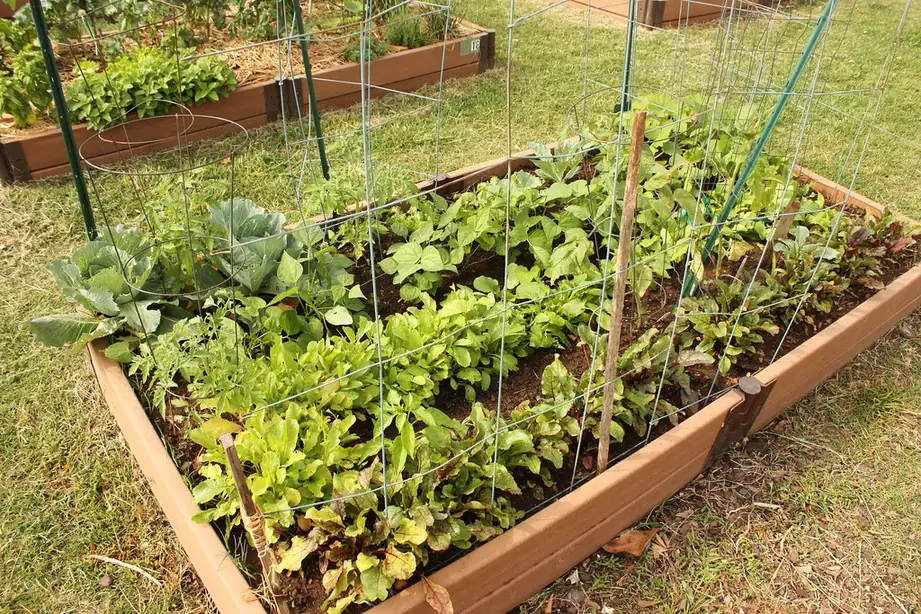
Stake, cage or trellis vining and tall crops to grow up instead of out. New to growing food? Our step-by-step guide on how to start a vegetable garden covers the basics. Good first crops for raised beds are lettuce, radishes, bush beans, chard, herbs, peppers and a staked tomato or two.
Watering, Feeding and Mulching
- Water by touch, not by calendar. Check the soil 2–4 in (5–10 cm) down and water when it feels dry. New beds can need up to 2 in (5 cm) of water a week in hot, dry weather.
- Use drip or soaker hoses. They put water at the roots, keep leaves dry and save time. Run lines about 2–3 ft (60–90 cm) apart and water until the whole bed is moist.
- Feed based on a soil test. Work in compost or a balanced fertilizer at planting, give long-season crops a second light feeding a few weeks later, and use a higher-nitrogen feed for leafy greens. Organic options include compost, aged manure, bone meal, blood meal and fish meal.
- Mulch once the soil warms. 2–4 in (5–10 cm) of straw, shredded leaves or bark around plants slows drying and smothers weeds.
- Rotate crops between beds. Avoid growing tomatoes, peppers and potatoes (one plant family) in the same bed two years running.
- Cover beds in winter. Sow a winter cover crop or mulch with leaves rather than leaving soil bare.
Common Raised Bed Mistakes
- Beds too wide. If you have to step in to reach the middle, you’ll compact the soil you paid for.
- Too shallow or poor fill. A few inches of soil over hard ground limits roots. Loosen underneath and use a compost-rich blend.
- Not enough sun. A shady bed grows leafy greens at best.
- Underwatering. Raised beds dry out faster than the ground, especially in their first year and in metal frames on hot days.
- Paths too narrow. You’ll want room for a wheelbarrow when topping up compost.
- Forgetting the yearly top-up. Beds sink as organic matter breaks down.
Watch: raised bed mistakes to avoid
This short video from Next Level Gardening covers beginner raised bed mistakes worth knowing before you build.
Helpful gear for this guide
Handy picks that match the advice above.
Links go to Amazon. Prices and availability change, so check reviews and fit for your setup before buying.
Raised Beds at a Glance
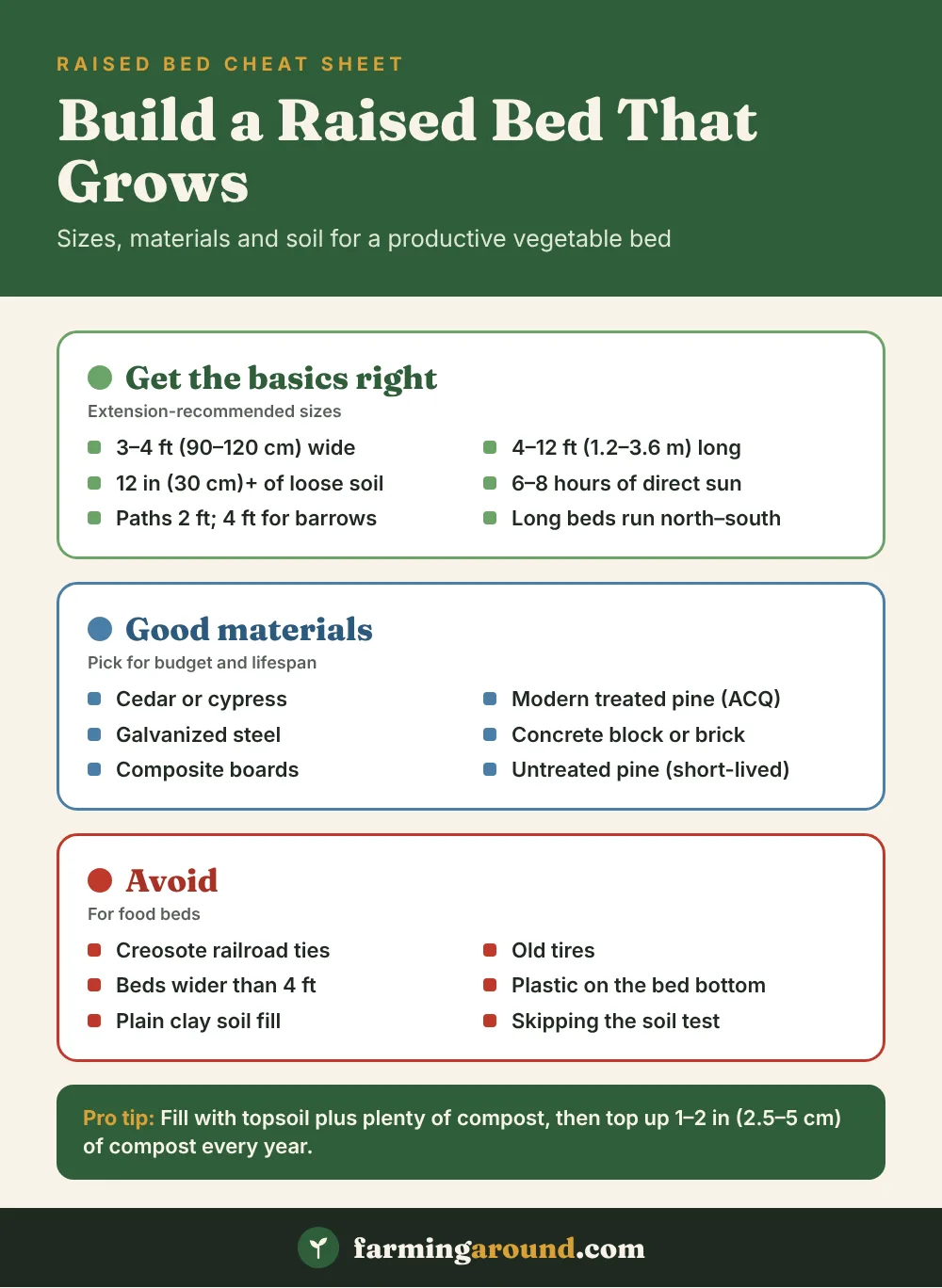
Here’s the whole guide on one card for quick reference while you plan and build.
FAQ
How deep should a raised bed be for vegetables?
Aim for at least 12 in (30 cm) of loose soil, which can include loosened ground under a shorter frame. Frames of 6–12 in (15–30 cm) suit most vegetables; go deeper on hard or poorly drained ground.
What is the best wood for a raised garden bed?
Cedar and cypress are the top choices because they naturally resist rot and insects. Modern pressure-treated pine is considered safe by extension services and lasts longer than untreated pine, but it isn’t allowed in certified organic gardens.
What do you put in the bottom of a raised bed?
Usually nothing but loosened native soil. Cardboard can smother grass, and hardware cloth keeps out gophers and moles. Avoid plastic on the bottom, and don’t add gravel layers, which don’t improve drainage.
Can you use regular garden soil in a raised bed?
Only if it’s good loam, and even then mix in plenty of compost. Heavy clay on its own compacts and drains poorly inside a frame.
Are galvanized metal raised beds safe for vegetables?
Galvanized steel beds are widely used for food gardens. They last for many years, but they can heat up in strong sun, so keep them well watered and mulched.
Sources
- Raised Bed Gardening (University of Delaware Cooperative Extension)
- Raised Bed Gardening, ANR-1345 (Alabama Cooperative Extension System)
- Starting Your Vegetable Garden (Oregon State University Extension)
Recommendations vary by region. Your local extension office can help with soil tests and planting dates for your area.
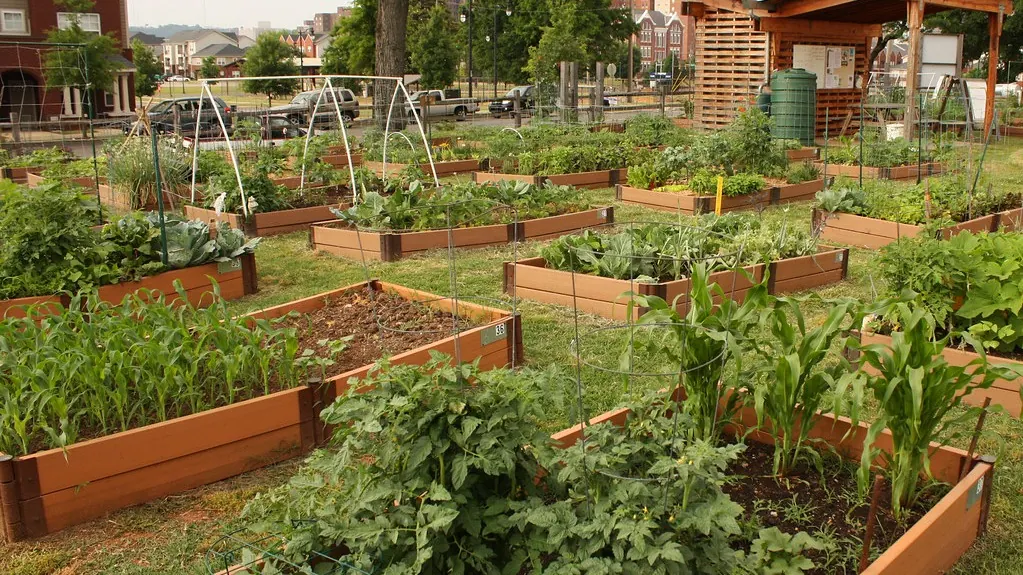
Featured image: Alabama Extension / CC0 via Flickr.


3 Comments