

Last updated: October 2026
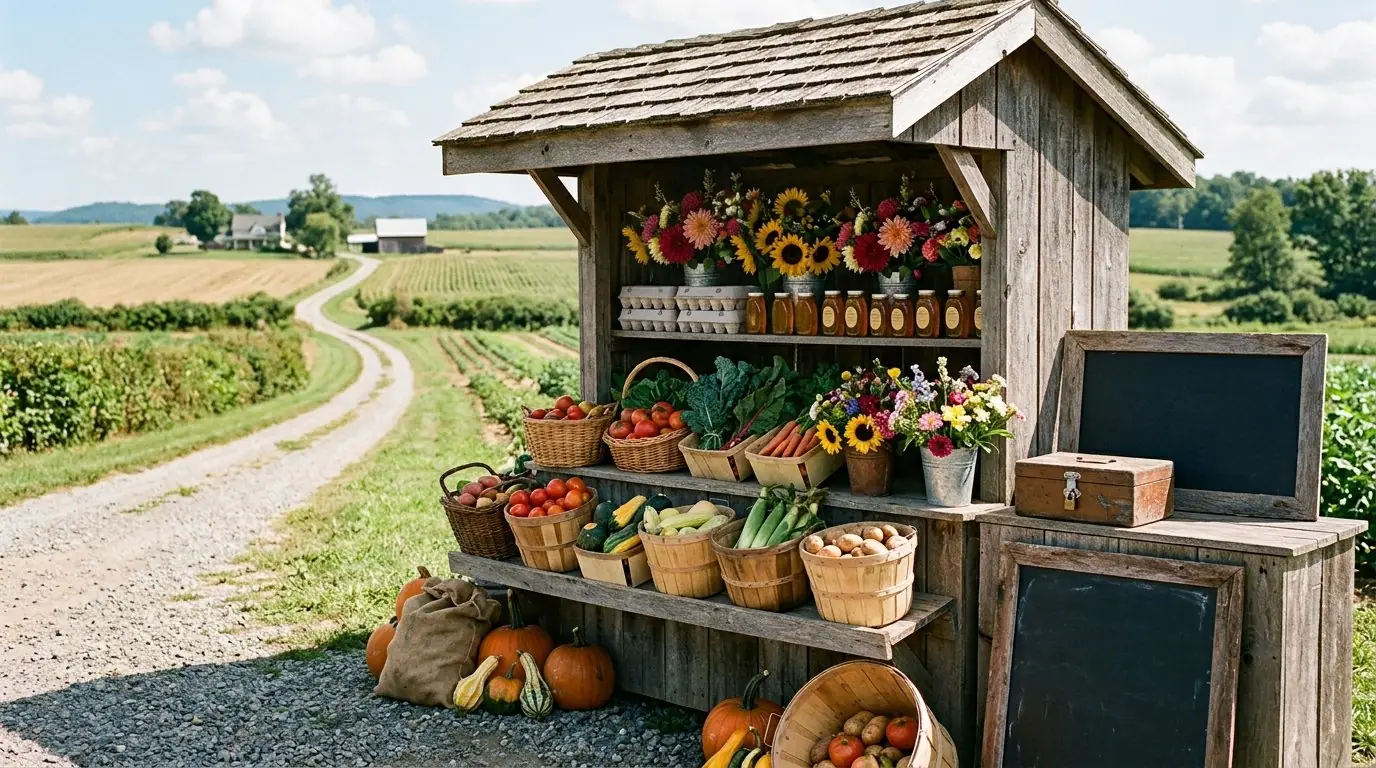
A farm stand is one of the simplest ways to turn your garden or small farm into income. Whether it’s a table at the end of your driveway or a charming roadside shed, a good farm stand builds a loyal local customer base and sells your produce at full retail price. These farm stand ideas cover everything from design and display to products, payment, signage and security, so your stand looks great and actually sells.
Key takeaways
- Start simple: a table and canopy tests demand before you build a shed stand.
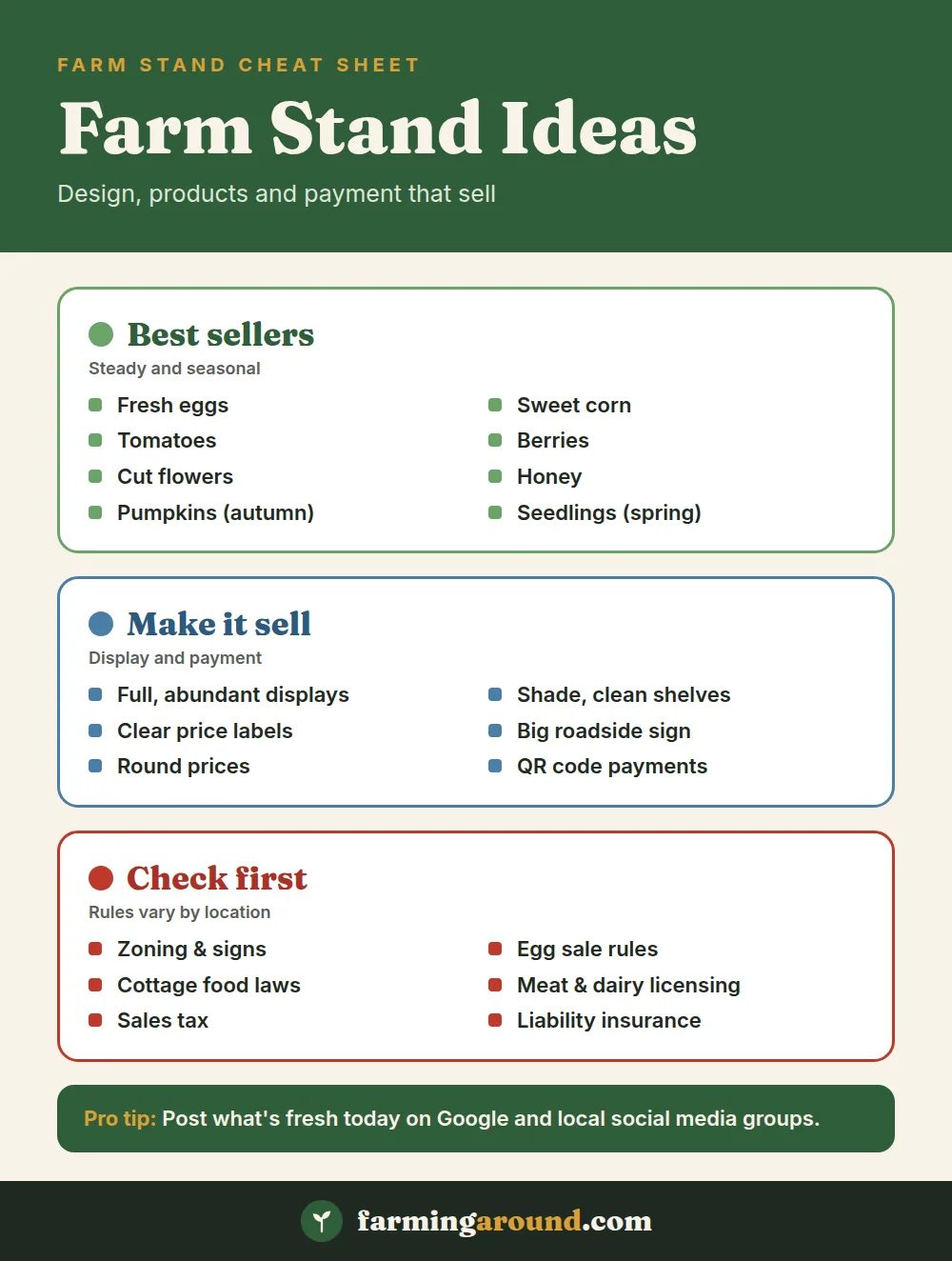
- Best sellers include eggs, sweet corn, tomatoes, berries, cut flowers and seasonal pumpkins.
- Displays sell: keep shelves full, shaded and clearly priced, with a big, simple roadside sign.
- Check the rules for zoning, eggs, cottage foods, meat and dairy before you open.
In this guide
Farm Stand Design Ideas
Your stand should be visible from the road, easy to pull up to, and protected from sun and rain.
- Classic wooden shed stand: a small open-front shed with a roof, shelves and a counter. It’s durable, weatherproof and instantly recognizable.
- Repurposed wagon or cart: an old hay wagon, garden cart or trailer makes a mobile, rustic stand you can move into the shade or store over winter.
- Pallet stand: a budget DIY build using free pallets for shelves and sides.
- Converted shed or greenhouse: a walk-in stand lets customers browse out of the weather.
- Folding table and pop-up canopy: the cheapest way to start and test demand before building something permanent.
- Vintage truck display: an old pickup bed full of pumpkins or flowers is great for seasonal sales and social media photos.
- Refrigerated stand: a reach-in fridge (with a lock) under a covered stand lets you sell eggs, meat, dairy and cut flowers safely.
Location tips: put the stand on your property with safe parking room for 2–3 cars, clear sightlines for drivers, and no blocking of the road. Check local zoning and road-setback rules first.

What to Sell at a Farm Stand
| Product | Why it sells | Notes |
|---|---|---|
| Fresh eggs | Weekly repeat customers | Keep refrigerated; follow local egg-sale rules |
| Seasonal vegetables | Freshness beats the supermarket | Harvest the same morning when possible |
| Berries and fruit | High value, fast sellers | Small containers sell better than big ones |
| Cut flower bouquets | High margin, impulse buys | Keep in water, in the shade |
| Honey | Premium local product | Label with your farm name and location |
| Seedlings and plants (spring) | Big early-season demand | Tomatoes, peppers, herbs sell best |
| Pumpkins and gourds (autumn) | Family traffic and photos | Pair with straw bales and corn stalks |
| Baked goods, jams, preserves | Add-on sales | Must comply with cottage food rules where you live |
| Firewood and kindling | Steady autumn and winter income | Sell by bundle or rack |
| Garlic, potatoes, onions | Long shelf life, low waste | Great for self-serve stands |
Growing for your stand? Try our guides to potatoes, garlic and sweet potatoes, all excellent farm stand crops that store well. And eggs from your own flock are a classic seller: see raising chickens for beginners.
Fresh herbs in small pots or bunches are another easy add-on; our indoor herb garden guide shows how to keep them growing through winter. Planning the season? Use our vegetable planting calendar to stagger crops so the stand never runs bare.
Display Ideas That Increase Sales
- Abundance sells: full baskets look fresh and inviting; a half-empty table looks picked over. Use smaller containers and restock often.
- Use height: tiered shelves, crates and baskets at different levels draw the eye.
- Group by color: red tomatoes next to green peppers and yellow squash creates eye-catching displays.
- Keep produce shaded and cool with a roof, umbrella or shade cloth.
- Bundle items: “salsa kits” (tomatoes, peppers, onions, cilantro) or “soup bags” boost the average sale.
- Keep it clean: sweep daily, remove damaged produce, and wipe down shelves.
Signage Ideas
- A large, simple roadside sign drivers can read at speed, like “FARM STAND · EGGS · VEGGIES”, placed 200–300 ft before your driveway.
- Chalkboards for daily items and prices, easy to update.
- Clear price labels on every item. Customers won’t ask; they’ll just leave.
- An “OPEN” flag or sign so people know when you’re selling.
- Your farm name and logo, to build a recognizable brand.
Pro tip: Penn State Extension’s rule of thumb for roadside signs is about 1 inch (2.5 cm) of letter height for every 25 feet (7.6 m) of reading distance. Use a plain sans-serif font, strong contrast and as few words as possible.
Honor System and Payment Ideas
Many small stands run unattended on the honor system. To make it work:
- Secure cash box: a locking steel box bolted to the stand, with a slot for payments. Empty it often.
- Digital payments: display QR codes for mobile payment apps popular in your country. Many customers no longer carry cash.
- Round prices: $3, $5 or $10 makes payment and change easier.
- A simple “how to pay” sign with clear steps.
- Staffed hours on weekends boost sales and let you chat with customers.
Watch: An Honor-System Farm Store
Curious how an unattended stand runs day to day? This tour of a small farm’s honor-system store shows one real-world setup.
Security Tips
- A visible security camera (even a basic battery-powered one) discourages theft.
- Bolt down cash boxes and lock refrigerators overnight.
- Keep high-value items limited on unattended days.
- Build community goodwill. Most customers are honest and will look out for your stand.
Legal Checklist
Rules vary a lot by country, state, province and council, so check before you open:
- Zoning: whether roadside sales and signage are allowed on your property
- Eggs: cleaning, labeling, refrigeration and sales-limit rules
- Cottage foods: which home-made foods (baked goods, jams) you can sell, and labeling requirements
- Meat and dairy: usually strictly regulated; licensed processing is often required
- Sales tax / business registration: depending on where you are and your turnover
- Insurance: consider liability coverage for customers visiting your property
Eggs, baked goods and meat need extra care. These are the products most often covered by licensing, labeling and refrigeration rules. Confirm what applies in your state, province or council before you put them on an unattended shelf.
Marketing Your Farm Stand
- Google Business Profile: list your stand so it appears on Google Maps when people search “farm stand near me.”
- Social media: post what’s fresh today on Facebook and Instagram, plus local community groups.
- Email or text list: collect contacts at the stand and send a quick weekly “what’s available” message.
- Seasonal events: pumpkin days, strawberry weekends and flower sales draw crowds.
- Consistency: keep regular hours and stock so customers can rely on you.
Pricing Your Produce
Check prices at local supermarkets and farmers’ markets, then price at or slightly above supermarket organic prices. Your produce is fresher and local. Don’t undercharge; low prices can signal low quality and undervalue your work. Track what sells and adjust.
Helpful gear for this guide
Handy picks that match the advice above.
Links go to Amazon. Prices and availability change, so check reviews and fit for your setup before buying.
At a Glance: Farm Stand Ideas
FAQ: Farm Stand Ideas
What sells best at a farm stand?
Eggs, sweet corn, tomatoes, berries, cut flowers and seasonal items like pumpkins are consistently strong sellers.
Do honor system farm stands work?
Yes, for many small farms. Most customers are honest. Use a locked cash box, digital payment options and a visible camera to reduce losses.
How much does it cost to build a farm stand?
A table and canopy costs very little, a DIY pallet stand is cheap in materials, and a finished wooden shed stand costs more. Start simple and upgrade as sales grow.
Do I need a license to sell at a farm stand?
It depends on your location and products. Fresh whole produce is usually the least regulated, while eggs, baked goods, meat and dairy often have specific rules. Check with your local authority.
A farm stand pairs perfectly with a small homestead. See how it fits into a full plan in homesteading on an acre, and find more income ideas in most profitable farm animals.
Sources
- Is Starting a Farm Stand Right for You? (Oregon State University Extension)
- Roadside Signage for Farm and Agritourism Operations (Penn State Extension)
This guide contains affiliate links. As an Amazon Associate, FarmingAround earns from qualifying purchases, at no extra cost to you.
Get free farming guides in your inbox
Practical guides, seasonal tips and market updates. No spam, unsubscribe anytime.
Subscribe free

2 Comments