

Last updated: October 2026
This guide contains affiliate links. As an Amazon Associate, FarmingAround earns from qualifying purchases, at no extra cost to you.
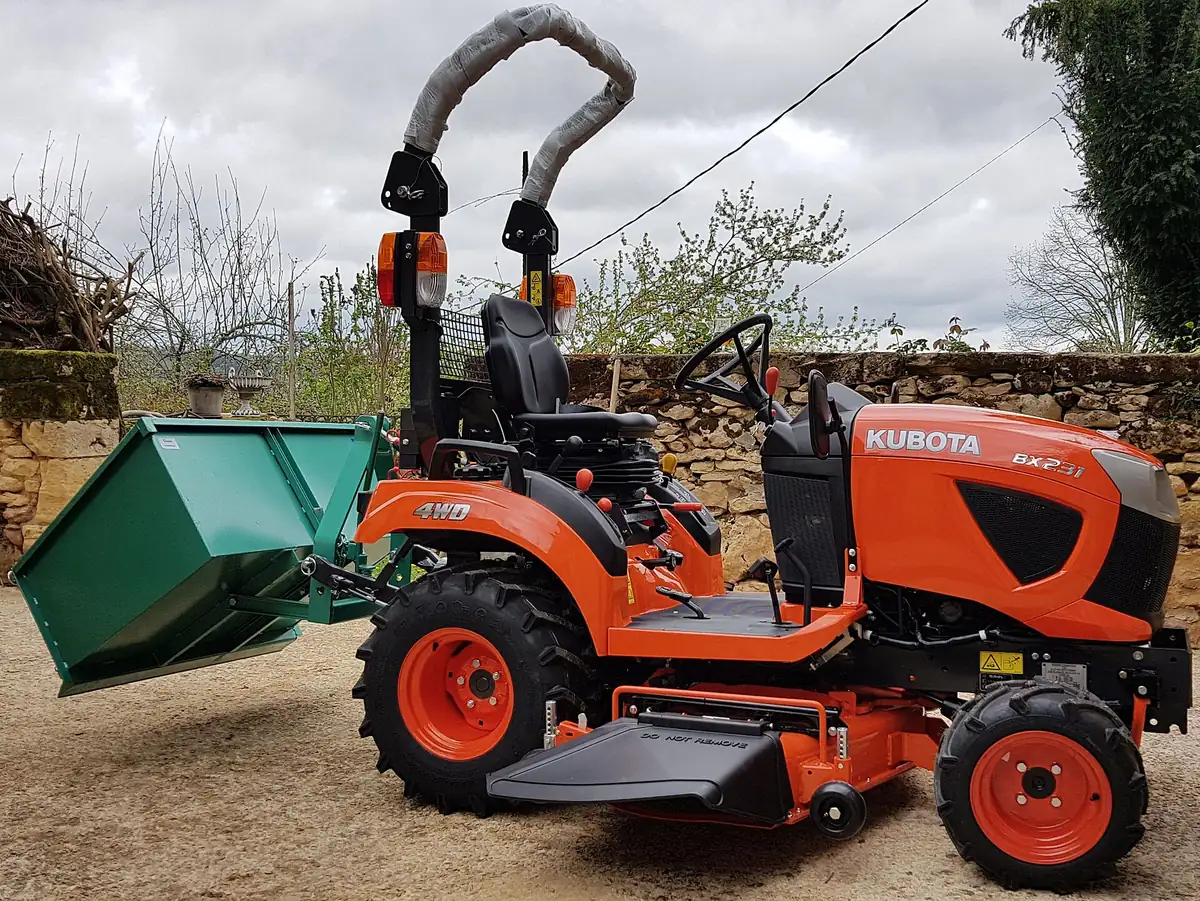
The Kubota BX series is Kubota’s line of sub-compact tractors: small, 4WD diesel tractors with hydrostatic transmissions, a mid PTO for belly mowers and a rear PTO and 3-point hitch for small implements. The current BX80 lineup includes the BX1880, BX2380 and BX2680, plus the BX23S, which comes as a dedicated tractor-loader-backhoe (TLB). Engines range from about 16.6 to 24.8 gross horsepower.
A BX is built for mowing, moving mulch and gravel, clearing snow, light tilling and digging on homesteads and hobby farms of roughly a few acres. This guide covers each model’s key specs, features, attachments, pros and cons, pricing factors and who the BX actually suits. All specs come from Kubota’s published spec sheets and brochures; we haven’t run our own tests.
Key takeaways
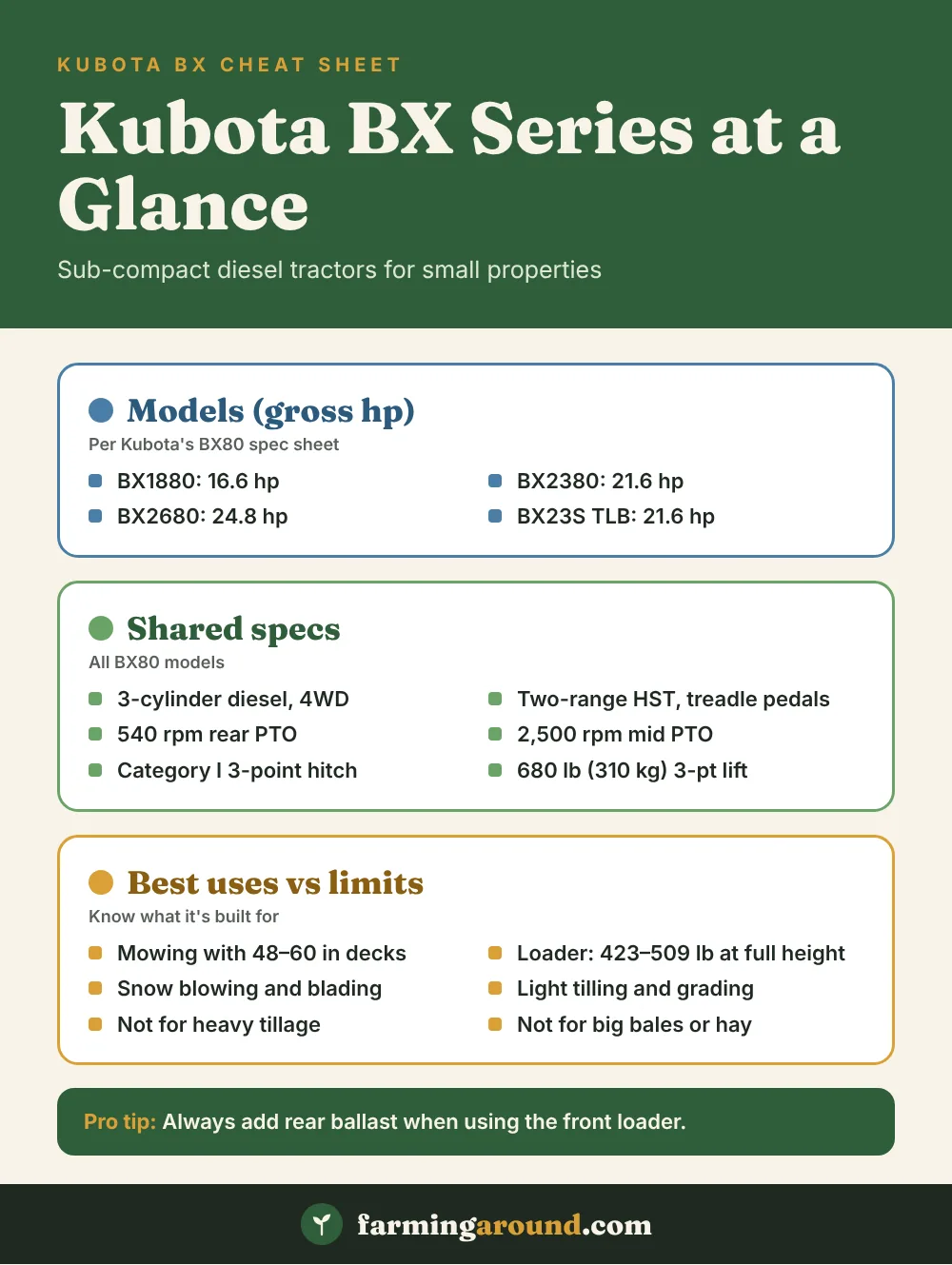
- Four models: BX1880 (16.6 hp), BX2380 (21.6 hp), BX2680 (24.8 hp on Kubota’s spec sheet) and the BX23S TLB (21.6 hp).
- All share a 3-cylinder Kubota diesel, 4WD, a two-range HST, a 540 rpm rear PTO, a 2,500 rpm mid PTO and a Category I 3-point hitch.
- Best for mowing, loader chores, snow and light ground work on small properties.
- Not for heavy tillage, big implements or large acreage. Step up to a compact tractor for that.
In this guide
Kubota BX Models Compared
| Spec | BX1880 | BX2380 | BX2680 | BX23S (TLB) |
|---|---|---|---|---|
| Engine | Kubota D722 | Kubota D902 | Kubota D1005 | Kubota D902 |
| Displacement | 43.9 cu in (719 cc) | 54.8 cu in (898 cc) | 61.1 cu in (1,001 cc) | 54.8 cu in (898 cc) |
| Gross hp | 16.6 hp (12 kW) | 21.6 hp (16.1 kW) | 24.8 hp (18.5 kW) | 21.6 hp (16.1 kW) |
| PTO hp | 13.7 hp (10.2 kW) | 17.7 hp (13.2 kW) | 19.5 hp (14.5 kW) | 17.7 hp (13.2 kW) |
| Weight with ROPS | 1,336 lb (606 kg) | 1,443 lb (650 kg) | 1,521 lb (670 kg) | 1,600 lb (725 kg)* |
| Front / rear turf tires | 16×7.5-8 / 24×12-12 | 18×8.5-10 / 26×12-12 | 18×8.5-10 / 26×12-12 | 18×8.5-10 / 26×12-12 |
| Mid-mount mower decks | 48 in or 54 in | 54 in or 60 in | 54 in or 60 in | 54 in or 60 in |
| Cruise control | Optional | Standard | Standard | Standard |
*BX23S weight is listed with front guard and control valve. Kubota’s US website currently lists the BX2680 at 23.3 hp in one place and 24.8 hp in another; we’ve used the spec-sheet figure. Confirm current figures with your dealer.
Shared Specs Across the BX Series
| Spec | All BX80 models |
|---|---|
| Engine type | Liquid-cooled, 3-cylinder Kubota diesel |
| Drive | 4WD |
| Transmission | Hydrostatic (HST), high/low range, twin treadle pedals |
| Rear PTO | 540 rpm |
| Mid PTO | 2,500 rpm |
| 3-point hitch | SAE Category I |
| 3-point lift capacity | 680 lb (310 kg) at 24 in (610 mm) behind the lift points |
| Hydraulic pump flow | 6.2 gpm (23.5 L/min) |
| Fuel tank | 6.6 gal (25 L) |
| Wheelbase | 55.1 in (1,400 mm) |
| Turning radius (no brake) | 7.5 ft (2.3 m) |
Key Features
Three-cylinder diesel engines
Every BX uses a Kubota-built, liquid-cooled 3-cylinder diesel. Three cylinders run smoother than the 2-cylinder gas engines found on many garden tractors, and diesel gives strong low-speed torque for loader work and PTO implements.
Hydrostatic transmission and treadle pedals
The HST has two ranges (low for loader and ground work, high for travel and mowing) and is driven with two foot pedals: one for forward, one for reverse. There’s no clutching between directions, which makes loader work fast and easy for beginners. Cruise control, standard on all but the BX1880, holds a steady ground speed for mowing.
Mid-mount mowers
Kubota’s Easy-Over mid-mount decks come in 48, 54 and 60 inch widths, depending on the model, and are designed so you can drive over the deck to attach it. Mulching and bagging kits are available. If mowing is your main job, the BX’s mid PTO is its biggest advantage over larger compact tractors, many of which can’t run a belly mower.
Cab and comfort options
All models come with a foldable ROPS. A dealer-installed cab is available with a heater, LED work lights and a front wiper, which is worth considering if you’ll clear snow regularly.
Pro tip: before you buy, measure your shed or garage door and gate openings, then compare them with the dealer’s height and width figures for the exact setup you want (ROPS up or folded, with or without a cab and loader).
Loader and Backhoe
Most BX tractors are sold with a front loader. Kubota’s Swift-Tach system lets you attach or remove the loader from the seat, without tools, in four steps.
| Loader | Bucket mount | Lift capacity at max height (500 mm forward) |
|---|---|---|
| LA340 / LA344 | Pin-on | 509 lb (231 kg) |
| LA340S / LA344S | Quick attach | 423 lb (192 kg) |
That’s plenty for mulch, compost, soil, gravel and firewood, but not for heavy round bales or big rocks. Add rear ballast (a weight box or loaded tires) whenever you use the loader; it improves stability and traction.
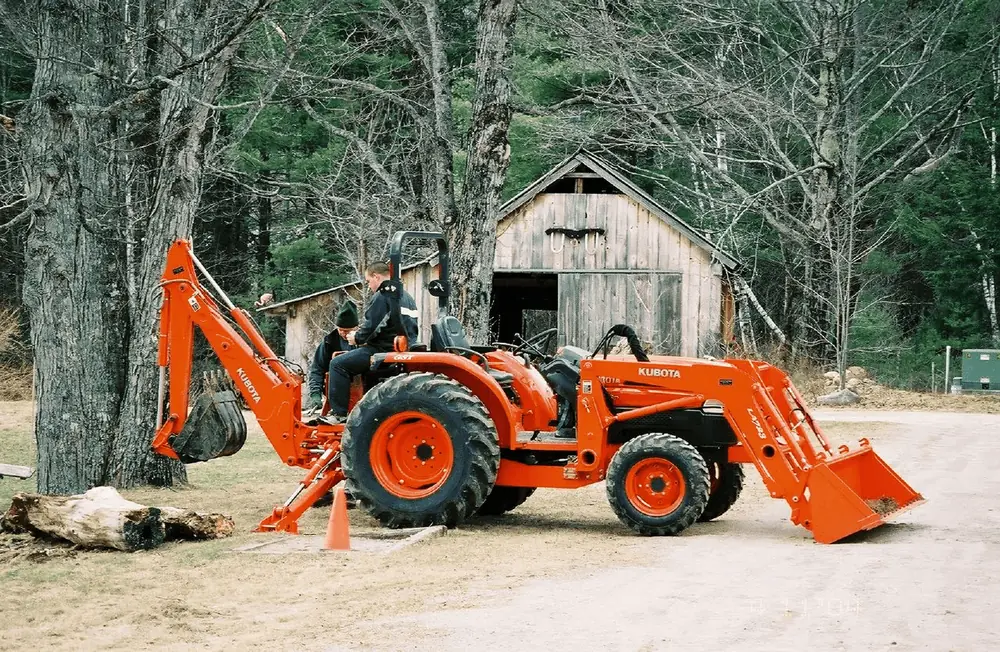
The BX23S is a dedicated TLB that comes with both a loader and a backhoe, with a maximum digging depth of about 6 ft 1 in (1,842 mm). It suits owners who’ll dig drainage trenches, post holes, small ponds or stumps often enough to justify a backhoe. Turning compost? A loader makes it far quicker; see our guide to building a compost pile.
Watch: The Kubota BX Series in Action
Kubota’s own overview video shows the BX series and its main features.
Attachments
- Front (4-point front hitch): 48, 50 and 55 inch snow blowers, a 60 inch sweeper and a 60 inch front blade.
- Loader: quick coupler, third-function valve (for a grapple), bucket level indicator, pallet forks, combo buckets, claw grapples and snow pushers from Kubota’s Land Pride brand.
- Mid-mount: 48, 54 or 60 inch mower decks with mulch and bagger kits.
- Rear (Category I 3-point): small tillers, box blades, rear blades, rotary cutters and rear snow blowers sized for sub-compact tractors.
Match rear implements to the tractor’s PTO horsepower and 680 lb (310 kg) lift capacity. A tiller or cutter built for a 40 hp compact tractor will be too heavy and too wide for any BX.
Pros and Cons
| Pros | Cons |
|---|---|
| Small, light and nimble, with a 7.5 ft (2.3 m) turning radius | Light weight limits traction and pushing power |
| Smooth 3-cylinder diesel engines | Category I hitch and 680 lb lift limit implement size |
| Easy two-pedal HST; cruise control on most models | Modest loader capacity (423–509 lb at full height) |
| Belly mower option, uncommon on bigger tractors | Small 6.6 gal (25 L) fuel tank |
| Swift-Tach loader removes from the seat | Low ground clearance (7.6–8.9 in / 193–225 mm) on rough ground |
| Wide dealer network in the US, Canada, UK and Australia | Not built for heavy tillage or larger acreage |
Price and What Affects It
At the time of writing, Kubota’s US website lists starting MSRPs of about $12,800 for the BX1880, $16,600 for the BX2380 and $17,600 for the BX2680; the BX23S isn’t priced on that page. Those are base prices for the tractor alone. What you actually pay depends on:
- The loader, mower deck, backhoe or cab you add
- Tire choice (turf, bar or industrial)
- Dealer pricing, freight and setup fees
- Seasonal financing offers and promotions
- Your country: prices and model names differ outside the US (in Europe, for example, BX models carry names such as the BX231)
Ask at least two dealers for a written, out-the-door quote on the exact package you want. The spec sheet we reviewed lists a general warranty of 24 months or 1,500 hours; confirm current warranty terms with your dealer, as they can change.
Which BX Model Should You Buy?
| If you mainly want to… | Consider |
|---|---|
| Mow a large lawn and do light loader chores | BX1880 |
| Mow, run a loader and use small rear implements | BX2380 |
| Get the most power for snow blowing, tilling and loader work | BX2680 |
| Dig trenches, post holes or stumps regularly | BX23S |
Many buyers choose the BX2380 as a middle ground. If you expect to run a tiller or snow blower often, the extra horsepower of the BX2680 is worth a test drive.
Who the Kubota BX Is Best For
A BX makes the most sense if your property is somewhere between a big suburban lot and a small hobby farm, and most of your jobs are maintenance rather than heavy field work. Typical BX owners:
- Mow a lot of grass and want one machine that also moves materials and clears snow.
- Keep a large vegetable garden and need to haul compost, wood chips and soil. A small rear tiller can prepare beds, though our raised bed vegetable garden guide shows a no-till route too.
- Keep a few animals and need to move bedding, manure and feed around a barn.
- Have tight spaces such as narrow gates, wooded trails or a small garage where a bigger tractor won’t fit.
A BX is probably the wrong choice if you plan to make hay, plow or disk large areas, move round bales or work steep, rough ground every day. In those cases the extra weight, ground clearance and hitch capacity of a compact or utility tractor pay off quickly.
Maintenance Basics
Sub-compact diesels are simple to look after if you stick to the schedule in the operator’s manual. The routine checks are the same as for any small tractor:
- Before each use: check engine oil and coolant, look for leaks and loose bolts, and check tire pressure.
- Regularly: grease the loader, front axle and mower deck fittings, clean the radiator screen and air filter, and drain water from the fuel filter.
- At the intervals in the manual: change engine oil and filter, hydraulic/transmission fluid and filters, and fuel filters.
- Before winter: use winter-grade diesel or an additive where it gets cold, and keep the battery charged.
Keep a simple log of hours and service dates. It helps with warranty claims and resale value.
BX vs B Series
Kubota’s B series is the next size up: compact rather than sub-compact tractors that are heavier, more powerful and better at ground engaging work, with bigger loaders. The trade-off is size. Most B series tractors can’t run a belly mower the way a BX can, and they need more storage space. If you have more than a few acres, plan to till large gardens or move heavy materials, compare both. Our guide to the best tractor for a small farm walks through sub-compact, compact and utility tractors side by side, and homesteading on an acre shows what a tractor-free small setup can look like.
Safety first: keep the ROPS up and wear the seat belt, carry loader buckets low, add rear ballast and avoid steep side slopes. Small tractors can tip more easily than people expect. Read the operator’s manual before your first job.
Helpful gear for this guide
Handy picks that match the advice above.
Links go to Amazon. Prices and availability change, so check reviews and fit for your setup before buying.
At a Glance: Kubota BX Series
FAQ
What is the Kubota BX series?
It’s Kubota’s sub-compact tractor line: small 4WD diesel tractors with hydrostatic transmissions, mid and rear PTOs and a Category I 3-point hitch, built for mowing, loader work and light chores on small properties.
How much horsepower does a Kubota BX have?
Kubota’s spec sheet lists 16.6 gross hp for the BX1880, 21.6 hp for the BX2380 and BX23S, and 24.8 hp for the BX2680.
How much can a Kubota BX loader lift?
Kubota lists the LA340 and LA344 pin-on loaders at 509 lb (231 kg) at full height, 500 mm forward, and the quick-attach versions at 423 lb (192 kg).
What’s the difference between the BX2380 and BX2680?
The BX2680 has a larger D1005 engine with more horsepower (24.8 vs 21.6 gross hp on the spec sheet) and is slightly heavier. Both share the same transmission, PTOs, hitch and mower deck options.
Is a Kubota BX big enough for a small farm?
For mowing, loader chores, snow and light ground work on a few acres, yes. For heavy tillage, hay or large acreage, a compact or utility tractor is a better fit.
Can a Kubota BX use a backhoe?
The BX23S is the dedicated backhoe model, with a digging depth of about 6 ft 1 in (1,842 mm).

One Comment