

Last updated: October 2026
This guide contains affiliate links. As an Amazon Associate, FarmingAround earns from qualifying purchases, at no extra cost to you.
Before you buy mini goats for sale, decide what you want them for (milk, pets or brush clearing), then buy at least two healthy goats from a breeder who can show negative tests for CAE, CL and Johne’s disease. The most common miniature breeds are the Nigerian Dwarf (a small dairy goat), the Pygmy (a stocky pet and meat type) and the miniature dairy breeds created by crossing Nigerian Dwarfs with standard dairy goats. Most mini goats stand under about 2 ft (61 cm) at the shoulder and live 10–15 years.
This buying guide compares the main mini goat breeds, explains where to find good stock and what to check before you pay, and covers the care and setup your goats need once they’re home.
Key takeaways
- Pick the breed for the job: Nigerian Dwarfs and mini dairy goats for milk, Pygmies for pets and brush.
- Never buy just one. Goats are herd animals and a lone goat is stressed and noisy.
- Ask for test results for CAE, CL and Johne’s, plus proper official ID.
- Wethers make the easiest pets; does are for milk and kids; leave bucks to experienced keepers.
In this guide
Mini Goat Quick Facts
| Trait | Typical miniature goat |
|---|---|
| Main breeds | Nigerian Dwarf, Pygmy, miniature dairy breeds (Mini Nubian, Mini LaMancha and others), Kinder, Pygora, Miniature Silky Fainting |
| Height | Roughly 16–25 in (41–64 cm) at the withers, depending on breed |
| Uses | Milk, pets, brush clearing, fiber (Pygora), small-scale meat |
| Lifespan | Generally 10–15 years |
| Herd size | Minimum of two goats |
| Temperament | Friendly, curious and playful when handled young |
| Main US registries | ADGA and AGS (Nigerian Dwarf), NPGA (Pygmy), MDGA and TMGR (miniature dairy) |
Mini Goat Breeds Compared
“Mini goat” isn’t one breed. Sellers use it for several very different animals, so know what you’re looking at:
| Breed | Size guide | Best for |
|---|---|---|
| Nigerian Dwarf | AGS limit: does up to 22.5 in (57 cm), bucks up to 23.5 in (60 cm) | Rich milk, family homesteads, pets |
| Pygmy | NPGA does 16–22⅜ in (41–57 cm) | Pets, brush clearing, petting farms |
| Miniature dairy breeds (Mini Nubian, Mini LaMancha, Mini Alpine, Mini Saanen and others) | “Mid-size”: between a Nigerian Dwarf and a standard dairy goat | More milk than a Nigerian in a smaller body than a full-size goat |
| Kinder | Mid-size (Pygmy × Nubian origin) | Dual-purpose milk and meat |
| Pygora | Small to mid-size (Pygmy × Angora origin) | Fiber |
| Miniature Silky Fainting | MSFGA: does up to 23.5 in (60 cm), bucks up to 25 in (64 cm) | Pets, show; long silky coat |
Two of these have their own full profiles on our site: the Nigerian Dwarf goat and our Pygmy goat buying guide. Fainting goats, including the miniature silky type, are explained in why fainting goats faint.
Where Mini Goats Come From
Both the Nigerian Dwarf and the Pygmy descend from the small West African Dwarf goats of West and Central Africa. Goats of this type were brought to North America in the 20th century, and breeders gradually split them into two types: a fine-boned dairy goat that became the Nigerian Dwarf and a broad, cobby goat that became the Pygmy.
The miniature dairy breeds are newer. The Miniature Dairy Goat Association’s stated goal is “a mid-size dairy goat that, other than the smaller size, looks like the standard-sized breed.” They’re created by crossing standard dairy goats such as Nubians, LaManchas and Alpines with Nigerian Dwarfs, then breeding the crosses on over several generations. That’s why you’ll see sellers describe kids by generation, such as “F1” or “F3”; later generations are generally more consistent in type.
Temperament
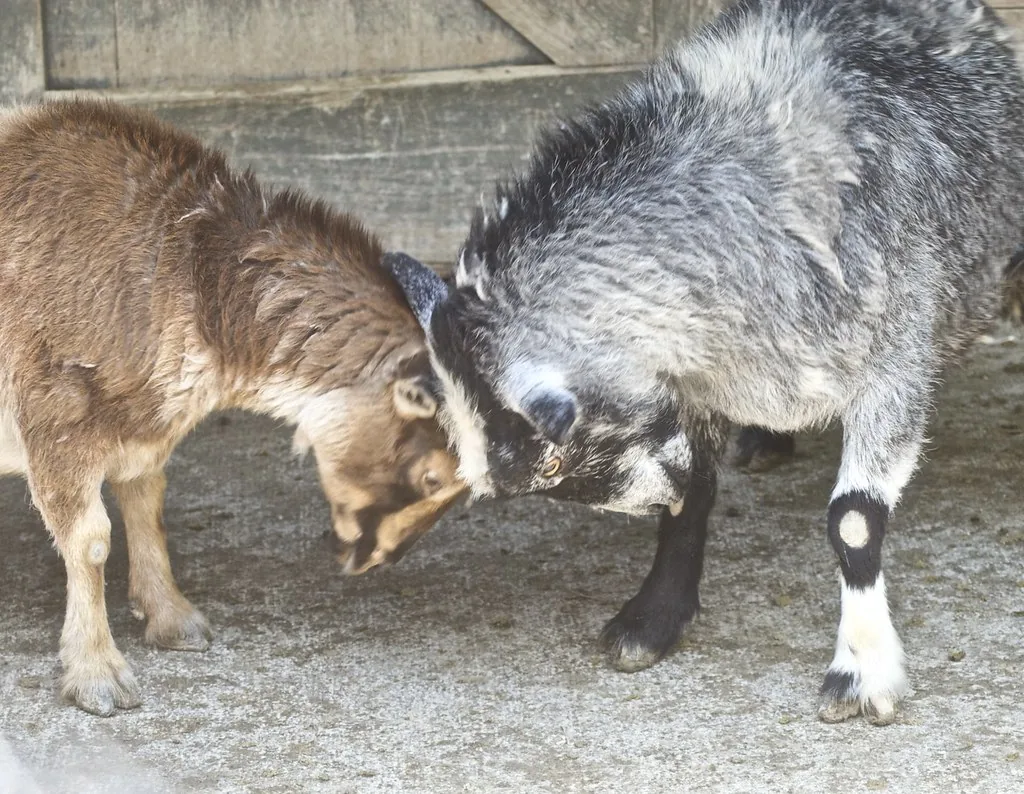
Well-handled mini goats are affectionate, curious and entertaining. They love to climb, jump and play-fight, so they need things to do, like stumps, cable spools, ramps and plenty of browse. A bored goat will test every fence and gate you own.
Personality varies by sex as much as by breed. Does and wethers are usually calm and easy to handle. Intact bucks smell strongly during the breeding season, urinate on themselves and can get pushy, so they’re best left to people who plan to breed.
Watch: Miniature Goats on the Farm
This ABC Landline report from Australia looks at the growing popularity of miniature goats and the people who breed them.
Where to Find Mini Goats for Sale
- Registered breeders. Breed associations such as ADGA, AGS, NPGA and MDGA list member herds. Registered goats cost more, but you get known parentage and, usually, better health records.
- Goat shows and 4-H fairs. A good place to compare quality and meet breeders in person.
- Local goat clubs and farms. Often have wethers and retired does at friendly prices.
- Online classifieds and sale barns. Be careful. Auction goats come with unknown health histories and are a common way to bring disease into a herd.
Prices vary widely by breed, registration, milk records and region, so compare several breeders before you commit.
Buying Checklist: What to Check Before You Pay
- Herd health tests. Ask for recent negative blood tests for CAE (caprine arthritis encephalitis), CL (caseous lymphadenitis) and Johne’s disease. None of these have a cure.
- Official ID. In the US, many goats need official scrapie identification (an ear tag or tattoo) to change hands or move between states. Ask the seller how their goats are identified.
- Bright and alert. Clear eyes, a clean nose, a glossy coat and good body condition.
- No lumps or abscesses, especially around the jaw, neck and shoulders, which can be a sign of CL.
- Healthy feet and legs. Trimmed hooves, a sound walk and no limping.
- Clean rear end. Diarrhea or a dirty tail can point to parasites or illness.
- Pale-eye check. Pink inner eyelids are good; very pale lids can mean anemia from barber pole worms.
- Records. Dates of vaccinations, deworming, disbudding and, for does, kidding and milk history.
- Weaning age. Kids should be eating hay and solid feed well before they leave their mother.
Quarantine new goats. Keep new arrivals apart from your existing herd for about 30 days and watch them for coughing, diarrhea, lumps or poor appetite before you let them mix.
Setting Up for Your New Goats
- Fencing: sturdy woven wire or welded goat panels about 4 ft (1.2 m) tall. Mini goats are excellent jumpers and climbers, and they’ll squeeze through gaps.
- Shelter: a dry, draft-free shed with clean bedding. Goats hate rain and need somewhere to get out of it.
- Feed: good-quality hay or browse as the base of the diet, clean water and a loose mineral made for goats. Our guide on what goats can eat covers safe foods and toxic plants.
- Routine care: hoof trimming as needed, a vaccination plan from your vet (commonly CD&T) and fecal tests to guide deworming.
Pro tip: If you’re buying wethers as pets, ask your vet about diet. Male goats can develop urinary stones, and too much grain is a common cause, so keep treats and concentrates modest.
Outside the US, check local rules before you bring goats home. In the UK, keepers must register their land with a County Parish Holding (CPH) number and identify their goats; in Australia, you’ll need a Property Identification Code (PIC) and National Livestock Identification System (NLIS) tags. Local zoning, council or HOA rules can also limit goats on small properties.
Pros and Cons of Mini Goats
| Pros | Cons |
|---|---|
| Small, easy to handle and good with children | Need strong fencing; escape artists |
| Need less space and feed than full-size goats | Must be kept in pairs or groups |
| Nigerian Dwarf and mini dairy goats give rich milk | Small teats can make hand milking slower |
| Long-lived, friendly companions | 10–15 year commitment |
| Good for brush and weed control | Will strip garden plants, young trees and bark if given the chance |
Who Mini Goats Suit
Mini goats suit small homesteads, families with children and anyone who wants a few dairy animals without the size of full-size goats. Choose Nigerian Dwarfs or a miniature dairy breed if milk matters, Pygmies or wethers of any mini breed if you mainly want friendly pets, and Pygoras if you spin fiber. To compare minis with full-size breeds, see our overview of types of goats.
Helpful gear for this guide
Handy picks that match the advice above.
Links go to Amazon. Prices and availability change, so check reviews and fit for your setup before buying.
At a Glance
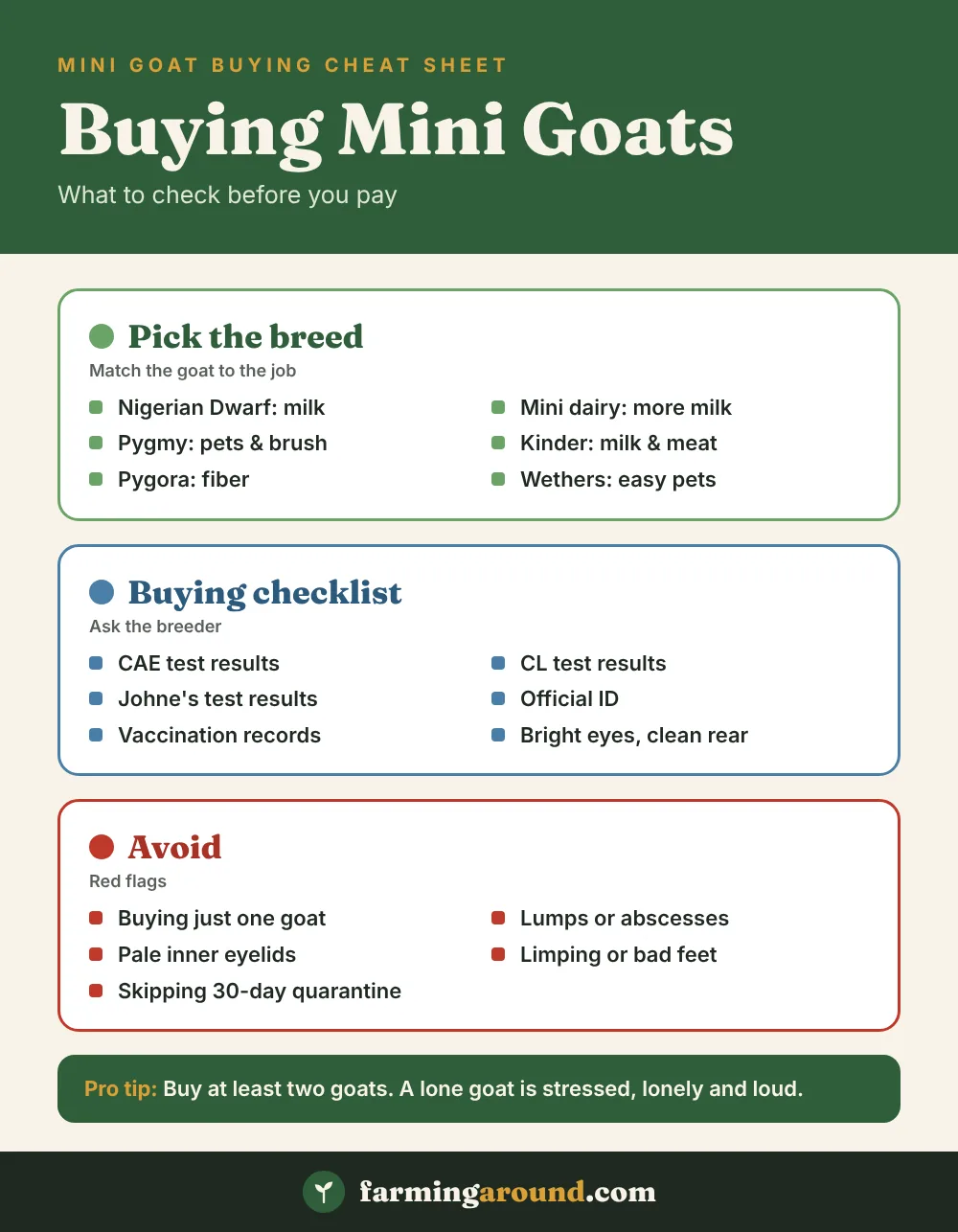
Save this checklist for your next farm visit:
FAQ
What is the smallest goat breed?
The Nigerian Dwarf and Pygmy are the smallest common breeds. Under AGS limits, Nigerian Dwarf does stand up to 22.5 in (57 cm), and NPGA Pygmy does stand 16–22⅜ in (41–57 cm).
How many mini goats should I buy?
At least two. Goats are herd animals, and a single goat is lonely, stressed and often very loud.
Are mini goats good pets?
Yes, if you have secure fencing and shelter. Wethers and does that were handled as kids are usually the friendliest.
Do mini goats give milk?
Nigerian Dwarfs and the miniature dairy breeds are dairy goats and give rich milk. Pygmies produce only small amounts and are kept mainly as pets or for meat.
What tests should a mini goat have before I buy?
Ask for recent negative herd tests for CAE, CL and Johne’s disease, plus vaccination and deworming records and proper ID.
What’s the difference between a Pygmy and a Nigerian Dwarf?
Pygmies are stocky, short-legged and kept for pets and meat. Nigerian Dwarfs are slimmer, longer-legged dairy goats that can be almost any color.
Sources
- Goat Journal: Miniature Goat Breeds, What Exactly Makes a Goat Miniature?
- USDA APHIS: Scrapie
- Merck Veterinary Manual: Management of Goats
For health testing, vaccinations and diet, consult a veterinarian or your local extension office.

One Comment