
Last updated: October 2026
This guide contains affiliate links. As an Amazon Associate, FarmingAround earns from qualifying purchases, at no extra cost to you.
To start a vegetable garden, pick a spot with at least 6–8 hours of direct sun, start small (a 10 × 10 ft / 3 × 3 m plot or one or two raised beds), improve the soil with 2–4 inches (5–10 cm) of compost, and plant a handful of easy crops you actually like to eat, timed to your local frost dates. Then water consistently, mulch, and pull weeds while they’re small.
That’s the whole recipe. Below, each step is broken down with the details beginners usually miss: how to test soil, what to plant first, when to plant in your zone, and the mistakes that cost new gardeners the most time and money.
Key takeaways
- Sun matters most: fruiting crops like tomatoes and squash want about 8 hours; leafy greens get by with less.
- Start small: a well-tended small garden out-produces a big neglected one.
- Feed the soil: test it, then work in compost before planting.
- Time it by frost dates: cool-season crops go in before the last frost, warm-season crops after it.
In this guide
Step 1: Choose a Sunny Site
Watch your yard for a day and note where the sun falls. Most vegetables need 6–8 hours of full sun, and Oregon State University Extension notes that fruiting crops (tomatoes, peppers, cucumbers, squash, eggplant and melons) need about 8. Leafy greens and herbs tolerate partial shade.
- Pick a high, well-drained spot. Low areas stay soggy and collect cold air on frosty nights.
- Stay close to water. If you have to drag a hose across the yard, you’ll water less.
- Avoid tree roots and shade from buildings, and keep away from spots where old paint or treated wood may have contaminated the soil.
- Keep it visible. A garden you pass every day gets checked every day.
Step 2: Start Small and Pick a Garden Type
The number one beginner mistake is starting too big. Oregon State suggests a 10 × 10 ft (3 × 3 m) plot for a first garden, which takes roughly 40 minutes a week of planting and tending plus time for watering, or even a single large container about 2 ft (60 cm) across and 18 in (45 cm) deep for salad greens.
| Garden type | Best for | Watch out for |
|---|---|---|
| In-ground plot | Good, well-drained soil; larger spaces; low cost | More weeding; heavy soil takes time to improve |
| Raised beds | Poor, clay or rocky soil; less bending; tidy look | Cost of frames and soil; dry out faster |
| Containers | Patios, balconies, renters | Daily watering in summer; use potting mix, not garden soil |
Whichever type you choose, our vegetable planting calendar shows when to sow each crop. Building beds? Our raised bed vegetable garden guide covers sizes, materials and soil.
Step 3: Test and Prepare the Soil
- Test your soil. A basic test through your local extension office shows pH and nutrient levels. Most vegetables grow best around pH 6.0–7.0. If soil is acidic, lime is best added in fall so it has time to work.
- Clear the area. Remove sod with a spade, or smother grass with cardboard and mulch for a few months (a great fall project).
- Check that the soil is workable. Squeeze a handful: if water drips out or it forms a sticky ball, wait. Digging wet soil ruins its structure.
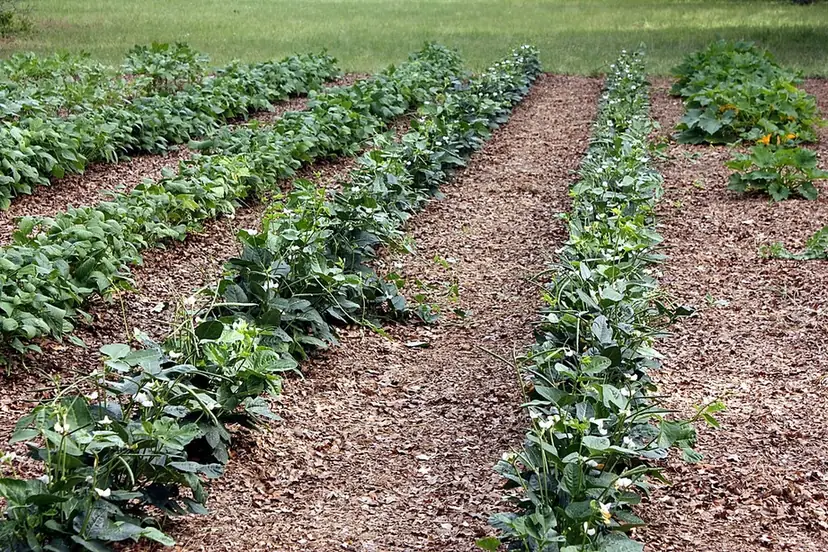
- Add organic matter. Spread 2–4 in (5–10 cm) of compost and mix it into the top 6–8 in (15–20 cm). Heavy ground benefits most; see compost for clay soil.
- Rake smooth and mark out beds and paths. Beds about 3–4 ft (90–120 cm) wide let you reach the middle without stepping on the soil.
Pro tip: Starting in autumn? It’s the best time to prepare. Smother the grass, add compost, test the soil and sow a winter cover crop. By spring you’ll have soft, ready-to-plant beds.
Step 4: Choose Easy Vegetables
Grow what you like to eat, plus a few quick wins. Fast crops that mature in about 50 days or less, like lettuce, give early success while you wait for slower crops.
| Crop | Season | Plant as | Why it’s easy |
|---|---|---|---|
| Radishes | Cool | Seed | Ready in about a month |
| Leaf lettuce | Cool | Seed or transplants | Cut-and-come-again harvests |
| Peas | Cool | Seed | Sow early; fix their own nitrogen |
| Swiss chard | Cool to warm | Seed | Produces for months |
| Bush beans | Warm | Seed | No staking, heavy yields |
| Zucchini | Warm | Seed or transplants | One or two plants feed a family |
| Tomatoes | Warm | Transplants | Take 75–90 days, so buy plants |
| Herbs (basil, parsley, chives) | Varies | Transplants | Expensive to buy, easy to grow |
Check our companion planting chart to see which of these grow well side by side.
Step 5: Plant at the Right Time
Your USDA hardiness zone describes winter cold, but planting dates come from your average last spring frost and first fall frost. Look these up for your town (your extension office or a frost-date tool) and plan around them.
- Cool-season crops (peas, lettuce, spinach, radishes, kale, broccoli) go in from a few weeks before the last frost. Peas can germinate in soil around 35°F (2°C).
- Warm-season crops (beans, tomatoes, peppers, squash, cucumbers, basil) go in after the last frost once soil warms: about 50°F (10°C) for beans, 55°F (13°C) for tomatoes and peppers, and 60°F (16°C) or more for basil.
- Seeds or transplants? Sow root crops, beans, peas and greens directly. Buy transplants of tomatoes, peppers and eggplant for your first year.
- Fall planting: many cool-season crops can be sown again in late summer for an autumn harvest. See fall garden vegetables.
Southern Hemisphere: flip the calendar. In Australia, New Zealand and South Africa, spring planting runs roughly September–November and fall crops go in around February–April, still timed to your local frost dates. In frost-free tropical areas, plant warm-season crops in the cooler, drier months.
Step 6: Water, Mulch and Weed
- Water deeply and consistently. A common rule of thumb is about 1 in (2.5 cm) of water a week from rain or irrigation, more in hot, dry or sandy conditions. Dig down 6–8 in (15–20 cm) to check moisture rather than guessing.
- Water the soil, not the leaves. Drip lines or soaker hoses are ideal. If you must water overhead, do it in the morning so foliage dries before night.
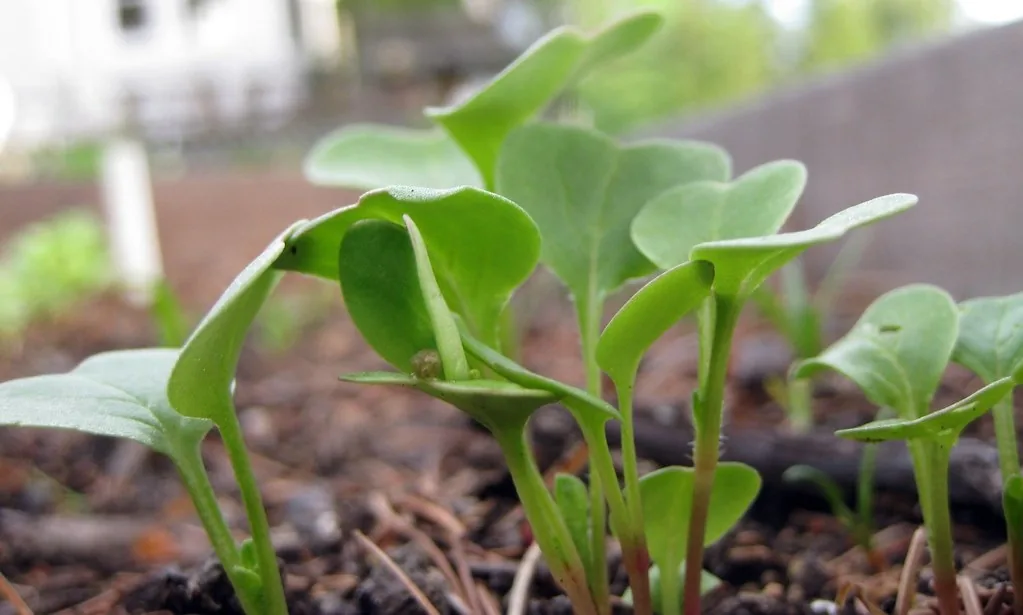
- Mulch with straw, shredded leaves or grass clippings (from untreated lawns) once plants are up, to hold moisture and smother weeds.
- Weed weekly while weeds are tiny. Ten minutes a week beats an afternoon a month.
- Feed lightly. Compost covers a lot. Heavy feeders like tomatoes and leafy greens appreciate a balanced fertilizer; beans and peas need little.
- Keep notes. Write down what you planted, when, and how it did. It’s the fastest way to improve next year.
Watch: how to get started
GrowVeg’s video on setting up a new vegetable garden is a useful visual walk-through of the early steps.
Beginner Mistakes to Avoid
- Going too big. Start small enough to keep up with, then expand.
- Too little sun. Shade means few tomatoes and peppers, whatever you do.
- Planting too early. Cold soil rots seeds and stunts warm-season crops. Wait for warm soil.
- Working wet soil or planting in a low, soggy spot.
- Using garden soil in containers. It compacts; use potting mix.
- Overcrowding. Follow seed-packet spacing; crowded plants get more disease.
- Watering late in the day overhead, which encourages leaf diseases.
Watch out for treated wood and old paint. Don’t build beds from railroad ties, and avoid growing food right next to old painted buildings where lead may be in the soil. A soil test can check for lead if you’re unsure.
Helpful gear for this guide
Handy picks that match the advice above.
Links go to Amazon. Prices and availability change, so check reviews and fit for your setup before buying.
Quick Reference: How to Start a Vegetable Garden
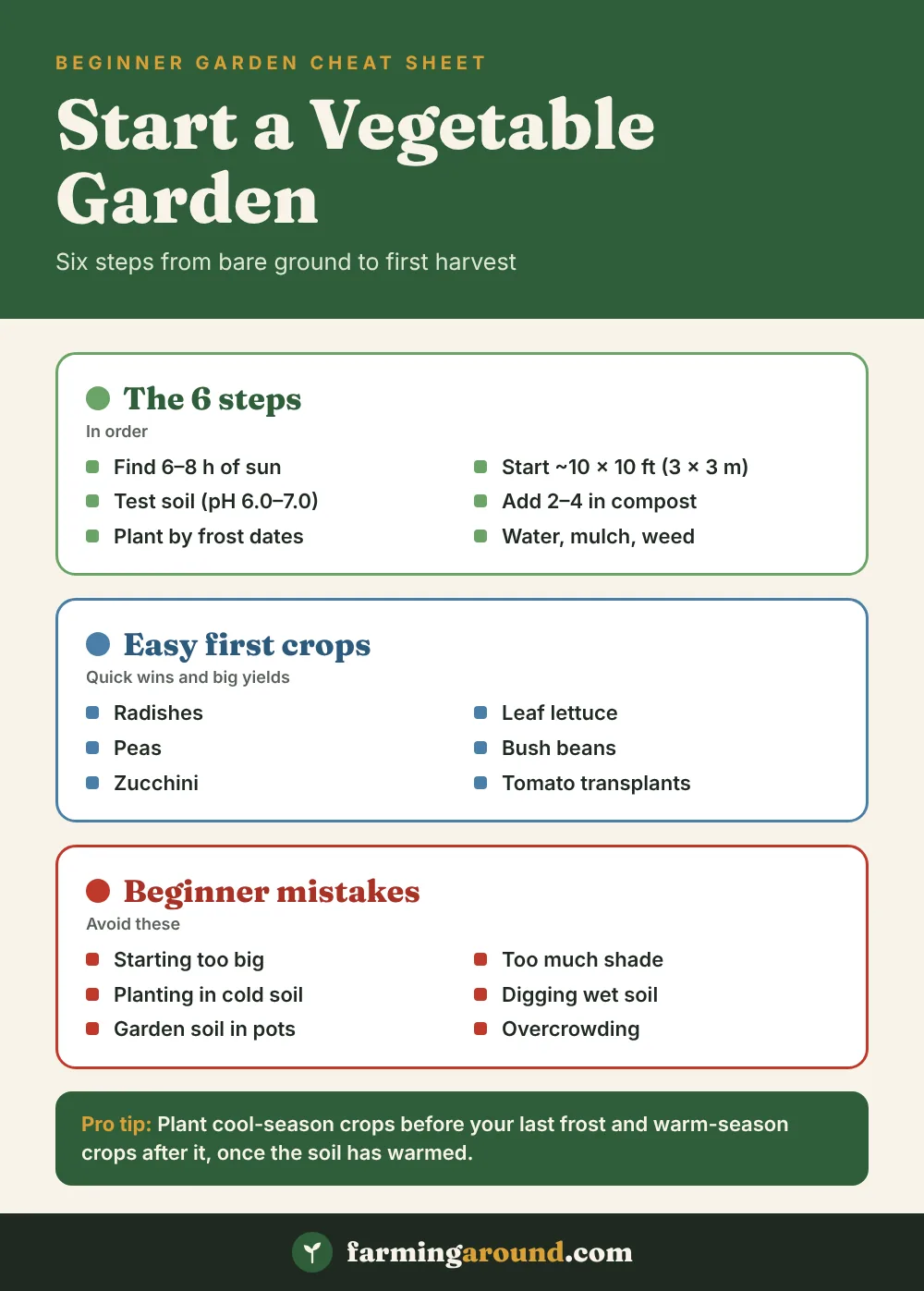
Here’s the whole process on one card. Save it for planting day.
FAQ
What is the easiest vegetable garden to start?
A small raised bed or a 10 × 10 ft (3 × 3 m) plot planted with lettuce, radishes, bush beans, zucchini, a couple of tomato plants and some herbs.
When should I start a vegetable garden?
Prepare the site in fall or early spring, plant cool-season crops a few weeks before your last frost, and plant warm-season crops after it. In the Southern Hemisphere, spring planting is roughly September–November.
Do I need to till my garden?
Not necessarily. Many gardeners smother grass with cardboard and pile compost on top (no-dig gardening), which protects soil structure and cuts weeds.
How much does it cost to start a vegetable garden?
It can be very cheap in the ground with seeds and homemade compost; raised beds, bought soil and transplants cost more. Start small and add as you go.
How big should a beginner vegetable garden be?
About 100 sq ft (9 m²), or one or two raised beds, is plenty for a first year.
Sources
- Starting Your Vegetable Garden (Oregon State University Extension)
- Beginning a Vegetable Garden (Penn State Extension)
- Raised Bed Gardening (University of Delaware Cooperative Extension)
Your local extension office can give exact frost dates, soil testing and variety recommendations for your area.
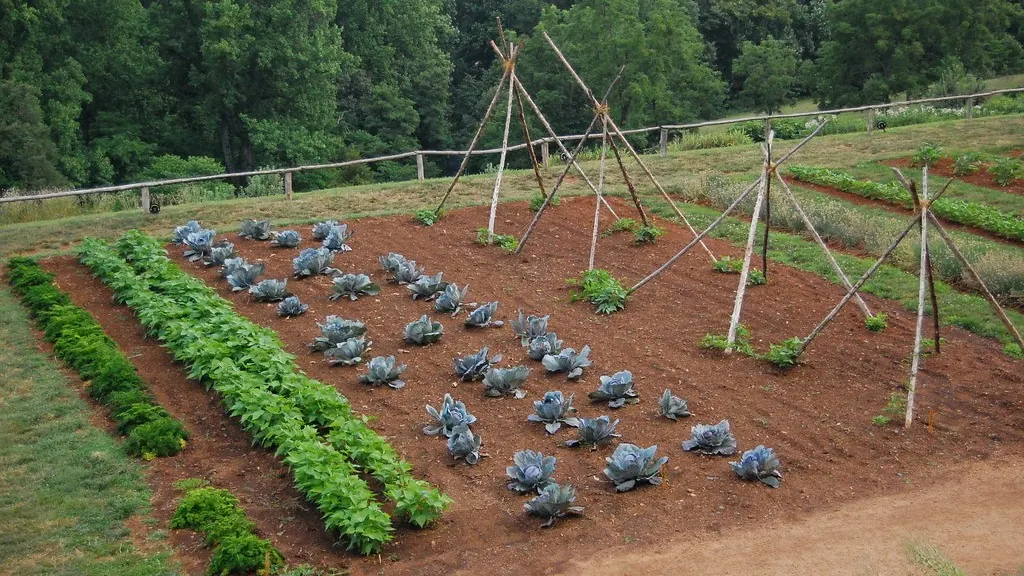
Featured image: Southern Foodways Alliance / CC BY 2.0 via Flickr.