
Last updated: October 2026
This guide contains affiliate links. As an Amazon Associate, FarmingAround earns from qualifying purchases, at no extra cost to you.
The easiest way to propagate plants is from stem cuttings: cut a healthy 4–6 inch (10–15 cm) shoot just below a leaf node, strip the lower leaves, dip the base in rooting hormone, and push it into a moist, free-draining mix under a clear cover. Most soft cuttings root in a few weeks; woody ones can take two to four months. Clump-forming plants are even quicker to multiply by division, and many shrubs and canes root on their own by layering.
This guide covers the main methods, which to use for which plant, the best time of year for each, and how to look after new plants until they’re big enough to plant out.
Key takeaways
- Cuttings, division and layering give an exact copy of the parent plant; seeds of hybrids don’t come true.
- Timing: softwood cuttings in late spring to early summer, semi-hardwood in mid-summer to early fall, hardwood in late fall to winter.
- Keep cuttings humid, warm and out of direct sun in a sterile, well-drained mix.
- Pot up once a cutting resists a gentle tug and has several roots about ½ inch (1 cm) long.
In this guide
Propagation Methods Compared
There are two kinds of propagation. Seed (sexual propagation) mixes genes from two parents, so seedlings can differ from the plant you collected from. Vegetative (asexual) methods, such as cuttings, division and layering, grow new plants from a piece of the parent, so they’re genetically identical to it. That’s why named varieties of shrubs, herbs, fruit and houseplants are almost always propagated vegetatively.
| Method | Best for | Difficulty | Time to a new plant |
|---|---|---|---|
| Softwood stem cuttings | Herbs, many shrubs, perennials, houseplants | Easy | A few weeks |
| Semi-hardwood cuttings | Evergreen shrubs such as camellia, holly, boxwood | Moderate | Several weeks to months |
| Hardwood cuttings | Deciduous shrubs such as forsythia, hydrangea, roses, currants | Easy but slow | A few months (rooted by the next growing season) |
| Leaf cuttings | African violet, snake plant, succulents, peperomia | Easy | Several weeks to months |
| Division | Hostas, daylilies, irises, ornamental grasses, many houseplants | Very easy | Immediate |
| Layering | Raspberries, blackberries, azaleas, forsythia, rhododendrons | Easy | One season |
| Seed | Vegetables, annuals, species plants | Easy to moderate | Varies |
When to Propagate
- Softwood cuttings: late spring to early summer, from fresh, soft new growth that snaps when bent. In much of the US, that’s around May to July.
- Semi-hardwood cuttings: mid-summer to early fall, from this year’s growth that has started to firm up at the base.
- Hardwood cuttings: late fall through winter to early spring, from fully mature, dormant one-year-old stems.
- Division: early spring or fall. As a rule, divide spring bloomers after they flower and summer or fall bloomers in early spring.
- Houseplants: any time, but spring and summer, when light levels are higher, give the fastest rooting.
Exact months shift with your USDA zone. In colder zones the softwood season starts later and the hardwood season starts earlier; warm-zone gardeners can often take cuttings over a longer season. Use your frost dates as a guide: softwood cuttings are ready a few weeks after your last spring frost, once new growth has had time to develop.
Southern Hemisphere note: shift the timing by about six months. Softwood cuttings are taken roughly in November to January, semi-hardwood in late summer to autumn (February to April), and hardwood in late autumn and winter (May to August).
What You Need
- Sharp, clean pruners or a knife. Wipe blades with rubbing alcohol or a 1-part bleach to 9-parts water solution.
- Rooting mix: sterile and free-draining, such as 1 part peat or coir to 1–2 parts perlite, or a mix of peat and coarse sand. Don’t use garden soil, and avoid straight vermiculite, which stays too wet.
- Pots or trays with drainage holes.
- Rooting hormone (powder, gel or liquid). It isn’t essential for easy plants, but it improves rooting percentage and speed on most others.
- A humidity cover: a clear plastic bag, a cut-off clear bottle or a propagator lid.
- A pencil or dibber to make planting holes.
How to Take Stem Cuttings
- Pick a healthy parent plant. Choose vigorous, non-flowering side shoots from a well-watered plant. Take cuttings early in the morning, when stems are full of water.
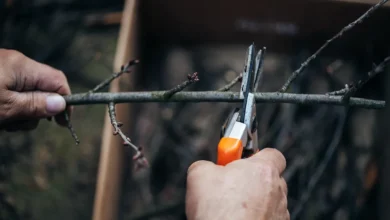
- Cut a 4–6 inch (10–15 cm) piece (3–5 inches for soft, herbaceous plants), making the bottom cut just below a node, where a leaf joins the stem. Roots form most readily there.
- Keep cuttings cool and moist. Pop them straight into a plastic bag; if you can’t plant them right away, keep the bag in the fridge.
- Strip the lower leaves. Remove leaves from the bottom third to half of the stem. Cut large leaves in half to reduce water loss, and pinch off any flowers or buds.
- Apply rooting hormone. Pour a little into a separate dish so you don’t contaminate the container. Dip the moistened base, tap off the excess and throw away what’s left in the dish.
- Plant. Make a hole in pre-moistened mix with a pencil, insert the cutting a third to half of its length, and firm the mix around it. Space several cuttings around the edge of a pot so the leaves don’t touch.
- Cover and place. Cover with a clear bag or lid, held off the leaves with sticks, and put it in bright, indirect light. Most temperate plants root best with the mix at about 65–77°F (18–25°C); a heat mat helps in cool rooms.
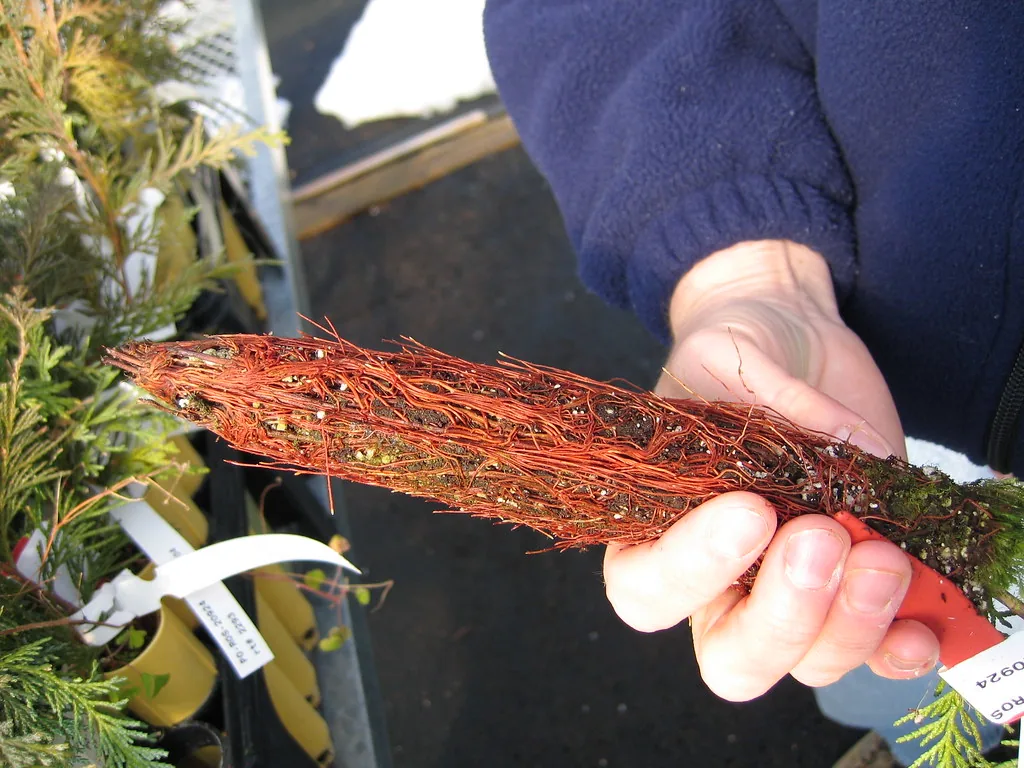
- Check for roots. After a few weeks, give a cutting a gentle tug. Resistance means roots have formed. New leaf growth is another good sign.
Hardwood cuttings are simpler still. Take pencil-thick, leafless stems of last year’s growth in late fall or winter, cut them into lengths of about 6–10 inches (15–25 cm) with a sloping cut at the top, and push them two-thirds of their length into a sheltered trench or deep pot of gritty mix. Leave them until the following fall, when most will have rooted.
Pro tip: Take more cuttings than you need. Even experienced growers don’t get 100% success, and spare young plants make great gifts or trades.
What about rooting in water? Many houseplants, such as pothos, philodendron and tradescantia, and some herbs like mint and basil, root easily in a glass of water on a bright windowsill. Change the water every few days and pot them up once the roots are an inch or two long, keeping the new pot evenly moist for the first couple of weeks while they adjust to soil.
Watch: Propagation by Cuttings
NC State Extension demonstrates how to propagate plants from cuttings in this short video.
Leaf Cuttings
Some plants can grow a whole new plant from a single leaf:
- African violets and peperomia: cut a healthy leaf with about 1½ inches (4 cm) of stalk and insert the stalk into the mix. Small plantlets form at the base.
- Snake plant: cut a leaf into 3–4 inch (8–10 cm) sections and insert them upright, the same way up they grew. Mark the bottom so you don’t plant them upside down, because they won’t root.
- Succulents like echeveria and jade: twist off a whole leaf, let the end dry for a day or two, then lay it on gritty mix and keep it barely moist.
Division
Division is the fastest way to multiply perennials and clump-forming houseplants, and it rejuvenates crowded old clumps at the same time.
- Water the plant the day before.
- Dig up the whole clump, or slide a houseplant out of its pot.
- Pull or cut it into sections with a spade or knife, making sure each piece has healthy roots and at least one or two shoots or growing points.
- Replant the divisions at the same depth as before, water well and keep them moist while they settle in.
Good candidates include hostas, daylilies, irises, ornamental grasses, chives and other clumping herbs, plus houseplants like ferns, snake plants and peace lilies.
Layering
Layering roots a stem while it’s still attached to the parent, so there’s very little risk.
- Simple layering: bend a low, flexible branch to the ground, nick the underside, bury that part a few inches deep and pin it down, leaving the tip (6–12 inches / 15–30 cm) above the soil. Cut it free once it has rooted, usually by the next season. Good for azaleas, forsythia and rhododendrons.
- Tip layering: bury the tip of a cane 3–4 inches (8–10 cm) deep in late summer. Raspberries and blackberries root at the tip naturally.
- Air layering: used for woody houseplants such as rubber plants. Remove a 1-inch (2.5 cm) ring of bark, dust with rooting hormone, wrap it in damp sphagnum moss and plastic, and cut below the new roots once they fill the moss.
Propagating from Seed
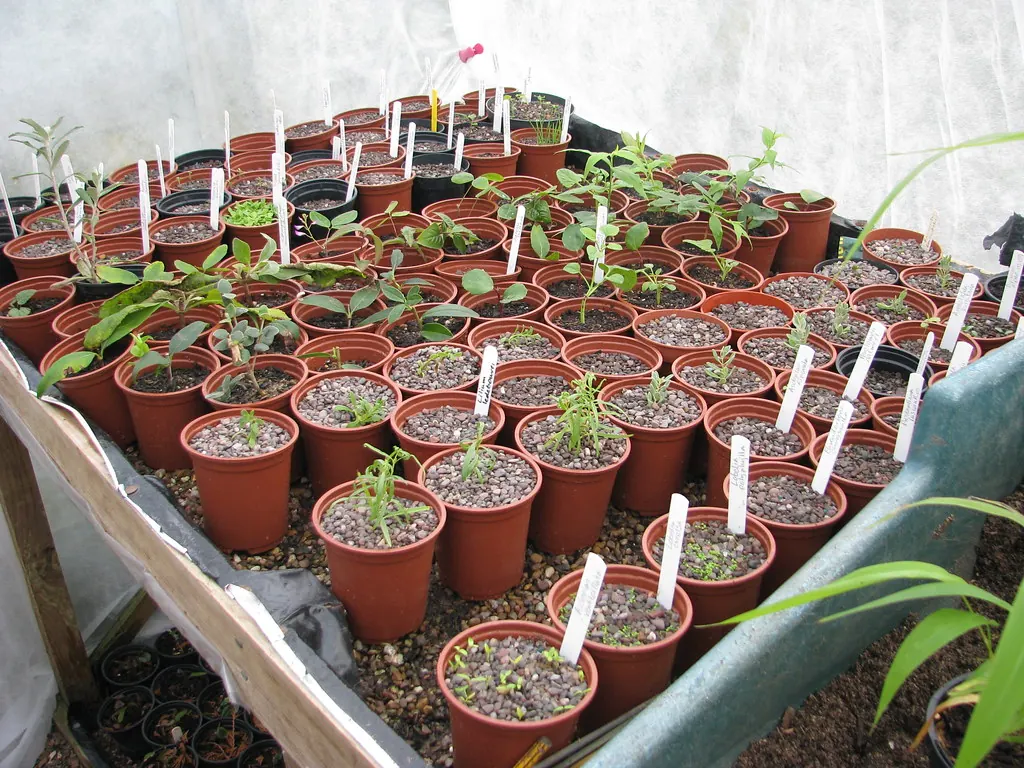
Seed is the cheapest way to raise lots of plants, and the usual method for vegetables and annuals. Keep in mind:
- Seed saved from hybrid (F1) varieties won’t come true. Save seed from open-pollinated or heirloom varieties instead.
- Most seeds germinate best at about 65–75°F (18–24°C), sown roughly 2–4 times as deep as the seed is wide.
- Some tree and shrub seeds need a cold period (stratification) or a nicked seed coat (scarification) before they’ll sprout.
Our vegetable planting calendar shows when to start common crops from seed, and our indoor herb garden guide covers herbs that root easily from cuttings on a windowsill.
Caring for New Plants
- Pot up gradually. Move rooted cuttings into individual 3–4 inch (8–10 cm) pots of regular potting mix once they have several roots about ½ inch (1 cm) long.
- Harden off. Open the cover a little more each day over about a week before removing it, and keep young plants out of strong sun and wind for a few weeks.
- Water carefully. Keep the mix evenly moist, never soggy.
- Feed lightly once new growth is under way, using a diluted balanced fertilizer.
- Plant out in spring, after your last frost, or in fall in mild climates. Hardwood cuttings rooted outdoors can usually be moved the following fall.
Watch for rot: blackened, mushy stems usually mean the mix is too wet or the cutting is sitting in stagnant air. Remove affected cuttings promptly, open the cover for ventilation and use a grittier mix next time.
Propagation at a Glance
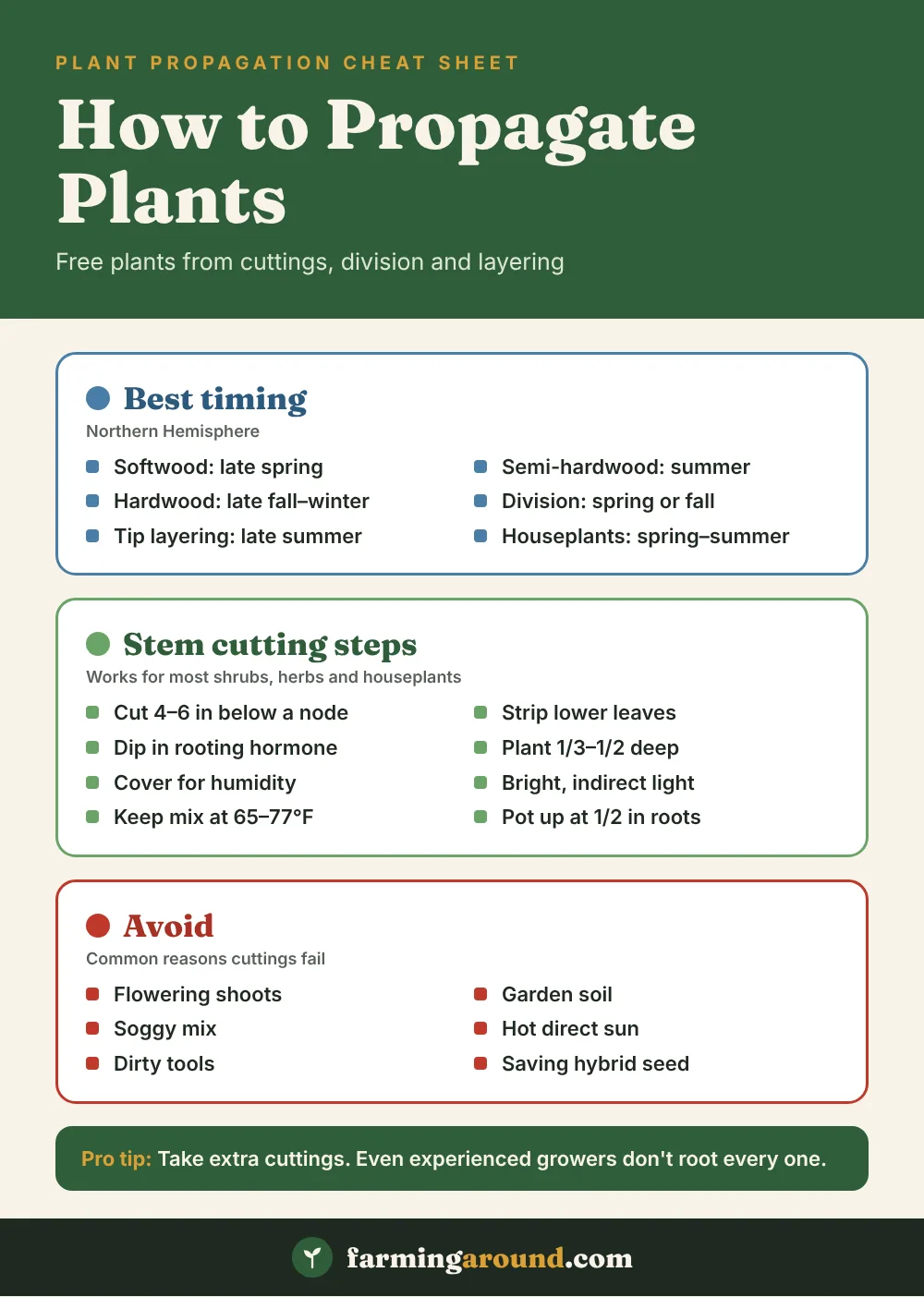
Once your new plants are established, give them a good home in a raised bed or a sunny border.
Helpful gear for this guide
Handy picks that match the advice above.
Links go to Amazon. Prices and availability change, so check reviews and fit for your setup before buying.
FAQ
What is the easiest way to propagate plants?
Division is the easiest because you get an established plant immediately. For plants that don’t form clumps, softwood stem cuttings of herbs, shrubs and houseplants are the next easiest and often root in a few weeks.
How long do cuttings take to root?
Soft, leafy cuttings of herbs and houseplants often root in two to four weeks. Many woody shrub cuttings take two to four months, and some, like rhododendrons, can take longer.
Do I need rooting hormone?
Not for easy plants like willow, mint, coleus or pothos. For most shrubs and harder-to-root plants, it increases the number of cuttings that root, speeds rooting and gives a stronger root system.
Is it better to root cuttings in water or soil?
Water works well for many houseplants and soft herbs, and you can watch the roots form. For most garden shrubs and woody plants, a free-draining rooting mix gives better results and avoids the shock of moving water-grown roots into soil.
Can you propagate any plant from cuttings?
Many, but not all. Most herbs, shrubs and houseplants root readily, while some trees and plants with a single growing point, such as many palms, can’t be grown from cuttings. Check a guide for your specific plant before you start.