

Last updated: October 2026
This guide contains affiliate links. As an Amazon Associate, FarmingAround earns from qualifying purchases, at no extra cost to you.
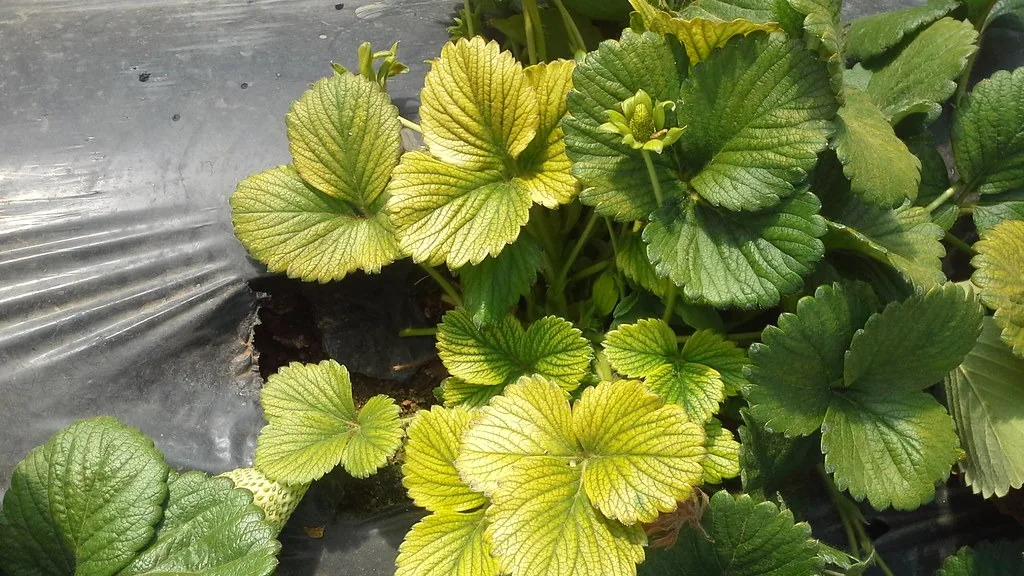
Plant leaves usually turn yellow because of a watering problem (most often too much water and poor drainage), a nutrient shortage (especially nitrogen, iron or magnesium), or stress from too little light, cold, pests or disease. Where the yellowing starts tells you a lot: yellow older, lower leaves point to nitrogen, magnesium or potassium shortage or simple aging, while yellow new, top leaves point to iron, manganese or sulfur problems, often caused by high soil pH.
Use the diagnosis table and step-by-step checklist below to narrow down the cause, then apply the matching fix. The same logic works for vegetables, fruit trees, shrubs and houseplants.
Key takeaways
- Check the soil first: soggy soil and root rot are among the most common causes of yellow leaves, indoors and out.
- Old leaves vs new leaves: mobile nutrients (nitrogen, potassium, magnesium) show up on older leaves; immobile ones (iron, manganese, sulfur) on new growth.
- Yellow with green veins (interveinal chlorosis) on young leaves usually means iron is locked up by alkaline soil.
- Test before you treat: a soil test confirms pH and nutrient levels so you don’t add fertilizer a plant doesn’t need.
In this guide
Yellow Leaves Diagnosis Table
Match what you see to the most likely cause, then confirm it before treating.
| Symptom | Likely cause | Fix |
|---|---|---|
| Lower leaves yellow and limp; soil stays wet; may smell sour | Overwatering, poor drainage, root rot | Let soil dry before watering; improve drainage; repot houseplants into fresh mix and trim rotten roots |
| Yellow, crispy leaves; soil dry; plant wilts in heat | Underwatering or drought | Water deeply and consistently; mulch outdoor beds |
| Older leaves evenly pale or yellow; slow growth | Nitrogen deficiency | Feed with a nitrogen source (compost, fish emulsion, balanced fertilizer) |
| Young leaves yellow with green veins | Iron deficiency, often from high soil pH or wet soil | Test pH; lower it with sulfur over time; chelated iron for quick relief |
| Older leaves yellow between veins, sometimes with reddish blotches | Magnesium deficiency | Confirm with a soil test; Epsom salts (magnesium sulfate) or dolomitic lime if pH is also low |
| Older leaves yellow at edges, then scorched brown | Potassium deficiency | Apply potassium per soil test results |
| Young leaves pale green to yellow all over | Sulfur deficiency | Add compost or a sulfur-containing fertilizer |
| A few bottom leaves yellow; rest of plant healthy | Natural aging | Nothing; remove old leaves if you like |
| Pale, stretched growth; yellowing on the shaded side | Too little light | Move to brighter light or add a grow light |
| Yellow leaves with fine speckles or webbing underneath | Spider mites | Hose off, raise humidity indoors, use insecticidal soap |
| Yellow, curled leaves with sticky residue | Aphids, whiteflies or other sap-suckers | Spray off with water; insecticidal soap; encourage beneficial insects |
| Yellow lower leaves with brown target-like spots | Fungal leaf spot (e.g., early blight on tomatoes) | Remove affected leaves, mulch, water at the base, rotate crops |
| Yellowing and wilting on one side of the plant | Vascular wilt (Fusarium or Verticillium) | Remove the plant; grow resistant varieties; rotate |
| Mottled yellow-green mosaic pattern | Virus | Remove infected plants; control aphids and other carriers |
Old Leaves vs New Leaves
This one observation does most of the diagnostic work. Plants can move some nutrients, called mobile nutrients, out of older leaves to feed new growth. When those run short, the older, lower leaves yellow first. Immobile nutrients stay where they were first used, so a shortage shows up on the newest leaves.
- Older leaves first: nitrogen, potassium, magnesium (and phosphorus, which tends to cause purpling rather than yellowing).
- Newer leaves first: iron, manganese, sulfur, zinc and copper.
Cornell’s soil health team cautions that leaf symptoms are only clues: different deficiencies can look alike, and problems that have nothing to do with fertility (wet soil, root damage, compaction) can cause the same signs.
Watering and Drainage Problems
Roots need air as well as water. In waterlogged soil they suffocate and rot, so they can’t take up nutrients, and leaves yellow even when there is fertilizer in the soil. This is why overwatering often looks like a nutrient deficiency.
- Finger test: push a finger 1–2 in (2.5–5 cm) into the soil. Water only if it feels dry at that depth (deeper, 4–6 in / 10–15 cm, for vegetable beds).
- Pots: make sure every container has drainage holes, and empty saucers after watering.
- Beds: heavy clay drains slowly. Work in compost (see compost for clay soil) or grow in raised beds.
- Underwatering causes yellowing too, usually with dry, crisp edges. Water deeply and less often, and mulch to keep moisture steady.
Pro tip: A wilting plant in wet soil needs less water, not more. Wilting in soggy soil is a sign the roots are already damaged.
Nutrient Deficiencies
Nitrogen
The most common nutrient cause of yellowing in vegetable gardens. Older leaves turn evenly pale green to yellow, and growth slows. Leafy crops and heavy feeders like corn and tomatoes show it first. Feed with compost, aged manure, blood meal, fish emulsion or a balanced fertilizer. Also watch for nitrogen tie-up: fresh sawdust or wood chips mixed into soil temporarily take nitrogen as they decompose. Keep woody mulch on the surface.
Iron and manganese
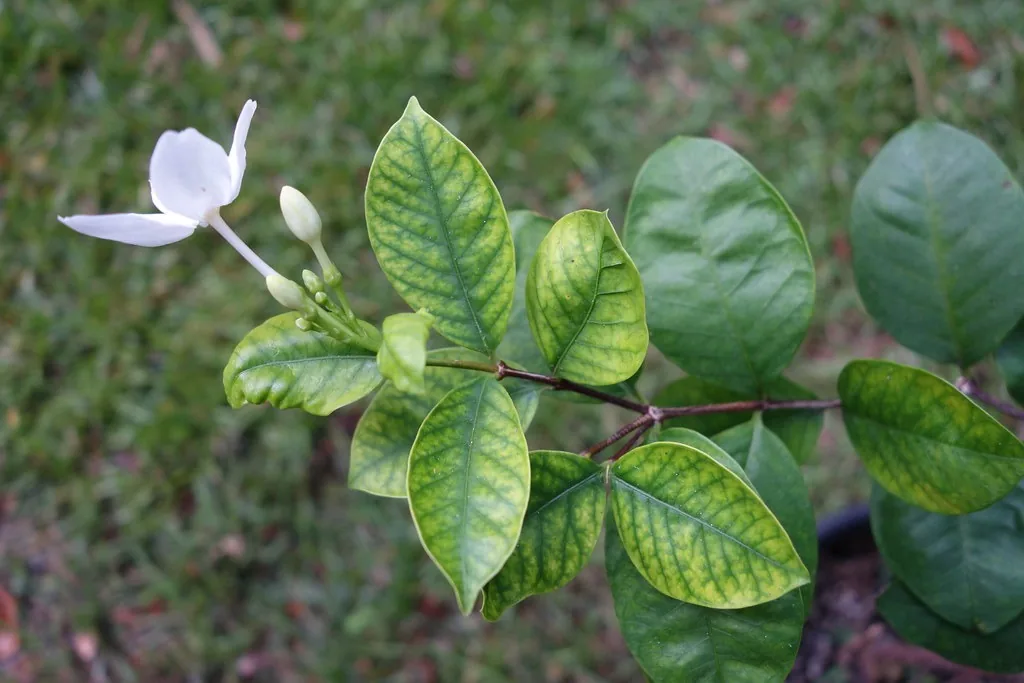
The classic sign is interveinal chlorosis on young leaves: yellow tissue with sharp green veins. According to the University of Maryland Extension, iron shortage is usually caused not by a lack of iron in the soil but by high soil pH, which makes iron unavailable; it is common near concrete foundations and walks. Poor drainage, root rot and root damage can cause it too. Blueberries, azaleas, rhododendrons, pin oaks and citrus are especially prone. Lower pH gradually with elemental sulfur (based on a soil test), and use chelated iron as a foliar spray or soil drench for quicker relief. Manganese deficiency looks similar, with darker green bands along the veins, and also occurs in alkaline soils.
Magnesium
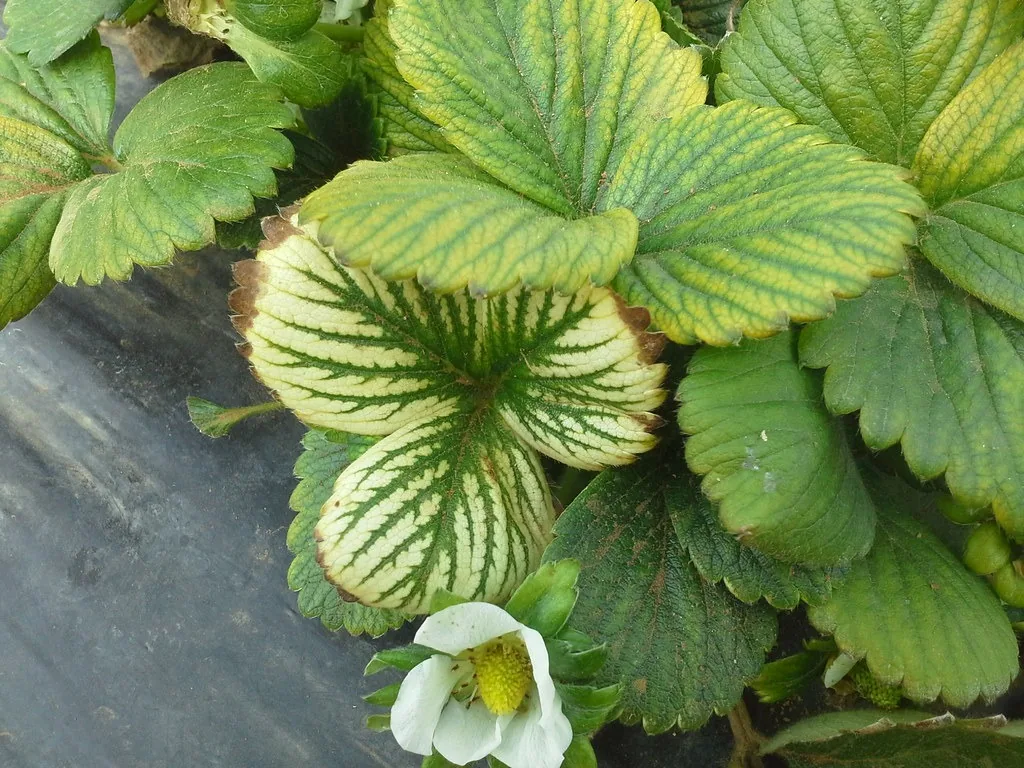
Yellowing between the veins of older leaves, sometimes turning reddish-purple. It’s common in sandy, acidic soils and where heavy potassium fertilizer has been used. Epsom salts (magnesium sulfate) supply magnesium, but only use them when a soil test shows a shortage. They won’t fix other causes of yellowing. If soil is also acidic, dolomitic lime raises pH and adds magnesium.
Potassium and sulfur
Potassium shortage yellows the edges of older leaves first, then the margins scorch brown and may curl. Sulfur shortage looks like nitrogen deficiency but starts on newer leaves. Both are best confirmed with a soil test and corrected with a fertilizer that supplies the missing nutrient. Adding compost every year helps prevent both.
Light, Temperature and Transplant Stress
- Low light: houseplants and seedlings in dim spots grow pale and leggy, and lower leaves yellow and drop. Move them to brighter light; most vegetables need 6–8 hours of direct sun.
- Cold: warm-season crops such as tomatoes, peppers, basil and cucumbers often yellow or purple after nights below about 50°F (10°C). Wait until after your last frost date and warm soil before planting out, and use row cover on cold nights.
- Transplant shock: a few yellow leaves after planting are normal. Harden off seedlings for a week first, plant on a cloudy day and water in well.
- Fertilizer or salt burn: too much fertilizer, or salt build-up in pots, yellows and browns leaf edges. Flush pots with plenty of clean water and feed more lightly.
- Seasonal change: in autumn, many plants yellow naturally as they slow down or go dormant. In the Northern Hemisphere that’s September–November; in the Southern Hemisphere, March–May.
Pests and Diseases
Turn leaves over and look closely. Sap-sucking pests (spider mites, aphids, whiteflies, scale and mealybugs) cause speckled or blotchy yellowing, often with webbing or sticky honeydew. A strong spray of water and insecticidal soap control most of them.
Diseases cause yellowing with a pattern: spots with rings (fungal leaf spots), yellowing that starts at the bottom of tomato plants and moves up (early blight or Septoria leaf spot), yellowing on one side of the plant (Fusarium or Verticillium wilt) or a mottled mosaic (viruses). Remove badly affected leaves, water at the soil instead of overhead, space plants for airflow and rotate crops. Our companion planting chart can help you plan rotations and spacing.
Watch: why plant leaves turn yellow
Fraser Valley Rose Farm walks through common reasons leaves turn yellow in this video, a good visual companion to the table above.
Step-by-Step Diagnosis Checklist
- Where is the yellowing? Old lower leaves, new top leaves, or all over?
- What’s the pattern? Evenly yellow, yellow between green veins, yellow edges, spots, or one side of the plant?
- Check soil moisture with your finger or a trowel. Soggy, bone-dry or just right?
- Check drainage. Do pots have holes? Does water pool in the bed after rain?
- Look under leaves and along stems with a magnifier for mites, aphids and eggs.
- Think about recent changes: transplanting, a cold night, a move indoors, a big feed or new mulch.
- Test the soil for pH and nutrients through your local extension office or a reputable lab before adding amendments.
Don’t fertilize blindly. If the real problem is wet soil, root rot or high pH, extra fertilizer won’t green the plant up, and too much can burn roots and pollute waterways. Fix watering and drainage first, then feed based on a soil test.
How to Prevent Yellow Leaves
- Plant in well-drained soil or raised beds, and use pots with drainage holes.
- Water deeply but only when the top layer of soil is dry; mulch outdoor beds.
- Test soil every few years and keep pH in the right range (6.0–7.0 suits most vegetables).
- Add compost every season. It feeds plants slowly and improves drainage. See how to build a compost pile.
- Give plants the light they need, and harden off seedlings before planting out.
- Inspect leaves weekly so you catch pests early.
Helpful gear for this guide
Handy picks that match the advice above.
Links go to Amazon. Prices and availability change, so check reviews and fit for your setup before buying.
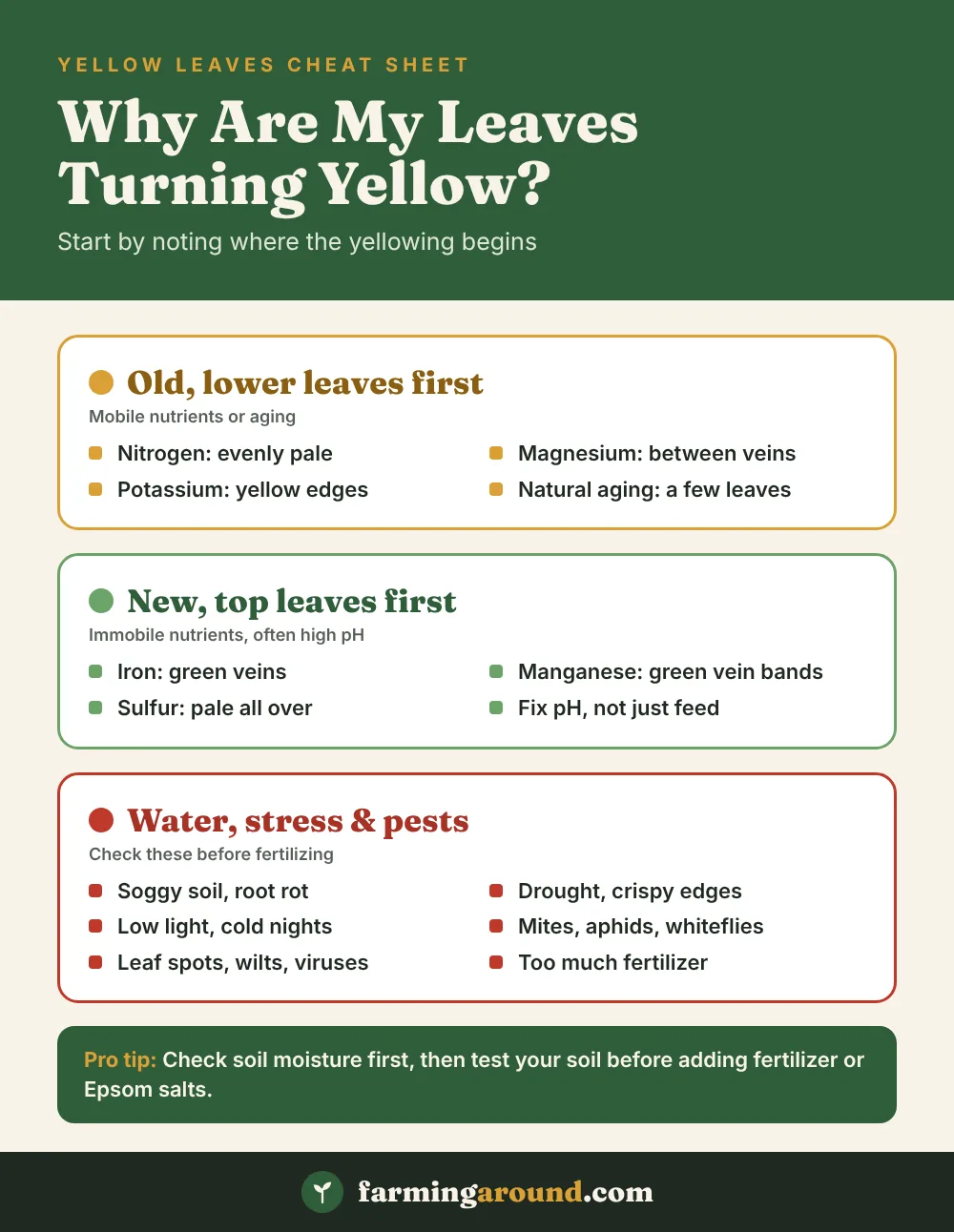
Quick Reference: Yellow Leaves
Save this diagnosis card for the next time you spot yellow leaves.
FAQ
Should I cut off yellow leaves?
Yes, once you’ve worked out the cause. A fully yellow leaf rarely turns green again, and removing it tidies the plant. Always remove leaves with disease spots and dispose of them away from the garden.
Can yellow leaves turn green again?
Leaves yellowed by a mild nutrient shortage, such as early nitrogen or iron deficiency, can partly regreen once the problem is fixed. Old leaves that are fully yellow usually won’t; watch new growth to judge recovery.
Does Epsom salt fix yellow leaves?
Only when the cause is magnesium deficiency. Epsom salt doesn’t fix overwatering, nitrogen shortage or high pH, so test your soil before using it.
Why are my houseplant leaves turning yellow?
Overwatering and poor drainage are the most common reasons, followed by low light, cold drafts and pests. A few old leaves yellowing slowly is normal.
Why are the bottom leaves of my vegetable plants turning yellow?
Usually nitrogen shortage, natural aging or a soilborne leaf disease splashing up from the soil. Feed lightly, mulch, and remove spotted leaves.
Sources
- Nutrient Deficiency Symptoms in Trees and Shrubs (University of Maryland Extension)
- How to Diagnose Plant Nutrient Deficiencies Using Leaf Symptoms (Cornell University)
- Starting Your Vegetable Garden (Oregon State University Extension)
For a confirmed diagnosis, take a sample of affected leaves and a soil sample to your local extension office or plant diagnostic lab.
Featured image: Plant pests and diseases / CC0 via Flickr.

One Comment