

Last updated: September 2026
This guide contains affiliate links. As an Amazon Associate, FarmingAround earns from qualifying purchases, at no extra cost to you.
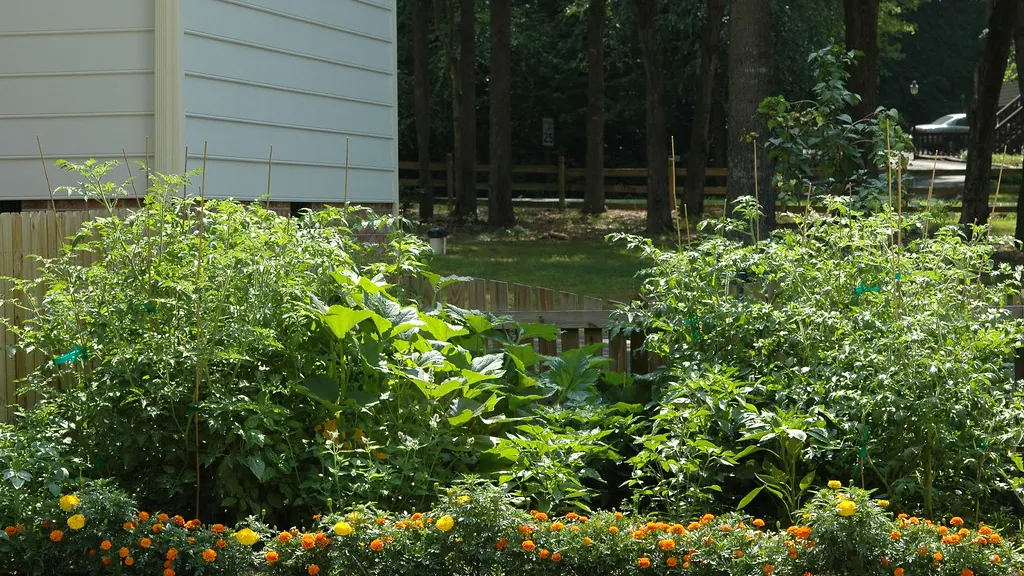
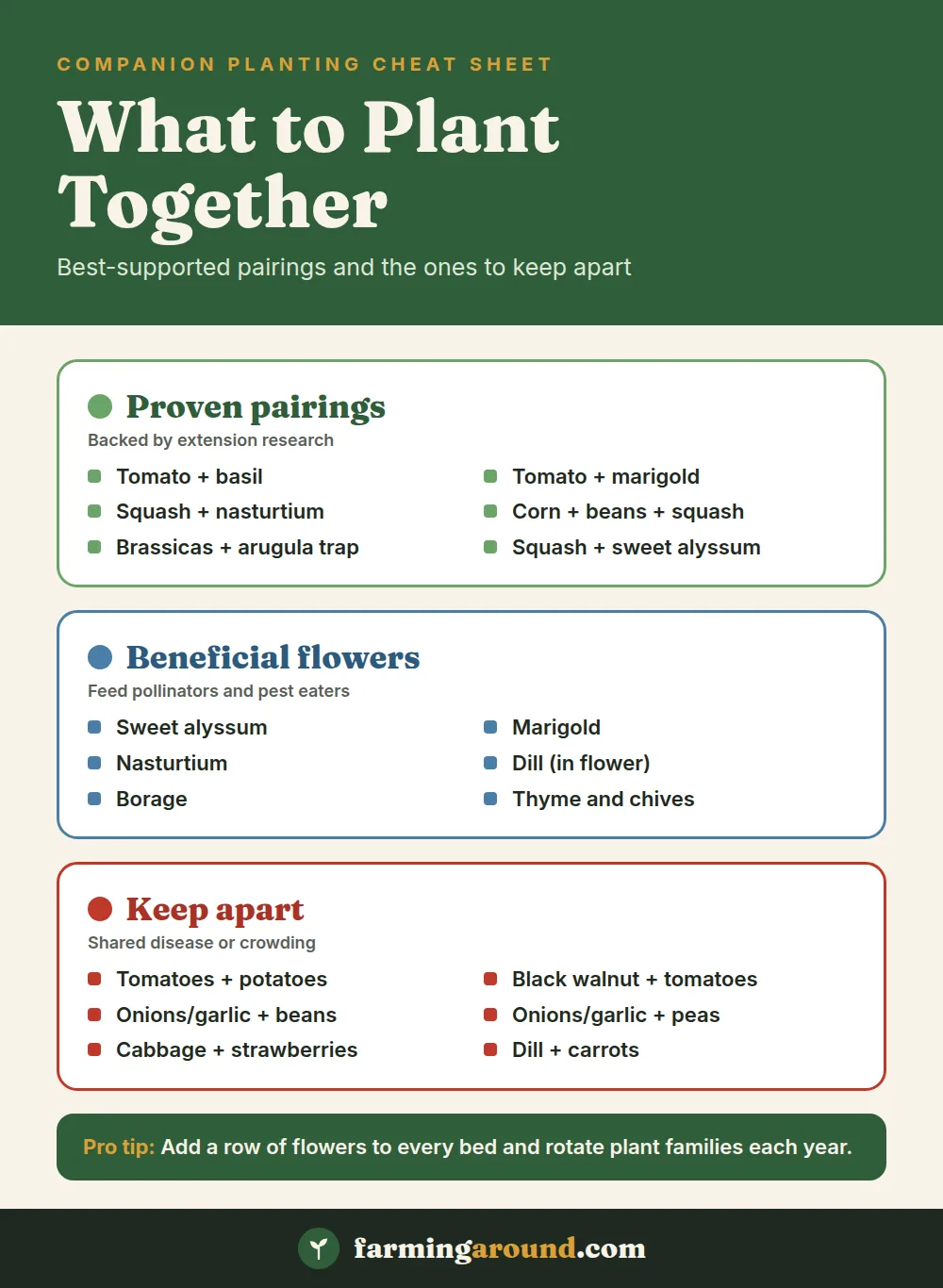
A companion planting chart shows which crops grow well side by side and which ones are better kept apart. The pairings with the best support are simple: tomatoes with basil and marigolds, squash with nasturtiums, and the three sisters (corn, pole beans and squash). The bad pairings worth knowing are fewer than most lists suggest, and most come down to shared diseases or one plant crowding another.
Much of what you read about companion plants is tradition rather than tested science, so this guide separates the two. Use the main chart below to decide what to plant together, then check the “avoid” table, the flower list, and a sample 4×8 ft (1.2×2.4 m) raised bed you can copy.
Key takeaways
- Best-supported pairings: tomatoes with basil or marigolds (fewer thrips), squash with nasturtiums (squash bugs), and corn, beans and squash grown together.
- Flowers do the real work: sweet alyssum, dill, borage and other nectar plants feed pollinators and pest-eating insects like hover flies and parasitic wasps.
- Keep apart: tomatoes and potatoes (both get late blight), sensitive crops near black walnut, and onions or garlic crowding beans and peas.
- Treat most lists as tradition: extension scientists say many “friends and enemies” claims have never been tested, so watch your own garden and adjust.
In this guide
What the science says about companion plants
Companion planting is old, and many of the popular lists were passed down without testing. Dr. Linda Chalker-Scott, an extension horticulturist at Washington State University, has written that there is no scientific basis for the traditional lists of companion plants. University of Minnesota Extension says the same about some favorite claims. For example, several studies found that marigolds do not deter Colorado potato beetles.
That doesn’t mean growing plants together is pointless. Extension services at Minnesota, Virginia Tech and Delaware point to a handful of effects with real support:
- Trap crops: a plant pests like more than your crop, which draws them away or concentrates them where you can deal with them.
- Beneficial insects: flowers supply nectar and pollen for ladybugs, lacewings, hover flies and tiny parasitic wasps, which eat or parasitize pests.
- Confusing pests: mixed plantings can make it harder for insects to find their host plant by sight and smell.
- Physical help: tall plants give support or shade (corn holding up beans), and low plants cover bare soil.
- Space and timing: fast crops like radishes and lettuce fill gaps between slow ones before they need the room.
One honest caveat: University of Delaware notes that more beneficial insects don’t always mean fewer pests on your crop. Companions help, but they won’t replace crop rotation, good spacing or checking plants regularly.
Companion planting chart: 20 vegetables and herbs
This chart lists common good companions and the pairings most often flagged to avoid. Items in the “avoid” column are mostly traditional advice or based on shared pests and diseases. Few have been proven to harm a crop directly.
| Crop | Good companions | Avoid (or keep apart) |
|---|---|---|
| Tomatoes | Basil, marigold, carrots, parsley, onions, lettuce | Potatoes (shared blight), fennel, black walnut |
| Peppers | Basil, onions, carrots, marigold | Fennel, black walnut |
| Eggplant | Beans, marigold, basil | Black walnut, fennel |
| Potatoes | Beans, corn, cabbage family | Tomatoes (shared blight), black walnut |
| Beans (bush and pole) | Corn, squash, cucumbers, carrots, eggplant | Onions, garlic, leeks, chives |
| Peas | Carrots, radishes, lettuce, spinach | Onions, garlic |
| Sweet corn | Pole beans, squash, cucumbers, melons | Tall crops that shade it |
| Squash and pumpkins | Nasturtium, corn, beans, sweet alyssum, borage | Potatoes (space competition) |
| Cucumbers | Beans, corn, dill, nasturtium, lettuce | Aromatic herbs like sage (traditional) |
| Cabbage, broccoli, kale | Onions, thyme, dill, nasturtium, lettuce | Strawberries, pole beans |
| Lettuce | Carrots, radishes, onions, tall crops for shade | Few problems |
| Carrots | Onions, leeks, lettuce, tomatoes, peas | Dill and fennel (same family, can cross) |
| Onions | Carrots, lettuce, tomatoes, cabbage family | Beans, peas |
| Garlic | Tomatoes, cabbage family, lettuce, carrots | Beans, peas |
| Beets | Onions, lettuce, cabbage family | Pole beans (traditional) |
| Spinach | Peas, radishes, strawberries | Few problems |
| Radishes | Carrots, lettuce, peas, cucumbers | Few problems |
| Strawberries | Spinach, lettuce, onions, borage | Cabbage family, black walnut |
| Basil | Tomatoes, peppers | Few problems |
| Dill | Cabbage family, cucumbers, lettuce | Carrots, fennel (cross-pollination) |
Growing spuds this year? Our guide on how to grow potatoes covers spacing and hilling, which matter more than any companion.
Plants that shouldn’t be planted together
These are the bad pairings that extension sources mention most often. The reasons range from well documented (black walnut, shared blight) to mostly traditional (onions and beans), so the table says which is which.
| Pairing | Why keep apart | How solid is it? |
|---|---|---|
| Black walnut + tomatoes, peppers, potatoes, eggplant, asparagus, rhubarb | Walnut roots release juglone, which harms sensitive plants. University of Wisconsin puts the toxic zone within about 50–60 ft (15–18 m) of a mature tree’s trunk. | Well documented |
| Tomatoes + potatoes | Both are hosts for late blight and share pests like Colorado potato beetle. Planting them together makes it easier for problems to spread. | Well supported |
| Onions or garlic + beans and peas | Listed by Virginia Tech and many other guides. Often said to slow legume growth, though the evidence is thin. | Traditional, widely repeated |
| Cabbage family + strawberries | Listed as incompatible by Virginia Tech. Both need plenty of space and attract some of the same slugs and pests. | Traditional |
| Fennel + most vegetables | Commonly kept in its own spot. It is large and competitive, and it cross-pollinates with dill. | Traditional; grow fennel apart to be safe |
| Dill + carrots | Same plant family. They can cross-pollinate if both flower, and they share pests like carrot rust fly. | Reasonable caution |
Warning: Juglone can stay in walnut roots, leaves and wood chips. Don’t mulch or compost vegetable beds with fresh black walnut leaves or chips, and site beds well away from the tree’s roots.
Planting onions and garlic this fall? Give them their own row away from peas. Our guide on how to grow garlic explains timing and spacing.
Three sisters and trap crops
The three sisters
The three sisters system comes from Indigenous farmers across North America. Corn gives pole beans something to climb. Beans are legumes that host nitrogen-fixing bacteria in their roots, and big squash leaves shade the soil and help smother weeds. Chalker-Scott uses it as an example of a plant partnership that actually works.
To try it, plant corn in blocks or mounds after your last spring frost, once the soil is warm (about 60°F / 16°C). Sow pole beans at the base when the corn is roughly 6 in (15 cm) tall, then plant squash or pumpkins between the mounds. The timing is the same across USDA zones: plant after your local frost date. In the Southern Hemisphere, that usually means October to December. When the vines die back, see our guide on when to harvest pumpkins.
Trap crops
A trap crop is a plant that pests prefer, grown to pull them away from your main crop. University of Minnesota Extension lists these examples:
- Flea beetles on brassicas: arugula, mustard and napa cabbage work as traps, and a mix of 3+ species beats a single trap plant.
- Squash bugs: nasturtiums planted near squash helped reduce squash bug numbers.
- Cabbage loopers: thyme, onion and nasturtium near broccoli and cabbage helped reduce loopers.
Virginia Tech adds collards as a trap for diamondback moth and Blue Hubbard squash for squash bugs. Check trap plants often and remove or destroy heavily infested ones. If you don’t, the trap just becomes a pest nursery.
Flowers and herbs for pollinators and beneficial insects
This is the part of companion planting with the best support. Flowers with small, open blooms give nectar and pollen to pollinators and to the adult stage of many pest-eating insects.
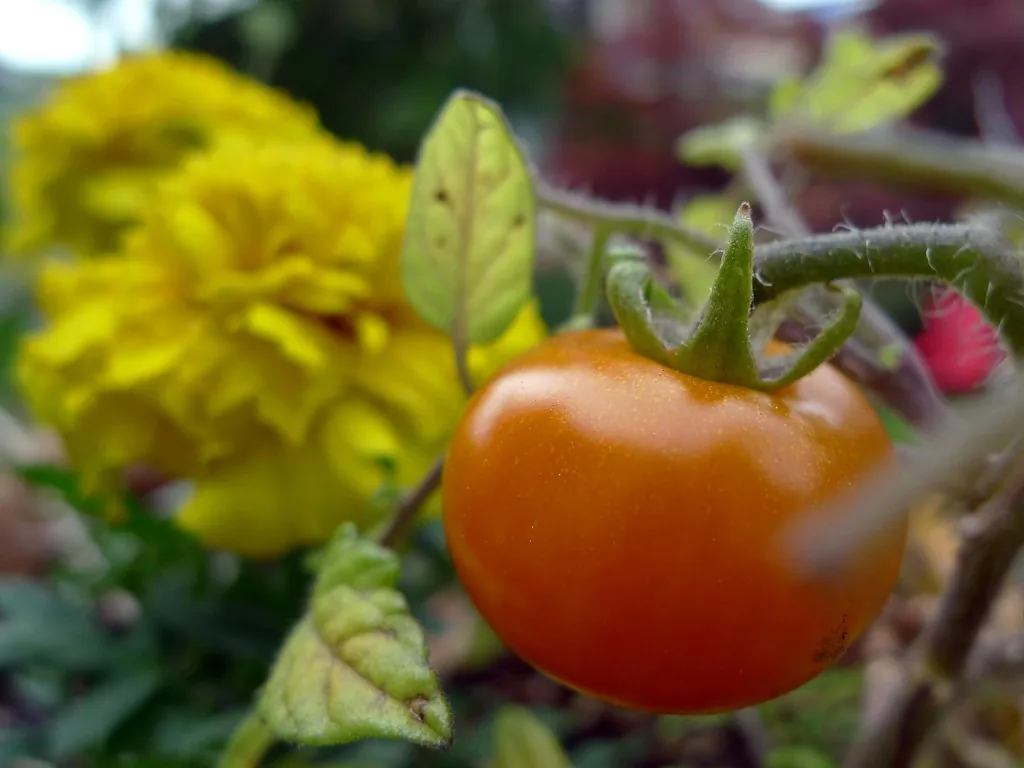
- Marigold: planted with tomatoes, it can reduce thrips, partly by supporting predatory bugs. It won’t stop potato beetles.
- Nasturtium: helps with squash bugs, and aphids often cluster on it, which makes them easy to spot.
- Sweet alyssum: a low edging plant. With squash, it increased the natural enemies of aphids in Minnesota trials.
- Dill, cilantro and parsley (left to flower): their umbrella-shaped flowers feed hover flies, lacewings and parasitic wasps.
- Borage: a strong bee plant that self-seeds freely, so pull extra seedlings.
- Basil, thyme, chives, lavender and rosemary: useful herbs that also feed bees when they bloom.
Pro tip: Pick flowers that bloom at different times so something is flowering from spring to frost. Beneficial insects stay where the food supply is steady.
Watch: companion planting basics
This video from GrowVeg covers companion planting made easy.
Sample 4×8 ft (1.2×2.4 m) raised bed layout
This summer layout splits the bed into 16 blocks, each 1×2 ft (30×60 cm). Tall plants go on the north side so they don’t shade shorter ones. In the Southern Hemisphere, put them on the south side. Beans are kept away from the onions, and flowers edge the sunny side.
| Row | Block 1 | Block 2 | Block 3 | Block 4 |
|---|---|---|---|---|
| Row 1 (north) | Tomato, staked | Basil | Tomato, staked | Pole beans on trellis |
| Row 2 | Pepper | Marigolds | Pepper | Cucumber on trellis |
| Row 3 | Carrots | Onions | Lettuce | Radishes, then bush beans |
| Row 4 (south) | Sweet alyssum | Parsley | Thyme | Nasturtium, trailing over edge |
Why it works: basil and marigolds sit next to the tomatoes and peppers. Beans climb beside cucumbers and stay two blocks from the onions. Carrots and onions share a row, and flowers along the edge draw in pollinators and beneficial insects. Once summer crops finish, replant with fall garden vegetables such as kale and spinach, or sow a winter cover crop.
How to use the companion planting chart
- Start with your main crops. Look up each one in the chart, then choose one or two companions from its row.
- Check the avoid table next. Put tomatoes and potatoes in different beds, and keep alliums away from beans and peas.
- Match sun, water and height. Companions still need similar growing conditions. Don’t plant sun lovers in a tall crop’s shade.
- Leave room. Crowding causes more problems than a “bad” neighbor does. Stick to normal spacing.
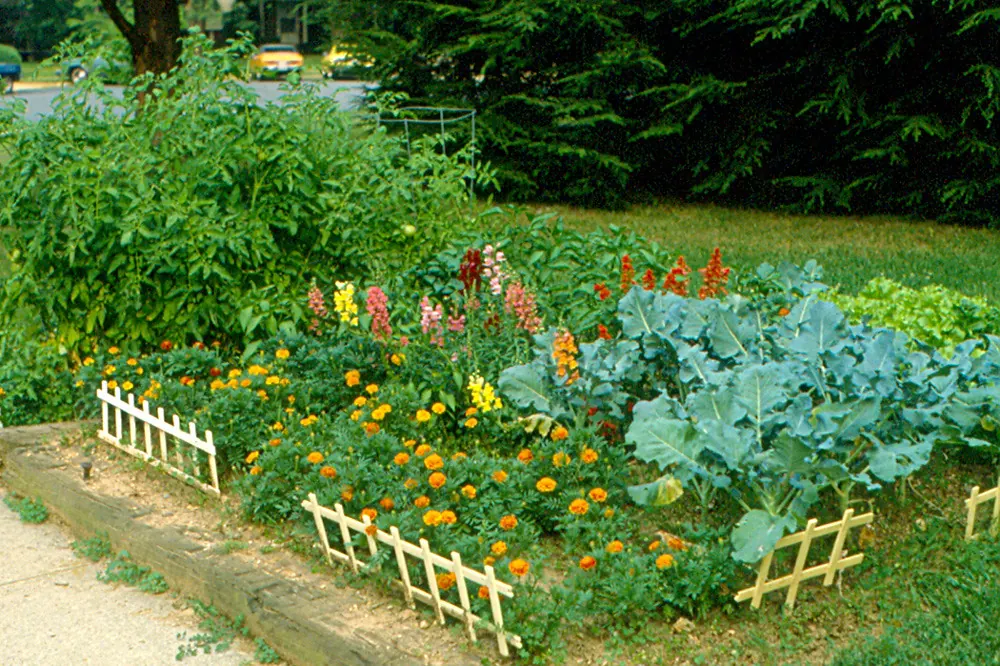
- Add flowers to every bed. Even a single edging row of alyssum or marigolds helps.
- Rotate each year. Move plant families to a new spot to break disease cycles.
- Keep notes. Results vary by region and pest pressure, so trust what you see in your own garden.
Helpful gear for this guide
Handy picks that match the advice above.
Links go to Amazon. Prices and availability change, so check reviews and fit for your setup before buying.
Quick Reference: Companion Plants
| Goal | What to plant together |
|---|---|
| Fewer thrips on tomatoes | Basil, marigold |
| Fewer squash bugs | Nasturtium near squash |
| Flea beetle trap | Arugula, mustard, napa cabbage |
| Support and shade | Corn + pole beans + squash |
| More beneficial insects | Sweet alyssum, dill, borage |
FAQ
Does companion planting actually work?
Partly. Trap crops, flowers for beneficial insects, and physical partnerships like the three sisters have research support. Many traditional “friend and enemy” lists have never been tested, according to Washington State University and University of Minnesota Extension.
What should not be planted next to tomatoes?
Keep tomatoes away from potatoes, because both get late blight, and away from black walnut trees because of juglone. Fennel is also traditionally kept apart.
What are the best companion plants for tomatoes?
Basil and marigolds are the best-supported choices, since both can help reduce thrips. Carrots, parsley, lettuce and onions also fit well around tomato plants.
Can I plant onions and garlic near beans?
It’s widely advised against, though the evidence is mostly traditional. If you have the space, put alliums and legumes in different rows or beds. Carrots, lettuce and the cabbage family are the usual suggested neighbors for onions.
Do marigolds keep pests away?
They help with some pests, like thrips on tomatoes and squash bugs, but studies show they don’t deter Colorado potato beetles. There’s also little support for using them against flea beetles on brassicas.
Sources
- University of Minnesota Extension: Companion planting in home gardens
- Washington State University (Linda Chalker-Scott): The Myth of Companion Plantings
- Virginia Cooperative Extension: Companion Planting in Gardening (SPES-620)
- University of Wisconsin–Madison Extension: Landscaping in Spite of Black Walnuts
Pest pressure and what works vary by region, so check with your local extension office for advice suited to your area.

2 Comments