
Last updated: October 2026
This guide contains affiliate links. As an Amazon Associate, FarmingAround earns from qualifying purchases, at no extra cost to you.
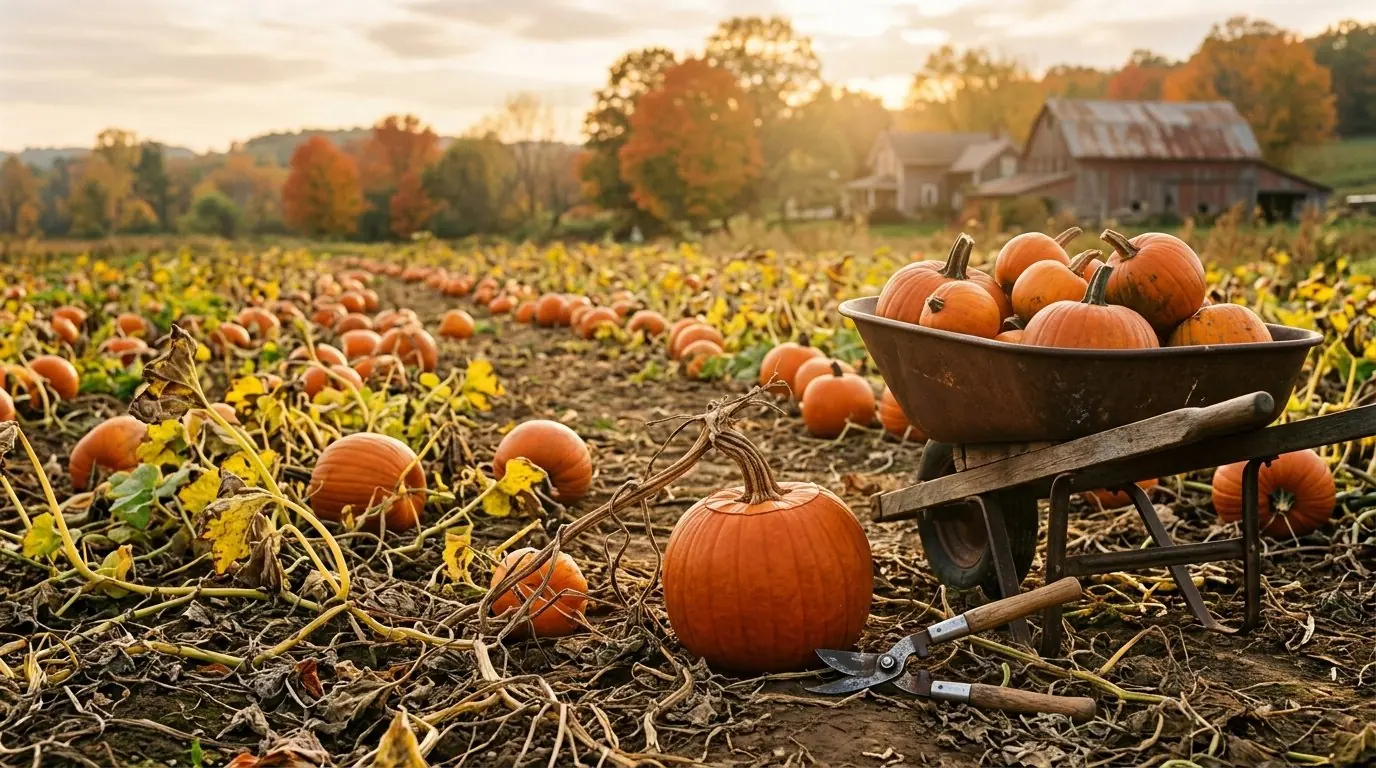
Knowing when to harvest pumpkins makes all the difference. Pick too early and they won’t store or taste their best; leave them too long and frost or rot can ruin the crop. This guide covers the signs of a ripe pumpkin, how to harvest without damaging it, and how to cure and store pumpkins so they last for months.
Key takeaways
- Timing: most pumpkins are ready about 90–120 days after planting, usually September–October in the Northern Hemisphere (March–April in the Southern Hemisphere).
- Ripe signs: full even color, a rind your fingernail can’t dent, and a hard, drying stem.
- Harvest right: cut with pruners, leave 3–4 in (8–10 cm) of stem, and never carry pumpkins by the stem.
- Cure and store: about 10–14 days at 80–85°F (27–29°C), then store at 50–55°F (10–13°C).
In this guide
- When to Harvest Pumpkins: The Short Answer
- 7 Signs a Pumpkin Is Ripe
- Pumpkin Days to Maturity (Typical Examples)
- What About Frost?
- Can You Pick Pumpkins Early?
- How to Harvest Pumpkins
- How to Cure Pumpkins
- How to Store Pumpkins
- Common Harvest Problems
- Selling Pumpkins?
- Quick Reference: Pumpkin Harvest at a Glance
- FAQ: When to Harvest Pumpkins
- Sources
When to Harvest Pumpkins: The Short Answer
Most pumpkins are ready about 90–120 days after planting, depending on the variety. In many regions that means September to October. Harvest when the pumpkin shows the ripeness signs below, and always before a hard frost.
7 Signs a Pumpkin Is Ripe
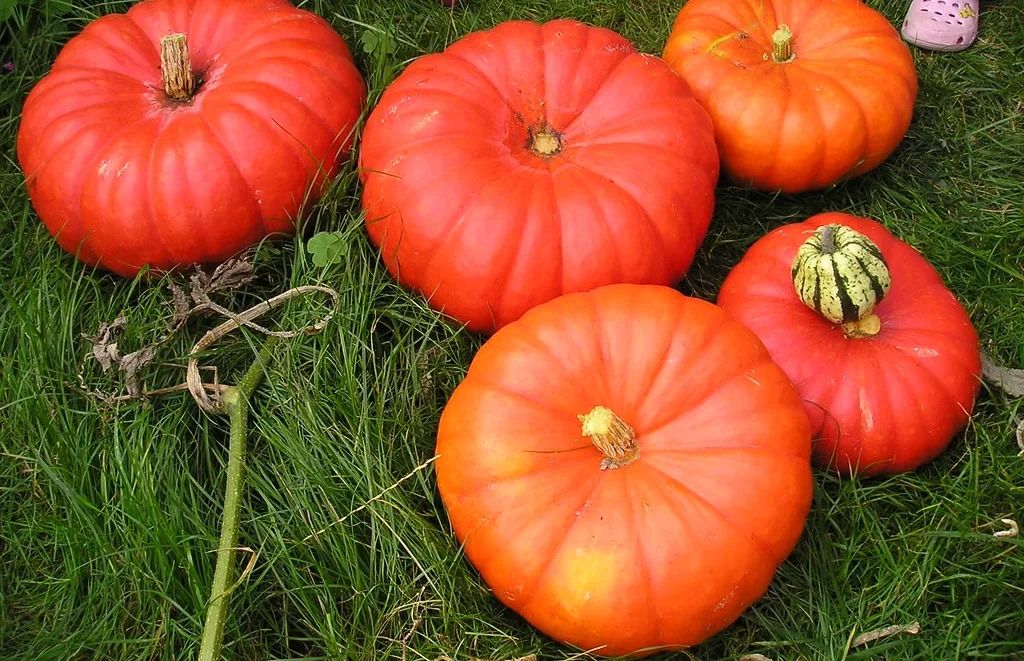
- Deep, even color: the pumpkin has reached its full mature color for the variety (orange, white, blue-gray and so on) all over.
- Hard rind: press your fingernail into the skin. If it resists and doesn’t dent easily, it’s ready.
- Hollow sound: knock on the pumpkin; a ripe one sounds hollow.
- Dry, woody stem: the stem above the fruit turns hard and starts to dry and crack.
- Dying vines: leaves and vines begin to yellow and die back.
- Glossy to dull skin: many varieties lose their shine as they mature.
- Days to maturity: check the seed packet. It’s a useful guide alongside the physical signs.
Pumpkin Days to Maturity (Typical Examples)
| Type | Examples | Days (approx.) |
|---|---|---|
| Mini pumpkins | Jack Be Little, Baby Boo | 90–100 |
| Pie / sugar pumpkins | Small Sugar, Winter Luxury | 95–110 |
| Carving pumpkins | Howden, Connecticut Field | 100–120 |
| Giant pumpkins | Atlantic Giant | 120–160 |
What About Frost?
- A light frost kills the vines but usually won’t harm mature pumpkins with hard rinds, though it’s best to harvest before one.
- A hard frost or freeze (around 28°F / −2°C or colder) can damage the fruit and cause soft spots and rot in storage.
- If a hard frost is forecast, harvest ripe pumpkins right away and cover the rest with blankets overnight.
Don’t wait for a hard freeze. Pumpkins hit by temperatures around 28°F (−2°C) or below often develop soft spots and rot in storage. Check the forecast through October and pick ripe fruit before the first hard frost.
Can You Pick Pumpkins Early?
If a pumpkin has started to color and the rind has begun to harden, it can finish ripening off the vine in a warm, sunny, dry spot. Fully green, soft pumpkins won’t ripen properly and won’t store well.
How to Harvest Pumpkins
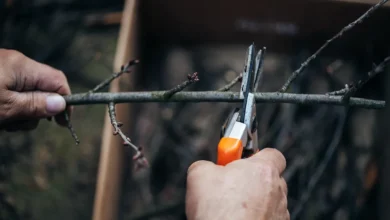
- Use pruners or a sharp knife, never twist or tear the fruit off the vine.
- Leave 3–4 in (8–10 cm) of stem. Pumpkins with short or missing stems rot much faster.
- Never carry a pumpkin by its stem. If it breaks, the pumpkin won’t keep.
- Handle gently. Bruises and cuts lead to rot. Wear gloves; the vines are prickly.
- Harvest on a dry day if possible.
How to Cure Pumpkins
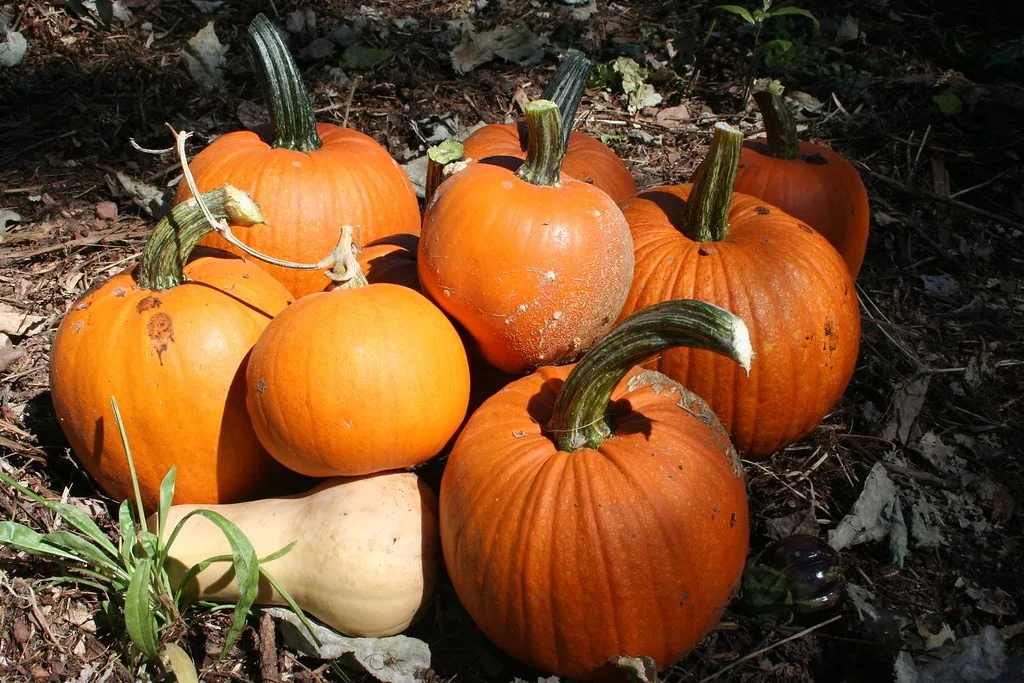
Curing hardens the skin, heals small scratches and helps pumpkins last months longer.
- Cure for about 10–14 days in a warm place, ideally around 80–85°F (27–29°C), with good airflow.
- A sunny porch, greenhouse or warm shed works. Bring them in if frost threatens.
- Turn them occasionally so all sides dry.
- Pie pumpkins are often cured briefly or not at all if you plan to use them soon.
Pro tip: Curing works best with high humidity as well as warmth; Iowa State University Extension suggests about 80% relative humidity during the 10-day cure.
Watch: how to harvest and store pumpkins
The University of Maine shows harvesting and storing pumpkins in this short extension video.
How to Store Pumpkins
- Clean: wipe the skin with a mild solution of 1 part household bleach to 10 parts water to reduce surface mold, then dry thoroughly.
- Temperature: store at about 50–55°F (10–13°C), with moderate humidity (roughly 50–70%).
- Airflow: place pumpkins in a single layer on shelves, cardboard or wooden pallets, not touching each other and not directly on concrete.
- Check weekly and use or remove any with soft spots.
- Storage life: well-cured pumpkins commonly keep 2–3 months, and some varieties longer.
Storing other crops from the fall garden too? Our guide on how to store vegetables covers the right temperature and humidity for each, and when to harvest vegetables covers ripeness signs for the rest of the garden.
Common Harvest Problems
| Problem | Cause | Fix |
|---|---|---|
| Soft spots in storage | Bruising, frost damage, no curing | Handle gently, harvest before hard frost, cure properly |
| Pumpkins won’t turn orange | Picked too early or a short season | Ripen in a warm, sunny spot if already partly colored |
| Rot on the underside | Contact with wet soil | Place pumpkins on straw or boards while growing |
| Broken stem | Carried by the stem | Use these first; they won’t store |
Selling Pumpkins?
Pumpkins are one of the best autumn sellers for small farms. Pair them with straw bales, gourds and mums for a seasonal display. See our farm stand ideas for setup and pricing tips. At home, pumpkins also anchor these fall living room decor ideas.
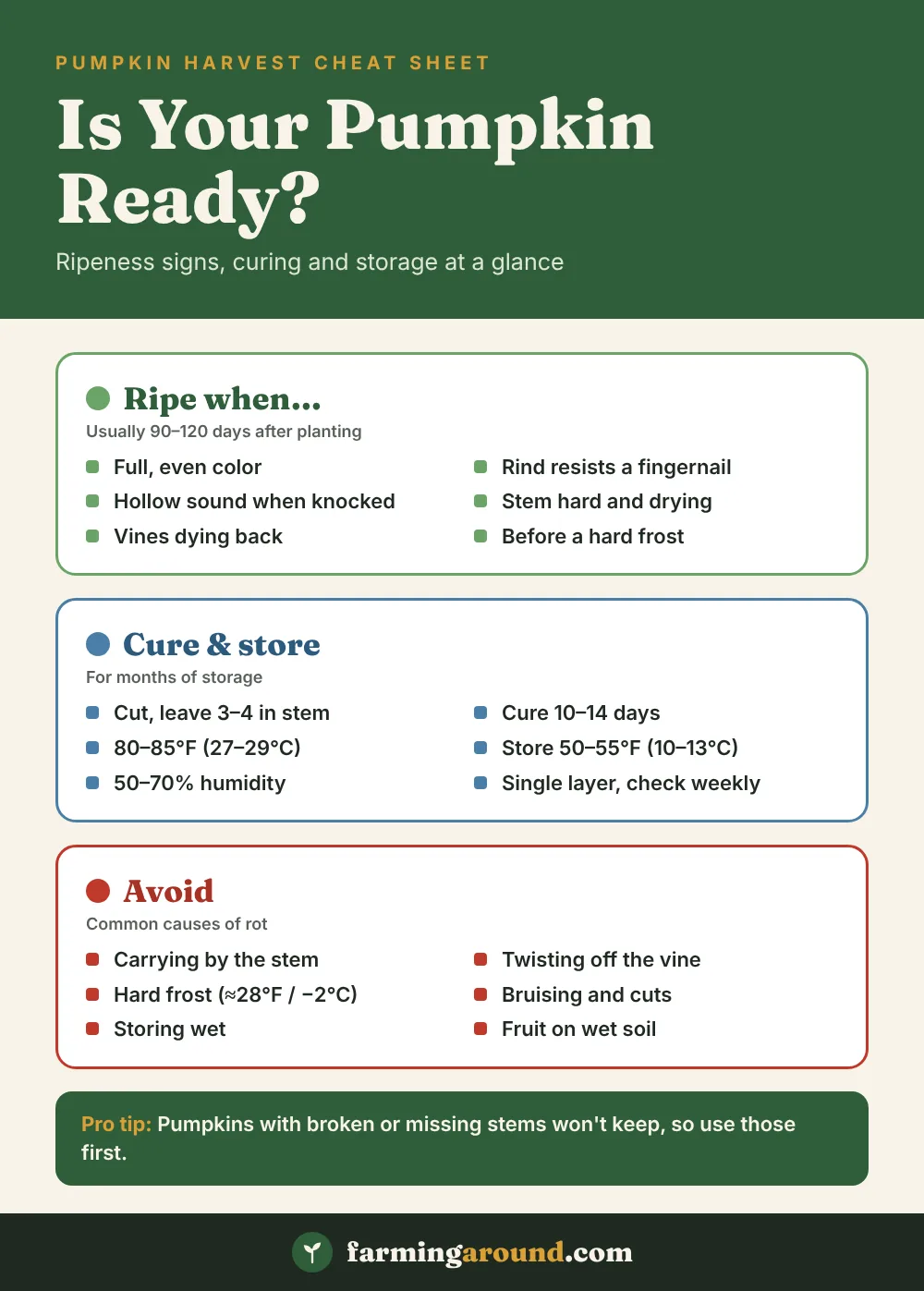
Quick Reference: Pumpkin Harvest at a Glance
Keep this card handy at harvest time.
Helpful gear for this guide
Handy picks that match the advice above.
Links go to Amazon. Prices and availability change, so check reviews and fit for your setup before buying.
FAQ: When to Harvest Pumpkins
Will pumpkins ripen after picking?
Partly colored pumpkins with a hardening rind can continue to color in a warm, sunny place. Fully green pumpkins usually won’t.
How long can pumpkins stay on the vine?
Until the vines die back and before a hard frost. Leaving ripe pumpkins too long in wet weather increases rot risk.
Should I wash pumpkins before storing?
Wipe them with a diluted bleach solution and dry them fully. Don’t store pumpkins wet.
Can you eat carving pumpkins?
Yes, but they’re usually stringy and watery. Pie or sugar pumpkins are much better for cooking.
Planning next season’s patch? Our fall garden vegetables guide shows what to grow after the pumpkins come out, and winter cover crops help rebuild the soil over winter.
Sources
- When Should I Harvest My Pumpkins? (Iowa State University Extension)
- What Is the Proper Way to Store Pumpkins? (Iowa State University Extension)
- Harvesting and Storing Home Garden Vegetables (University of Minnesota Extension)
Harvest dates vary with variety and local weather. Your local extension office can help with frost dates for your area.