

Last updated: September 2026
This guide contains affiliate links. As an Amazon Associate, FarmingAround earns from qualifying purchases, at no extra cost to you.
The most reliable vegetable planting calendar is built on your frost dates, not calendar months. Find your average last frost date in spring and your average first frost date in autumn, then count forward or back from them: peas and spinach go in 4–6 weeks before the last frost, tomatoes and peppers go out 1–2 weeks after it, and fall crops are timed backward from the first frost.
That is why “plant tomatoes in May” is right in Ohio, too late in Texas and too early in northern Minnesota. Below you’ll find how to look up your frost dates, a planting table for 25 common vegetables, a rough month-by-month guide by USDA hardiness zone, and notes for gardeners in the UK, Australia and New Zealand.
Key takeaways
- Frost dates, not months: every planting time in this guide is counted in weeks before or after your average last or first frost date.
- Zones are not frost dates: a USDA hardiness zone tells you how cold winter gets, not when spring frosts end. Look up both.
- Soil temperature decides germination: most cool-season seeds sprout from about 40°F (4°C); beans, squash, melons and peppers need at least 60°F (16°C).
- Plant in waves: succession planting every 2–3 weeks and a second, fall round of cool-season crops roughly double what a small bed produces.
In this guide
Find your frost dates first
Your last frost date is the average date of the final spring frost where you live. Your first frost date is the average date of the first autumn frost. The days between them are your frost-free growing season.
These are averages, not guarantees. In a typical year there’s still a real chance of frost after the “last” date, so many gardeners wait an extra week before setting out tender plants like tomatoes and basil. In the US, you can look up frost dates by ZIP code through many state extension services, NOAA climate data, or the Old Farmer’s Almanac frost date tool. Your local extension office will know the local quirks, such as cold valleys that frost later than the official weather station.
Why your USDA hardiness zone isn’t enough
A USDA hardiness zone is based on the average coldest winter temperature, in 10°F bands. It’s excellent for deciding whether a perennial, shrub or fruit tree will survive winter. It does not tell you when spring frosts end. Two towns in the same zone can have last frost dates weeks apart because of elevation, distance from the coast or how quickly spring warms up. Use your zone as a rough guide and your frost dates for actual timing.
Outside the US: UK gardeners use the RHS hardiness ratings (H1–H7) for plants and local average last frost dates for timing, which run later in the north and in upland areas. Australia uses broad climate zones (tropical, subtropical, arid, temperate and cool) rather than hardiness zones, and many coastal areas rarely frost at all; there, heat and rainfall set the calendar as much as cold does.
Cool-season vs warm-season crops
Every vegetable falls into one of two broad groups, and this split drives most of the planting calendar.
- Cool-season crops such as peas, spinach, lettuce, radishes, onions, carrots, beets, kale, cabbage and broccoli grow best in mild weather and handle light frost. They go in before the last frost date and again in late summer for a fall harvest. University of Minnesota Extension notes that their seeds germinate in soil between 40 and 50°F (4–10°C).
- Warm-season crops such as tomatoes, peppers, eggplant, beans, sweet corn, cucumbers, squash, melons and sweet potatoes are damaged or killed by frost. They go in after the last frost date, once the soil has warmed.
Utah State University Extension breaks this down further into four groups: hardy crops planted as soon as the soil can be worked, semi-hardy crops about 2 weeks before the last frost, tender crops on the last frost date, and very tender crops about 2 weeks after that. The table below follows the same logic.
Vegetable planting calendar table
All timings are counted from your average frost dates. “LF” means last spring frost; fall timings are counted back from the first fall frost. Soil temperatures are the minimum for germination; seeds sprout faster and more evenly when the soil is warmer.
| Vegetable | Start indoors (weeks before LF) | Direct sow or transplant outdoors | Min. soil temp for germination | Fall planting (weeks before first frost) |
|---|---|---|---|---|
| Beans, snap | Not needed | Sow on LF to 2 weeks after | 60°F (16°C) | 10–12 (tender, needs to finish before frost) |
| Beets | Not needed | Sow 2–4 weeks before LF | 40°F (4°C) | 8–10 |
| Broccoli | 8–10 | Transplant 2–4 weeks before LF | 40°F (4°C) | 10–12 (transplants) |
| Cabbage | 8–10 | Transplant 2–4 weeks before LF | 40°F (4°C) | 10–12 (transplants) |
| Carrots | Not recommended | Sow 2–4 weeks before LF | 40°F (4°C) | 10–12 |
| Cauliflower | 8–10 | Transplant about 2 weeks before LF | 40°F (4°C) | 10–12 (transplants) |
| Chard, Swiss | Optional, 4–6 | Sow 2 weeks before LF | 40°F (4°C) | 8–10 |
| Corn, sweet | Not recommended | Sow on LF to 2 weeks after | 50°F (10°C); 60°F (16°C) better | Long-season areas only, 12+ |
| Cucumbers | Optional, 3–4 | Sow or transplant 1–2 weeks after LF | 60°F (16°C) | 10–12 in warm areas |
| Eggplant | 8–10 | Transplant 2 weeks after LF | 60°F (16°C) | Not suited |
| Garlic | Not needed | Plant cloves in autumn, not spring | 32°F (0°C) | A few weeks before the ground freezes |
| Kale and collards | 6–8 | Sow or transplant 2–4 weeks before LF | 40°F (4°C) | 8–10 |
| Lettuce | Optional, 4–6 | Sow or transplant 2–4 weeks before LF | 35°F (2°C) | 6–8 |
| Melons (cantaloupe, watermelon) | 3–4 | Sow or transplant 2 weeks after LF | 60°F (16°C) | Not suited |
| Okra | 4–6 | Sow or transplant 2–3 weeks after LF | 60°F (16°C) | Not suited |
| Onions | 10–12 (from seed) | Sets or transplants 2–4 weeks before LF | 35°F (2°C) | Not usually (bulbs need long days) |
| Peas | Not needed | Sow 4–6 weeks before LF | 40°F (4°C) | 10–12 |
| Peppers | 8–10 | Transplant 2 weeks after LF | 60°F (16°C) | Not suited |
| Potatoes | Not needed | Plant seed potatoes 2–4 weeks before LF | Workable, not soggy, soil | Not usually |
| Pumpkins and winter squash | Optional, 3–4 | Sow or transplant 1–2 weeks after LF | 60°F (16°C) | Not suited |
| Radishes | Not needed | Sow 4–6 weeks before LF | 40°F (4°C) | 4–6 |
| Spinach | Not needed | Sow 4–6 weeks before LF | 35°F (2°C) | 6–8 |
| Summer squash and zucchini | Optional, 3–4 | Sow or transplant on LF to 2 weeks after | 60°F (16°C) | 8–10 in warm areas |
| Sweet potatoes | Slips, not seed | Plant slips 2–3 weeks after LF | Warm soil (grown from slips) | Not suited |
| Tomatoes | 6–8 | Transplant 1–2 weeks after LF | 50°F (10°C) | Warm zones only, 12–14 (transplants) |
Germination temperatures follow the long-standing extension tables published by UC Master Gardeners and Alabama Extension. Fall timings are approximate: for exact dates, take the “days to maturity” on your seed packet, add about 2 weeks because growth slows as days shorten, and count back from your first frost date. Our guide to fall garden vegetables covers the best autumn crops in more detail.
A few crops don’t fit the usual pattern. Seed potatoes go in a couple of weeks before the last frost, as explained in how to grow potatoes. Garlic is planted in autumn and harvested the next summer; see how to grow garlic for timing by region. Sweet potatoes grow from slips that need genuinely warm soil, so check how to grow sweet potatoes before you order them.
Month-by-month by zone (approximate)
This table is a rough guide only. It assumes typical frost dates for each zone group: last frost around late May to early June in zones 3–4, mid-April to mid-May in zones 5–6, mid-March to mid-April in zones 7–8, and light or occasional frost in zones 9–10. Your own frost dates always win.
| Month | Zones 3–4 | Zones 5–6 | Zones 7–8 | Zones 9–10 |
|---|---|---|---|---|
| January–February | Plan, order seed | Start onions indoors (late Feb) | Start tomatoes and peppers indoors; sow peas late Feb | Plant cool-season crops; start tomatoes and peppers |
| March | Start onions indoors | Start brassicas, peppers, eggplant indoors | Sow peas, spinach, lettuce, radishes; plant potatoes | Transplant tomatoes and peppers; sow beans |
| April | Start brassicas, peppers, tomatoes indoors | Sow peas, spinach, radishes; plant potatoes; transplant brassicas | Transplant tomatoes and peppers after last frost; sow beans, corn | Sow squash, cucumbers, melons, corn |
| May | Sow peas, spinach, lettuce; plant potatoes | Transplant tomatoes and peppers late May; sow beans, squash | Plant sweet potatoes, okra, melons | Plant heat-lovers: okra, sweet potatoes, southern peas |
| June | Transplant tomatoes and peppers; sow beans, squash | Succession sow beans, corn, cucumbers | Succession sow beans; start fall brassicas indoors | Midsummer heat: many crops struggle; focus on heat-tolerant crops |
| July–August | Sow fall lettuce, radishes, spinach (July) | Transplant fall broccoli and cabbage; sow carrots, beets, kale | Start fall tomatoes (early Jul); sow fall brassicas, carrots | Start fall tomatoes and brassicas indoors (Aug) |
| September–October | Plant garlic; sow cover crops | Sow spinach, radishes; plant garlic (Oct) | Sow lettuce, spinach, radishes; plant garlic | Main cool-season planting: lettuce, carrots, broccoli, peas |
Start seeds indoors or direct sow?
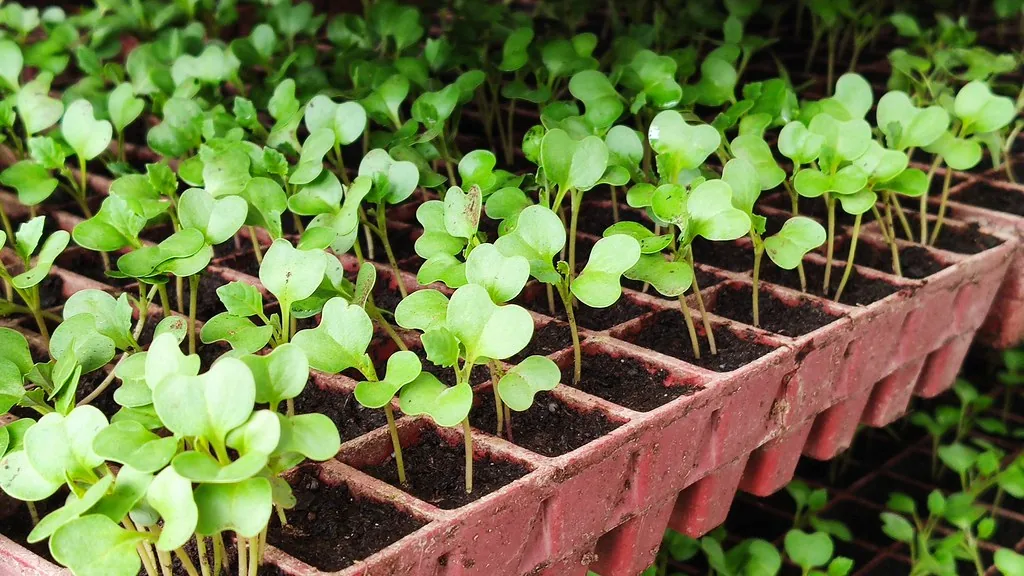
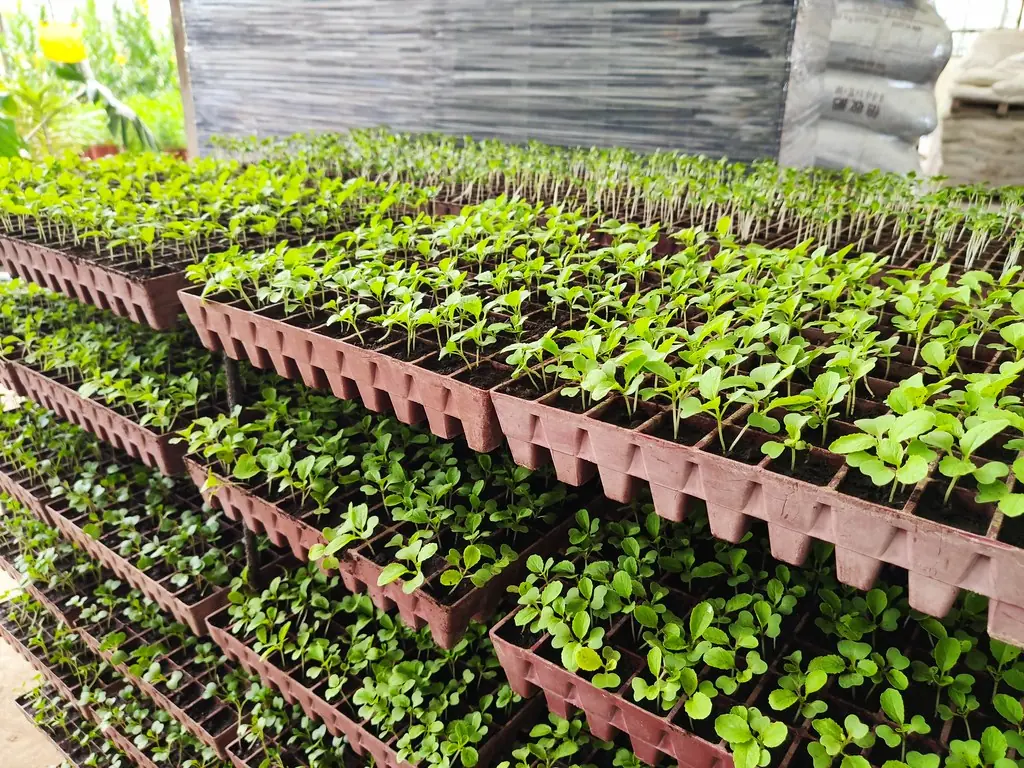
Start seeds indoors for crops that need a long season or grow slowly as seedlings: tomatoes, peppers, eggplant, onions and the cabbage family. University of Missouri Extension lists 6–8 weeks from seed to transplant for broccoli, cabbage and cauliflower, 6–10 weeks for tomatoes and peppers, and only 3–5 weeks for cucumbers, melons and squash. Start them too early and you get leggy, root-bound plants that stall after transplanting.
Direct sow crops that dislike root disturbance or grow fast from seed: carrots, beets, radishes, peas, beans, corn and spinach. Cucumbers, squash and melons can go either way; in short-season areas a 3–4 week head start indoors helps, but handle the roots gently.
Either way, harden off indoor seedlings for about a week before planting out by setting them outside for a few hours a day and gradually increasing their exposure to sun and wind.
Pro tip: Write your last frost date on a calendar, then count backward and mark each seed-starting week. Ten minutes in January saves you from starting peppers too late or tomatoes too early.
Watch: vegetable planting calendar and seed starting
This short video from University of Missouri Extension covers building a vegetable planting calendar and timing seed starting.
Soil temperature: the other planting signal
Frost dates tell you when plants are safe from cold air. Soil temperature tells you whether seeds will actually sprout. In cold, wet soil, seeds of beans, corn and squash germinate slowly or rot before they come up, even if there’s no frost in the forecast.
A basic soil thermometer costs little and removes the guesswork. Push it about 2–4 inches (5–10 cm) deep, the depth most seeds are sown, and check in the morning when soil is coolest. As a rule of thumb:
- 35–40°F (2–4°C): spinach, lettuce, onions, peas, radishes, carrots, beets and the cabbage family can go in.
- 50°F (10°C): the minimum for tomatoes and sweet corn, though corn does much better at 60°F.
- 60°F (16°C) and up: beans, cucumbers, squash, pumpkins, melons, peppers, eggplant and okra.
Black plastic mulch or a cloche laid over a bed for a week or two warms the soil faster in spring.
Succession planting
Succession planting means sowing small batches every few weeks instead of one big planting, so you get a steady harvest instead of a glut. It works best for fast crops you eat fresh:
- Every 1–2 weeks: radishes and baby salad greens.
- Every 2–3 weeks: lettuce, bush beans, spinach (while weather stays cool), carrots and beets.
- Every 2–3 weeks, 2–3 sowings: sweet corn, so the whole crop doesn’t ripen in the same week.
The other kind of succession is swapping crops in the same bed: early peas followed by bush beans, then fall spinach or kale. Stop sowing each crop when there are no longer enough days left before your first frost for it to mature. When the last crop comes out in autumn, sowing one of the winter cover crops for gardens protects and feeds the soil until spring.
Southern Hemisphere planting
In Australia, New Zealand and South Africa, seasons run roughly six months opposite to the Northern Hemisphere. Spring is September to November, so the warm-season crops that northern gardeners plant in May go in around October–November, and cool-season crops are sown from late summer through autumn (February to May).
- Temperate Australia (Melbourne, Adelaide, Sydney): start tomatoes and peppers indoors in late winter and plant out in spring once frosts have passed; sow peas, broad beans, onions and brassicas in autumn.
- Subtropical and tropical Australia: the calendar turns around; many gardeners grow tomatoes and lettuce through the milder, drier months (roughly autumn to spring) because summer heat and humidity are the main problem.
- New Zealand: a common rule of thumb is to wait until after Labour Day (late October) before planting tomatoes outdoors, later in inland and southern areas that frost into November.
The same frost-date method works anywhere: find your local average last and first frost dates and use the week counts in the table above.
Common mistakes
- Planting by the calendar or the garden center: tomato plants go on sale weeks before it’s safe to plant them in many areas.
- Using your zone as a frost date: your hardiness zone won’t tell you when the last spring frost falls.
- Ignoring cold soil: beans and squash sown into 50°F (10°C) soil often rot. Wait for 60°F (16°C).
- Starting seeds too early indoors: an 8-week-old tomato transplants better than a 14-week-old one.
- Skipping hardening off: sheltered seedlings can scorch or stall when moved straight outside.
- Planting fall crops too late: growth slows as days shorten, so allow roughly 2 weeks beyond the days to maturity.
Warning: Frost dates are averages. Check the 10-day forecast before setting out tender plants, and keep row cover or old sheets handy to throw over them on a surprise cold night.
Helpful gear for this guide
Handy picks that match the advice above.
Links go to Amazon. Prices and availability change, so check reviews and fit for your setup before buying.
Quick Reference: When to Plant Vegetables
| Timing | What to plant |
|---|---|
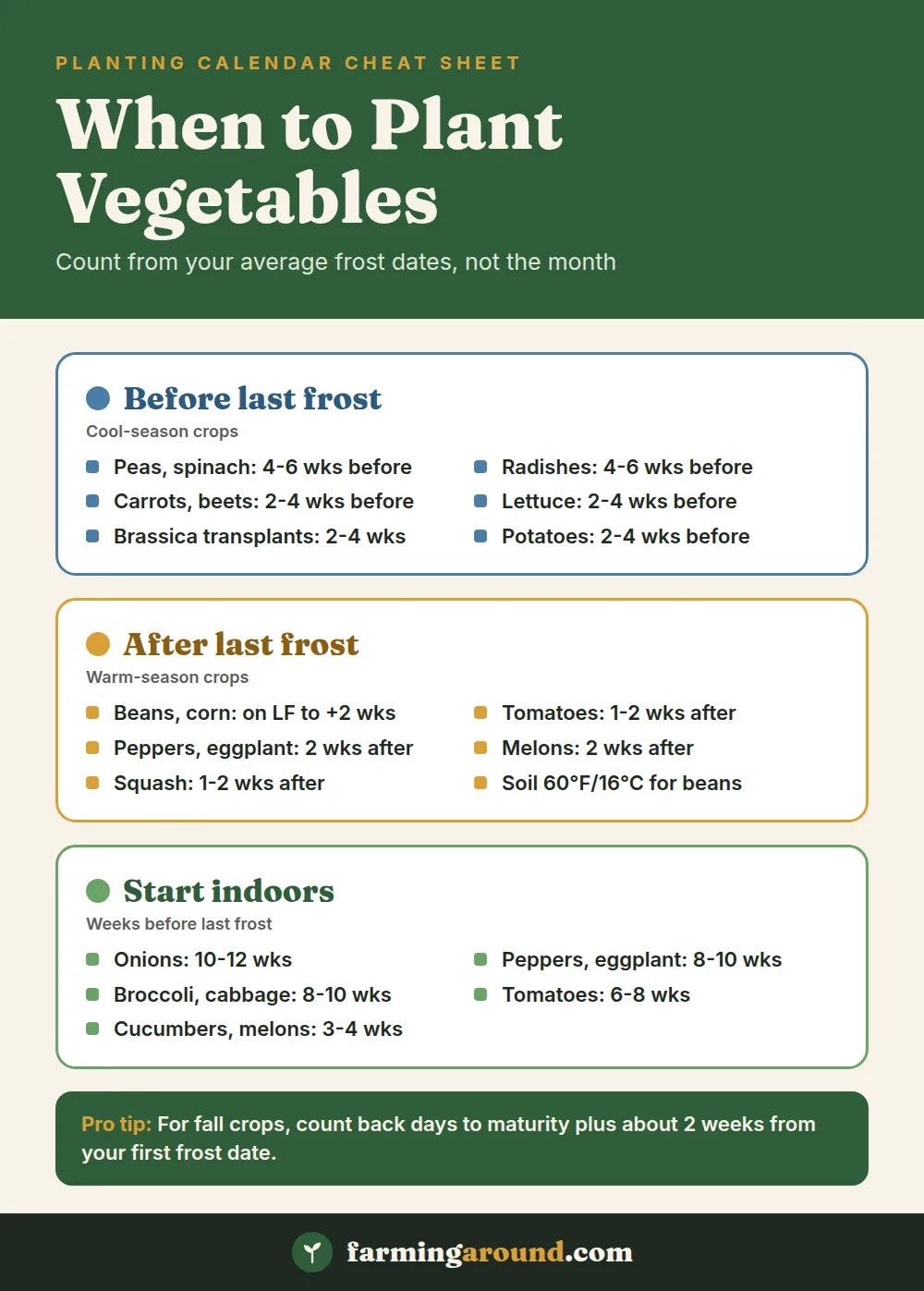
| 8–12 weeks before last frost | Start onions, peppers, eggplant, broccoli, cabbage indoors |
| 6–8 weeks before last frost | Start tomatoes, kale indoors |
| 4–6 weeks before last frost | Sow peas, spinach, radishes outdoors |
| 2–4 weeks before last frost | Sow carrots, beets, lettuce; plant potatoes, onion sets, brassica transplants |
| On to 2 weeks after last frost | Sow beans, corn, squash; transplant tomatoes |
| 2–3 weeks after last frost | Transplant peppers, eggplant, melons; plant sweet potato slips |
| 6–12 weeks before first frost | Fall lettuce, spinach, kale, carrots, beets, broccoli |
FAQ
When should I plant vegetables?
Plant cool-season vegetables such as peas, spinach and lettuce 2–6 weeks before your average last frost date, and warm-season vegetables such as tomatoes, beans and squash on or 1–2 weeks after it, once the soil has warmed to 50–60°F (10–16°C).
How do I find my last frost date?
Look it up by ZIP code or town through your state or local extension service, NOAA climate data or the Old Farmer’s Almanac frost date tool. Outside the US, national weather services and local gardening groups publish average frost dates.
Is my USDA hardiness zone the same as my frost date?
No. Your zone reflects average winter minimum temperatures. It’s useful for choosing perennials but doesn’t tell you when spring or fall frosts happen, so you need both.
Can I plant vegetables in the fall?
Yes. Many cool-season crops, including lettuce, spinach, kale, carrots, beets, radishes and broccoli, do well planted in late summer. Count back from your first frost date using days to maturity plus about 2 weeks.
What vegetables can I plant before the last frost?
Peas, spinach, radishes, onions, lettuce, kale, cabbage, broccoli, beets, carrots and potatoes can all go in before the last frost, since they tolerate cool soil and light frost.
How early should I start seeds indoors?
Most crops need 6–10 weeks: about 6–8 weeks for tomatoes, 8–10 weeks for peppers, eggplant and the cabbage family, 10–12 weeks for onions from seed, and only 3–4 weeks for cucumbers, squash and melons.
Sources
- University of Minnesota Extension: Planting the vegetable garden
- Utah State University Extension: Suggested vegetable planting dates for Utah
- Alabama Cooperative Extension System: Soil temperature conditions for vegetable seed germination
- University of Missouri Extension: Starting plants indoors from seeds
Frost dates and planting windows vary with local conditions. For timing specific to your area, contact your local extension office or national gardening body.

5 Comments