

Last updated: November 2026
This guide contains affiliate links. As an Amazon Associate, FarmingAround earns from qualifying purchases, at no extra cost to you.
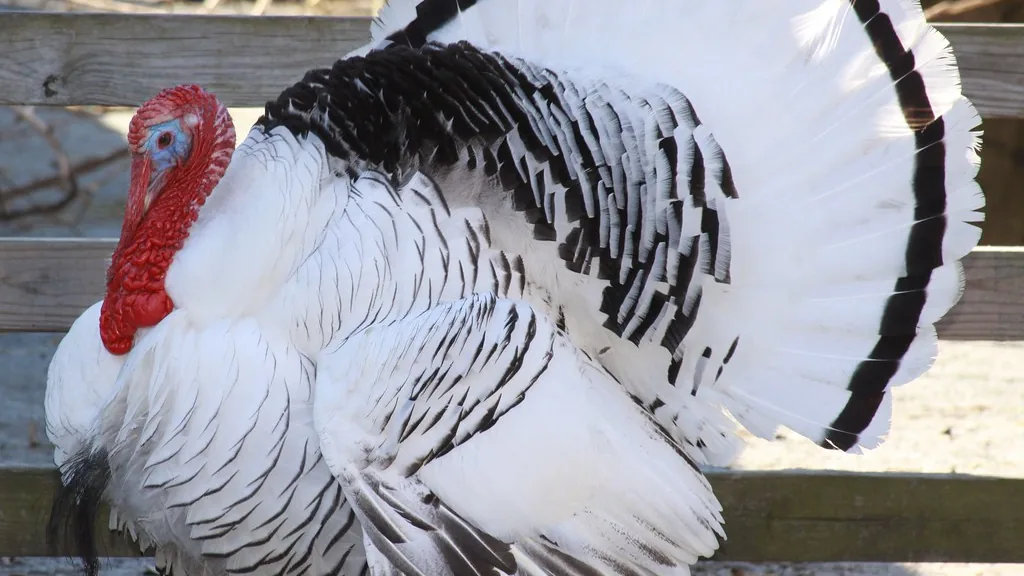
Royal Palm turkeys are a small, striking heritage breed with snow-white feathers edged in sharp metallic black. Mature toms weigh around 20–22 lb (9–10 kg) and hens about 12 lb (5.4 kg), which makes them one of the lightest standard turkey breeds. They are kept mainly for exhibition, for small-scale home meat production and as active foragers that help keep insects down.
Below you will find a quick-facts table, the breed’s Florida origins, how to recognize a true Royal Palm, what temperament to expect, realistic meat and egg output, and the care they need, so you can decide whether they suit your farm or homestead.
Key takeaways
- Size: toms about 20–22 lb (9–10 kg), hens about 12 lb (5.4 kg) when mature.
- Purpose: exhibition, ornamental flocks, small-scale meat and insect control.
- Strong flyers and foragers: they need secure fencing or a covered run.
- Conservation status: listed as “Watch” by The Livestock Conservancy.
In this guide
Royal Palm Turkey Quick Facts
| Trait | Royal Palm turkey |
|---|---|
| Origin | Lake Worth, Florida, USA (1920s) |
| Recognized by the APA | 1971 |
| Mature weight | Toms 20–22 lb (9–10 kg); hens about 12 lb (5.4 kg) |
| Young bird weight | Young toms about 16 lb (7.3 kg); young hens about 10 lb (4.5 kg) |
| Main uses | Exhibition, ornamental, small-scale meat, pest control |
| Egg color | Pale cream to medium brown, spotted |
| Broodiness | Often broody; hens frequently make good mothers |
| Flying ability | Strong flyers |
| Conservation status | Watch (The Livestock Conservancy) |
History and Origin
According to The Livestock Conservancy, the first American turkeys with the Palm color pattern appeared in the 1920s in a mixed flock of Black, Bronze, Narragansett and wild turkeys on Enoch Carson’s farm in Lake Worth, Florida. Breeders selected for the pattern and body type over the following decades, and the American Poultry Association added the Royal Palm to its Standard of Perfection in 1971.
A similar black-laced white turkey had been known in Europe since the 1700s under names such as Pied and Cröllwitzer, but the American Royal Palm was developed separately. Because it never suited large-scale meat production, the breed was kept alive largely by exhibitors and small farms, and it remains on The Livestock Conservancy’s “Watch” list today. If you are comparing heritage breeds, our guides to Narragansett turkeys and white turkeys are a good next read.
Appearance
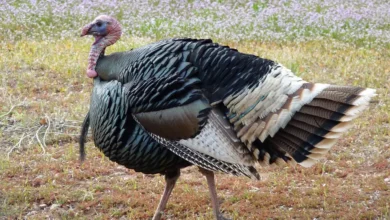
The Royal Palm is easy to recognize. Its plumage is mostly white, with crisp metallic black bands on the feather edges that give the breast a scaled look. Other breed features include:
- Saddle: black.
- Tail: white, with a black band and white edging, which shows off well when a tom fans it.
- Head and throat: red to bluish-white, changing with mood.
- Beard: black.
- Beak: light horn; eyes: light brown.
- Shanks and toes: deep pink.
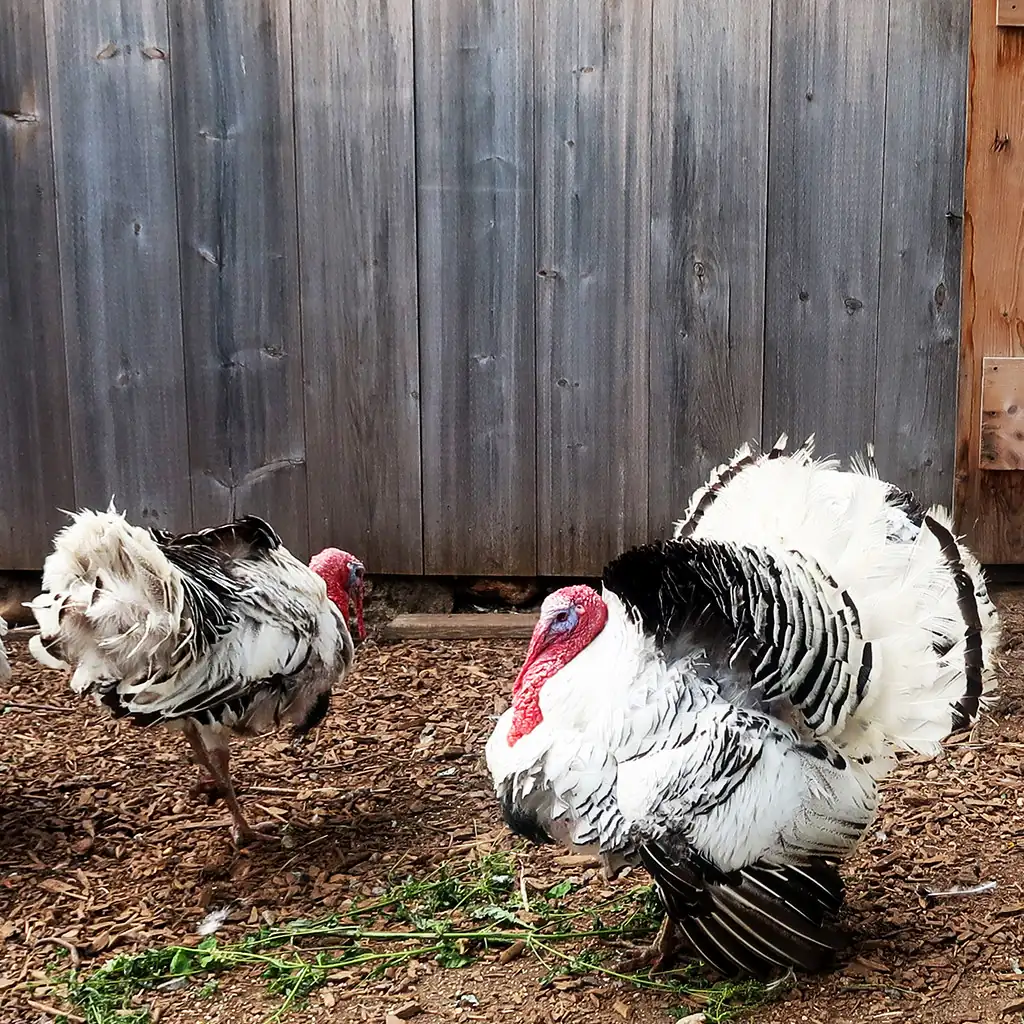
Hens share the same pattern but are much smaller, with less head color and usually no beard.
Temperament and Behavior
Temperament in Royal Palms depends a lot on the breeding line. The Livestock Conservancy notes that some lines are aggressive while others are docile, so it pays to buy from a breeder who selects for calm birds. Toms usually get along well with people, especially when they are handled often as poults, but they may harass other species if housed with them.
They are active, thrifty foragers that spend much of the day hunting insects and grazing. They are also strong flyers: without shelter, they will roost in trees, and without good fencing they wander. Read more in our guide to whether turkeys can fly.
Watch: Royal Palm Turkeys
This short clip from Oklahoma State University Extension shows Royal Palm turkeys and their distinctive markings.
Meat and Egg Production
Meat
Royal Palms produce flavorful heritage meat, but their small frame means a light carcass. That limits their appeal for commercial production, yet it makes them a practical choice for a family-sized holiday bird or for homesteads with limited space. Like other heritage turkeys, they grow more slowly than Broad Breasted commercial birds, so plan on raising them for longer.
Eggs
The Livestock Conservancy reports that Royal Palm hens lay fewer than 20 eggs in spring. The eggs are large, pale cream to medium brown and spotted. Turkey eggs are edible and taste much like chicken eggs; learn more in our guide to turkey eggs. Hens are often broody and many make good mothers, which is a real advantage if you want to hatch your own poults.
Caring for Royal Palm Turkeys
Housing and fencing
Give your flock a dry, draft-free shelter with sturdy roosts higher than you would use for chickens; our turkey roost guide covers sizes and designs. Because Royal Palms fly well, use tall poultry fencing, a covered run, or clip one wing of each bird. Secure the shelter at night, as turkeys are vulnerable to foxes, coyotes, raccoons, owls and dogs.
Feeding
Poults need a high-protein game bird or turkey starter (around 28–30% protein) for their first several weeks, then a grower ration. Adults on pasture forage a good part of their diet but still need a balanced turkey or game bird feed, plenty of clean water, and oyster shell for laying hens. For a complete feeding plan, see what turkeys eat.
Health
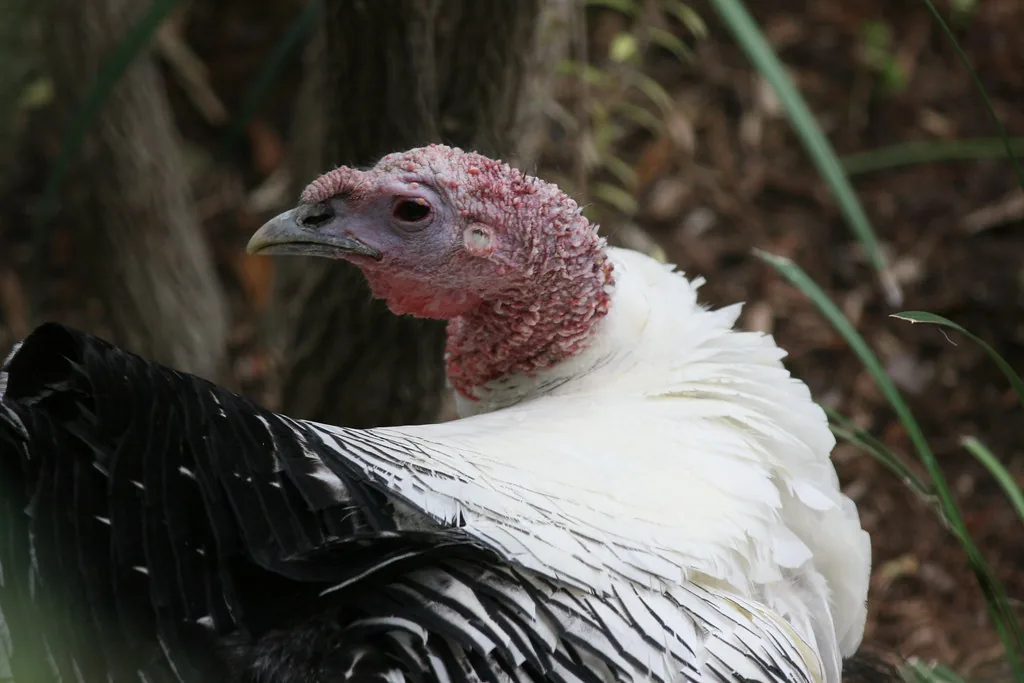
Royal Palms are generally hardy, but like all turkeys they are susceptible to blackhead disease (histomoniasis), which can be carried by chickens. Many keepers raise turkeys away from chickens or at least keep their ground and housing separate. Keep housing clean and dry, check birds regularly for lice and mites, and talk to a poultry vet if a bird stops eating or looks hunched and dull.
Pro tip: Handle poults gently and often in their first weeks. Royal Palm toms raised this way are usually much easier to manage as adults.
Pros and Cons
| Pros | Cons |
|---|---|
| Striking, show-quality looks | Small carcass for a meat bird |
| Small size suits small properties | Strong flyers that need secure fencing |
| Active foragers that help control insects | Temperament varies by breeding line |
| Hens often broody and good mothers | Low egg numbers |
| Breeds naturally, unlike Broad Breasted turkeys | Slower growth than commercial meat breeds |
Is the Royal Palm Right for You?
Royal Palms are a great fit if you: want a beautiful, manageable heritage turkey; have limited space; plan to show birds; want to raise a small holiday turkey; or want to help conserve a rare breed.
Look at other breeds if you: want maximum meat per bird or need lots of eggs. Heavier heritage breeds, or commercial meat breeds, will give more meat.
Buying Royal Palm turkeys
Because the breed is uncommon, it pays to buy from a breeder or hatchery that keeps true Royal Palm lines. When you look at adult birds, check for clean white plumage with crisp black edging, a black saddle, the banded white tail and deep pink shanks. Ask the breeder how they select for temperament, since that varies so much between lines, and whether the parent stock mates naturally. If you plan to breed or show your birds, buying from a single well-kept line usually gives more consistent results than mixing birds from several sources.
New to turkeys? A small starter group of hens with one tom is easy to manage, and you can learn more about flock terms in what a group of turkeys is called.
Helpful gear for this guide
Handy picks that match the advice above.
Links go to Amazon. Prices and availability change, so check reviews and fit for your setup before buying.
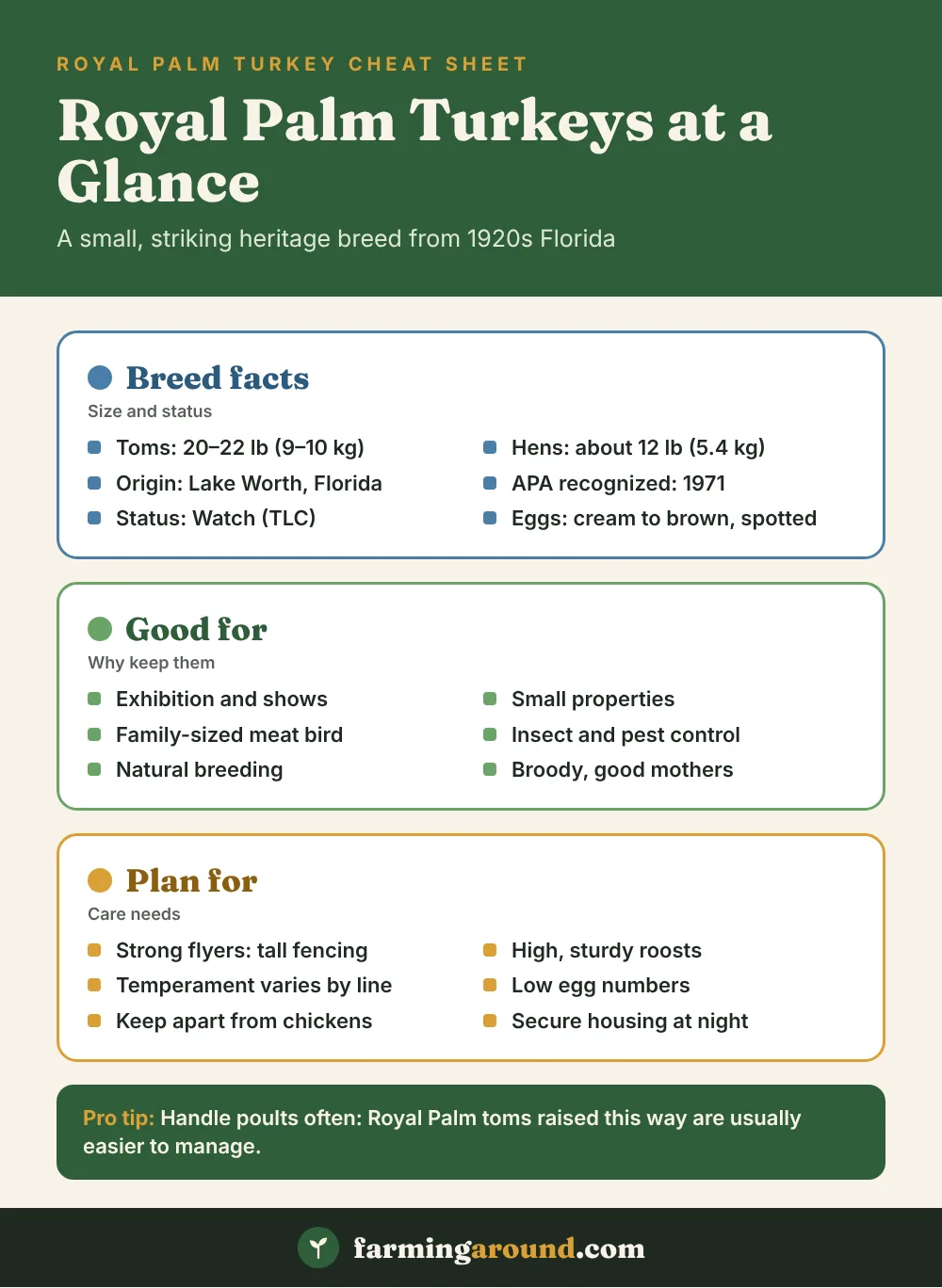
At a Glance: Royal Palm Turkeys
Here are the key Royal Palm facts in one place.
FAQ
How big do Royal Palm turkeys get?
Mature toms weigh around 20–22 lb (9–10 kg) and mature hens about 12 lb (5.4 kg). Young toms are about 16 lb (7.3 kg) and young hens about 10 lb (4.5 kg).
Are Royal Palm turkeys good to eat?
Yes. They produce flavorful heritage meat, but their small frame gives a light carcass, so they suit home use more than commercial sale.
Are Royal Palm turkeys friendly?
Many are, especially toms handled often as poults, but temperament varies by breeding line. Some lines are calmer than others, so choose your breeder carefully.
Can Royal Palm turkeys fly?
Yes, they are strong flyers. Use tall fencing, a covered run or wing clipping, and give them high roosts so they do not head for the trees.
How many eggs do Royal Palm turkeys lay?
The Livestock Conservancy reports fewer than 20 eggs per hen in spring. The eggs are large, cream to medium brown and spotted.
Can Royal Palm turkeys live with chickens?
They can share space, but chickens can carry blackhead disease, which is often serious in turkeys. Many keepers house them separately to reduce the risk.
Sources
- Royal Palm Turkey (The Livestock Conservancy)
- Royal Palm Turkeys (Oklahoma State University Breeds of Livestock)
- What Do Turkeys Eat? Tips for Raising Turkeys (Purina Animal Nutrition)
This guide is general information. For health problems in your flock, talk to a vet who treats poultry.

One Comment