

Last updated: November 2026
This guide contains affiliate links. As an Amazon Associate, FarmingAround earns from qualifying purchases, at no extra cost to you.
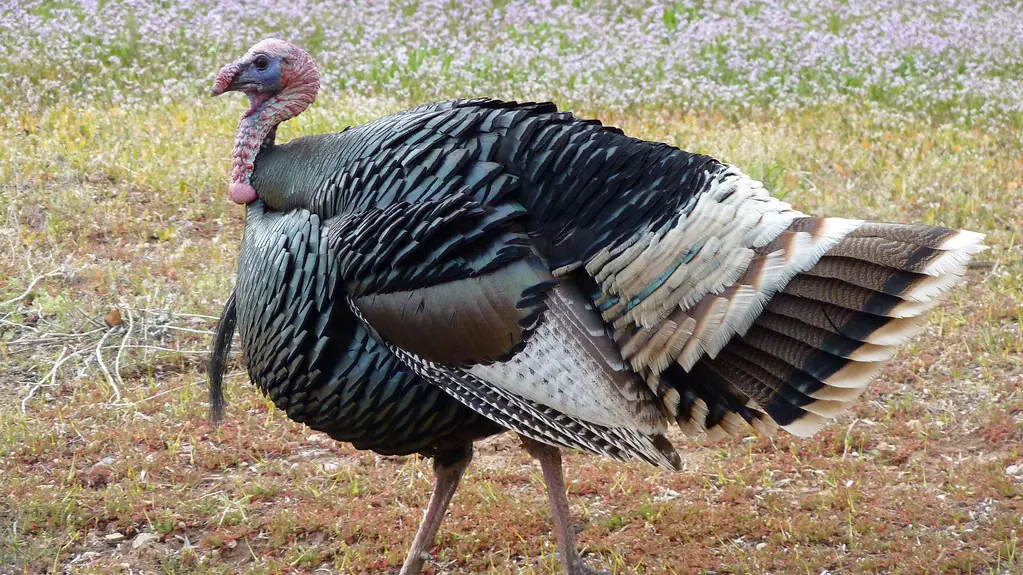
Wild turkeys eat mostly plants: acorns and other nuts, seeds, grasses, buds, berries and wild fruit make up about 90% of an adult’s diet. The rest is animal food such as insects, snails and the occasional small lizard or snake. Young poults are the exception and live almost entirely on insects for their first few weeks.
Because turkeys find plenty of natural food, wildlife agencies advise people not to feed them. Below you’ll find what wild turkeys eat season by season, what poults need, which foods are harmful, and how to support turkeys with habitat instead of handouts. If you keep domestic birds, see our separate guide to what turkeys eat on the farm.
Key takeaways
- About 90% plants: acorns, seeds, grasses, clover, buds and wild fruit.
- About 10% animal food: insects, snails and other small creatures.
- Poults eat mostly insects for protein, then switch toward plants at around 4 weeks.
- Don’t feed wild turkeys. Handouts cause aggression, disease spread and nuisance flocks.
In this guide
What Wild Turkeys Eat in Nature
Wild turkeys are opportunistic foragers. They scratch through leaf litter, pick seeds from grass heads and walk field edges looking for whatever is in season. Their main foods fall into a few groups:
| Food group | Examples | Why it matters |
|---|---|---|
| Hard mast (nuts) | Acorns, beechnuts, pecans, pine seeds | A preferred, energy-rich food in fall and winter |
| Seeds | Grass and weed seeds, sedges, ragweed, sunflower | Available most of the year |
| Green plants | Grass leaves, clover, dandelion, tree buds | Important in spring |
| Soft mast (fruit) | Wild grapes, dogwood, blackberries, cherries, hackberry, blackgum | Summer and fall energy |
| Animal food | Grasshoppers, beetles, caterpillars, snails, small reptiles | Protein; snails provide calcium for egg-laying hens |
| Crops | Waste corn, oats, wheat, soybeans in harvested fields | Useful in winter, especially after heavy snow |
How Their Diet Changes Through the Year
- Spring: fresh grass and sedge leaves, tree buds, leftover acorns, insects and snails. Hens eat more animal food before and during egg laying.
- Summer: insects become a big part of the diet, along with blackberries, dogwood and blackgum fruit, and ripening grass seeds. Flocks feed in hayfields, pastures and open woods.
- Fall: acorns and other nuts take over when available, plus grass seed, wild grapes and pine seed.
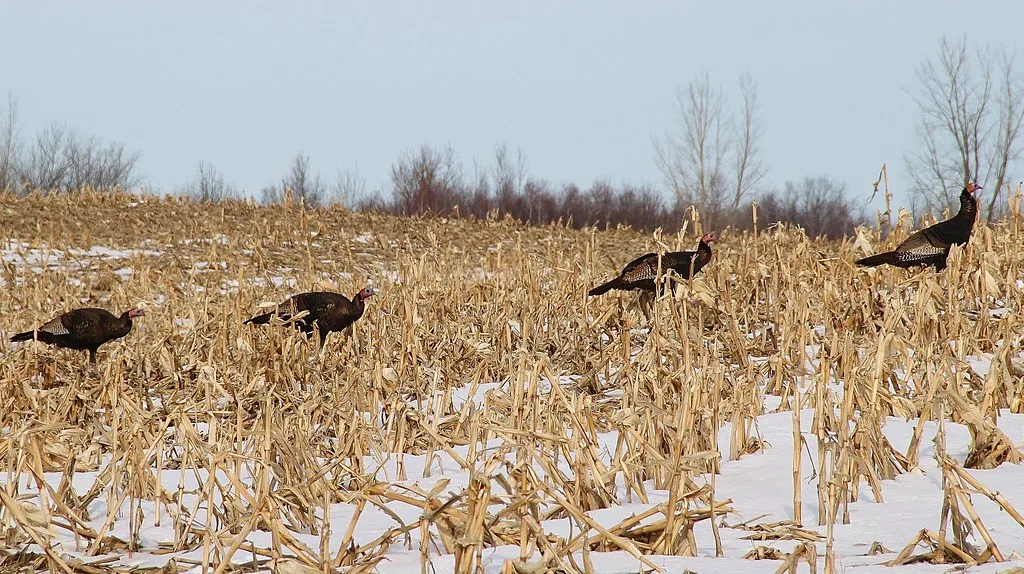
- Winter: turkeys rely on mature hardwoods for nuts, plus seeds, sumac and leftover grain in harvested fields. In deep snow they often feed along streams and springs where the ground stays open.
What Baby Wild Turkeys (Poults) Eat
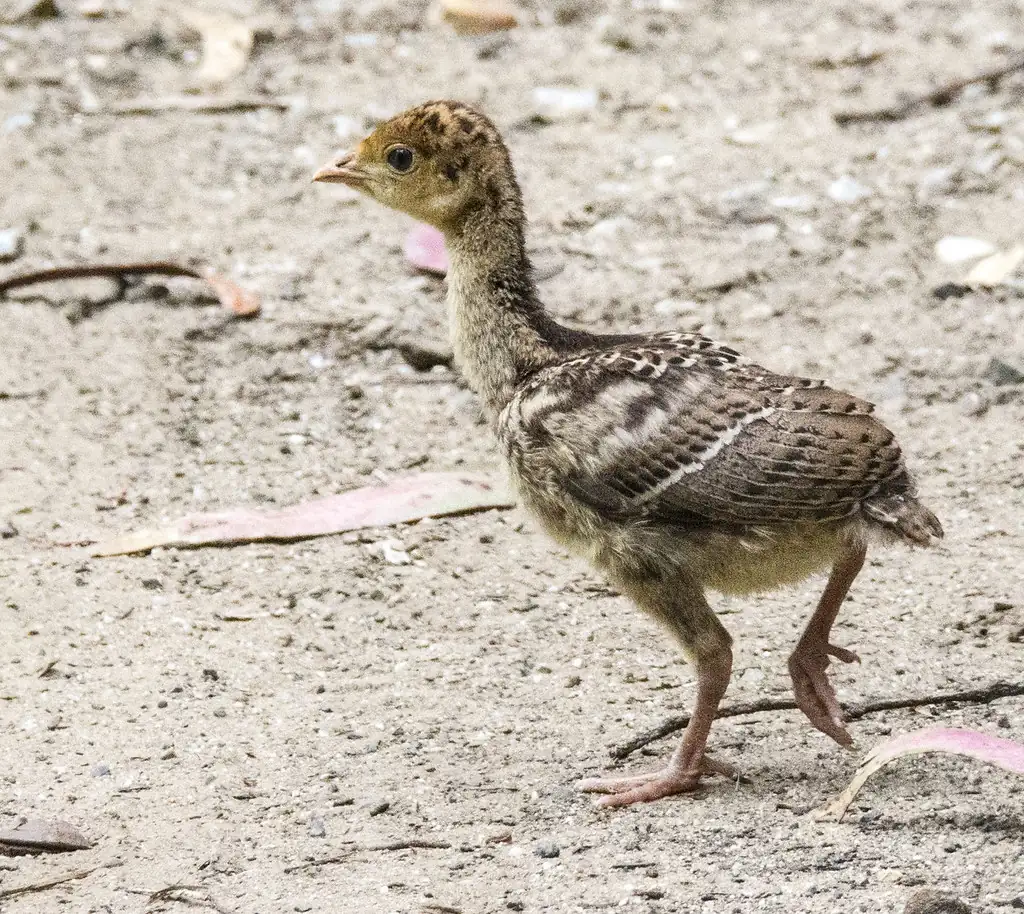
Poults need a lot of protein to grow fast, so for roughly their first month they feed almost entirely on insects: grasshoppers, beetles, leafhoppers, caterpillars and spiders. Missouri wildlife biologists note that close to 90% of a poult’s waking time in its first month is spent feeding.
That is why open, weedy and grassy areas near woods matter so much. These patches hold far more insects than closed forest. After about four weeks, young turkeys start eating more seeds, greens and fruit, like the adults.
Watch: What turkey poults eat
This short video from the University of Florida’s wildlife program looks at the diet of young wild turkeys.
Should You Feed Wild Turkeys?
No. State wildlife agencies such as MassWildlife advise against feeding wild turkeys. They thrive on natural food, and handouts cause real problems:
- Aggression: fed turkeys lose their fear of people and may chase, peck or block people, pets and cars. Birds that repeatedly attack people may have to be removed.
- Disease: feeding concentrates birds in one spot, which helps diseases spread through the flock and to other wildlife.
- Nuisance damage: large flocks leave droppings on decks, roofs and cars and scratch up gardens.
- Predators: food and bird feeders also draw coyotes, foxes and bears into neighborhoods.
Bird feeders count as feeding. Spilled seed under feeders is one of the most common reasons turkeys settle into backyards. If turkeys are visiting, take feeders down for a while or use trays that catch spilled seed.
Local laws vary, and some areas restrict or ban feeding wildlife, so check your state or provincial wildlife agency before putting out any food.
Foods Wild Turkeys Should Never Get
Even when people mean well, some foods are harmful to turkeys and other birds:
| Food | Why to avoid it |
|---|---|
| Bread, crackers, chips | Filling but low in nutrients; salty snacks add sodium birds don’t need |
| Moldy grain, seed or bread | Molds can produce toxins that make birds sick |
| Avocado | Contains persin, which is toxic to many birds |
| Chocolate and caffeine | Toxic to birds |
| Onions and garlic in quantity | Can damage red blood cells |
| Sugary or processed human food | No nutritional value and encourages begging |
How to Help Wild Turkeys the Right Way
If you want turkeys on your land, improve their habitat instead of feeding them. This is what wildlife managers recommend:
- Plant native oaks and nut trees for long-term mast, plus fruiting shrubs like dogwood, wild plum and blackberry. Starting with native wildflower seed mix along field edges also boosts insects for poults.
- Keep some open ground. Mowed or grazed areas, food plots and forest openings provide insects and seeds. In heavily wooded land, keeping around 10% in scattered openings helps.
- Leave some grain standing near timber on farms, which helps turkeys through heavy snow.
- Provide water such as a pond, stream or spring.
- Let it grow: dense vegetation 2–4 feet (60–120 cm) tall gives hens nesting cover.
Pro tip: Watching turkeys is easiest from a distance. A pair of binoculars lets you enjoy a flock in your field or woods without drawing it closer to the house.
Curious about turkey behavior? Read about whether turkeys can fly, where turkeys roost at night, and what a group of turkeys is called.
Helpful gear for this guide
Handy picks that match the advice above.
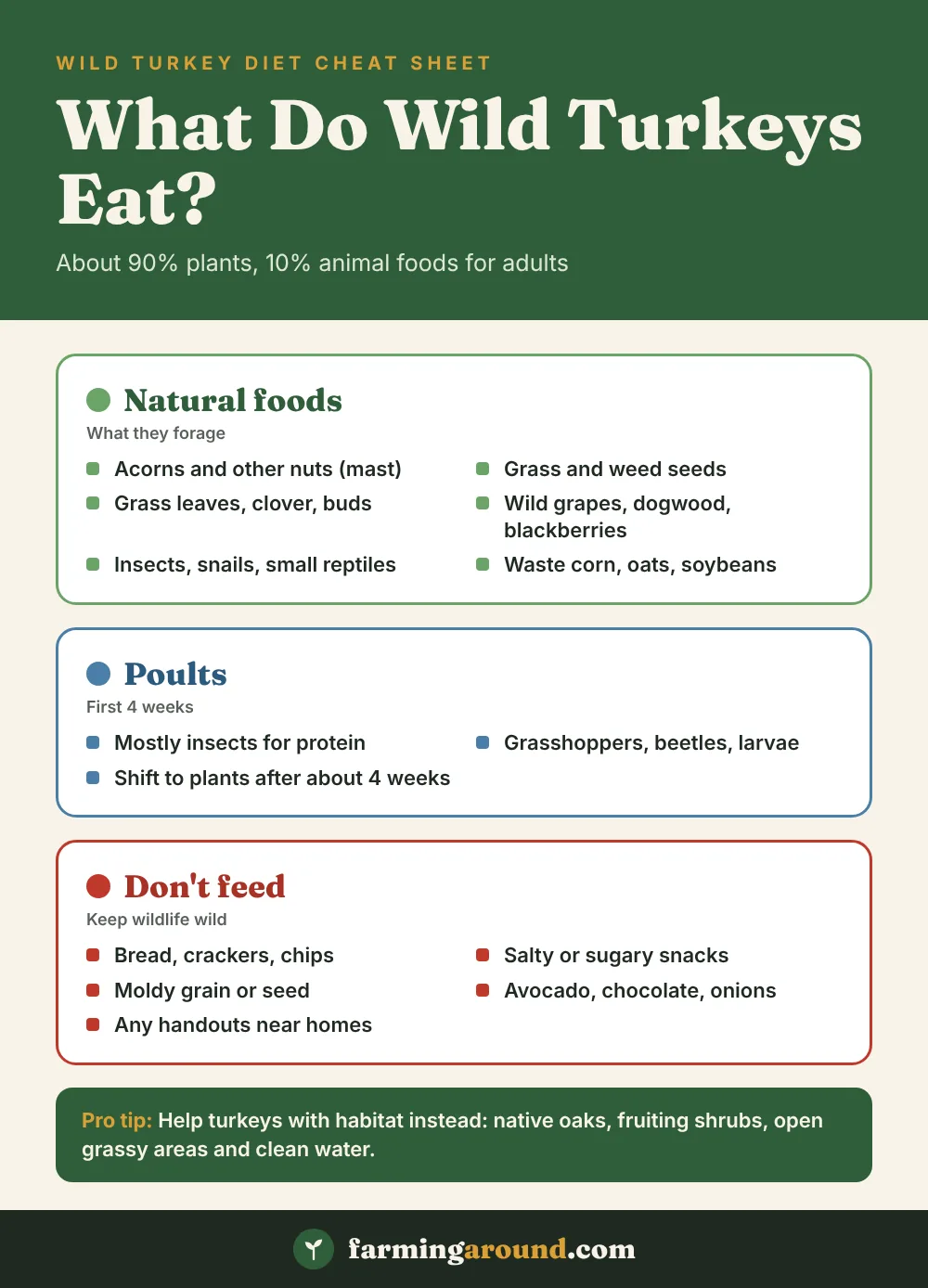
Quick Reference: Wild Turkey Diet at a Glance
FAQ
What is a wild turkey’s favorite food?
Acorns are a preferred food when they are available in fall and winter. Turkeys also seek out grass seeds, wild grapes, dogwood fruit and insects.
Do wild turkeys eat meat?
They eat small animals now and then. Insects make up most of their animal food, along with snails, and they occasionally catch small lizards, frogs or snakes.
Is it okay to feed wild turkeys corn?
Wildlife agencies advise against feeding wild turkeys anything, including corn. Feeding concentrates birds, spreads disease and makes them bold around people. Leaving waste grain in harvested fields is different, because it keeps turkeys in natural feeding areas.
Do wild turkeys eat ticks?
Turkeys do eat ticks along with other small invertebrates, but there’s no strong evidence they reduce tick numbers in a meaningful way.
What do wild turkeys eat in winter?
Acorns and other nuts, seeds, sumac, sedges, leftover grain in harvested fields, and green plants near springs and streams where the ground stays unfrozen.
Why are wild turkeys eating from my bird feeder?
Spilled seed under feeders is an easy meal. Taking feeders down for a few weeks or using a seed-catching tray usually encourages the flock to move on.
Sources
- Wild Turkey fact sheet, Oklahoma State University Extension
- Turkey Management, Missouri Department of Conservation
- Prevent conflicts with turkeys, MassWildlife
For an injured or sick wild turkey, or a turkey causing problems, contact your state wildlife agency or a licensed wildlife rehabilitator rather than handling the bird yourself.

One Comment