

Last updated: November 2026
This guide contains affiliate links. As an Amazon Associate, FarmingAround earns from qualifying purchases, at no extra cost to you.
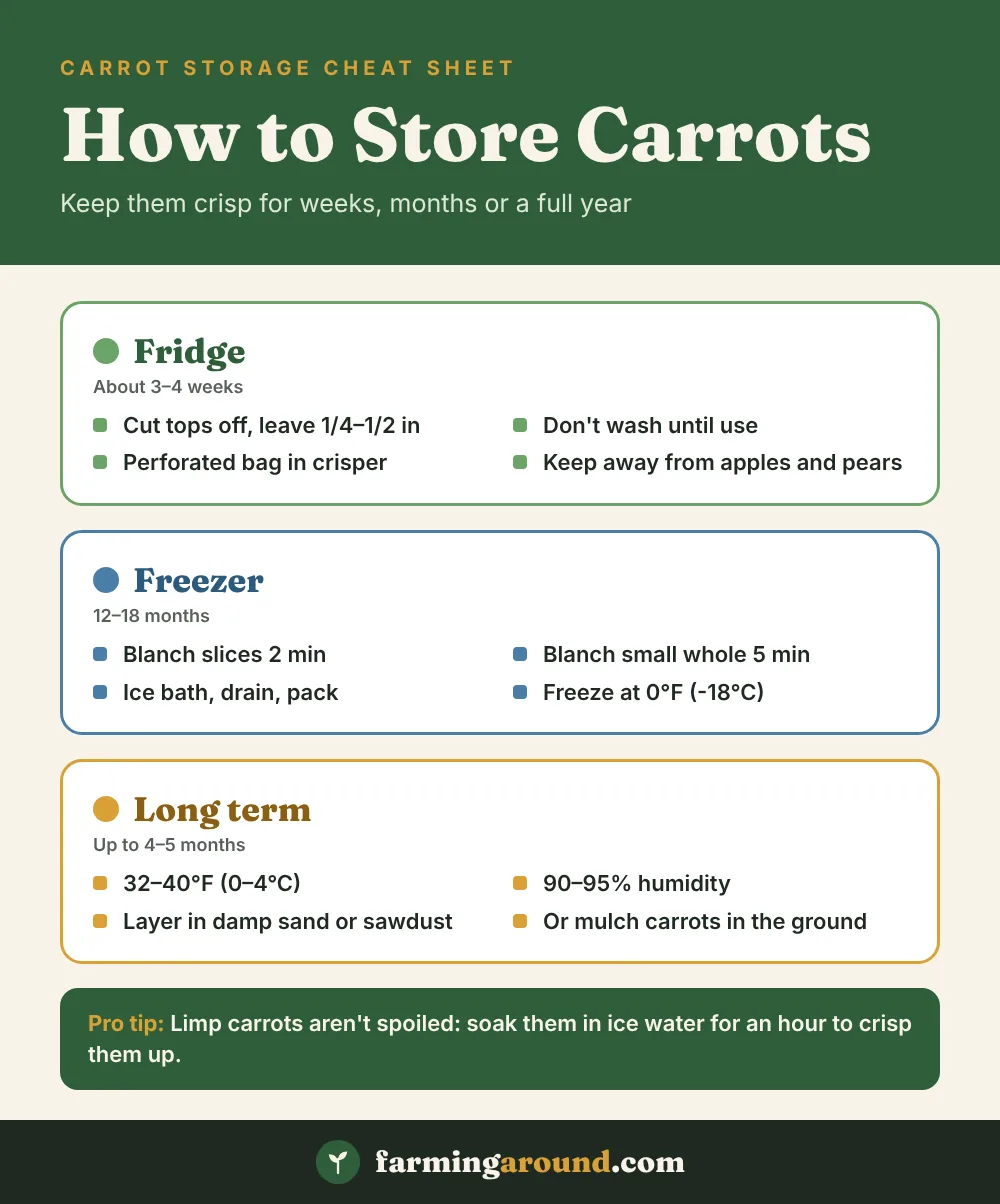
The best way to store carrots is cold and humid: cut off the green tops, leave the carrots unwashed, and keep them in a perforated plastic bag in the fridge crisper, where they stay crisp for several weeks. For longer storage, freeze blanched carrots for up to about a year, or pack homegrown carrots in damp sand in a root cellar or cold garage at close to 32°F (0°C), where they can keep for up to around 4–5 months.
This guide walks through every method step by step, from the fridge and freezer to root cellars and leaving carrots in the ground, plus how to tell when a carrot is past saving.
Key takeaways
- Cut the tops off first. Leafy greens pull moisture out of the root and make carrots go limp.
- Fridge: unwashed, in a perforated bag in the crisper, for several weeks.
- Freezer: blanch first (2 minutes for slices, 5 for small whole carrots), then freeze for 12 months or more.
- Long term: 32–40°F (0–4°C) with high humidity, packed in damp sand or sawdust, away from apples.
In this guide
How to Prepare Carrots for Storage
Good storage starts the moment carrots come out of the ground or home from the store.
- Remove the tops. Twist or cut off the greens, leaving about 1/4–1/2 inch (6–12 mm) of stem. The leaves keep drawing water from the root, which makes carrots soft and bendy within days.
- Don’t wash them yet if you plan to store them for more than a week or two. Brush or shake off loose soil instead. Washing can damage the skin and leave moisture that encourages rot. If they are very muddy, rinse and let them dry completely.
- Sort them. Store only firm carrots with no cracks, cuts or soft spots. Use damaged ones first, because they won’t keep.
- Cool them quickly. Homegrown carrots should go somewhere cold soon after harvest.
How to Store Carrots in the Fridge
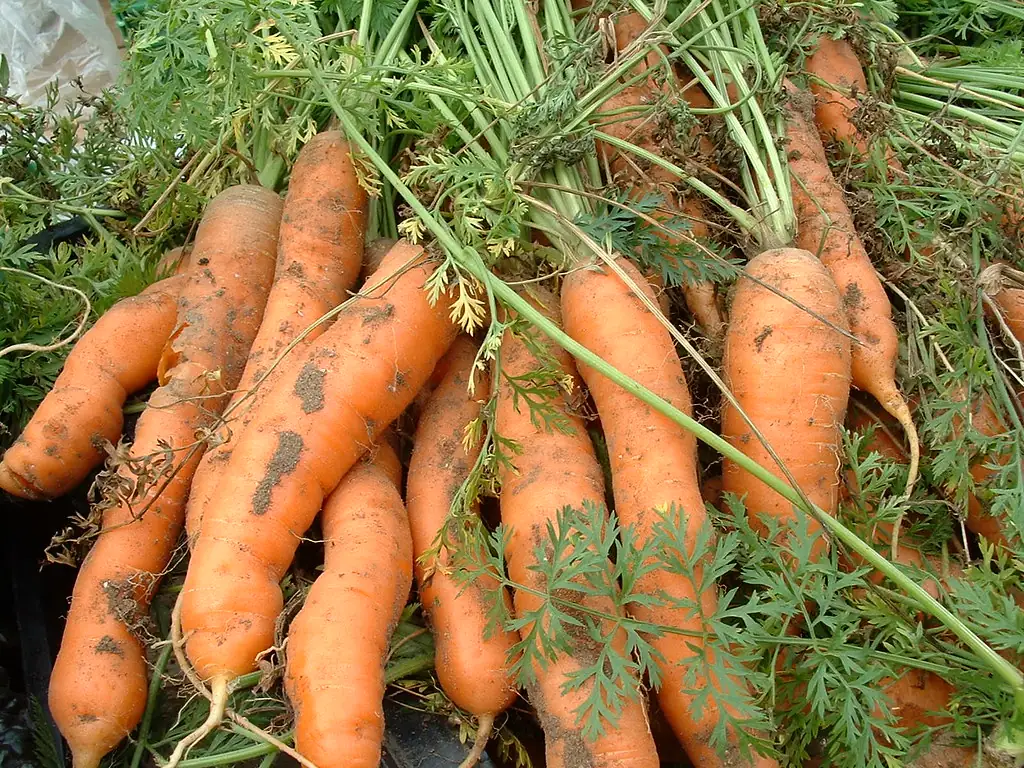
For everyday use, the fridge is the easiest option. Carrots like it cold and humid, which is exactly what the crisper drawer provides.
- Trim the tops as above.
- Place the carrots in a perforated plastic bag, a loosely closed bag, or produce saver containers. Some airflow prevents excess condensation, while the bag keeps humidity high.
- Add a dry paper towel to soak up extra moisture if you see droplets forming.
- Store in the crisper drawer, set to high humidity if it has a setting.
Stored this way, whole carrots typically stay crisp for about 3–4 weeks, and fresh homegrown carrots often keep longer. Store the greens separately if you plan to eat them; they last only a few days.
Keep carrots away from apples and pears. These fruits give off ethylene gas, which can make carrots taste bitter. Store them in separate drawers or bags.
Storing Cut, Peeled and Baby Carrots
Once carrots are peeled or cut, they lose moisture much faster.
- Carrot sticks: store in an airtight container in the fridge, or submerged in cold water to keep them crisp. Change the water every day or two and use them within a few days.
- Baby carrots: keep them in their bag in the fridge. The white film that sometimes forms is just drying on the surface and is safe; a quick soak in cold water often restores them.
- Cooked carrots: refrigerate in a sealed container within 2 hours of cooking and use within 3–4 days.
How to Freeze Carrots
Freezing is the best way to keep carrots for months with very little effort. Blanching first stops the enzymes that cause loss of color, flavor and texture. Here is the method recommended by Colorado State University Extension, based on USDA guidance:
- Choose young, tender carrots with no soft spots.
- Wash, trim and peel. Leave small carrots whole, or slice or dice larger ones about 1/4 inch (6 mm) thick.
- Blanch in vigorously boiling water (about 1 gallon/4 liters per pound of carrots), covered: 5 minutes for small whole carrots, 2 minutes for slices or dice. Add 1 extra minute if you live at 5,000 ft (1,500 m) or higher.
- Cool immediately in ice water for the same amount of time, then drain well.
- Pack into freezer bags or containers, pressing out as much air as possible and leaving 1/2 inch (12 mm) headspace in rigid containers. For loose-frozen pieces, freeze them in a single layer on a tray first, then bag them.
- Label and freeze at 0°F (-18°C) or below.
Frozen carrots keep their best quality for about 12–18 months. Cook them straight from frozen in soups, stews and stir-fries. Shredded raw carrots for baking can be frozen without blanching, but use them within a few months.
Pro tip: Freeze carrots in recipe-sized portions, such as 1 or 2 cups per bag. You can grab exactly what you need for a soup without thawing a whole bag.
Watch: Storing carrots without a root cellar
This homestead video shows one way to keep a big carrot harvest through winter when you don’t have a root cellar.
Long-Term Storage: Root Cellar, Sand and In the Ground
If you grow a lot of carrots, cold storage can keep them for months. The target, according to University of Alaska Fairbanks Extension, is 32°F (0°C) at 90–95% relative humidity, which gives a storage life of up to about 5 months. Anywhere between 32°F and 40°F (0–4°C) with high humidity works well.
The sand or sawdust box method
- Use a sturdy box, bin or bucket.
- Spread a layer of slightly damp sand, sawdust or peat moss in the bottom. It should feel like a wrung-out sponge, not wet.
- Lay unwashed, trimmed carrots in a single layer so they don’t touch.
- Cover with more damp material and repeat the layers.
- Keep the box somewhere cold that doesn’t freeze: a root cellar, unheated basement, or cold garage.
- Check every few weeks and remove any that soften or rot.
Leaving carrots in the ground
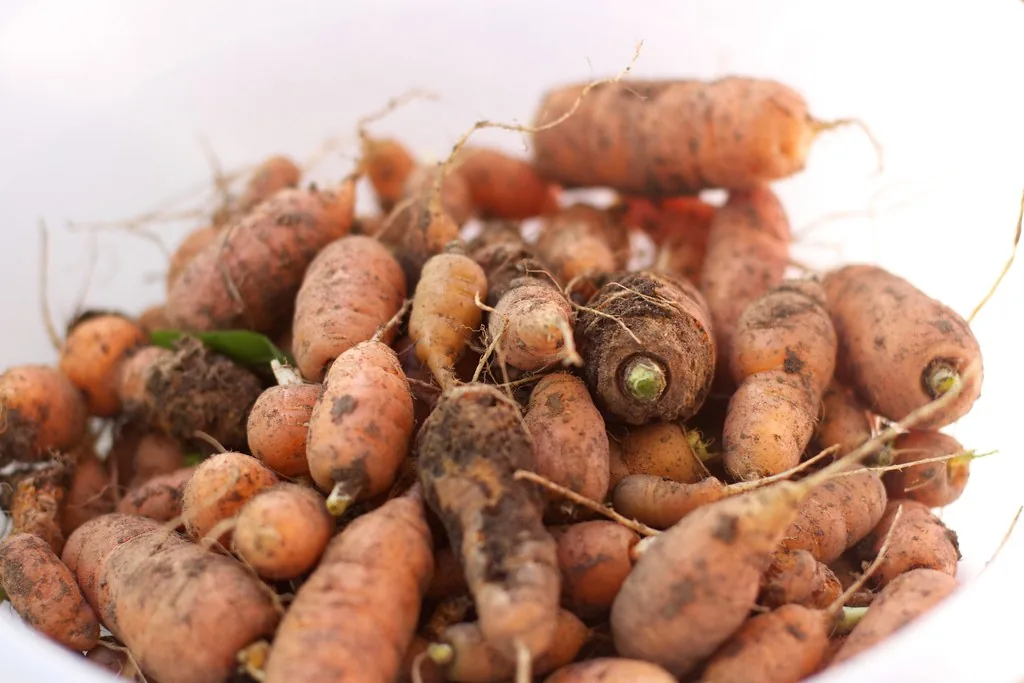
In many gardens you can simply leave carrots where they grew and harvest as needed. Light frosts even make them sweeter. In colder areas, cover the row with a thick layer of straw or shredded leaves, 12 inches (30 cm) or more, to keep the soil from freezing solid. In areas with very hard winters (roughly USDA zones 3–5), dig the crop before the ground freezes hard, unless you mulch heavily. In the Southern Hemisphere, the same applies through June to August.
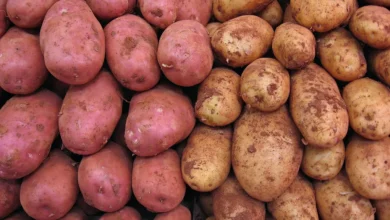
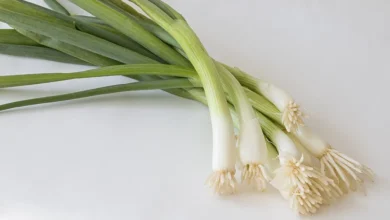
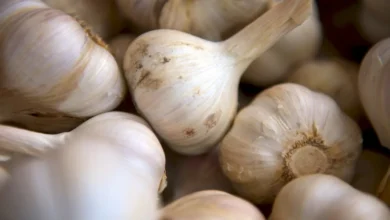
The same cold, humid conditions suit beets and parsnips. Potatoes, onions and garlic need different setups, which we cover in our guides to storing potatoes, storing onions and storing vegetables in general.
Canning, Pickling and Drying
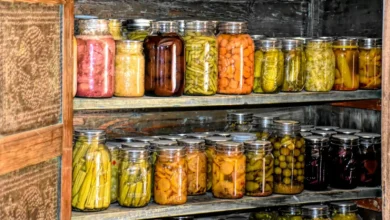
- Canning: carrots are a low-acid vegetable, so plain canned carrots must be processed in a pressure canner using a USDA-tested recipe. Water-bath canning is not safe for them. See our pressure canning for beginners guide and the National Center for Home Food Preservation for tested times.
- Pickling: pickled carrots made with a tested vinegar recipe can be water-bath canned. Quick refrigerator pickles don’t need processing but must stay in the fridge.
- Drying: blanched carrot slices or shreds dry well in a dehydrator and are handy for soups and camping meals. Store them in airtight jars in a cool, dark place.
Signs Carrots Have Gone Bad
| What you see | What it means | Keep or toss? |
|---|---|---|
| Limp, bendy carrots | Moisture loss | Safe. Soak in ice water for an hour to crisp up, or cook them |
| White film on baby carrots | Surface drying | Safe. Rinse or soak |
| Small root hairs or sprouting tops | Carrot is still alive and trying to grow | Safe. Trim and use soon |
| Slimy surface, mushy spots | Bacterial breakdown | Toss |
| Mold, black rot or sour smell | Spoilage | Toss |
Helpful gear for this guide
Handy picks that match the advice above.
Quick Reference: Carrot Storage at a Glance
FAQ
Should you wash carrots before storing them?
No, not for longer storage. Brush off loose soil and wash just before using. If they are very muddy, rinse and dry them thoroughly before storing.
How long do carrots last in the fridge?
Whole carrots with the tops removed usually stay crisp for about 3–4 weeks in a bag in the crisper, often longer if they were freshly harvested. Cut carrot sticks last only a few days.
Can you freeze carrots without blanching?
You can, but unblanched carrots lose flavor, color and texture faster. Blanch slices for 2 minutes or small whole carrots for 5 minutes for the best results. Shredded raw carrot for baking is fine unblanched if used within a few months.
Why do my carrots go rubbery in the fridge?
They are losing moisture, usually because the tops were left on or the carrots were stored uncovered. Remove the greens and keep carrots in a bag or container. Soaking rubbery carrots in ice water often restores them.
Can you store carrots in water?
Cut or peeled carrots stay crisp submerged in water in the fridge for a few days if you change the water every day or two. Whole carrots keep better in a bag in the crisper.
Do carrots need to be refrigerated?
For anything longer than a day or two, yes, or kept in another cold, humid place like a root cellar. At room temperature they soften quickly.

One Comment