

Last updated: October 2026
This guide contains affiliate links. As an Amazon Associate, FarmingAround earns from qualifying purchases, at no extra cost to you.
The fastest fruit trees for most home gardens are peaches and nectarines, dwarf apples on dwarfing rootstock, sour cherries, mulberries and figs, plus citrus in frost-free climates. Bought as grafted nursery trees, most of these give a first crop within 2 to 4 years of planting, and mulberries can fruit as soon as the year after planting. Slower choices like sweet cherries, standard pears and pawpaws often take 4 to 7 years.
Rootstock, planting time and care in the first two seasons decide whether you pick fruit in year two or year six. This guide covers the best fast growing fruit trees by zone, how to plant them, and the mistakes that delay fruiting.
Key takeaways
- Quickest to fruit: mulberry (often year 1–2), peach and nectarine (2–3), dwarf apple and sour cherry (2–4), fig and citrus (about 2–4).
- Buy grafted trees on dwarfing rootstock. Apples on M9 or M26 fruit after 2–3 years; seedlings can take twice as long or more.
- Match chill hours to your climate. A tree that doesn’t get enough winter chill flowers poorly, no matter how well it grows.
- Go easy on nitrogen and plant at the right depth, with the graft union 2–4 in (5–10 cm) above the soil.
In this guide
- The Fastest Fruit Trees at a Glance
- The Best Fast Growing Fruit Trees
- Why Rootstock and Nursery Stock Matter
- Chill Hours: Pick a Tree That Fits Your Winter
- How to Plant for Fast Establishment
- Care in the First Three Years
- Mistakes That Slow Fruiting
- Fast Fruiting Bushes and Shrubs
- Quick Reference: Fast Growing Fruit Trees
- FAQ
- Sources
The Fastest Fruit Trees at a Glance
Years count from planting a grafted 1- to 2-year-old nursery tree. They are typical extension ranges, not guarantees; sun and good care push a tree toward the low end.
| Tree | USDA zones | Years to first fruit | Mature size | Pollination |
|---|---|---|---|---|
| Mulberry (e.g., Illinois Everbearing) | 4–9 | 1–2 | Large tree unless pruned; dwarf types available | Many cultivars fruit alone; some species have separate male and female trees |
| Peach / nectarine | 5–8 (low-chill types to 9) | 2–3 (some sources 3–4) | 12–15 ft (3.5–4.5 m), kept lower by pruning | Mostly self-fertile |
| Apple on dwarfing rootstock (M9, M26) | 4–8 (rootstock dependent) | 2–3 | 6–10 ft (1.8–3 m) | Needs a compatible pollinator variety |
| Sour cherry (e.g., Meteor, North Star) | 4–7 | 2–3 for compact types; 3–5 standard | 8–15 ft (2.5–4.5 m) | Self-fertile |
| Fig (common types) | 7–10 (6 with protection) | 2–4 | 10–20 ft (3–6 m) | No pollination needed |
| Citrus (lemon, mandarin, orange) | 9–11 (or in pots) | About 3 | Dwarf 6–12 ft (1.8–3.5 m) | Most self-fruitful; some mandarin hybrids need a pollenizer |
| Pawpaw (grafted) | 5–8 | 3–4 (seedlings 5–8) | 15–25 ft (4.5–7.5 m) | Needs two genetically different trees |
| Sweet cherry (for comparison) | 5–8 | 4–7 | 8–20 ft (2.5–6 m) by rootstock | Most need a pollinator |
Pawpaw is often listed as fast, but University of Kentucky gives 3–4 years for grafted trees and 5–8 for seedlings.
The Best Fast Growing Fruit Trees
Mulberry
Mulberries are the speed champions. University of Florida describes them as producing fruit within the first year, and NC State lists Illinois Everbearing as an early bearer that sometimes fruits the first year after planting, growing 3 to 5 ft (0.9–1.5 m) a year. The catch: full-size trees get big and dark fruit stains patios, so choose a dwarf type or plant away from paths.
Peach and Nectarine
Peaches and nectarines are the fastest of the classic orchard trees, typically bearing in 2 to 3 years. They’re self-fertile, so one tree is enough, but their early blossoms are prone to spring frost.
Dwarf Apple
The best fast choice for cold climates. The RHS gives 2 to 3 years to fruit on M9 or M26. Plant a second apple or crabapple that blooms at the same time.
Sour Cherry
Hardy and self-fertile. Illinois Extension lists compact Meteor and North Star at 2 to 3 years to bearing.
Fig
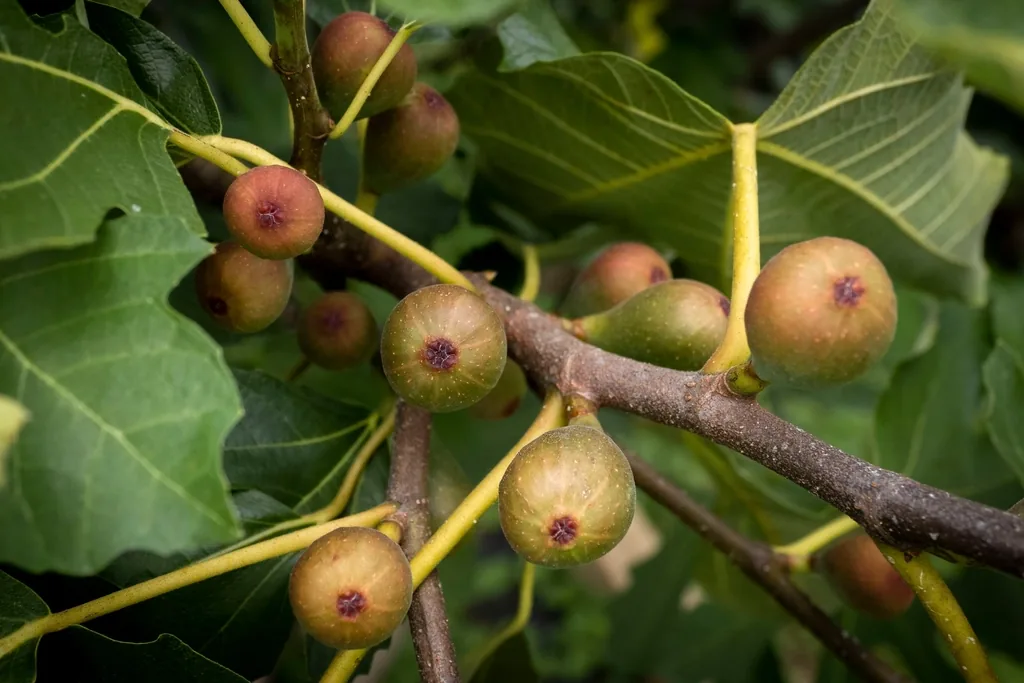
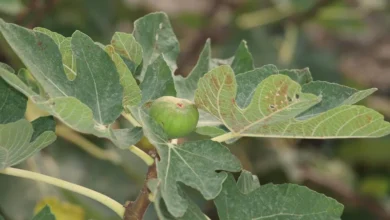
Common figs need no pollinator and often fruit young, but University of Georgia notes 3 or 4 years can pass before some plants ripen a crop, especially if overfed or frozen back each winter.
Citrus
In zones 9–11, or in a pot moved indoors for winter, a grafted lemon or mandarin is a quick choice. UF/IFAS treats home citrus as bearing trees from about year three.
Why Rootstock and Nursery Stock Matter
Most fruit trees are a fruiting variety grafted onto a rootstock that controls size and how soon the tree fruits. Dwarfing rootstocks bear years earlier than vigorous ones.
| Apple rootstock | Vigour | Years to fruit (RHS) | Height as a bush |
|---|---|---|---|
| M27 | Extremely dwarfing | About 2 | 4–6 ft (1.2–1.8 m) |
| M9 | Dwarfing | 2–3 | 6–8 ft (1.8–2.4 m) |
| M26 | Dwarfing | 2–3 | 8–10 ft (2.4–3 m) |
| MM106 | Semi-dwarfing | 3–4 | 10–13 ft (3–4 m) |
| MM111 | Vigorous | 4–5 | 13–15 ft (4–4.5 m) |
Dwarf trees have weak roots, so M9 and M27 apples need a permanent stake. For cherries, look for Gisela 5; for plums, Pixy; for pears, Quince C.
Grafted vs seedling: a tree from a seed or pit must pass a long juvenile phase before flowering, and its fruit may not match the parent. Grafted trees skip much of that wait. Nursery age: a healthy 1- or 2-year-old tree usually establishes faster than an older, root-bound one.
Chill Hours: Pick a Tree That Fits Your Winter
Peaches, apples, cherries, plums and other deciduous fruit trees need a set number of chill hours (roughly, hours below 45°F / 7°C) each winter before they flower properly. Requirements run from about 100 to more than 1,000 hours depending on the variety. University of Florida lists low-chill peaches, plums and nectarines at 100–525 hours.
A high-chill variety in a mild-winter area (Florida, southern California, coastal Australia) blooms sparsely and fruits poorly. A very low-chill variety in a cold area can bloom too early and lose its flowers to frost.
How to Plant for Fast Establishment
Bare-Root or Container?
Bare-root trees are sold dormant, cost less and come in more varieties. Container trees can go in over a longer season, but tease out any circling roots first.
When to Plant
- Cold winters (roughly zones 3–6, Canada, northern US): late winter to early spring, once the soil can be worked and before buds break.
- Mild winters (zones 7–10, UK, Ireland, Pacific Northwest, California): anywhere in the dormant season. In the UK and Ireland the bare-root season runs roughly from November to March, and autumn planting gives roots a head start.
- Southern Hemisphere (Australia, NZ, South Africa): the bare-root season is June to August, while trees are dormant.
- Citrus and figs in pots: plant in spring after your last frost date so new growth isn’t hit by cold.
Planting Steps
- Choose full sun: at least 6–8 hours a day. Shade is a common reason trees don’t flower.
- Dig a hole at least twice as wide as the roots, but no deeper than they need.
- Set the tree so the graft union sits 2–4 in (5–10 cm) above the soil (UC Master Gardeners’ advice). Burying it lets the top variety root and lose the rootstock’s dwarfing effect.
- Backfill with the native soil, firm gently and water thoroughly.
- Stake dwarf trees and mulch a wide circle, keeping mulch away from the trunk.
Watch: Planting a Bare-Root Fruit Tree
This step-by-step video walks through planting a bare-root fruit tree in a garden or small orchard.
Care in the First Three Years
The faster a young tree builds roots and a strong framework, the sooner it fruits.
- Watering: water deeply rather than often. UC Master Gardeners suggest a slow soak two to three times a week in dry weather, around 10–15 gallons (38–57 L) a week in total, adjusted for rain and soil type.
- Mulching and weeding: keep a grass-free circle at least 3 ft (1 m) across. A 2–3 in (5–8 cm) layer of wood chips or homemade compost holds moisture and feeds soil life.
- Feeding: skip strong fertilizer at planting. After that, feed lightly in spring based on growth and a soil test, rather than on a fixed schedule.
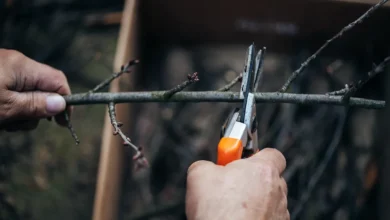
- Formative pruning: prune in the dormant season to build a balanced shape (central leader for apples, open centre for peaches), and remove upright water sprouts, which Illinois Extension notes can delay bearing.
Pollinators matter once trees flower: see our guide to how to start beekeeping, or use a companion planting chart to pick flowers that draw bees to the orchard.
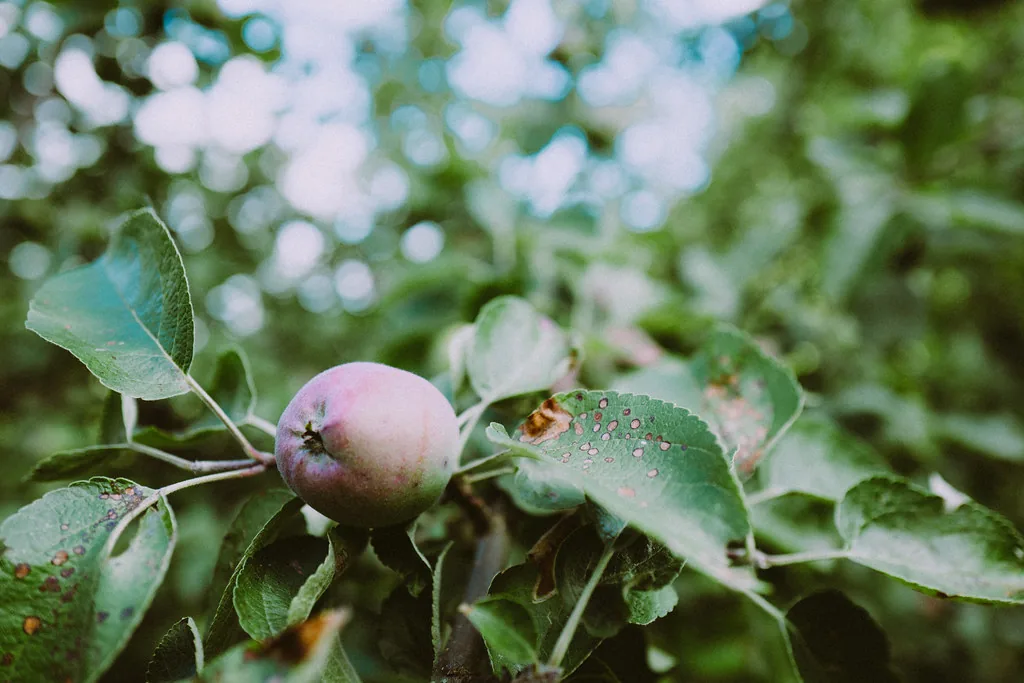
Pro tip: Pick off most or all of the flowers or fruitlets in the first year after planting. It feels wasteful, but it lets the tree put its energy into roots and branches, which means bigger crops from year two or three onward.
Mistakes That Slow Fruiting
- Too much nitrogen. Heavy feeding produces long, leafy shoots and fewer flower buds. UConn warns excess fertilizer delays the setting of flower buds, and UGA advises cutting back fertilizer on figs that grow vigorously but don’t ripen fruit.
- Letting the tree fruit too early. A heavy crop on a tiny tree stunts growth and can bend or break branches. Thin hard for the first few years.
- Planting too deep. A buried graft union or trunk invites crown rot and can cancel the dwarfing effect of the rootstock.
- The wrong chill hours, or too much shade. Either can stop a healthy tree from flowering well.
- No pollinator. Most apples, pears, sweet cherries and Japanese plums need a second compatible variety nearby. A lone tree may bloom heavily and set almost nothing.
Be wary of “fruit in the first year” claims. A potted tree may carry a few fruit set at the nursery, but most grafted trees need at least two seasons to settle in, and forcing an earlier crop usually backfires.
Fast Fruiting Bushes and Shrubs
If you want fruit faster than any tree can deliver, berries are the answer. They also pair well with a young orchard on a one-acre homestead.
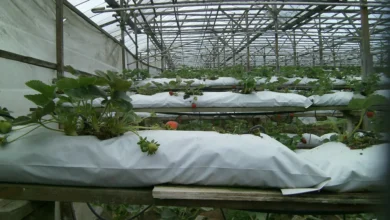
- Strawberries: everbearing and day-neutral types crop in their first summer; June-bearers fruit the year after planting.
- Fall-bearing (primocane) raspberries: fruit on new canes in their first autumn.
- Blackberries and summer raspberries: fruit in their second summer.
- Blueberries: slower. Iowa State advises rubbing off flowers for the first two years, with full production by about year five or six. They also need acidic soil.
To plan the rest of the plot, see our vegetable planting calendar.
Quick Reference: Fast Growing Fruit Trees
Save this cheat sheet for the next time you’re choosing trees at the nursery.
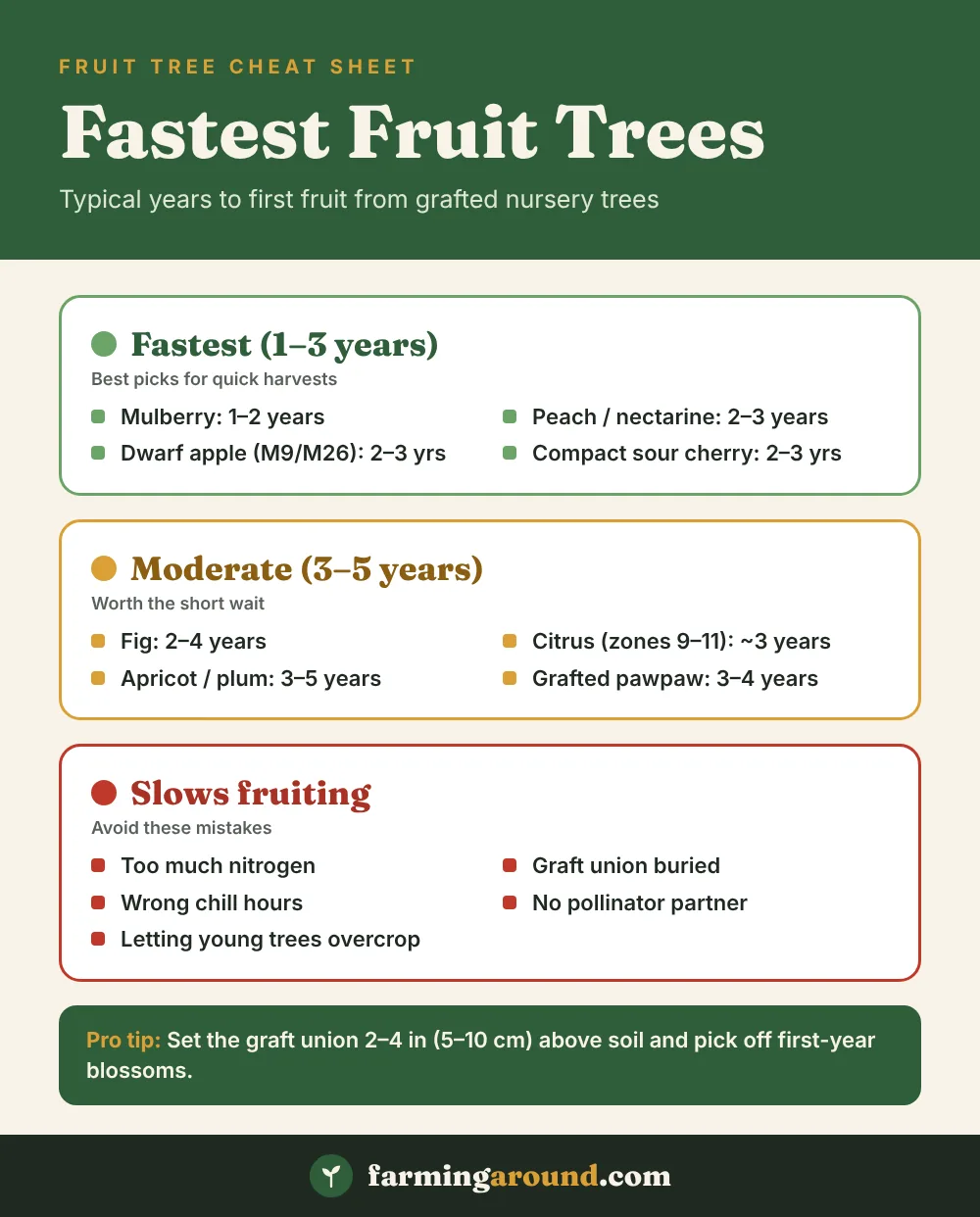
| Fastest (1–3 yrs) | Moderate (3–5 yrs) | Slow (4+ yrs) |
|---|---|---|
| Mulberry, peach, nectarine, dwarf apple (M9/M26/M27), compact sour cherry | Fig, citrus, apricot, plum, dwarf pear, grafted pawpaw | Sweet cherry, standard apple and pear, seedling pawpaw, any tree grown from seed |
Helpful gear for this guide
Handy picks that match the advice above.
Links go to Amazon. Prices and availability change, so check reviews and fit for your setup before buying.
FAQ
What is the fastest growing fruit tree?
Mulberry, sometimes fruiting the year after planting. Among classic orchard trees, peaches and nectarines are fastest at 2 to 3 years.
Which fruit tree gives fruit in 1 year?
Mulberries sometimes do. Most grafted fruit trees need 2 years or more; for first-year fruit, plant strawberries or fall-bearing raspberries.
Do dwarf fruit trees produce fruit faster?
Yes. Illinois Extension notes dwarf trees usually bear 1 to 3 years sooner than standard-size trees, and the RHS gives 2 to 3 years for apples on M9 or M26.
What fruit trees don’t need a pollinator?
Most peaches, nectarines, sour cherries, common figs and many citrus are self-fertile.
Why is my fruit tree not producing fruit?
Usually it’s still too young, or it has too much nitrogen, too much shade, frosted blossoms, no pollination partner, or too few chill hours.
Sources
- Rootstocks for Fruit (Royal Horticultural Society)
- Fruit Trees: Management (University of Illinois Extension)
- Fruit Trees That Fail to Bear (UConn Home & Garden Education Center)
- Chill Hours (UF/IFAS Gardening Solutions)
Bearing times vary with climate, variety and care. For the best varieties and rootstocks for your area, check with your local extension office or a regional fruit nursery.
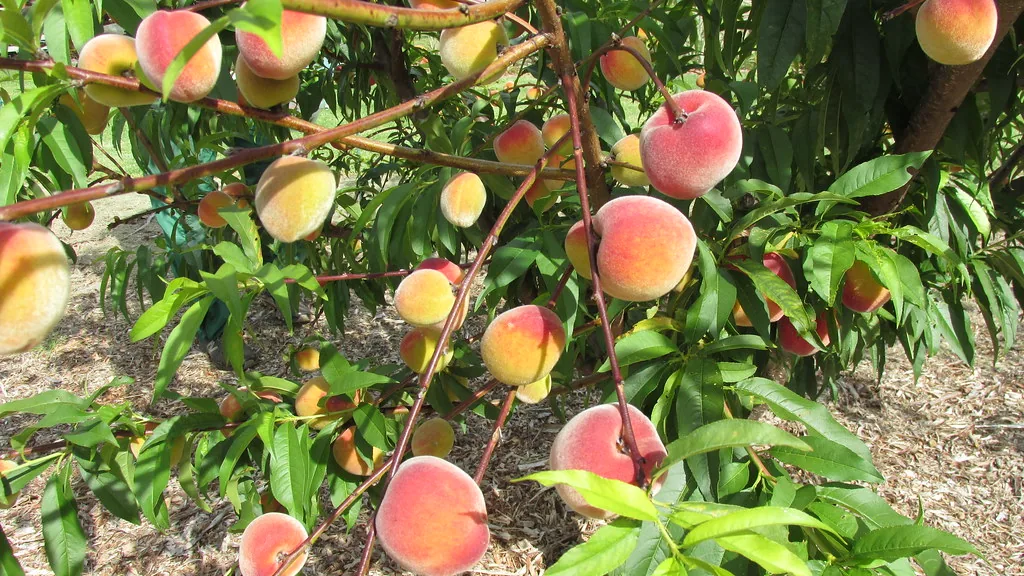
Featured image: Forest & Kim / CC BY 2.0 via Flickr.

One Comment