

Last updated: October 2026
This guide contains affiliate links. As an Amazon Associate, FarmingAround earns from qualifying purchases, at no extra cost to you.
An indoor herb garden is a set of culinary herbs grown in pots inside your home, usually on a bright windowsill or under a grow light. Most herbs need 6–8 hours of direct sun or 12–16 hours under a grow light placed 6–12 inches (15–30 cm) above the leaves, a fast-draining potting mix, and pots with drainage holes. Get the light right and herbs like chives, parsley, mint, basil and oregano will give you fresh leaves all year.
This guide explains how an indoor herb garden works, which herbs are easiest, how to set one up step by step, and how to water, feed and harvest so your plants keep producing instead of turning leggy and pale.
Key takeaways
- Light is everything: a south-facing window (north-facing in the Southern Hemisphere) or a full-spectrum grow light on a 12–16 hour timer.
- Easiest herbs: chives, parsley, mint, basil, oregano, thyme and cilantro.
- Drainage matters: one herb per pot, holes in the bottom, and a light, well-drained potting mix.
- Go easy on food and water: let most herbs dry slightly between waterings and fertilize at half strength or less.
In this guide
What Is an Indoor Herb Garden?
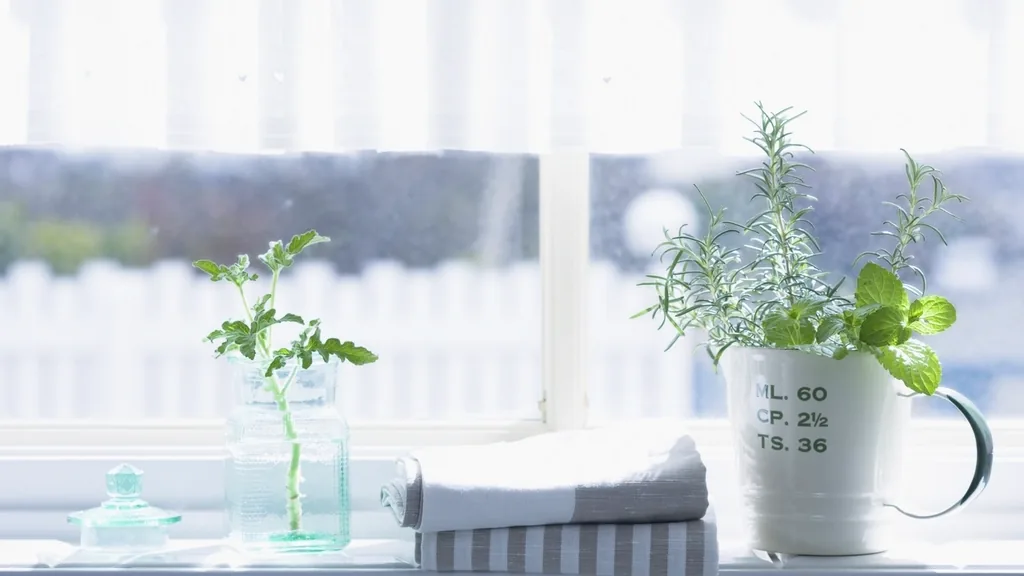
An indoor herb garden can be as simple as three pots on a kitchen windowsill or as elaborate as a shelf unit with LED lights. Either way, it works on the same principle: you recreate the bright light, good drainage and mild temperatures herbs get outdoors in summer.
The payoff is fresh flavor through winter, no more half-used plastic packs of supermarket herbs, and a handy way to keep tender herbs like basil going after your outdoor garden is done for the season. It’s also one of the easiest first steps if you’re interested in homesteading but don’t have land yet.
Expect some differences from outdoor plants. Indoor herbs grow more slowly in winter and often taste a little milder, because they get less light than they would outside.
Best Herbs to Grow Indoors
| Herb | Difficulty | Light | Watering | Notes |
|---|---|---|---|---|
| Chives | Easy | Tolerates lower light | Evenly moist | Cut to 2 in (5 cm) and they regrow |
| Parsley | Easy | Bright | Evenly moist | Deep pot for its taproot |
| Mint | Easy | Bright to medium | Evenly moist | Always in its own pot; it spreads |
| Basil | Easy | Very bright, warm | Never let it dry out | Keep above 50°F (10°C), away from cold glass |
| Oregano | Easy | Very bright | Let dry slightly | Pinch often to keep it bushy |
| Thyme | Easy | Very bright | Let dry slightly | Terracotta pot suits it well |
| Cilantro | Easy to moderate | Tolerates lower light | Evenly moist | Short-lived; resow every few weeks |
| Rosemary | Moderate | Very bright | Let dry slightly, never bone dry | Likes a cool spot in winter |
| Sage | Moderate | Very bright | Let dry slightly | Needs good air flow |
| Bay laurel | Moderate | Very bright | Let dry slightly | Slow, but lives for years in a pot |
Skip indoors: herbs with big root systems such as horseradish, fennel and lovage. Dill and borage are possible but need deep pots.
Light: Windows vs Grow Lights
Low light is the number one reason indoor herbs fail. Without enough of it, plants become thin and spindly, with small leaves and weak aroma.
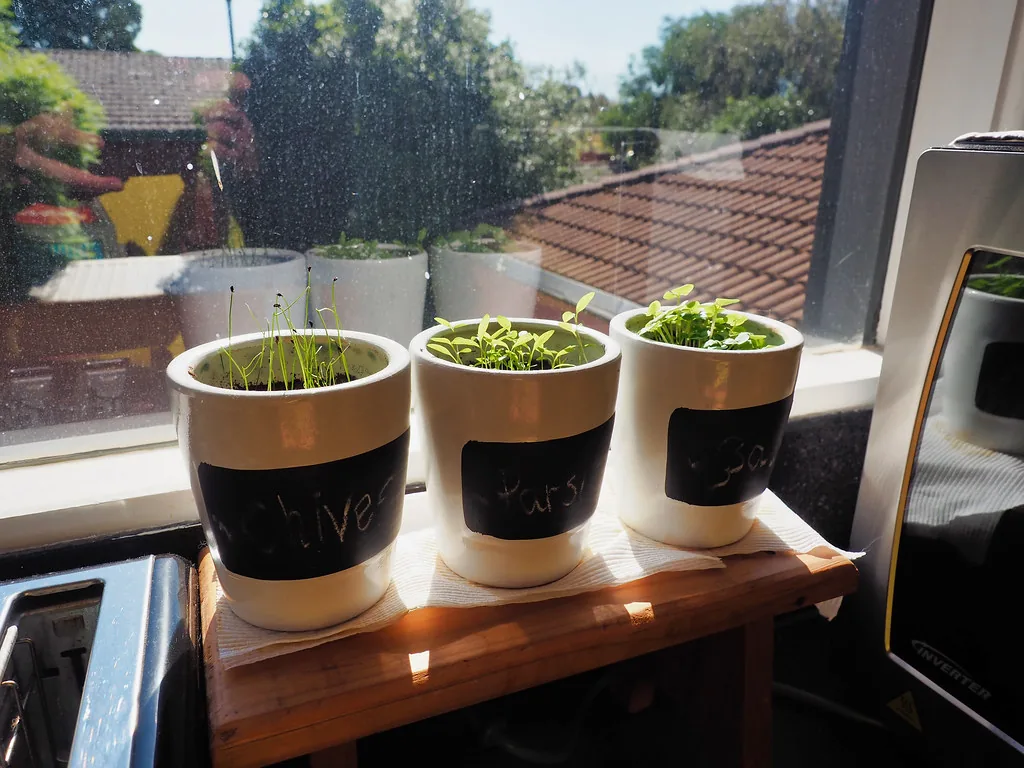
Growing on a Windowsill
- Best window: south-facing in the Northern Hemisphere (US, Canada, UK, Ireland). In Australia, New Zealand and South Africa, use a north-facing window instead.
- Second best: east- or west-facing windows, which suit lower-light herbs like chives, mint, parsley and cilantro.
- Target: most herbs want 6–8 hours of direct sun. Sun-lovers like rosemary, thyme and bay need the brightest spot you have.
- Winter: short days mean even a south window often isn’t enough between late autumn and late winter, especially in northern areas (roughly USDA zones 3–6 and most of the UK). That’s when a grow light pays for itself.
Using Grow Lights
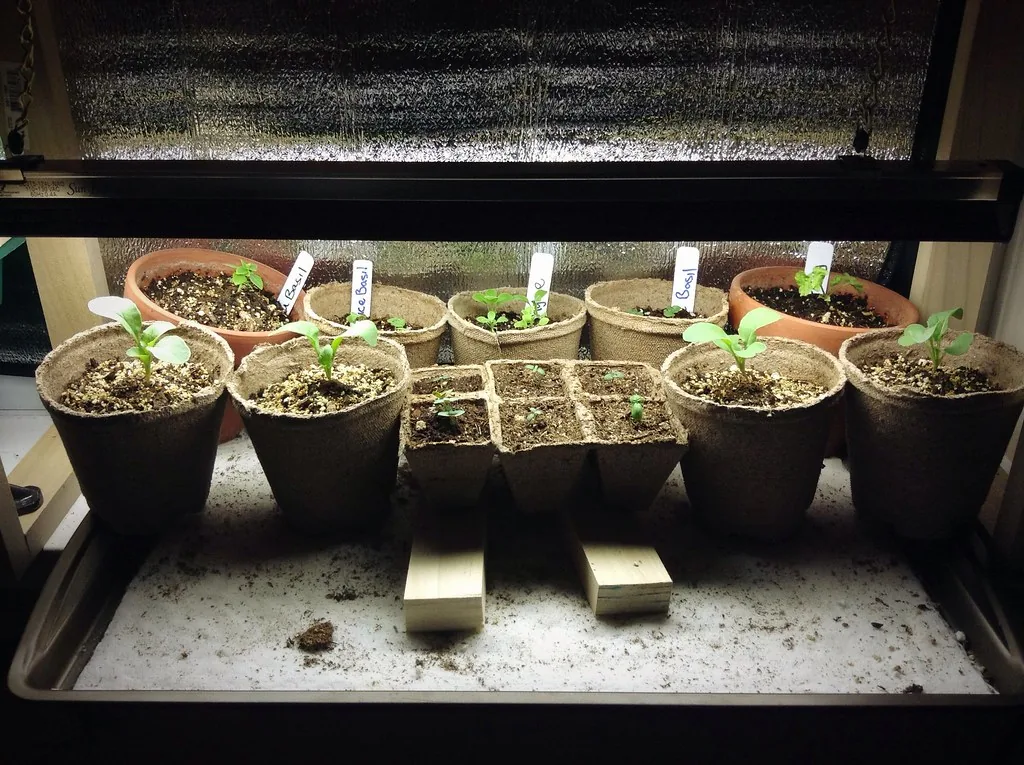
- Choose full-spectrum LED or high-output fluorescent fixtures. A clip-on task light works for a few pots; a 4 ft (1.2 m) LED shop light covers a whole shelf.
- Hang lights 6–12 inches (15–30 cm) above the leaves and raise them as plants grow.
- Run them 12–16 hours a day on a plug-in timer, then give the plants darkness at night.
Pro tip: Turn windowsill pots a quarter turn every few days. Herbs lean toward the glass, and rotating them keeps growth even and upright.
How to Set Up an Indoor Herb Garden
- Pick your spot. Your brightest window, or a shelf near an outlet for a grow light. Keep plants away from heating vents, radiators and cold drafts.
- Choose containers. Every pot needs drainage holes and a saucer. Terracotta dries faster, which suits thyme, rosemary and oregano; glazed or plastic pots hold moisture longer for basil, parsley and mint. Pots of 6–8 in (15–20 cm) suit most herbs; avoid oversized pots that stay wet. Grow each herb in its own pot so you can water each one correctly.
- Use the right mix. A good-quality, well-drained potting mix, never garden soil. For Mediterranean herbs, mixing in some perlite or grit improves drainage.
- Start plants. Buy small nursery plants for the quickest harvest, sow seed (basil, cilantro, parsley, chives), or root cuttings of mint, oregano, rosemary and sage in water or moist mix. Outdoor herbs can be potted up and brought in before your first fall frost; check them for pests first.
- Set the temperature. Herbs grow best at about 65–70°F (18–21°C) by day and 55–60°F (13–16°C) at night. Normal room temperatures are fine.
- Label and settle in. Give new plants a week or two to adjust before you start harvesting.
Watch: Growing Herbs Indoors
This episode of a public-media gardening series shows a practical indoor herb setup.
Watering, Feeding and Humidity
Watering
More indoor herbs die from overwatering than underwatering. Push a finger into the mix: water when the top inch (2–3 cm) feels dry, then water until it runs out of the bottom and empty the saucer.
- Let dry slightly: rosemary, thyme, oregano, sage, marjoram, bay.
- Keep evenly moist: basil, parsley, chives, mint, cilantro.
Feeding
Use a balanced water-soluble fertilizer at half or quarter strength, about every two weeks during spring and summer growth. Ease off in winter when growth slows. Heavy feeding makes soft, fast growth with less flavor.
Humidity and Air Flow
Heated homes get dry in winter. Group pots together or set them on a tray of moist pebbles to raise humidity, but keep some air moving (a small fan on low helps) to prevent mildew and fungus gnats.
Harvesting Indoor Herbs
- Start once plants are established and have plenty of leaves, and never take more than about a third of a plant at once.
- Basil, mint, oregano: pinch just above a pair of leaves. Two new shoots grow from that point, making a bushier plant.
- Chives: cut whole leaves about 2 in (5 cm) above the soil.
- Parsley and cilantro: cut outer stems at the base and let the center keep growing.
- Rosemary, thyme, sage: snip soft tips; avoid cutting into old, woody stems.
Annual herbs such as basil and cilantro wear out after several harvests. Sow a new pot every few weeks so there’s always one coming along. Our vegetable planting calendar shows when to move herbs back outside once frost has passed.
Common Problems and Fixes
| Symptom | Likely cause | Fix |
|---|---|---|
| Tall, thin, pale stems | Not enough light | Move to a brighter window or add a grow light 6–12 in above |
| Yellow lower leaves, soggy mix | Overwatering or no drainage | Water less often; use pots with holes; empty saucers |
| Crispy leaf edges | Dry air or underwatering | Pebble tray, group pots, check moisture more often |
| Tiny flies around the soil | Fungus gnats | Let the surface dry out; yellow sticky traps |
| Fine webbing, speckled leaves | Spider mites | Rinse plants; raise humidity; isolate affected pots |
| Sticky leaves, clusters of small insects | Aphids | Wipe or rinse off; use insecticidal soap only if needed |
| Basil leaves blackening | Cold glass or drafts | Move away from the window at night; keep above 50°F (10°C) |
| Roots out of the drainage holes | Pot-bound | Repot one size up, ideally in early spring |
Edible plants, edible-safe products: If you treat pests, only use products labeled for edible herbs, follow the label’s waiting time before harvest, and wash leaves before eating.
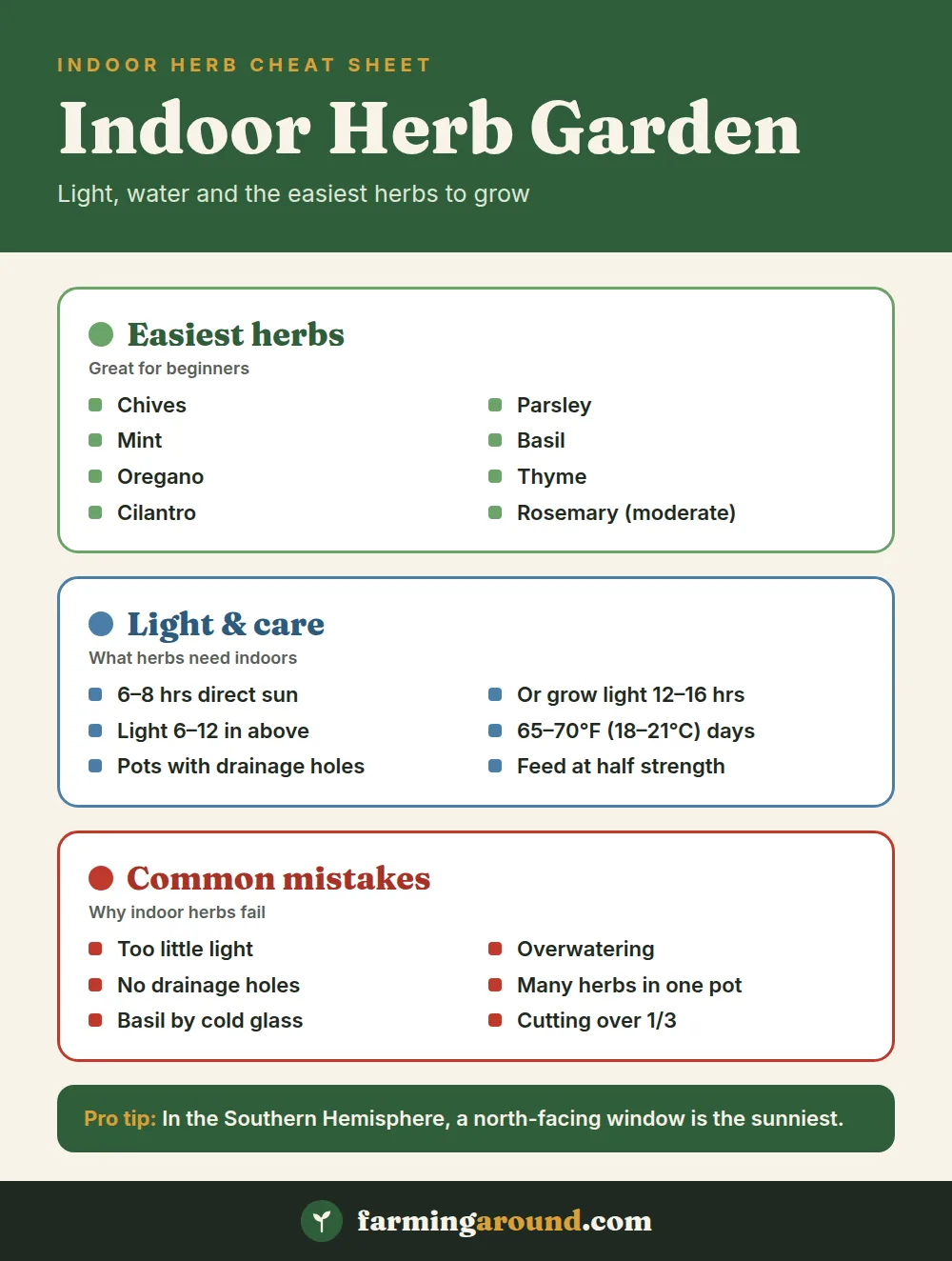
At a Glance: Indoor Herb Garden
Planning what to grow outside in spring? Our companion planting chart shows which herbs help vegetables in the garden, and our list of fall garden vegetables covers what to sow outdoors as the season ends.
Helpful gear for this guide
Handy picks that match the advice above.
Links go to Amazon. Prices and availability change, so check reviews and fit for your setup before buying.
FAQ
What is the easiest herb to grow indoors?
Chives, mint and parsley are among the easiest because they tolerate a little less light. Basil is easy too, as long as it’s warm and gets plenty of sun or a grow light.
Can herbs grow indoors without a window?
Yes, with a grow light. Use a full-spectrum LED 6–12 inches above the plants on a timer for 12–16 hours a day.
Can I grow different herbs in one pot?
It’s possible, but separate pots work better indoors. Herbs differ in water needs, and vigorous ones like mint crowd out their neighbors.
Why are my indoor herbs dying?
The usual causes are too little light and too much water. Move them to brighter light, make sure pots drain, and let the top of the mix dry before watering.
How long do indoor herbs last?
Perennials like chives, mint, oregano, thyme, rosemary and bay can last for years with repotting. Annuals like basil and cilantro decline after several months or a few heavy harvests, so resow them regularly.
Do supermarket potted herbs grow well indoors?
They can, but each pot usually holds many crowded seedlings. Split the clump into three or four smaller groups and pot them up separately so they don’t compete.

2 Comments