

Last updated: November 2026
This guide contains affiliate links. As an Amazon Associate, FarmingAround earns from qualifying purchases, at no extra cost to you.
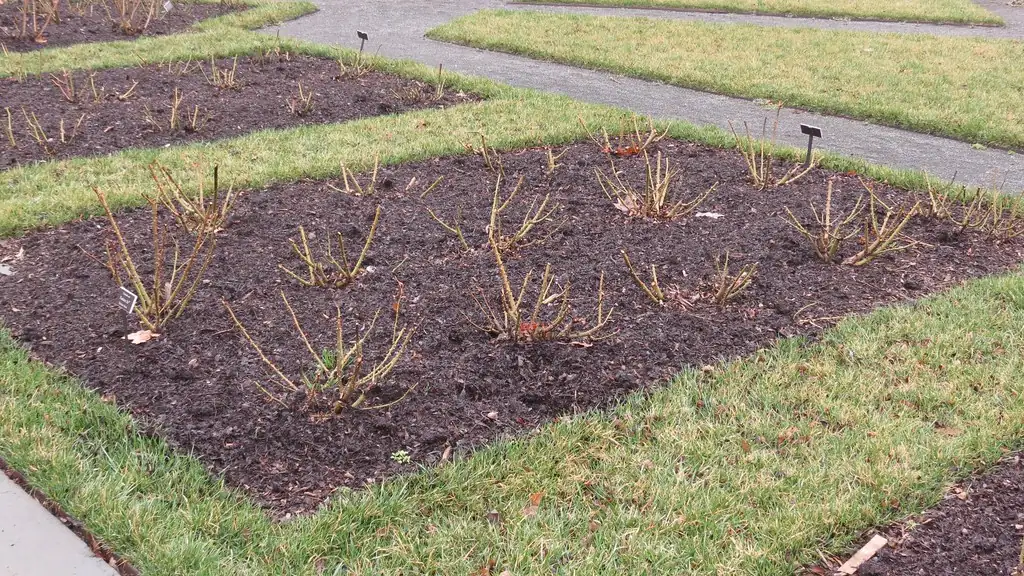
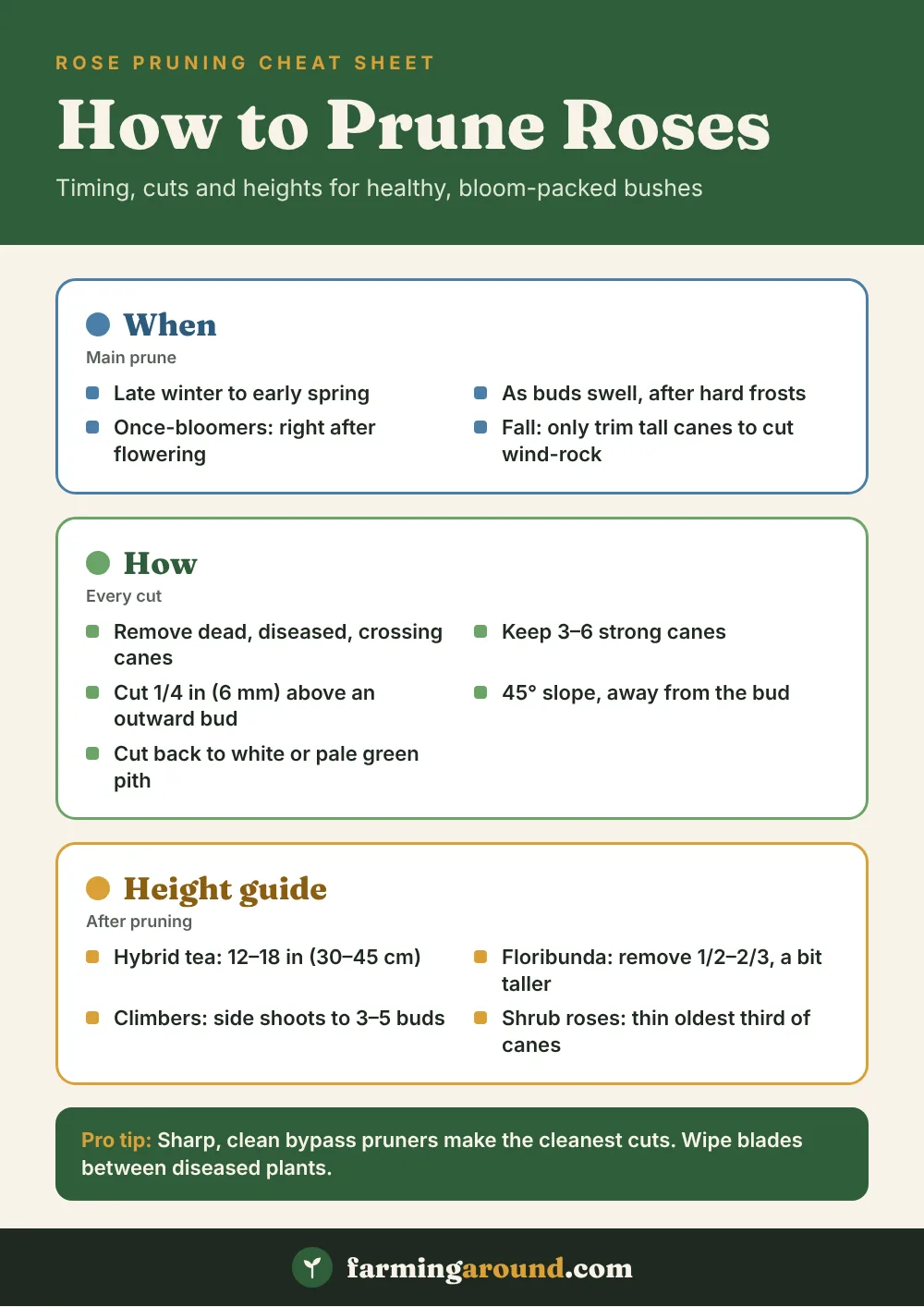
Prune most roses in late winter or early spring, just as the buds begin to swell and the worst frosts have passed. Remove dead, diseased and crossing canes first, keep three to six strong canes, and cut each one about 1/4 inch (6 mm) above an outward-facing bud with a 45-degree slope. Roses that bloom only once a year are the exception: prune those right after they finish flowering.
Pruning sounds intimidating, but roses are tough plants that bounce back quickly. This guide covers timing by climate, the few tools you need, each cut step by step, how to handle hybrid teas, floribundas, climbers and shrub roses, and the mistakes that cost you flowers.
Key takeaways
- Timing: late winter to early spring for repeat bloomers; right after flowering for once-bloomers.
- The cut: 1/4 inch (6 mm) above an outward-facing bud, sloping away from it at about 45 degrees.
- Keep 3–6 healthy canes and open up the center so air can move through the bush.
- Fall: only shorten very tall canes to stop wind rocking. Save the hard prune for spring.
In this guide
When to Prune Roses
The main prune happens at the end of dormancy. Look for buds that are starting to swell and turn red or green along the canes. Pruning then gives the plant a fresh start just as it is ready to grow, and it reduces the risk of new shoots being killed by a hard freeze.
Many gardeners use a simple natural cue: prune when forsythia starts to bloom. If you prune too early, a late frost can kill the tender new growth and you will have to prune again. If you prune too late, the plant spends energy on shoots you then remove, and the first flush of flowers is delayed.
| Climate | Typical timing |
|---|---|
| Cold winters (USDA zones 3–5) | Mid to late spring, after the hardest frosts, often April to early May |
| Moderate winters (zones 6–7) | Late winter to early spring, usually March to early April |
| Mild winters (zones 8–10) | Mid to late winter, usually January to February |
| UK and Ireland | Late winter to early spring, roughly February to March |
Southern Hemisphere: the same rules apply six months later. In most of Australia, New Zealand and South Africa, roses are pruned in mid to late winter, typically July to August, with gardeners in the coldest areas waiting until the end of August or early September.
Once-blooming roses, such as many old garden roses and ramblers, flower on wood made the previous year. Prune them lightly right after they finish blooming in early summer, or you will cut off next year’s flowers.
Tools You Need
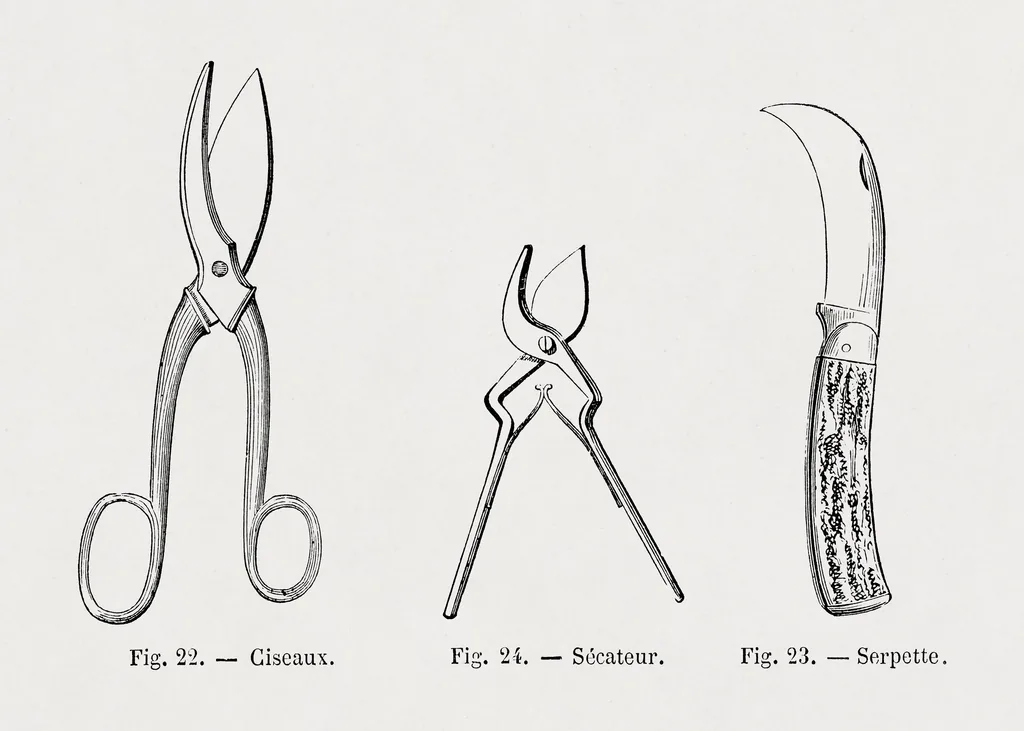
You only need a few tools, but they should be sharp and clean. Ragged cuts heal slowly and give disease an easy way in.
- Bypass pruners for canes up to about 1/2 inch (13 mm) thick. Bypass blades slice cleanly like scissors; anvil pruners tend to crush rose stems.
- Loppers for thicker, older canes up to about 1 inch (2.5 cm).
- A small pruning saw for very old woody canes at the base of established bushes.
- Thick gloves with long cuffs. A pair of gauntlet rose gloves protects your forearms from thorns.
- Rubbing alcohol or a disinfectant wipe to clean blades between plants, especially after cutting diseased wood.
How to Prune Roses Step by Step
- Clear the base. Rake away old leaves and mulch from around the plant. Fallen leaves can carry black spot spores into the new season.
- Remove the three Ds. Cut out anything dead, damaged or diseased. Dead canes are brown or black and shriveled. Cut back until you see white or pale green pith in the center of the stem; brown pith means the cane is still dead at that point.
- Take out crossing and inward canes. Remove canes that rub against each other or grow into the middle of the bush. Aim for an open, vase-like shape so air and light reach the center.
- Remove thin, weak growth. Anything thinner than a pencil rarely produces good flowers on hybrid teas and grandifloras.
- Choose your keepers. On most bush roses, keep three to six strong, healthy canes, evenly spaced around the plant. Remove the oldest, grayest canes at the base to make room for new growth.
- Shorten the keepers. Cut each remaining cane to the height that suits the rose type (see below). Make each cut about 1/4 inch (6 mm) above an outward-facing bud, sloping down and away from the bud at roughly 45 degrees so water runs off.
- Remove suckers. On grafted roses, shoots coming from below the bud union (the knobby graft point) are rootstock. Pull or cut them off right at their source.
- Clean up. Bag and dispose of the prunings, especially any diseased wood. Don’t compost diseased material.
Pro tip: If you are unsure which way a bud faces, look for the small reddish swelling just above a leaf scar. Cutting above a bud that points outward sends the new shoot away from the center of the bush.
Watch: Pruning roses
This video from a rose farm walks through the main pruning rules, which is helpful if you want to see real cuts before you start.
Pruning by Rose Type
Different roses flower in different ways, so they need slightly different treatment.
| Rose type | When | How hard |
|---|---|---|
| Hybrid tea and grandiflora | Early spring | Hard: keep 3–6 canes, about 12–18 in (30–45 cm) tall |
| Floribunda | Early spring | Moderate: remove about one-half to two-thirds of the height, leaving them a little taller than hybrid teas |
| Modern shrub roses | Early spring | Light: thin out about one-third of the oldest canes each year; little pruning needed in the first 2–3 seasons |
| Repeat-blooming climbers | Early spring | Keep main canes; shorten side shoots to 3–5 buds |
| Ramblers and once-blooming old roses | Right after flowering | Light: remove some old canes and tidy the shape |
| Miniature roses | Early spring | Trim by about one-third to one-half and remove twiggy growth |
Climbing roses
Climbers flower best on side shoots that grow from long main canes trained close to horizontal. Leave the main framework in place and shorten each side shoot to three to five buds. Every few years, remove one of the oldest main canes at the base and tie in a vigorous new one to replace it. Trim back main canes that have outgrown their support.
Summer Pruning and Deadheading
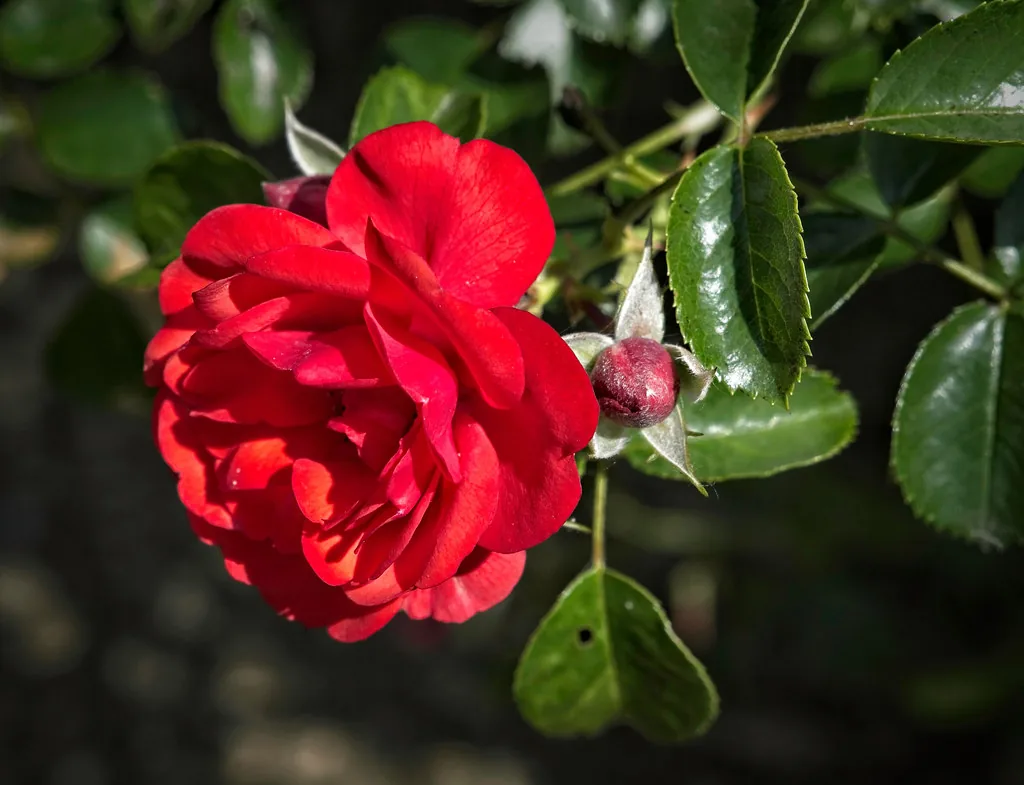
During the growing season, keep pruning light. On repeat-blooming roses, deadhead faded flowers by cutting back to the first healthy outward-facing leaf or bud below the bloom. This encourages the next flush of flowers. Leave the spent flowers on once-blooming roses if you want ornamental hips in fall.
Stop deadheading in early fall (around the start of October in much of the Northern Hemisphere) so the plant can slow down and harden off before winter.
Aftercare After Pruning
Water well after pruning if the soil is dry, then spread fresh compost or mulch around the base, keeping it a few inches away from the canes. Once new shoots appear, feed with a balanced rose fertilizer according to the label.
You don’t need to seal pruning cuts. Clean, angled cuts on healthy wood heal on their own. Some gardeners apply a dormant oil spray after pruning and before new shoots open to reduce overwintering pests; if you do, follow the product label exactly.
For more on looking after woody plants, see our guides to pruning fruit trees, pruning apple trees and pruning fig trees. The same clean-cut principles apply.
Common Rose Pruning Mistakes
- Pruning in fall. A hard autumn prune can trigger soft growth that winter kills. In fall, only shorten very tall canes by a few inches to stop wind rocking the roots.
- Using dull or anvil pruners. Crushed stems die back and invite canker.
- Cutting too far above a bud. Long stubs die back to the bud and can let disease into the cane. Stay close, about 1/4 inch (6 mm).
- Cutting once-bloomers in spring. You remove the wood that would have flowered this year.
- Leaving the center crowded. Poor airflow encourages black spot and powdery mildew.
- Forgetting the rootstock. Suckers from below the graft will slowly take over a grafted rose if you leave them.
Wear eye protection when cutting climbers. Long, springy canes can whip back when cut, and thorns at eye height are a real risk.
Helpful gear for this guide
Handy picks that match the advice above.
Quick Reference: Rose Pruning at a Glance
FAQ
Can I prune roses in the fall?
Only lightly. Shorten very long canes by a few inches to prevent wind damage, but save the main prune for late winter or early spring. Hard pruning in fall can encourage tender growth that frost kills.
How far back should I cut my roses?
Hybrid teas and grandifloras are usually cut to about 12–18 inches (30–45 cm). Floribundas are left a little taller, shrub roses are mostly thinned rather than cut low, and climbers keep their main canes with side shoots shortened to 3–5 buds.
What happens if I don’t prune my roses?
They keep growing and flowering, but bushes get woody and congested, flowers get smaller and fewer, and disease is more likely because air can’t move through the plant.
Should I seal rose pruning cuts?
No. Clean, angled cuts on healthy wood heal on their own. Focus on sharp tools and cutting just above a bud.
Can you over-prune a rose?
Established repeat-blooming roses are forgiving and usually regrow from a hard prune. The real risk is pruning once-blooming roses in spring, which removes this year’s flowers, or pruning repeatedly through the season so the plant never builds strength.
Do I cut above or below the leaf when deadheading?
Cut just above an outward-facing bud or healthy leaf below the faded flower. On hybrid teas, many gardeners cut back to the first leaf with five leaflets.
Sources
Timing varies with local climate. Your local extension office or gardening society can confirm the best pruning window for your area.





One Comment