
Last updated: November 2026
This guide contains affiliate links. As an Amazon Associate, FarmingAround earns from qualifying purchases, at no extra cost to you.
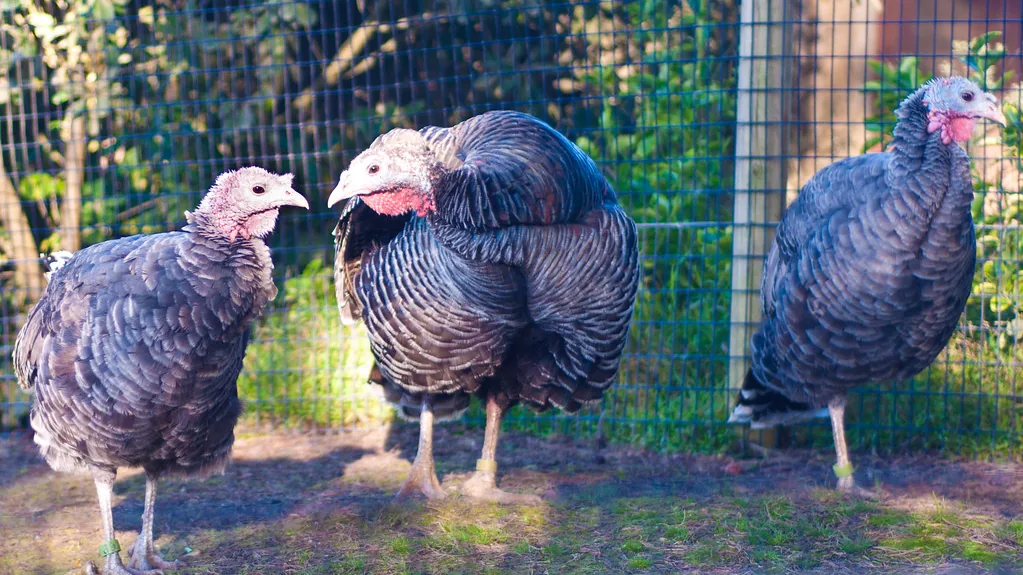
A female turkey is called a hen, and a young female under a year old is called a jenny. Hens are smaller and quieter than toms, usually have no beard or only a short snood, and do not strut or gobble. Heritage turkey hens lay seasonally in spring, often go broody and raise their own poults, which makes them the backbone of any small-farm turkey flock.
This guide covers how to tell hens from toms, how big they get, how many eggs they lay, how to feed and house them, what to expect from a broody hen, and the health and safety points every small farmer and homesteader should know.
Key takeaways
- Names: adult female = hen, young female = jenny; adult male = tom or gobbler, young male = jake.
- Tell them apart: hens are about half to two-thirds the size of toms, with plainer heads and usually no beard.
- Eggs: heritage hens lay mostly in spring, often around 30–60 eggs a season, and eggs hatch in about 28 days.
- Care: layer or breeder feed plus oyster shell in laying season, a private ground-level nest, and protection from predators.
In this guide
What Is a Female Turkey Called?
Adult female turkeys are hens. Females in their first year are often called jennies. Males are toms or gobblers, and young males are jakes. Baby turkeys of either sex are poults. A group of turkeys is a flock, sometimes called a rafter; see what a group of turkeys is called for the full list.
How to Tell a Hen From a Tom
Once birds are a few months old, hens and toms are fairly easy to tell apart:
| Feature | Hen (female) | Tom (male) |
|---|---|---|
| Size | About ½ to ⅔ the size of a tom | Larger and heavier |
| Head | Plainer, often bluish-gray; small or no snood | Bright red, white and blue when displaying; long snood over the beak |
| Beard | Usually none (a small proportion of hens grow one) | Long, bristly beard on the chest |
| Spurs | Usually none | Spurs on the legs |
| Sounds | Yelps, clucks and purrs | Gobbles and drums |
| Display | Does not strut or fan the tail | Struts with tail fanned and wings dropped |
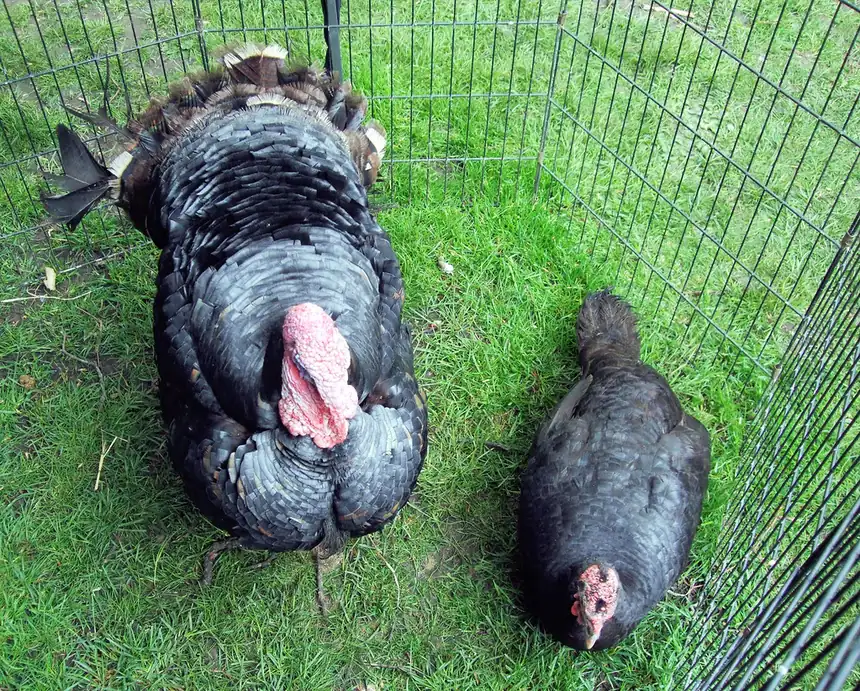
Young poults are much harder to sex. Differences in size, head shape and behavior start to show at a few months, and they become obvious as toms begin to strut.
Watch: How to Tell a Female Turkey From a Male
This short video shows the differences between hens and toms on a working farm.
How Big Are Turkey Hens?
Hen size depends heavily on breed. Heritage hens are much lighter than commercial Broad Breasted hens. For example, The Livestock Conservancy lists mature Royal Palm hens at about 12 lb (5.4 kg) against 20–22 lb (9–10 kg) for toms. Read the full profile of Royal Palm turkeys, or compare with white turkeys and Narragansett turkeys.
Because hens are lighter, heritage hens fly better than toms and are good at getting over low fences. Plan your fencing with that in mind; our guide to whether turkeys fly explains why.
Do Turkey Hens Lay Eggs?
Yes. Turkey hens lay eggs whether or not a tom is present; without a tom the eggs are simply infertile, just as with chickens. Our guide do turkeys lay eggs? goes into more detail.
- When they start: usually at around 7–10 months old, in their first spring.
- Season: heritage hens lay mainly in spring, as days lengthen, and production drops through summer.
- How many: heritage hens commonly lay around 30–60 eggs a season, though it varies widely by breed and line. Some small heritage breeds, such as the Royal Palm, lay fewer.
- Egg size: turkey eggs are almost twice the size of chicken eggs and taste much the same. See turkey eggs for cooking and selling tips.
Commercial Broad Breasted hens are bred for meat. They are too heavy to mate naturally, so the industry relies on artificial insemination. If you want a flock that reproduces on its own, choose a heritage breed.
Pro tip: Collect eggs every day. Daily collection keeps eggs clean, and many keepers find hens keep laying longer instead of settling down to brood.
Broody Hens and Raising Poults
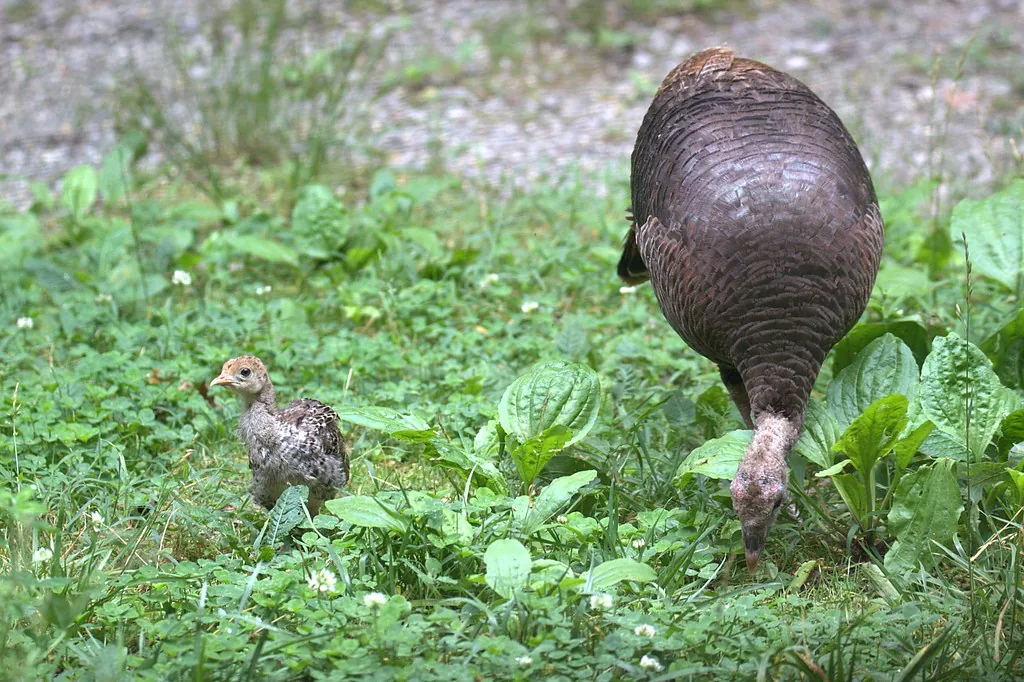
Many heritage hens go broody, meaning they stop laying, settle on a clutch of eggs and refuse to leave the nest. Turkey eggs take about 28 days to hatch, whether under a hen or in an incubator.
- Give a broody hen a quiet, sheltered nest away from the rest of the flock if possible.
- Make sure she has feed and water within easy reach, as she will leave the nest only briefly.
- Expect her to protect the poults fiercely and teach them to find food and water.
- If your hens are poor mothers, collect fertile eggs and use an incubator instead. Our guide to the best egg incubators for beginners can help you choose one.
For breeding, most small flocks keep one tom with several hens. Toms are heavy and their claws can tear the skin on a hen’s back during mating, so many keepers fit hens with a canvas turkey hen saddle during breeding season.
Feeding Turkey Hens
Hens eat the same basic diet as the rest of the flock, with extra calcium when laying:
- Outside laying season: a balanced turkey or game bird maintenance feed, plus pasture and forage.
- In laying season: Purina suggests switching hens to a game bird layer feed from about 30 weeks of age until laying ends.
- Mixed flocks: if toms and hens share a feeder, keep the regular feed and offer oyster shell in a separate dish so hens can take extra calcium.
- Water: clean water at all times, especially for laying and broody hens.
Keep treats to 10% or less of the diet. See what turkeys eat for a full feeding guide by age.
Housing, Nesting and Safety
Shelter and roosts
Turkey hens need a dry, well-ventilated shelter and high, sturdy roosts. Our turkey roost guide covers sizes and spacing.
Nests
Turkeys prefer to nest on the ground. Provide large, low nest boxes or sheltered corners with plenty of clean bedding, in a dark, quiet spot. Hens left to choose will often hide a nest in long grass or under bushes, where they and their eggs are exposed to predators.
Predators
A hen sitting on a ground nest is an easy target for foxes, coyotes, raccoons, dogs and large birds of prey. Lock the flock in at night, use secure fencing, and encourage hens to nest inside protected areas.
Wash your hands after handling turkeys or eggs. Like all poultry, turkeys can carry Salmonella even when they look healthy. The CDC advises washing hands with soap and water after touching birds, eggs or anything in their area, and keeping poultry out of the house.
Health Problems to Watch For
- Blackhead disease (histomoniasis): often serious in turkeys and can be carried by chickens. Many keepers house turkeys separately from chickens.
- Back injuries from mating: watch for bare or torn skin on hens’ backs; a saddle helps prevent it.
- Lice and mites: check under the wings and around the vent regularly.
- Heat stress: provide shade and plenty of cool water in hot weather.
- Bird flu: keep wild birds away from feed and water and report sudden deaths; see our bird flu guide.
Helpful gear for this guide
Handy picks that match the advice above.
Links go to Amazon. Prices and availability change, so check reviews and fit for your setup before buying.
Quick Reference: Turkey Hens
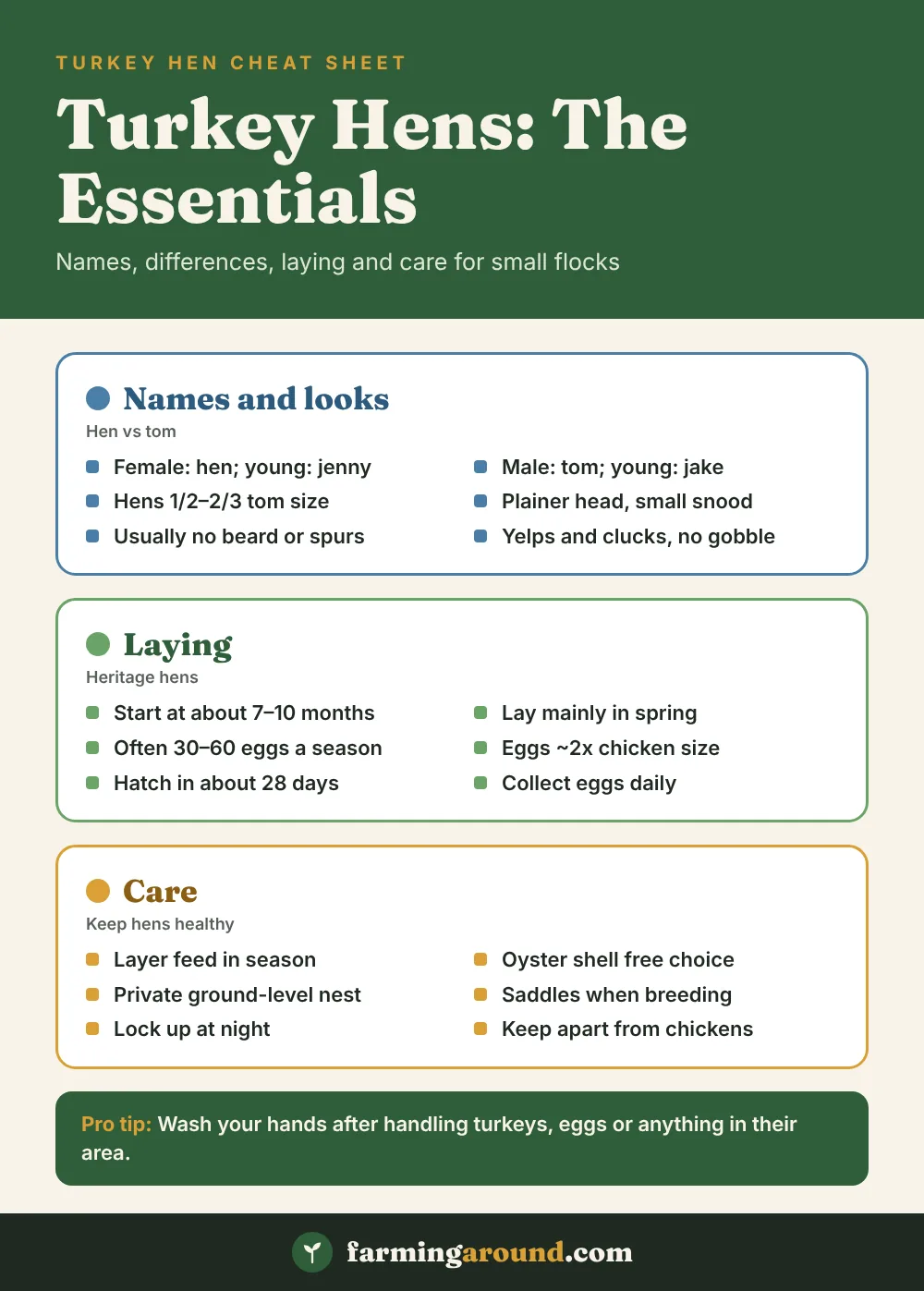
The key facts about turkey hens in one chart.
FAQ
Do female turkeys gobble?
No. Gobbling is a male call. Hens communicate with yelps, clucks, purrs and other softer calls.
Do turkey hens have beards?
Usually not, but a small proportion of hens do grow a beard. It is typically shorter and thinner than a tom’s.
Can turkey hens lay eggs without a male?
Yes. Hens lay eggs without a tom, but those eggs are infertile and will not hatch.
How many eggs does a turkey hen lay?
Heritage hens commonly lay around 30–60 eggs per season, mostly in spring. Numbers vary by breed and line, and some small breeds lay fewer.
How long do turkey eggs take to hatch?
About 28 days, under a broody hen or in an incubator.
Can turkey hens live with chickens?
They can, but chickens can carry blackhead disease, which is often serious in turkeys. Many keepers house them separately.
Sources
- Identifying Female and Male Turkeys in the Spring (Mass.gov)
- Royal Palm Turkey (The Livestock Conservancy)
- What Do Turkeys Eat? Tips for Raising Turkeys (Purina Animal Nutrition)
- Backyard Poultry (CDC)
This guide is general information. For sick birds or breeding problems, talk to a vet who treats poultry or your local extension office.