
Last updated: October 2026
This guide contains affiliate links. As an Amazon Associate, FarmingAround earns from qualifying purchases, at no extra cost to you.
A strawberry hydroponic system grows strawberry plants without soil, feeding their roots a measured nutrient solution through drip lines, shallow channels or a reservoir. Done well, it gives you clean berries at waist height, fewer soil-borne pests and, with day-neutral varieties and good light, fruit over a much longer season. The keys are the right varieties, a low-strength nutrient solution kept at pH 5.5–6.0, cool temperatures and a little help with pollination.
This guide explains how hydroponic strawberry systems work, which setup suits a home grower or small farm, the numbers that matter, and step-by-step tips to get your first crop.
Key takeaways
- Choose day-neutral varieties such as ‘Albion’, ‘Monterey’, ‘San Andreas’ or ‘Seascape’ for fruit over many months.
- Keep the solution mild: research at Ohio State and Arizona suggests pH 5.5–6.0 and an EC around 1.0 dS/m.
- Strawberries like it cool: about 68–75°F (20–24°C) by day and 50–54°F (10–12°C) at night.
- Indoors, you are the bee: brush or vibrate flowers daily or every other day to avoid misshapen berries.
In this guide
- How a Strawberry Hydroponic System Works
- Types of Strawberry Hydroponic Systems
- Best Strawberry Varieties for Hydroponics
- How to Set Up a Strawberry Hydroponic System
- Nutrient Solution, pH and EC
- Temperature, Light and Humidity
- Pollinating Hydroponic Strawberries
- Common Problems and Fixes
- Harvesting Hydroponic Strawberries
- Quick Reference
- FAQ
- Sources
How a Strawberry Hydroponic System Works
In soil, roots find water and nutrients for themselves. In a hydroponic system you supply both. Plants sit in an inert growing medium such as coco coir, perlite, rockwool or clay pebbles, or in net pots over water, and a pump or reservoir delivers a balanced nutrient solution to the roots.
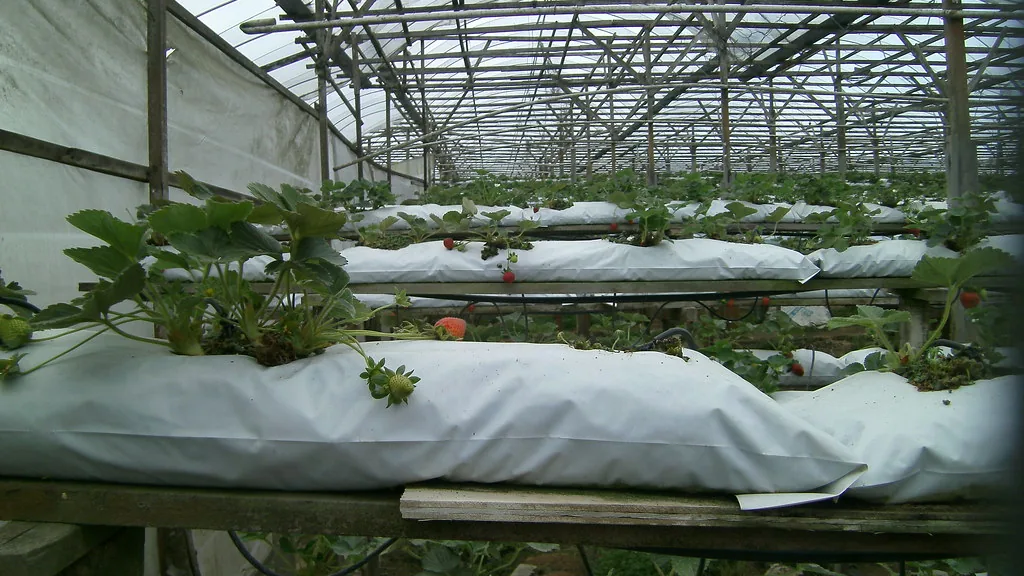
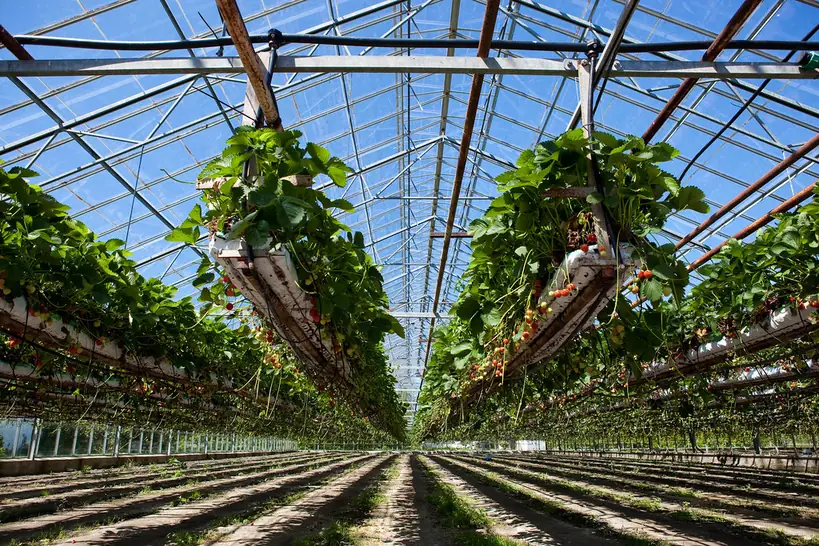
Strawberries suit hydroponics because they’re compact, shallow-rooted and easy to raise off the ground, which keeps fruit clean and picking comfortable. Commercial growers use the same idea in greenhouses and high tunnels with raised gutters, troughs and grow bags.
Types of Strawberry Hydroponic Systems
| System | How it works | Best for |
|---|---|---|
| Substrate bags or troughs with drip | Plants grow in coir or perlite; drip emitters deliver solution several times a day and excess drains away | Greenhouses, high tunnels and serious home setups |
| Nutrient film technique (NFT) gutters | A thin film of solution flows along sloped channels past the roots | Raised or hanging rows in greenhouses |
| Vertical towers or stacks | Solution is pumped to the top and trickles down through stacked pots | Small spaces, patios and high tunnels |
| Deep water culture (DWC) or Kratky tub | Net pots sit in a lid over an aerated or still reservoir | Beginners and a handful of plants indoors |
For a first try indoors, a simple tub with an air pump and air stone is cheap and forgiving. For more plants, drip-fed grow bags or troughs are easier to manage than deep water, because each plant has its own root zone and problems are less likely to spread.
Best Strawberry Varieties for Hydroponics
Day-neutral (everbearing) varieties are the usual choice because they flower regardless of day length, so they keep producing for months under good conditions. Common picks include ‘Albion’, ‘Monterey’, ‘San Andreas’, ‘Seascape’ and ‘Mara des Bois’.
University of Illinois Extension trials of day-neutral strawberries in a vertical stack system in a high tunnel found ‘Monterey’ gave the highest yield and best flavor of the three tested, ‘San Andreas’ had the largest fruit, and ‘Albion’ had smaller, slightly sour berries in that trial. Results vary with climate and setup, so treat them as a starting point.
June-bearing varieties produce one big crop a year and need the right day length and cool temperatures to set flowers, which makes them harder to manage indoors.
Start with healthy plug plants or dormant bare-root plants from a reputable nursery. Growing from seed is slow and many named varieties don’t come true from seed.
How to Set Up a Strawberry Hydroponic System
- Pick your spot. A greenhouse, high tunnel, sunny porch or indoor grow area with good airflow and access to power and water.
- Choose the system and medium. Coir or perlite in bags or troughs, net pots with clay pebbles or rockwool, or a ready-made tower.
- Prepare the plants. Rinse soil off the roots of plug plants. Trim bare-root plants’ roots lightly and plant so the crown sits just above the medium, never buried.
- Mix the nutrient solution to the label rate for fruiting crops, then check and adjust pH and EC with a meter.
- Set your watering. In drip systems, short, frequent irrigations work better than a few long ones. Ohio State’s guidance aims for about 20–30% of the applied solution to drain away.
- Add light if needed. Indoors, use full-spectrum LED grow lights on a timer.
- Remove runners and early flowers for the first few weeks so plants put energy into roots and crowns.
Pro tip: Plant a few extra strawberries in a spare pot. If one in the system dies or develops crown rot, you’ll have a same-age replacement ready instead of a gap.
Nutrient Solution, pH and EC
Strawberries are more sensitive to salts than tomatoes and other greenhouse crops, so they need a weaker solution.
| Measure | Target | Why it matters |
|---|---|---|
| pH of the solution | 5.5–6.0 | Root-zone pH above 7.0 causes iron deficiency (yellow-green young leaves) |
| EC (electrical conductivity) | About 1.0 dS/m (mS/cm) | Higher levels for long periods stress plants with salt |
| When to flush | If root-zone EC climbs above about 1.2 dS/m | Clears built-up salts from the medium |
These targets come from Ohio State University’s indoor berry research. Other growers run higher: the Illinois high-tunnel trial above used an EC around 1.8 and pH about 6.6 because it shared a solution with other crops, and noted that wasn’t optimized for strawberries. Start low and watch the plants.
Check pH and EC at least every few days with a pH and EC meter, top up with plain water as plants drink, and change the reservoir completely on a regular schedule. If young leaves turn yellow between green veins, check pH first. Our guide to why plant leaves turn yellow explains other common causes.
Temperature, Light and Humidity
- Temperature: Ohio State suggests 68–75°F (20–24°C) by day and 50–54°F (10–12°C) at night. Nights above about 60–65°F (16–18°C) make berries more acidic and less sweet.
- Light: aim for a daily light integral (DLI) of at least 12 mol/m²/day, with 20–25 ideal. Above about 30, plants need shading.
- Humidity: about 40–60% during the day. Good airflow helps prevent gray mold (botrytis).
- Water temperature in deep water systems: cool water holds more oxygen, so keep the reservoir out of direct sun.
Outdoors or in an unheated greenhouse, strawberry season follows your local frost dates. In USDA zones 3–6, hydroponic beds in a high tunnel typically run from spring to fall. In mild zones 8–10, a protected setup can fruit through much of the cool season. In the Southern Hemisphere, shift the calendar by six months, with the main season from about September to April.
Pollinating Hydroponic Strawberries
Outdoors, bees and wind do the work. Indoors, uneven pollination is the usual cause of small, lumpy or misshapen berries.
- Brush: dab the center of each open flower with a soft small paintbrush, moving from flower to flower.
- Vibration: a few seconds of vibration on each flower truss with an electric pollinator or electric toothbrush.
- Air: a fan or small blower passed over dry flowers helps shed pollen.
Ohio State recommends pollinating daily or every other day while plants are in bloom, when flowers and anthers are dry.
Watch: How to grow hydroponic strawberries at home
This short video from Simple Greens Hydroponics shows a home hydroponic strawberry setup.
Common Problems and Fixes
| Problem | Likely cause | Fix |
|---|---|---|
| Small or misshapen berries | Poor pollination | Pollinate daily or every other day |
| Yellow young leaves with green veins | Root-zone pH too high (iron deficiency) | Lower solution pH toward 5.5–6.0 |
| Brown, crispy leaf tips on new leaves | Tipburn (calcium not reaching young leaves) | Improve airflow and humidity balance; check EC |
| Brown, slimy roots and wilting | Root rot from warm, low-oxygen water | Cool the reservoir, add aeration, clean the system |
| Fine webbing and speckled leaves | Spider mites | Isolate plants, rinse leaves, use biological controls |
| Gray fuzzy mold on fruit | Botrytis in humid, still air | Remove affected fruit, increase airflow, lower humidity |
Keep it clean. Hydroponic systems share one water supply, so disease spreads fast. Wash and sanitize containers, channels and net pots between crops, and never reuse a solution from sick plants.
Strawberries are a natural next step if you already grow greens indoors. See our guides to growing microgreens and setting up an indoor herb garden.
Harvesting Hydroponic Strawberries
Pick berries when they’re fully red all over, with the stem attached, ideally in the cool of the morning. Berries don’t get sweeter after picking, so wait for full color. Day-neutral plants usually keep flowering and fruiting in waves for several months. Many growers replace plants after one or two seasons, when yields and vigor drop.
Helpful gear for this guide
Handy picks that match the advice above.
Links go to Amazon. Prices and availability change, so check reviews and fit for your setup before buying.
Quick Reference
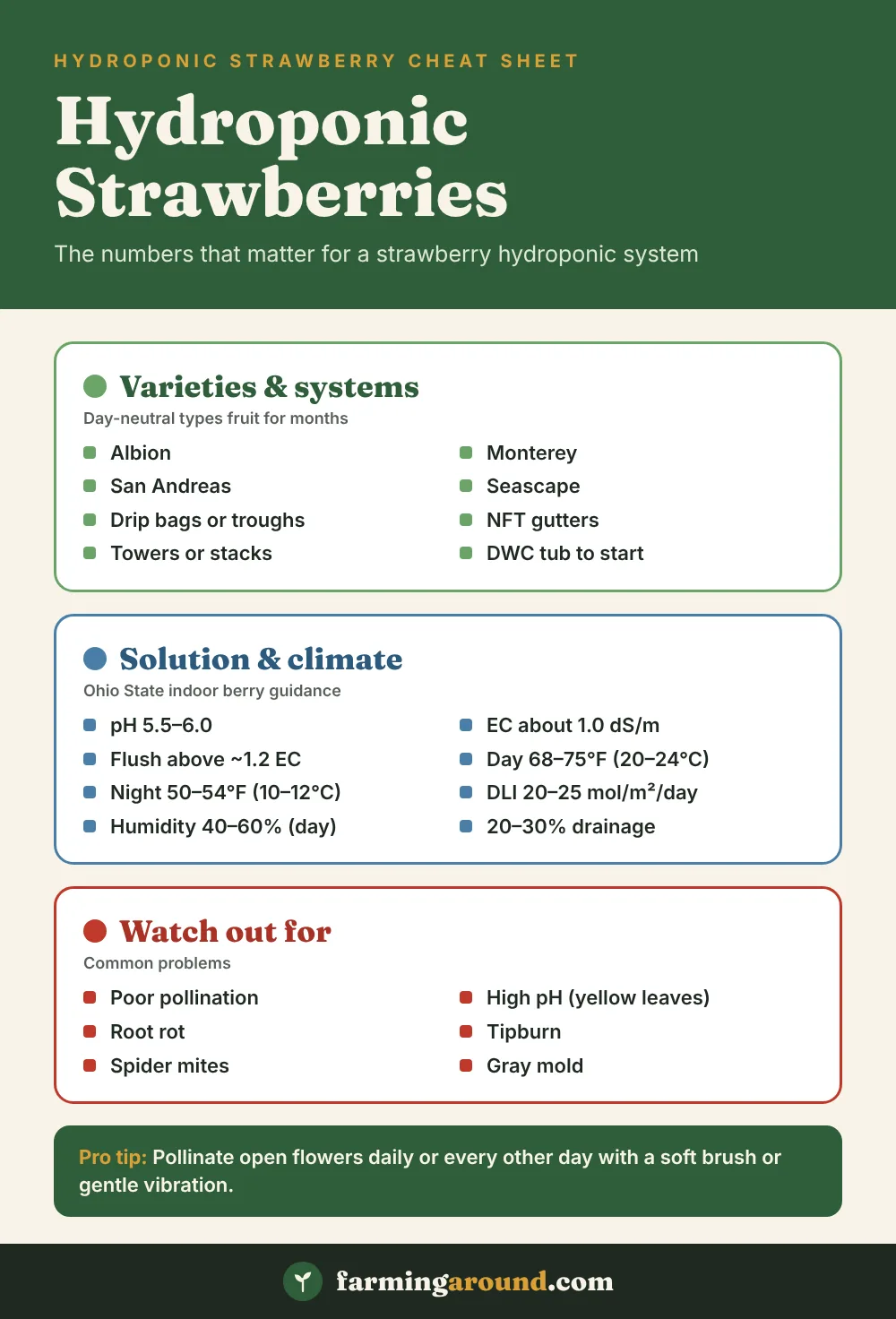
Save this chart next to your system:
FAQ
Are hydroponic strawberries worth it?
For many home growers, yes, especially if you have limited space or poor soil. Expect to spend time checking pH, EC and pollination, and to need extra light indoors.
What is the best hydroponic system for strawberries?
Drip-fed grow bags or troughs and NFT gutters are the most common in greenhouses. For a few plants indoors, a simple deep water tub or a vertical tower is easiest to start with.
How long until hydroponic strawberries fruit?
Healthy day-neutral plug plants often flower within a few weeks of planting, with ripe berries several weeks after that. Dormant bare-root plants start more slowly.
What pH do hydroponic strawberries need?
About 5.5–6.0 for the nutrient solution. Above that, iron becomes less available and young leaves turn yellow.
Can you grow strawberries hydroponically from seed?
You can, but it’s slow and many named varieties don’t come true from seed. Plug plants or bare-root crowns are much faster.
Do hydroponic strawberries need pollinating?
Indoors, yes. Brush, vibrate or gently blow air over open flowers daily or every other day for well-shaped berries.