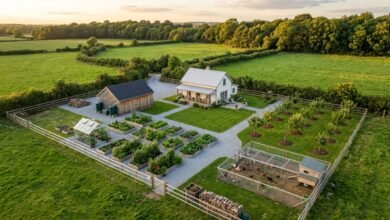
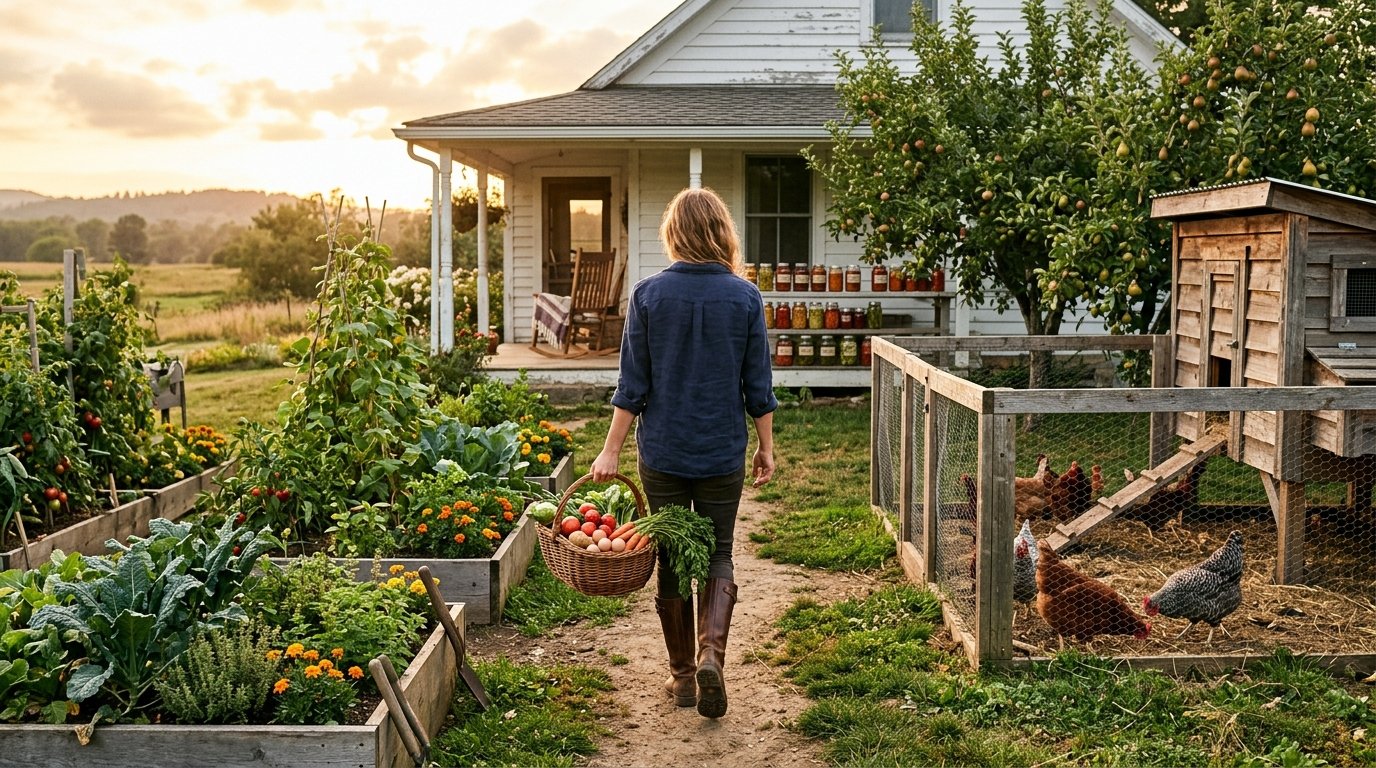

Homesteading is a lifestyle built around self-sufficiency: growing your own food, raising animals, preserving the harvest, and learning practical skills that reduce your dependence on stores and outside services. It can happen on a hundred acres or in a city backyard. This guide explains what homesteading means today, where the term came from, the different types of homesteading, the skills involved, the pros and cons, and how to start, wherever you live.
What Is Homesteading? A Simple Definition
Homesteading is the practice of living more self-sufficiently by producing your own food and meeting more of your household’s needs with your own skills and resources. Modern homesteaders typically:
- Grow fruit, vegetables and herbs
- Raise animals for eggs, meat, milk or honey
- Preserve food by canning, freezing, dehydrating and fermenting
- Cook from scratch and bake their own bread
- Repair, build and make things instead of buying new
- Reduce waste through composting and reuse
- Sometimes produce their own energy or water
Homesteading isn’t all-or-nothing. Most people do it in stages, adding skills and projects over years.
Where Does the Word “Homesteading” Come From?
In the United States, the word is closely tied to the Homestead Act of 1862, signed by President Abraham Lincoln. It allowed eligible settlers to claim up to 160 acres of public land for free if they lived on it, built a home and farmed it for five years. Hundreds of millions of acres were eventually transferred this way, mostly across the American West. The Act was repealed in 1976, with an extension for Alaska lasting until 1986.
Today, “homesteading” rarely means claiming free land. Instead, it describes a way of living focused on self-reliance and producing more of what you use.
Don’t confuse it with a “homestead exemption.” That’s a legal term in many US states that can reduce property taxes on your primary residence or protect some home equity from creditors. It has nothing to do with farming, though the names sound similar.
Types of Homesteading
| Type | What it looks like | Typical projects |
|---|---|---|
| Rural homesteading | Several acres or more in the countryside | Large gardens, orchards, livestock, firewood, hay |
| Small-acreage / hobby farm | 1–10 acres near a town | Chickens, goats, big vegetable garden, farm stand |
| Suburban homesteading | A typical house and yard | Raised beds, fruit trees, backyard hens, bees (where allowed) |
| Urban homesteading | Apartment or small city lot | Container gardens, balcony herbs, sourdough, fermentation, community gardens |
| Off-grid homesteading | Independent of public utilities | Solar power, wells or rainwater, wood heat, composting toilets |
Curious what’s possible on a small piece of land? See our detailed plan for homesteading on an acre.
Core Homesteading Skills
Food Production
- Vegetable gardening and seed saving
- Growing staple crops like potatoes, garlic and squash
- Fruit trees and berry bushes
- Soil building and composting
Animal Husbandry
- Raising chickens for eggs or meat
- Goats for milk or meat
- Rabbits, ducks, pigs and bees
Food Preservation
- Water-bath and pressure canning (always follow tested recipes and guidelines)
- Freezing, dehydrating and fermenting
- Root cellaring and cold storage
Practical and Household Skills
- Cooking from scratch and bread baking
- Basic carpentry, fencing and repairs
- Sewing and mending
- Soap and candle making
- Budgeting and reducing waste
Benefits of Homesteading
- Fresher, better food: you know how it was grown and raised.
- Greater self-reliance: less affected by supply shortages and price spikes.
- Potential savings: especially on produce, eggs and preserved foods over time.
- Physical activity and more time outdoors.
- Valuable skills for the whole family.
- Lower environmental impact through local food and less waste.
- Possible income from eggs, produce, honey or crafts.
Challenges to Be Honest About
- Time: animals need daily care, and harvest season is busy.
- Startup costs: fencing, coops, tools and infrastructure add up.
- Learning curve: expect failed crops and mistakes in the first few years.
- Harder to travel: livestock need someone to care for them when you’re away.
- Regulations: zoning, livestock limits and food-sale rules vary by location.
- It’s not always cheaper: some things, especially at a small scale, cost more to produce than to buy.
How to Start Homesteading (Wherever You Live)
- Start with what you have. You don’t need land to begin: grow herbs on a windowsill, bake bread, try canning.
- Cook from scratch. It’s the foundation of the homestead kitchen and saves money right away.
- Start a small garden. A few raised beds or containers of crops you actually eat.
- Compost. Turn kitchen scraps into soil for your garden.
- Learn to preserve. Freeze or can your first surplus.
- Add animals slowly. Backyard hens are the classic first step. Check local rules first.
- Build skills in winter. Plan the garden, learn to sew, fix tools, read and take courses.
- Connect with others. Local extension offices, gardening clubs, farmers’ markets and homesteading groups are great resources.
How Much Land Do You Need to Homestead?
None to start. Many people homestead successfully on a suburban lot. As a rough guide:
- Apartment or balcony: herbs, greens, sprouts, fermentation, bread
- Small yard (¼ acre or less): vegetable garden, a few hens, dwarf fruit trees
- 1 acre: most of a family’s vegetables, eggs, fruit and some meat
- 5+ acres: larger livestock, pasture, woodlot, hay
FAQ: What Is Homesteading?
What is the difference between homesteading and farming?
Farming is usually a business producing food for sale. Homesteading focuses mainly on self-sufficiency for your own household, though many homesteaders sell surplus.
Can you homestead in the city?
Yes. Urban homesteaders grow food in containers and small gardens, keep hens where allowed, preserve food and build DIY skills.
Is homesteading expensive to start?
It can be done gradually and cheaply. Start with a garden, composting and cooking from scratch before investing in animals and infrastructure.
Can homesteading make money?
Many homesteads earn some income from eggs, produce, honey, plants or crafts. See our guide to the most profitable farm animals for ideas.