


Last updated: October 2026
A top bar hive is a single long, horizontal box where bees build natural comb hanging from wooden bars laid across the top, with no frames or foundation. It is cheap to build, easy on your back because you never lift heavy boxes, and well suited to small farms and homesteads that want pollination, some honey and beeswax. The trade-offs are fragile comb, usually smaller honey harvests and a bit more attention in the first season.
This guide explains how a top bar hive works, how it compares with the familiar stacked Langstroth hive, how to set one up and inspect it, and how to harvest honey and wax. You’ll also find safety tips and the local rules to check before you get bees.
Key takeaways
- One long box, no frames: bees build comb down from bars about 1¼–1⅜ in (32–35 mm) wide.
- Easy on the body: you lift one comb at a time instead of heavy honey boxes.
- Harvest by crush and strain: you get honey and plenty of beeswax, but bees must rebuild the comb.
- Watch the comb: check every 1–2 weeks in the first season to keep combs straight and catch problems early.
In this guide
What Is a Top Bar Hive?
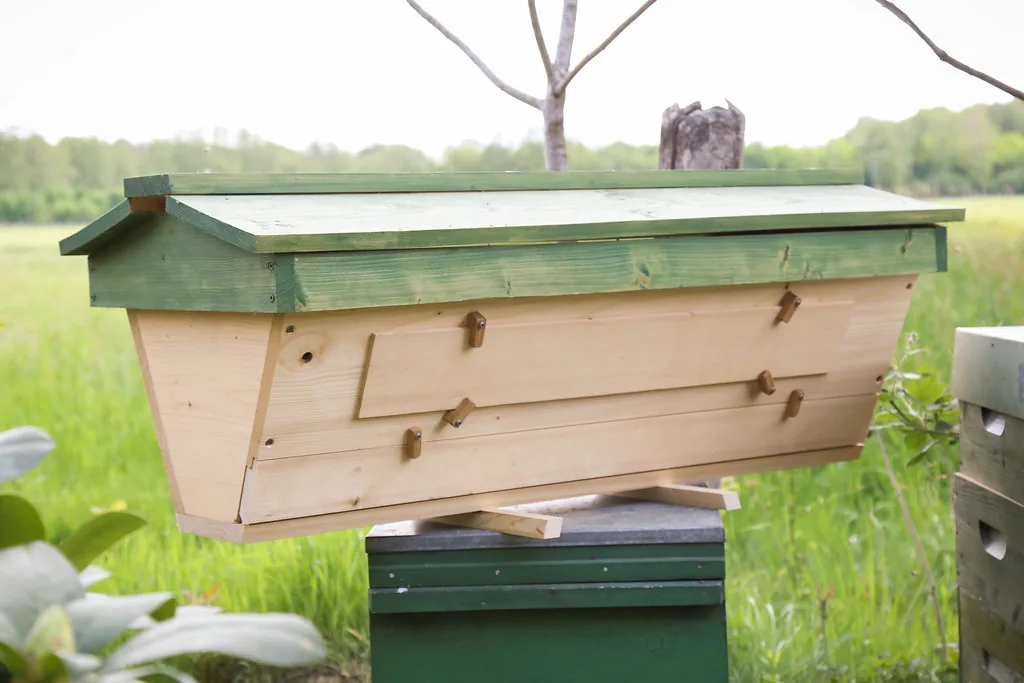
A horizontal top bar hive is a rectangular trough, usually raised on legs to a comfortable working height. Wooden bars sit side by side across the top to form the roof of the bee space. Each bar has a comb guide, such as a wooden ridge, a groove with a wax strip or a V-shaped edge, and the bees build a single comb hanging down from it.
- Bar width: typically about 32–35 mm (1¼–1⅜ in), equal to one comb plus one bee space, so the bees build one comb per bar.
- Bar length: commonly about 430–510 mm (17–20 in).
- Sides: often sloped at around 30°, which discourages bees from attaching comb to the walls.
- Follower boards: movable dividers that shrink the space for a new colony and expand it as they grow.
The modern design grew out of development projects in Africa in the 1970s, including the Kenyan top bar hive, because it could be built cheaply from local materials and allowed beekeepers to harvest without destroying the whole colony. If you are brand new to bees, start with our overview of how to start beekeeping.
Top Bar Hive vs Langstroth
| Feature | Top bar hive | Langstroth hive |
|---|---|---|
| Layout | One long horizontal box | Stacked vertical boxes |
| Comb | Natural comb hanging from bars | Comb built in frames, usually on foundation |
| Lifting | One comb at a time | Full honey boxes can be very heavy |
| Honey harvest | Crush and strain, or cut comb | Spin frames in an extractor; comb is reused |
| Typical honey yield | Usually lower | Usually higher, since bees reuse drawn comb |
| Expansion | Limited to the box length | Add boxes as needed |
| Equipment sharing | Bars rarely fit other hives | Standard parts widely available |
| Building it yourself | Simple and forgiving | Needs more precise joinery or bought parts |
Pros and Cons for Small Farms
Advantages
- Low startup cost. You can build one from lumber or reclaimed wood, and you don’t need foundation, frames or an extractor.
- No heavy lifting. Helpful if you have back problems or prefer working alone.
- Gentle inspections. Only a few bars are open at a time, so the colony stays more settled.
- Natural comb and wax. Every harvest gives you beeswax for candles, balms or wood finish.
- Easy splits. Divider boards make it simple to split a strong colony within the same box.
Disadvantages
- Less honey. Bees use a lot of honey to build new comb, and crush-and-strain harvesting destroys the comb each time.
- Fragile comb. New, unsupported comb can snap off if you tilt it, especially in hot weather.
- Cross-combing. If bees build across several bars, inspections get messy fast.
- Limited space. A crowded box can push a colony to swarm, so you need to stay ahead of them.
- Less local support. Most clubs and mentors use Langstroth hives, and standard nucleus colonies come on frames that don’t fit top bars.
What a Top Bar Hive Costs
A top bar hive is one of the cheapest ways to keep bees, especially if you build it yourself. The main costs are lumber, screws or nails, a roof and legs. Ready-made hives are available but cost more. Remember to budget for the parts that don’t change between hive styles: bees, a veil or suit, gloves, a smoker, a hive tool or long knife, feeders and mite monitoring supplies.
Honey income is usually modest, so treat a top bar hive mainly as a pollination, hobby and wax project. If you are weighing livestock options for income, our guide to the most profitable farm animals compares other choices.
Setting Up a Top Bar Hive
- Pick a site. Choose a level spot with morning sun, some afternoon shade in hot climates, shelter from strong wind and a nearby water source. Face the entrance away from paths and neighbors.
- Level the hive side to side. Bees build comb straight down with gravity. If the hive leans, combs drift off the bars.
- Prepare the bars. Make sure every bar has a clear comb guide. Rub on a little clean beeswax to encourage the bees to start in the right place.
- Set the follower board to give a new colony only about 8–10 bars to start.
- Install bees. Package bees or a caught swarm are the usual choices, since standard nucleus colonies come on Langstroth frames. Some suppliers sell top bar nucs; make sure their bars match yours.
- Feed a new colony. A new package has no comb or stores, so feed 1:1 sugar syrup (equal parts sugar and water by weight or volume) until the bees are drawing comb steadily and a nectar flow is on.
Pro tip: Place an empty bar between two straight, fully drawn combs. The bees use the neighbors as a template, which is one of the best ways to keep new comb straight.

Inspecting a Top Bar Hive
In the first season, check about every 1–2 weeks. Your main goals are straight comb, a laying queen, enough room and healthy brood.
- Suit up and light your bee smoker. A few gentle puffs at the entrance and under the bars calm the bees.
- Start at the empty end, behind the follower board, and work toward the brood nest.
- Free each bar by running a long hive tool or knife along any comb attached to the walls.
- Lift straight up and keep the comb vertical. To see the other side, turn the bar like a page, keeping the comb’s face upright. Never tip new comb flat.
- Look for eggs and young larvae, a healthy brood pattern, stores of honey and pollen, and signs of disease or pests.
- Fix wonky comb early. Gently press slightly curved comb back into line, or cut away comb built across bars before it becomes a bigger problem.
Be careful in hot weather. Fresh comb softens in heat and can break off the bar when lifted. Inspect in the cooler morning hours and keep combs upright at all times.
Watch: Top bar hive basics
This short video from BeeBuilt introduces the parts of a top bar hive and how it differs from other hive types.
Seasonal Care, Swarms and Mites
- Spring: colonies grow quickly. Move the follower board back and add empty bars before the box gets crowded to reduce swarming.
- Summer: check for space and water, and harvest only surplus honey at the far end of the hive.
- Fall: make sure the colony has plenty of capped honey next to the brood nest for winter, and feed if stores are low.
- Winter: reduce the space with the follower board, keep the hive dry and wind-sheltered, and avoid opening it except on mild days.
Varroa mites are the biggest threat to honey bee colonies in most regions, whatever the hive style. Monitor mite levels regularly with a sugar roll or alcohol wash and follow current guidance from your local extension service or beekeeping association on when and how to treat. Top bar hives are not naturally mite-resistant.
Harvesting Honey and Wax
Harvest only full bars of capped honey from the end of the hive farthest from the brood. Leave the bees plenty for winter.
- Brush or gently shake bees off the comb and cut it from the bar, leaving a strip about ½ inch (1 cm) wide along the bar as a guide for the next comb.
- Cut pieces for cut-comb honey, or crush the comb in a clean bucket.
- Strain the honey through a fine honey strainer into a food-grade container and let it drain, ideally overnight in a warm room.
- Render the leftover wax by melting it gently in water, then let it cool and lift off the clean cake.
Because bees must rebuild every comb you take, expect smaller honey harvests than from a Langstroth hive. The upside is a steady supply of beeswax.
Safety and Local Rules
Bee stings are a real risk for anyone with a bee allergy. Talk to your doctor before keeping bees if you or a family member has had a serious reaction, and wear a beekeeping jacket with veil and gloves until you are confident.
- Check the rules. Many states, provinces and countries require you to register hives. Some also require hives with removable combs so inspectors can check them; a top bar hive usually qualifies because each comb lifts out, but confirm with your state apiarist or local authority.
- Be a good neighbor. Place hives away from property lines, provide water so bees don’t visit pools and pet bowls, and use a fence or hedge to send bees up and over.
- Keep children and pets away from the hive entrance.
Bees fit well into a small diversified farm. For more ideas on making the most of limited space, see homesteading on an acre and what homesteading really involves.
Helpful gear for this guide
Handy picks that match the advice above.
Links go to Amazon. Prices and availability change, so check reviews and fit for your setup before buying.
At a Glance

FAQ
Are top bar hives good for beginners?
They can be. They are cheap and easy to handle, but comb is fragile and fewer mentors use them. Beginners do best if they inspect often in the first season and join a local club.
Do top bar hives produce less honey?
Usually yes. Bees must rebuild comb after each crush-and-strain harvest, which uses a lot of their honey.
Can you use a honey extractor with a top bar hive?
Usually not. Top bar combs have no frames and are often irregular and fragile, so most top bar beekeepers crush and strain or sell cut comb.
How wide should top bars be?
Most designs use bars about 32–35 mm (1¼–1⅜ in) wide, which matches one comb plus one bee space.
Can bees survive winter in a top bar hive?
Yes, if the colony is strong, healthy and has enough honey next to the cluster. Keep the hive dry, sheltered and reduced in size with a follower board.
Can I put a nucleus colony in a top bar hive?
Only if it comes on matching top bars. Standard nucs are on Langstroth frames, so most top bar beekeepers start with package bees or swarms.
Sources
- Horizontal top-bar hive (overview of design and history)
- Oklahoma State University Extension: Beekeeping Honey Harvest Methods
- FAO: Beekeeping in Africa, Hive Management
For bee health questions or rules in your area, contact your state apiarist, local extension office or beekeeping association.
This guide contains affiliate links. As an Amazon Associate, FarmingAround earns from qualifying purchases, at no extra cost to you.
Get free farming guides in your inbox
Practical guides, seasonal tips and market updates. No spam, unsubscribe anytime.
Subscribe free

One Comment