
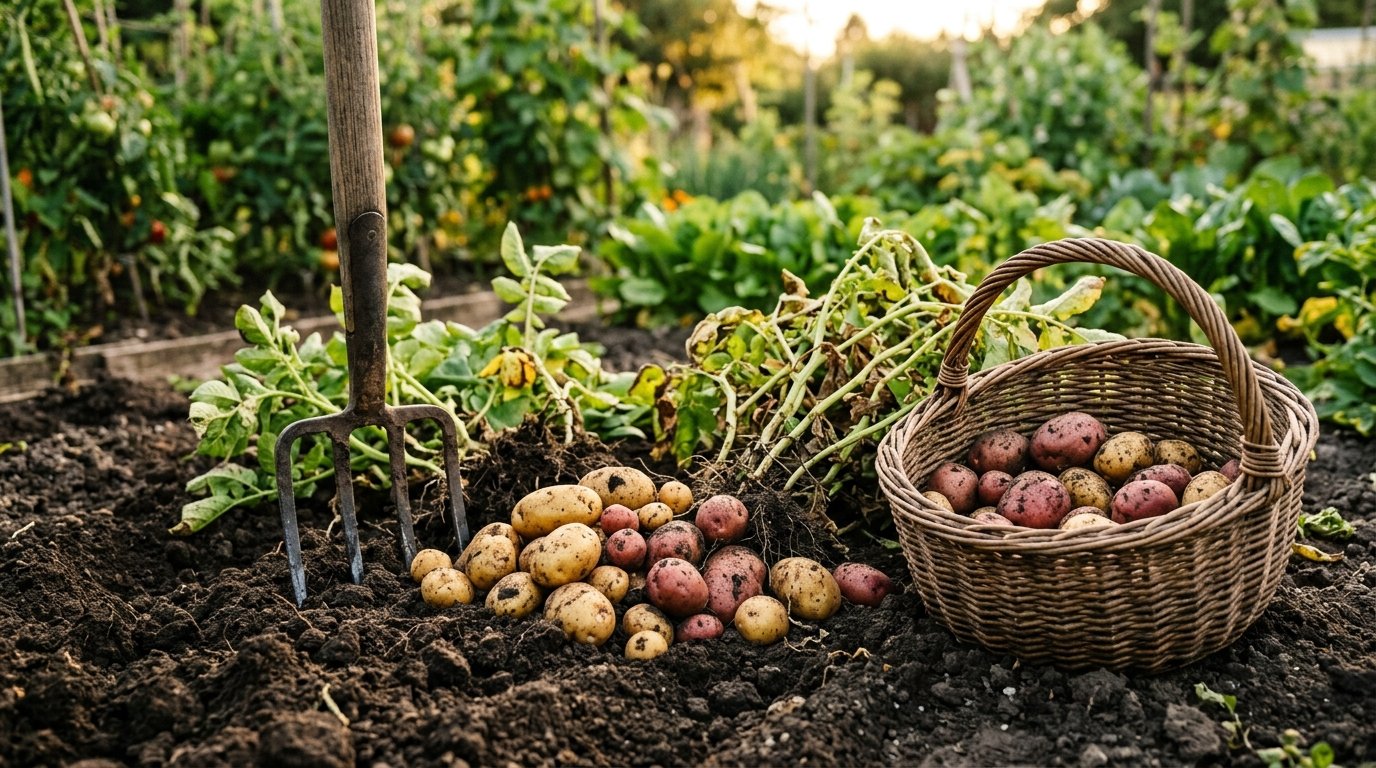

Potatoes are one of the most rewarding crops you can grow. A single pound of seed potatoes can give you around ten pounds of harvest, they store for months, and they grow happily in open ground, raised beds, or even a grow bag on a patio. This guide walks you through how to grow potatoes from start to finish: choosing seed, planting, hilling, watering, harvesting, and storing your crop so it lasts into winter.
Quick Facts: Growing Potatoes at a Glance
| Planting time | 2–4 weeks before your last spring frost, once soil reaches about 45°F (7°C) |
| Soil | Loose, well-drained, slightly acidic (pH 5.0–6.5) |
| Sun | Full sun, 6–8+ hours a day |
| Spacing | 12 in (30 cm) apart, rows 30–36 in (75–90 cm) apart |
| Planting depth | About 4 in (10 cm), then hill as plants grow |
| Water | 1–2 in (2.5–5 cm) per week, evenly |
| Days to harvest | 70–90 days (early), 90–120+ days (main crop) |
1. Choose the Right Seed Potatoes
Always start with certified seed potatoes from a garden center or seed supplier. Supermarket potatoes are often treated with sprout inhibitors and can carry diseases that will stay in your soil for years.
Potato varieties are grouped by how long they take to mature:
- Early (first earlies): Ready in roughly 70–90 days. Great for “new potatoes.” Examples: Red Norland, Irish Cobbler, Rocket.
- Mid-season (second earlies): 90–110 days. Examples: Yukon Gold, Kennebec, Charlotte.
- Late (main crop): 110–135 days. Best for storage. Examples: Russet Burbank, Maris Piper, King Edward.
If you want potatoes to eat fresh in summer and store for winter, plant a mix of early and late varieties.
2. Chit (Pre-Sprout) Your Seed Potatoes
Chitting gives your crop a head start of a week or two. About 3–4 weeks before planting, set seed potatoes in an egg carton or tray with the end that has the most “eyes” facing up. Keep them somewhere cool (around 50–60°F / 10–15°C) and bright, but out of direct sun. You want short, sturdy, dark green or purple sprouts about ½–1 in long, not long pale shoots.
3. Cut Large Seed Potatoes (Optional)
Egg-sized seed potatoes can be planted whole. Larger ones can be cut into pieces roughly 1.5–2 oz (40–55 g) each, making sure every piece has at least 2–3 eyes. Let the cut pieces sit for 1–2 days so the cut surface dries and forms a protective skin. This helps prevent rot in cool, wet soil.
4. Prepare the Soil
Potatoes form their tubers underground, so loose soil is essential. Dig or fork the bed to about 10–12 in (25–30 cm) deep and remove stones. Work in well-rotted compost, but avoid fresh manure, which encourages potato scab.
Aim for a slightly acidic soil. A pH of around 5.2–5.5 helps reduce common scab, while anything up to about 6.5 still grows good potatoes. If you have heavy soil, see our guide on using compost to improve clay soil before planting.
Crop rotation matters: don’t plant potatoes where potatoes, tomatoes, peppers or eggplant grew in the last 3 years. They share many of the same diseases.
5. How to Plant Potatoes
- Dig a trench about 6 in (15 cm) deep, or individual holes.
- Place seed potatoes (sprouts up) 12 in (30 cm) apart. Space rows 30–36 in apart so you have soil to hill with.
- Cover with about 4 in (10 cm) of soil, leaving the trench partly unfilled.
- Water lightly if the soil is dry.
If a late frost is forecast after shoots appear, cover them with soil, straw, or frost cloth. Potato foliage is frost-tender, but plants usually regrow if only the tips are nipped.
6. Hilling: The Step Most Beginners Skip
New potatoes form along the buried stem, above the seed piece. Hilling means pulling soil up around the stems as the plants grow. It gives more room for tubers and keeps them covered from sunlight, which turns potatoes green.
- When plants reach about 6–8 in (15–20 cm) tall, draw soil up around the stems, leaving the top few inches of leaves exposed.
- Repeat every 2–3 weeks until the plants start to flower or the rows close over.
- Straw or shredded leaves also work as a hilling material and keep the soil cool and moist.
Important: green potatoes contain solanine, a natural toxin. Cut away green parts before eating, and throw away heavily greened tubers.
7. Watering and Feeding
Potatoes need steady moisture, especially from flowering onward, when tubers are bulking up. Aim for 1–2 in (2.5–5 cm) of water per week, including rain. Uneven watering (dry, then soaked) causes hollow heart and cracked or knobby tubers.
Water at the base in the morning rather than overhead in the evening. Wet leaves overnight invite blight. Once the foliage begins to yellow and die back, reduce watering so the skins can set.
If you prepared the bed with compost, a balanced organic fertilizer at planting is usually enough. Too much nitrogen gives you big, leafy plants and few potatoes.
8. Common Potato Problems and Fixes
| Problem | Signs | What to do |
|---|---|---|
| Colorado potato beetle | Striped beetles and orange larvae eating leaves | Hand-pick daily, crush egg clusters under leaves, use row covers early |
| Late blight | Dark, water-soaked patches on leaves, white fuzz underneath in humid weather | Remove and bag infected foliage, avoid overhead watering, grow resistant varieties |
| Common scab | Rough, corky patches on skin | Keep pH on the acidic side, water evenly, avoid fresh manure |
| Green tubers | Green skin on potatoes | Hill more thoroughly, mulch heavily |
| Wireworms | Narrow tunnels through tubers | Common after turning grassland; rotate and harvest promptly |
9. When and How to Harvest Potatoes
New potatoes: Start gently feeling around the base of plants about 2–3 weeks after flowering. Take a few small tubers and leave the plant to keep growing.
Main crop / storage potatoes: Wait until the foliage has yellowed and died back completely, then leave the potatoes in the ground for another 2–3 weeks. This toughens the skins so they store well.
Harvest on a dry day. Use a garden fork and push it in well away from the plant (about 12 in out), then lever the soil up. Stabbed or bruised potatoes should be eaten first, since they won’t keep.
10. Curing and Storing Potatoes
- Don’t wash them. Brush off loose soil only.
- Cure for 1–2 weeks somewhere dark, around 45–60°F (7–15°C), with good humidity. This heals small scrapes.
- Store in a dark, cool, humid place at about 38–40°F (3–4°C): a cellar, cool garage, or insulated box. Use breathable containers like burlap sacks, paper bags or crates.
- Keep potatoes away from apples and onions, which release gases that speed up sprouting and spoilage.
Stored this way, late varieties can keep for 4–6 months.
Growing Potatoes in Containers and Grow Bags
No garden? Potatoes do surprisingly well in containers. Use a grow bag or pot of at least 10 gallons (about 40 liters) with drainage holes. Add 4–6 in of potting mix and compost, set in 3–4 seed potatoes, and cover with 4 in of mix. Keep adding mix as the plants grow, just like hilling. Containers dry out fast, so check moisture daily in warm weather. At harvest, just tip the bag out onto a tarp.
FAQ: How to Grow Potatoes
How long do potatoes take to grow?
Early varieties are ready in about 70–90 days. Main crop storage varieties take 110–135 days.
Can I plant potatoes from the grocery store?
You can try, but it isn’t recommended. Store potatoes may be treated to stop sprouting and aren’t certified disease-free. Certified seed potatoes give far more reliable results.
How many potatoes does one plant produce?
It depends on variety and growing conditions, but a healthy plant commonly yields several pounds. A typical rule of thumb is around 10 lb of potatoes for every 1 lb of seed planted.
Should I remove potato flowers?
It’s optional. Removing flowers won’t hurt, and some growers believe it helps, but the effect on yield is usually small. Flowering is a useful sign that new potatoes are forming.
Why are my potato plants all leaves and no potatoes?
Usually too much nitrogen, too little sun, or planting too shallow without hilling. Go easy on high-nitrogen fertilizers and hill consistently.
Once you’ve got potatoes down, try growing sweet potatoes, a completely different plant that loves heat. And if you’re planning a bigger food garden, our guide to homesteading on one acre shows how to fit potatoes into a full-scale layout.

3 Comments