

Last updated: September 2026
This guide contains affiliate links. As an Amazon Associate, FarmingAround earns from qualifying purchases, at no extra cost to you.
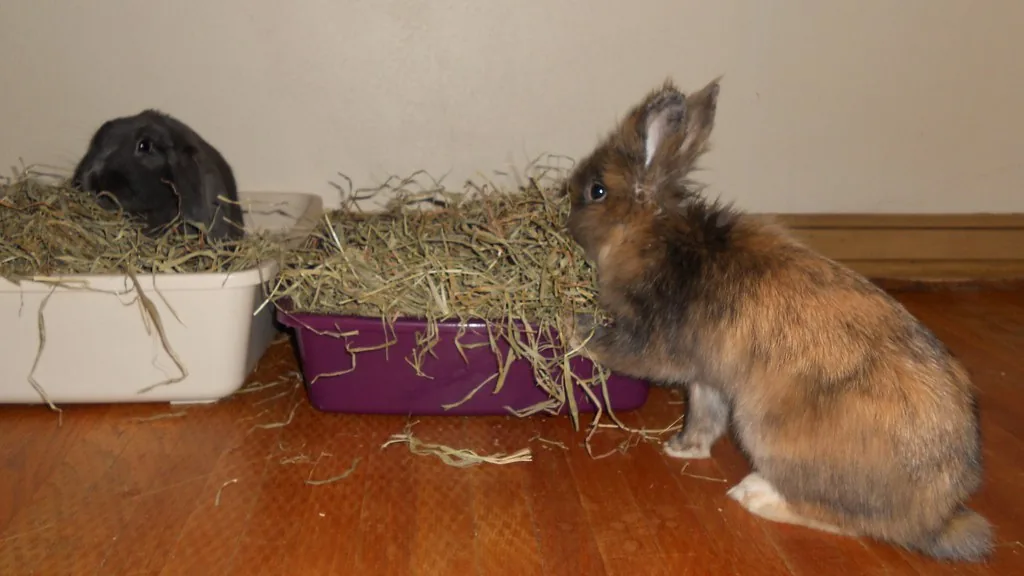
Rabbits eat mostly hay. A healthy pet or farm rabbit needs unlimited fresh grass hay every day, a portion of leafy greens, a small measure of plain pellets and clean water, with fruit kept as a tiny treat. Hay should make up roughly 85% of what a rabbit eats, because the long fiber keeps its gut moving and wears down its constantly growing teeth.
So what can rabbits eat beyond that? Plenty of greens and herbs, a few fruits and vegetables in small amounts, and nothing from the list of toxic foods further down. This guide covers the daily diet, safe treats, what baby and wild rabbits eat, and a chart you can save.
Key takeaways
- Unlimited grass hay (timothy, orchard grass, meadow hay) should be about 85% of the diet.
- Leafy greens every day: roughly 2 cups (about 500 ml) chopped per 6 lb (2.7 kg) of rabbit.
- Pellets are a supplement, not a meal: about ¼ cup per 6 lb, or 25 g per kg of body weight.
- Never feed avocado, chocolate, onions, rhubarb, raw potato, bread or iceberg lettuce.
In this guide
The Daily Rabbit Diet
Rabbit welfare groups such as the House Rabbit Society and the RSPCA describe the same basic balance for adult rabbits:
| Food | Share of the diet | How much (adult rabbit) |
|---|---|---|
| Grass hay or fresh grass | About 85% | Unlimited, at least a pile as big as the rabbit every day |
| Leafy greens and herbs | About 10% | About 2 cups (500 ml) chopped per 6 lb (2.7 kg) body weight |
| Plain pellets (nuggets) | About 5% | About ¼ cup per 6 lb, or 25 g per kg (an egg cup) |
| Fruit and treats | A tiny amount | About 1 tsp per 2 lb (0.9 kg) a day, or less |
| Fresh water | Always | Bowl or bottle, refilled daily |
Growing, pregnant, nursing and underweight rabbits need more pellets and richer hay, so ask your vet if your rabbit falls into one of those groups.
Hay: The Most Important Food
A rabbit’s digestive system is built to process a steady stream of fiber. Chewing long strands of hay also grinds down the teeth, which grow throughout a rabbit’s life. Too little hay is one of the most common reasons rabbits end up with dental problems and gut stasis (when digestion slows or stops).
- Best for adults: timothy, orchard grass, meadow hay, oat hay or a grass mix.
- Alfalfa hay: good for young and nursing rabbits, but too rich in calories and calcium for most healthy adults.
- Quality check: hay should smell sweet and look green to golden. Throw out anything dusty, damp or moldy.
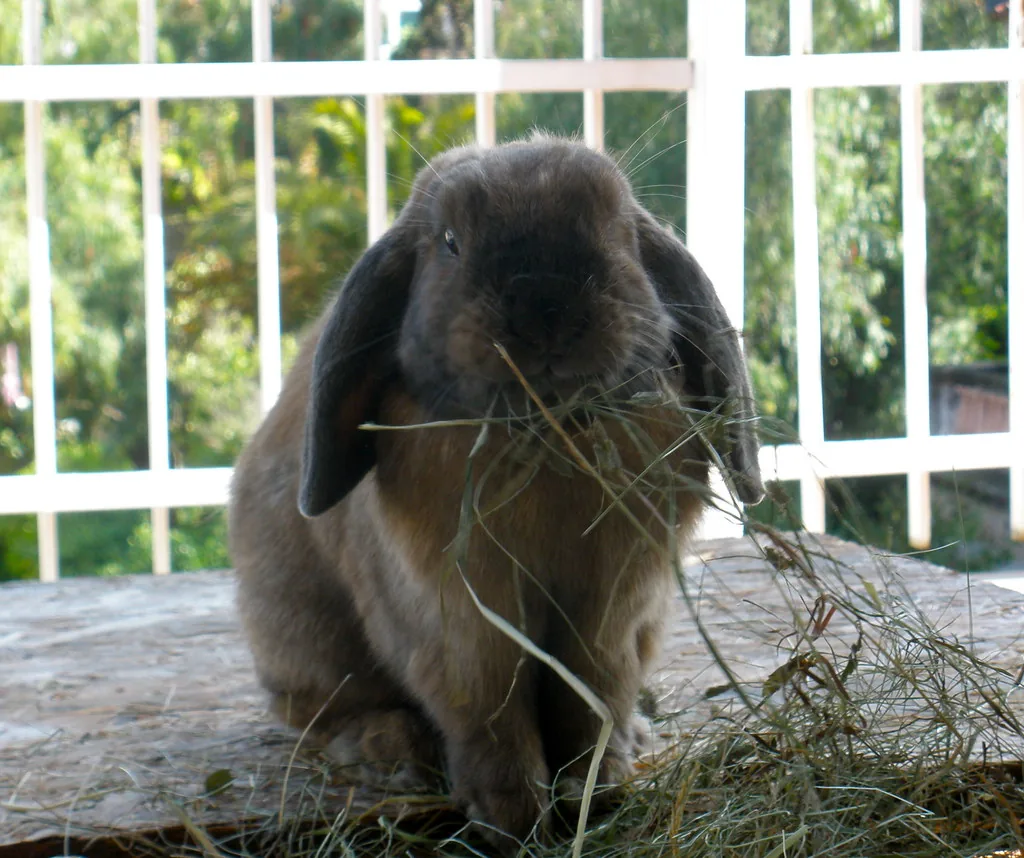
Watch: Feeding Rabbits Pellets and Hay
This short video from a rabbit breeder walks through how hay and pellets fit into a rabbit’s diet.
Greens and Vegetables Rabbits Can Eat
Fresh greens add moisture, vitamins and variety. Offer a mix of three or more kinds each day, and introduce new ones one at a time so you can spot anything that causes soft droppings.
| Food | How often | Notes |
|---|---|---|
| Romaine, green leaf and red leaf lettuce | Daily | Skip iceberg, which has little nutrition |
| Cilantro (coriander), parsley, basil, mint, dill | Daily | Herbs are a favorite; rotate them |
| Dandelion leaves | Daily | Only from lawns never treated with chemicals |
| Bok choy, arugula (rocket), watercress, spring greens | Daily | Good variety greens |
| Carrot tops, fennel, celery leaves | Daily | Cut celery stalks into short pieces to avoid stringy fibers |
| Kale, spinach, mustard greens, chard | A few times a week | Higher in oxalates or calcium; rotate rather than feed every day |
| Broccoli, cabbage, Brussels sprouts | Small amounts | Can cause gas in some rabbits |
| Bell peppers, cucumber, zucchini | Small amounts | Fine as extra vegetables |
| Carrots | Treat only | High in sugar; the root is a treat, the leafy tops are better |
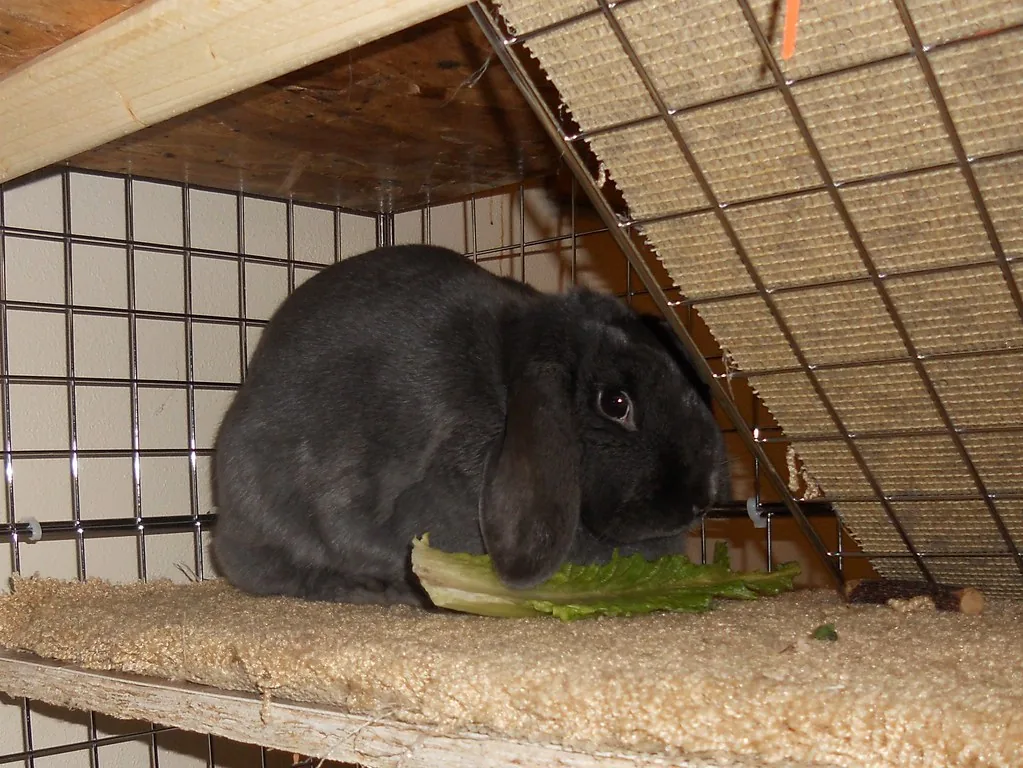
Pro tip: wash greens and serve them damp. It adds a little extra water to your rabbit’s day, which helps keep the gut and bladder healthy.
How Many Pellets Should Rabbits Eat?
Pellets were designed to fatten meat rabbits quickly, so a pet or breeding rabbit that fills up on them tends to eat less hay. For a healthy adult, the House Rabbit Society suggests about ¼ cup (60 ml) per 6 lb (2.7 kg) of body weight a day, and the RSPCA suggests 25 g per kg, roughly an egg cup.
- Choose plain, timothy-based pellets with at least 18% fiber.
- Avoid muesli-style mixes with seeds, corn, nuts or colored bits. Rabbits pick out the sugary parts and leave the rest.
- If you’re switching from muesli, the RSPCA recommends mixing in more pellets and less muesli gradually over 14–28 days.
Meat rabbits and does raising litters are fed differently from pets. If you’re choosing a breed for meat or show, our guide to rabbit breeds compares sizes and uses.
Fruit and Treats
Rabbits love sweet food, but their gut bacteria don’t. Treats should stay well under 10% of the diet. The House Rabbit Society’s guideline is about 1 teaspoon of fruit per 2 lb (0.9 kg) of body weight a day, and many owners give fruit only a few times a week.
| Treat | Safe? | How to serve |
|---|---|---|
| Apple and pear | Yes (flesh) | Small slice, seeds and core removed |
| Strawberries, blueberries, raspberries | Yes | One or two berries |
| Banana | Yes, sparingly | A thin slice; very high in sugar |
| Melon and watermelon | Yes | A small cube, seeds removed |
| Grapes | Occasionally | One grape, halved; high in sugar |
| Carrot | Yes, as a treat | A thin coin or two |
| Commercial yogurt drops, crackers, cereal | No | Processed, sugary and bad for the gut |
Foods Rabbits Should Never Eat
| Food | Why it’s a problem |
|---|---|
| Avocado | Toxic to rabbits |
| Chocolate and anything with xylitol | Toxic |
| Onions, leeks, garlic, chives | Can damage red blood cells |
| Rhubarb (leaves and stalks) | High in oxalic acid |
| Raw potatoes and potato leaves | Contain solanine; starchy and hard to digest |
| Fruit seeds and pits (apple, cherry, peach, plum) | Contain compounds that can release cyanide |
| Iceberg lettuce | Mostly water and can upset digestion |
| Bread, pasta, crackers, cereal, cookies | Starchy and sugary; can disrupt gut bacteria |
| Meat, eggs and dairy | Rabbits are herbivores and can’t digest them properly |
| Mushrooms | Can be toxic |
| Lawnmower clippings | Ferment quickly and can cause serious gut upsets |
| Garden plants such as foxglove, bluebells, tulips, holly | Poisonous; keep rabbits away from bulbs and ornamental beds |
Not eating or pooping? A rabbit that stops eating, or stops passing droppings, for more than a few hours can be in real danger. Call a vet who treats rabbits right away rather than waiting to see if it passes.
What Do Baby Rabbits Eat?
Kits drink their mother’s milk for the first few weeks and start nibbling hay and pellets at around 3 weeks old. The House Rabbit Society suggests unlimited alfalfa hay and alfalfa-based pellets for young rabbits, adding greens slowly, one type at a time, from about 12 weeks. Around 7 months, move gradually to grass hay and reduce pellets to adult amounts.
If you’ve found a wild baby rabbit, don’t try to feed it. Contact a local wildlife rehabilitator, because wild kits are very hard to raise and are often not orphaned at all.
What Do Wild Rabbits Eat?
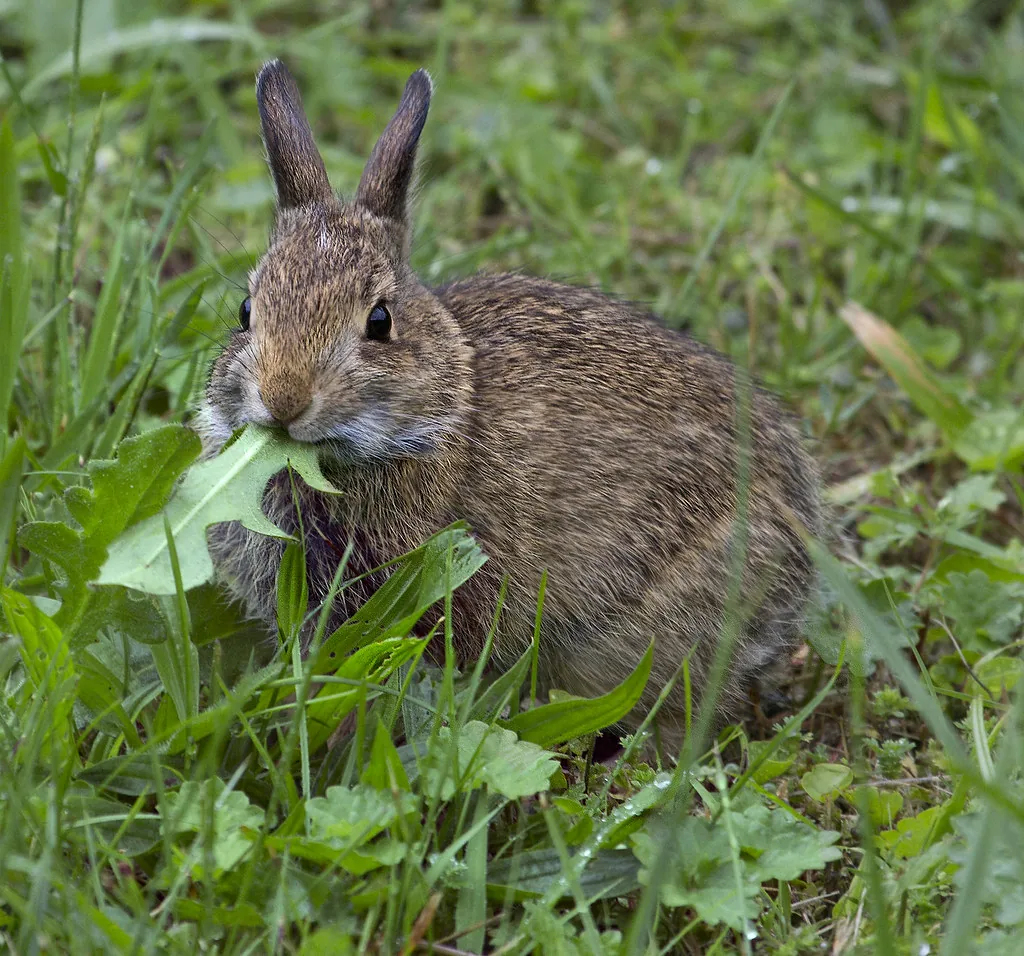
Wild rabbits graze on grasses, clover, dandelions and other leafy weeds for most of the year. In winter, when green food is scarce, they eat bark, twigs, buds and dried grasses. That grazing diet is exactly why hay is the backbone of a domestic rabbit’s diet. If you keep a vegetable garden, wild rabbits will also help themselves to lettuce, beans and young shoots, so a fence with the bottom buried a few inches works better than hoping they stay away.
Planning to keep rabbits for meat or manure on a small property? See how they fit into a one-acre homestead alongside a garden and hens. Keeping other animals too? Compare their needs with our guides on what goats can eat and what ducks eat.
Helpful gear for this guide
Handy picks that match the advice above.
Links go to Amazon. Prices and availability change, so check reviews and fit for your setup before buying.
Quick Reference: What Rabbits Can Eat
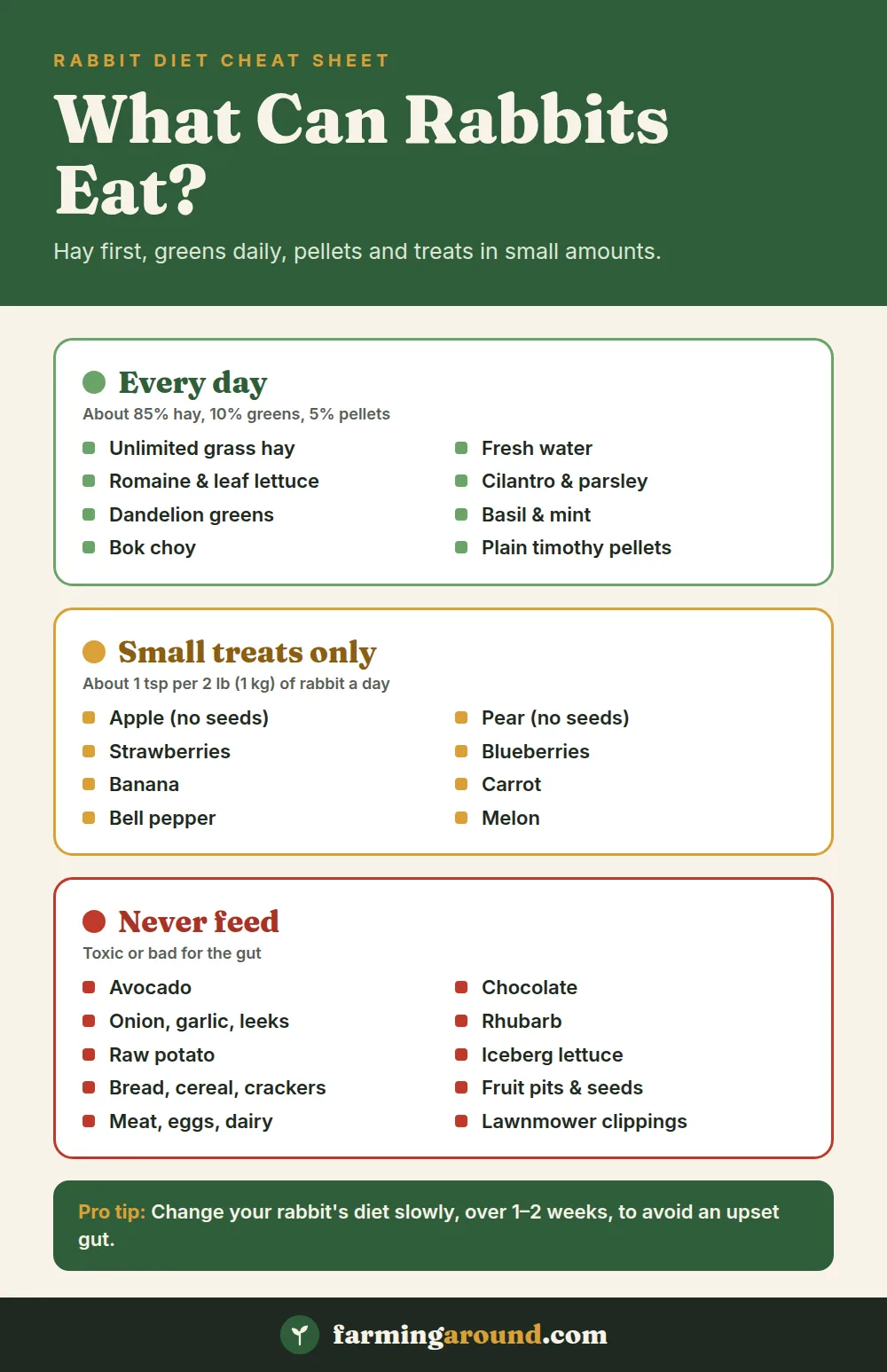
| Feed daily | Small treats | Never feed |
|---|---|---|
| Unlimited grass hay, fresh water, leafy greens and herbs, a measured portion of plain pellets | Apple or pear (no seeds), berries, banana, melon, carrot, bell pepper | Avocado, chocolate, onion, garlic, leeks, rhubarb, raw potato, iceberg lettuce, bread and cereal, fruit pits, meat, dairy, lawn clippings |
FAQ
What is the best food for rabbits?
Grass hay. Timothy, orchard grass or meadow hay, available all day, should make up most of an adult rabbit’s diet, backed up by leafy greens and a small amount of plain pellets.
Can rabbits eat carrots every day?
It’s better not to. Carrot roots are high in sugar, so treat them like fruit: a thin slice now and then. The leafy carrot tops are a healthier everyday green.
Can rabbits eat lettuce?
Yes, darker lettuces such as romaine, green leaf and red leaf are safe daily greens. Avoid iceberg lettuce, which is mostly water and can upset digestion.
Why do rabbits eat their own poop?
Rabbits produce two kinds of droppings. The soft, shiny clusters called cecotropes are packed with nutrients from the gut, and eating them is normal and necessary. You’ll rarely see it, because they eat them straight from the body.
Can rabbits live on pellets alone?
No. A pellet-only diet lacks the long fiber rabbits need for healthy teeth and digestion and is linked to overgrown teeth, obesity and gut problems. Hay must come first.
How much water does a rabbit need?
Rabbits drink a lot for their size, so keep clean water available at all times. Check bowls and bottles daily, and more often in hot weather or when water might freeze.
Sources
- Diet (House Rabbit Society)
- Rabbit Diet & Nutrition (House Rabbit Society, rabbit.org)
- Feeding Your Pet Rabbit a Healthy Diet (RSPCA)
This guide is general information. For a rabbit with a health problem or special dietary needs, talk to a vet who treats rabbits.

One Comment