

Last updated: October 2026
This guide contains affiliate links. As an Amazon Associate, FarmingAround earns from qualifying purchases, at no extra cost to you.
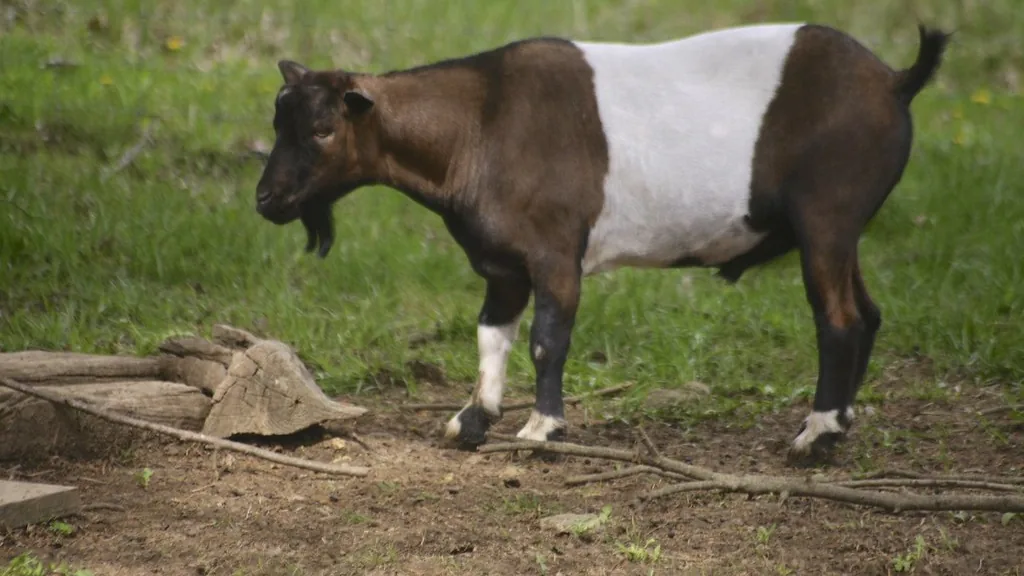
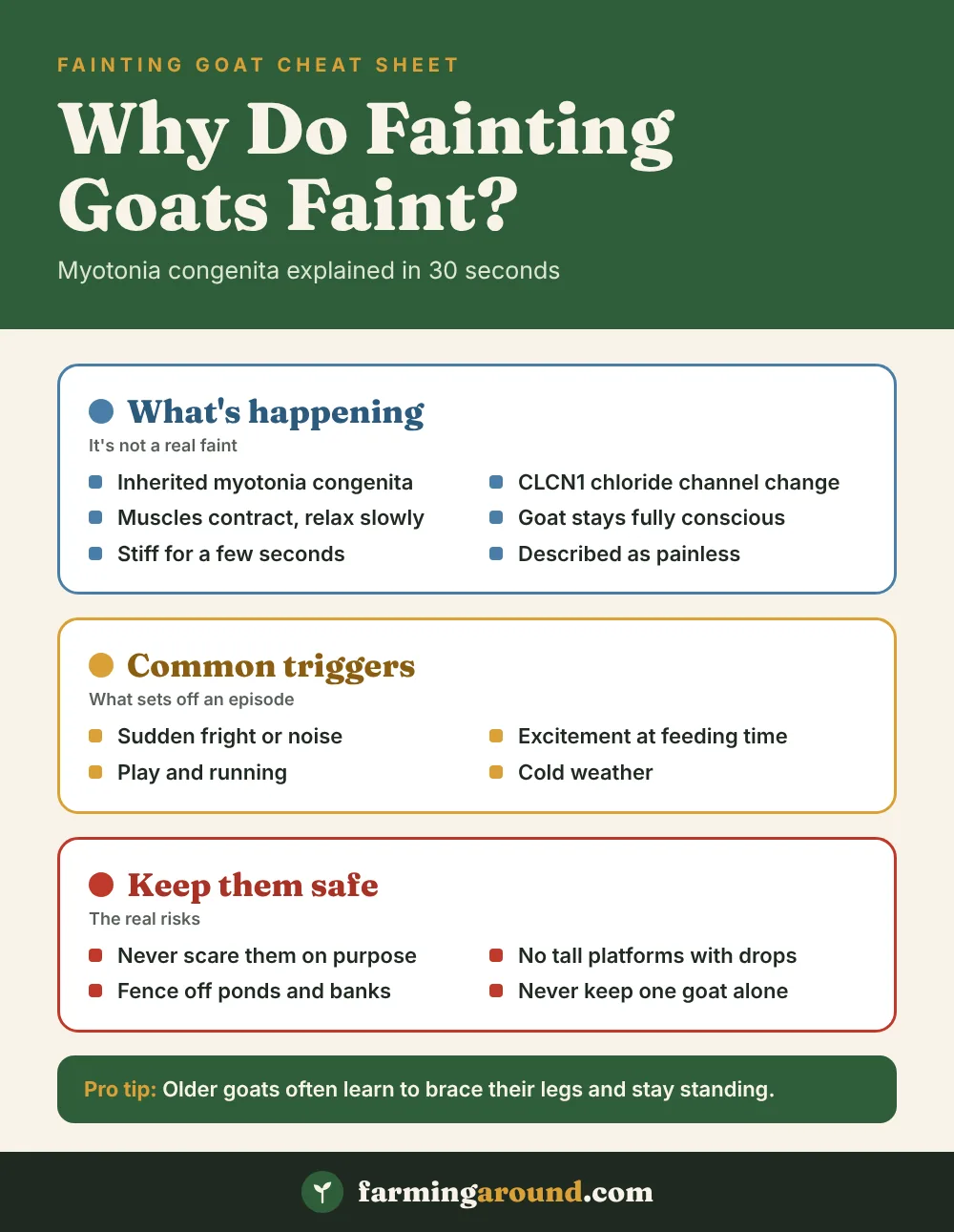
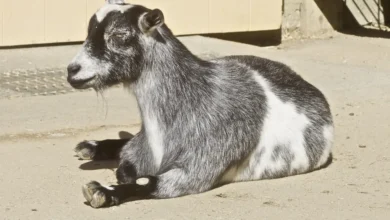
Fainting goats don’t actually faint. They have an inherited muscle condition called myotonia congenita: when they’re startled or excited, their muscles tense up and are slow to relax, so the goat goes stiff for a few seconds and sometimes tips over. The goat stays fully conscious the whole time, and once the muscles release it gets up and walks off normally.
The breed is properly called the Myotonic goat, also known as the Tennessee fainting goat or wooden-leg goat. Below we explain what’s happening inside the muscle, whether it hurts, what triggers an episode, where the breed came from, and what it all means if you’re thinking of keeping a few.
Key takeaways
- It’s not a faint: the goat’s muscles lock up briefly; its brain, heart and breathing are unaffected.
- The cause is genetic: a change in a muscle chloride channel gene (CLCN1) keeps muscles firing after they should relax.
- Episodes are short: a few seconds of stiffness, then the goat carries on. They’re described as painless.
- Don’t scare them on purpose: the real risk is falling from a height or into water during an episode.
In this guide
What Happens When a Fainting Goat “Faints”
When a Myotonic goat is startled, its leg and body muscles contract hard, just as any animal’s would when it gets ready to run. The difference is that its muscles don’t relax on cue. The legs lock straight, and a young goat often topples over sideways like a toy. After a few seconds the muscles release and the goat stands up as if nothing happened.
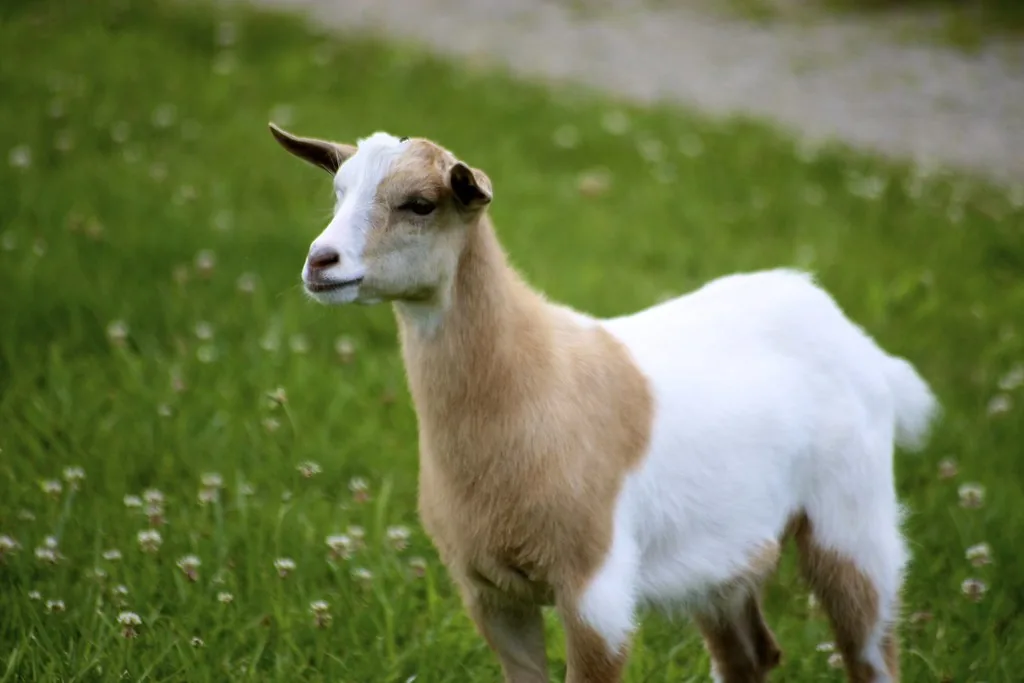
Older goats usually learn to cope. Many brace their legs wide or lean against something and stay on their feet, moving stiffly for a moment instead of falling. That’s why videos of “fainting” goats so often star kids and yearlings.
The Science: Myotonia Congenita
Muscles need to switch off as well as on. In a healthy muscle fiber, chloride channels in the cell membrane help reset the fiber after it fires, so it relaxes when the nerve signal stops.
Myotonic goats carry a mutation in the skeletal muscle chloride channel gene, CLCN1. Researchers identified the goat mutation in 1996: a single amino acid swap that makes the channel less likely to open. With less chloride current, the muscle fiber becomes over-excitable and keeps firing extra signals after a contraction. The result is myotonia, a muscle that contracts normally but relaxes slowly.
- It affects skeletal muscle only. The heart, nervous system and breathing aren’t involved.
- Cold weather tends to make stiffness worse.
- There’s no treatment, and none is needed for a goat to live a normal life.
People can have the same condition. In humans, myotonia congenita is also caused by changes in the CLCN1 gene and causes muscle stiffness after movement, which often eases with repeated movement, a “warm-up” effect.
Watch: Do Fainting Goats Really Faint?
This short clip from National Geographic shows Myotonic goats in action.
Does It Hurt the Goat?
Episodes are described as painless. The goat stays awake and aware, doesn’t lose consciousness and shows no sign of distress. It isn’t “playing dead” either; it simply can’t relax its muscles for a moment.
The real danger isn’t the stiffness itself but where the goat is when it happens. A goat that locks up on a ledge, a steep bank, a loading ramp or next to a pond can fall and get hurt, or tip into water.
Never startle fainting goats for fun. Repeated frights stress any animal, and an episode near a drop-off, a fence or water can cause injuries. Keep their pen free of high platforms with sheer edges and fence off ponds and steep banks.
What Triggers an Episode?
- Sudden fright: a loud noise, a dog, an umbrella opening or someone running at them.
- Excitement: feeding time, play or being let out to pasture can set it off too.
- Cold weather: symptoms are usually stronger when it’s cold.
Kids aren’t born stiff. Studies of the breed found no stiffness in the first two weeks of life, with stiffening first appearing between about 3 weeks and 6 months of age.
History of the Fainting Goat
The breed’s American story starts in the 1880s, when a traveler named John Tinsley is said to have brought four stiff-legged goats to Marshall County, Tennessee, reportedly from Nova Scotia. Local farmers liked them: they were calm, meaty and, because they couldn’t climb or jump well, much easier to keep in than other goats. The condition was first described in scientific literature in 1904.
The goats spread across the eastern US by the mid-1900s, and Texas breeders developed larger meat lines, sometimes called “wooden-leg” goats. Today two US registries, the Myotonic Goat Registry and the International Fainting Goat Association, work to preserve the breed, and the FAO’s global livestock database listed it as “at risk” in 2019.
Myotonic Goat Breed Facts
| Trait | Myotonic goat |
|---|---|
| Other names | Tennessee fainting goat, wooden-leg goat, stiff-legged goat, nervous goat |
| Height at withers | About 17–25 in (43–64 cm) |
| Weight | About 50–175 lb (23–79 kg); large bucks up to about 200 lb (90 kg) |
| Main uses | Meat, pets, brush clearing; some grow cashmere-type winter down |
| Temperament | Quiet, docile and easy to handle |
| Lifespan | About 10–12 years, sometimes up to 15 |
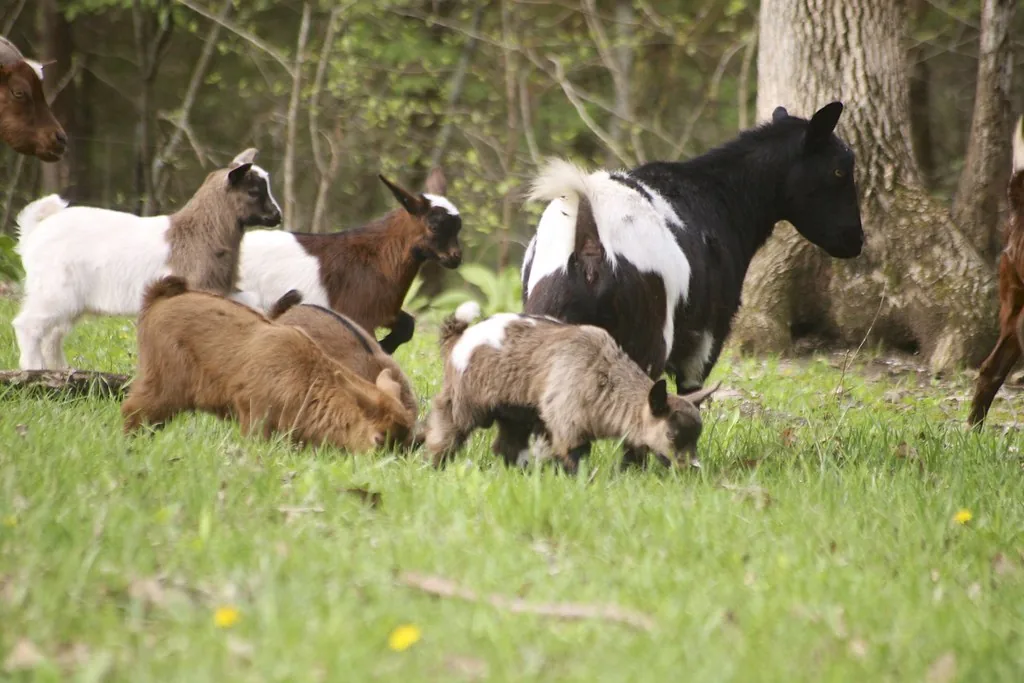
| Look | Prominent eyes, broad muscular body; many colors |
Myotonic goats are one of the breeds we cover in our guide to types of goats. Compared with a fast-growing meat breed like the Boer goat, they’re smaller and slower-growing, but they’re also hardy foragers that many owners find easier to manage. In one comparison study, Myotonic goats had lower worm egg counts than Boers.
Caring for Fainting Goats
Day to day, fainting goats need the same care as any other goat:
- Company: keep at least two. Goats are herd animals and get stressed alone.
- Fencing: they rarely jump, but you still need sturdy goat fencing to keep predators out.
- Safe layout: skip tall climbing platforms with sheer drops, and fence off ponds, ditches and steep banks.
- Feed: a forage-based diet of browse, pasture and hay, plus loose goat minerals and clean water. Our guide to what goats can eat covers safe foods and toxic plants.
- Health: routine hoof trimming, parasite monitoring and vaccinations as recommended by your vet.
- Calm handling: move slowly around them, especially at feeding time, to cut down on episodes.
Pro tip: buying Myotonic goats? Ask whether they’re registered and see the parents in person. Crossbred “fainting” goats can show the trait to very different degrees.
Helpful gear for this guide
Handy picks that match the advice above.
Links go to Amazon. Prices and availability change, so check reviews and fit for your setup before buying.
At a Glance: Why Fainting Goats Faint
FAQ
Do fainting goats really pass out?
No. They stay conscious. Their muscles lock up for a few seconds because of an inherited condition called myotonia congenita, and they may fall over until the muscles relax.
Is it cruel to keep fainting goats?
Keeping them isn’t cruel. The episodes are described as painless and the goats live normal lives. What is unkind is scaring them deliberately or keeping them where a fall could injure them.
How long does a fainting goat stay stiff?
Usually just a few seconds. Then the muscles release and the goat gets up and walks away.
Do all fainting goats faint?
Purebred Myotonic goats all carry the condition, but how strongly it shows varies. Older goats often learn to stay standing, and crossbreds may show it less.
Are fainting goats good for beginners?
Yes, they’re often recommended because they’re calm, hardy and less likely to jump fences than many breeds.
Can humans have the same condition?
Yes. Myotonia congenita in people is also caused by changes in the CLCN1 gene and causes muscle stiffness after movement.
Sources
- Myotonia Congenita (MedlinePlus Genetics, US National Library of Medicine)
- Scared Stiff: The Story Behind “Fainting Goats” (Boston University)
- Why Do Fainting Goats Faint? (Farmers’ Almanac)
This guide is general information. For health questions about your goats, talk to a vet who treats goats or your local extension office.

2 Comments