

Last updated: November 2026
This guide contains affiliate links. As an Amazon Associate, FarmingAround earns from qualifying purchases, at no extra cost to you.
Deep water culture (DWC) is a hydroponic method where plant roots hang directly in an oxygen-rich nutrient solution, held up by net pots or a floating raft. An air pump and air stone keep the water bubbling with oxygen, so roots can drink and breathe at the same time. It is one of the simplest and cheapest hydroponic systems to build, and it is excellent for lettuce, leafy greens and herbs.
This guide explains how DWC works, what you need, how to set up a home system step by step, the water, oxygen, pH and nutrient targets that matter, which crops do best, and how to fix the problems most beginners run into.
Key takeaways
- Roots sit in aerated nutrient solution; an air pump and air stone supply oxygen 24/7.
- Targets for leafy greens: pH about 5.5–6.0 and EC about 1.2–2.0 mS/cm; check two to three times a week.
- Keep water cool and dark: roughly 65–72°F (18–22°C) and a light-proof container to stop algae.
- Best crops: lettuce, arugula, kale, basil and other herbs; lettuce is often ready 3–5 weeks after transplanting.
In this guide
What Is Deep Water Culture?
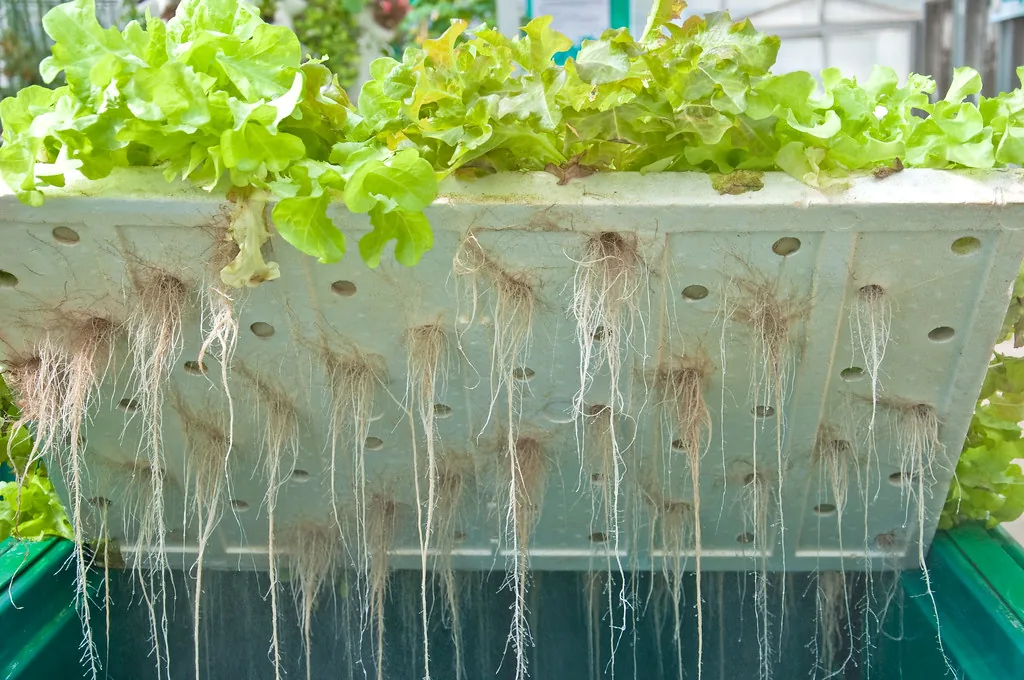
In deep water culture, plants grow without soil. Each seedling sits in a net pot (a plastic cup full of holes) filled with an inert growing medium such as clay pebbles or a rockwool cube. The net pots are set into a lid or a floating foam raft, and the roots grow down into a reservoir of water mixed with hydroponic nutrients.
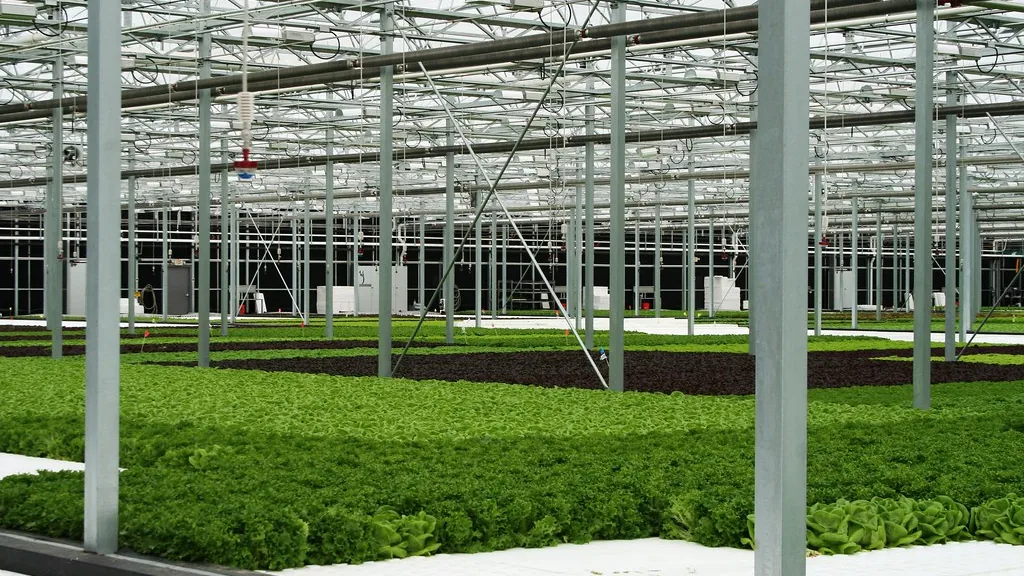
The word “deep” refers to the volume of water, not just the depth. A large body of solution keeps nutrient levels and temperature stable, which makes DWC forgiving for beginners. At home, a DWC system can be as small as a single bucket or a storage tote; commercially, it scales up to large shallow ponds where foam rafts of lettuce float from one end to the other. Virginia Cooperative Extension describes commercial ponds of 4–12 inches (10–30 cm) deep with heat-sealed polystyrene rafts, often 2 by 4 feet (60 by 120 cm), and lettuce spaced about 8 inches (20 cm) apart.
How a DWC System Works
- Reservoir: holds the nutrient solution. It must be opaque so light cannot reach the water.
- Lid or raft: supports the plants with their crowns above the water.
- Air pump, tubing and air stone: push a constant stream of fine bubbles through the solution, adding dissolved oxygen and gently mixing the nutrients. Larger systems may use a water pump with a venturi to add air.
- Nutrients: a complete hydroponic fertilizer mixed into the water, because there is no soil to supply anything.
Without that steady supply of oxygen, roots sitting in water suffocate and rot within days. That is why the air pump is the heart of every DWC system.
Pros and Cons of DWC
| Pros | Cons |
|---|---|
| Simple, cheap and easy to build | Relies on electricity; a dead air pump can harm roots quickly |
| Fast growth thanks to constant access to water, oxygen and nutrients | Warm water holds less oxygen and raises root rot risk |
| Large water volume buffers pH, nutrient and temperature swings | Heavy when full; hard to move large reservoirs |
| Few moving parts and no pump timers | Less suited to large, long-season fruiting crops |
What You Need
- An opaque container with a lid: a 5-gallon (19 L) bucket for one plant, or a 10–20 gallon (38–76 L) tote for several leafy greens.
- Net pots sized to your lid (2–3 in / 5–7.5 cm pots suit lettuce and herbs) and a hole saw to cut holes for them.
- Growing medium: clay pebbles, rockwool cubes or coco coir plugs. Our hydroponic grow media guide compares them.
- An aquarium-style air pump, airline tubing, a check valve and one or more air stones.
- A complete hydroponic nutrient for leafy greens.
- A pH test kit or meter and pH up/down solutions; an EC or TDS meter is very helpful.
- Light: a sunny window works for some greens, but an LED grow light gives far more reliable results indoors. See our indoor herb garden guide for lighting tips.
How to Set Up a DWC System Step by Step
- Prepare the container. Clean it, then cut holes in the lid for your net pots, spacing them about 6–8 in (15–20 cm) apart for lettuce. Paint or wrap the outside if it lets in any light.
- Fit the aeration. Place the air stone on the bottom, run the tubing out through a small hole near the lid, add a check valve, and connect it to an air pump that sits above the water line.
- Mix the solution. Fill the reservoir with water and add nutrients according to the label. Stir, then adjust the pH into the target range.
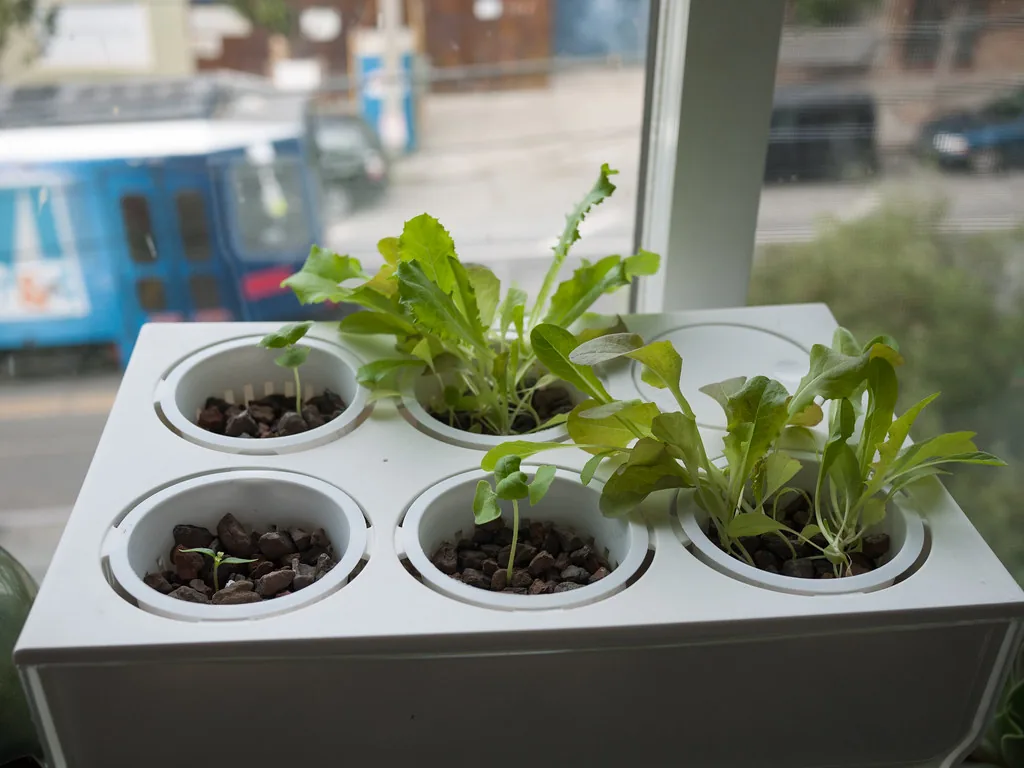
- Start seedlings. Sow seeds in rockwool cubes or plugs. Once roots poke out of the bottom, place each plug in a net pot and pack clay pebbles around it.
- Set the water level. At first, keep the solution about 1 in (2.5 cm) below the bottom of the net pots, or just touching them, so young roots stay moist. As roots grow longer, let the level drop to leave an air gap under the lid.
- Turn on the pump and light. Run the air pump 24 hours a day. Give leafy greens around 14–16 hours of light a day.
- Monitor and top up. Check pH and EC two to three times a week, top up with plain water as plants drink, and refresh the whole solution every couple of weeks.
Pro tip: Put a check valve in the airline and keep the pump higher than the water. If the power goes out, this stops nutrient solution from siphoning back into the pump.
Watch: Deep Water Culture Hydroponics Tutorial
Prefer a visual walkthrough? This video shows a home DWC system and how it is put together.
Water, Oxygen, pH and Nutrients
| Factor | Target for leafy greens | Why it matters |
|---|---|---|
| Dissolved oxygen | About 6–8 ppm (mg/L) | Roots need oxygen; crops can fail at very low levels (below about 3 ppm) |
| Water temperature | Roughly 65–72°F (18–22°C) | Warmer water holds less oxygen and favors root rot |
| pH | 5.5–6.0 (most crops 5.5–6.2) | Outside this range, plants struggle to take up nutrients |
| EC | About 1.2–2.0 mS/cm | Measures nutrient strength; too low starves plants, too high burns them |
| Checks | pH and EC 2–3 times a week | Plants change the solution as they feed |
The University of Kentucky recommends maintaining about 6–8 ppm dissolved oxygen with an air pump and air stones in DWC, and a pH of 5.5–6.0 for lettuce. Virginia Cooperative Extension notes that many leafy greens perform well at an EC of 1.2–2.0 mS/cm and suggests checking EC and pH two to three times a week.
Keep the water cool. Solution that creeps above about 75°F (24°C) in summer holds much less oxygen and invites root rot. Keep reservoirs out of direct sun, add more air stones, or use a larger volume of water, which warms more slowly.
Best Plants for Deep Water Culture
DWC shines with fast, leafy crops that like cool roots:
- Lettuce of all kinds (butterhead, romaine, oakleaf, loose-leaf). The University of Kentucky notes lettuce is typically harvested 21–35 days after transplanting.
- Arugula, tatsoi, mâche and other salad greens.
- Kale and Swiss chard.
- Herbs such as basil, cilantro, mint and parsley.
- Spinach grows well in cool conditions but is more prone to root rot, so keep the water cool.
Fruiting crops such as tomatoes, peppers, cucumbers and strawberries can be grown in DWC, usually one plant per bucket, but they need more space, support and closer nutrient management. For strawberries, see our strawberry hydroponic system guide.
Common Problems and Fixes
| Problem | Likely cause | Fix |
|---|---|---|
| Brown, slimy, smelly roots; wilting | Root rot (Pythium) from warm water or low oxygen | Cool the water, add aeration, remove badly affected plants, and clean and sanitize the system between crops |
| Green slime on surfaces | Light reaching the solution | Use an opaque reservoir and cover all gaps in the lid |
| Yellowing or pale leaves | Nutrient strength too low or pH out of range | Check EC and pH and adjust; refresh the solution |
| Leaf tips burned or crispy | Nutrients too strong | Dilute with plain water to lower EC |
| Plants wilt suddenly | Air pump failure or clogged air stone | Check the pump and replace or clean the air stone |
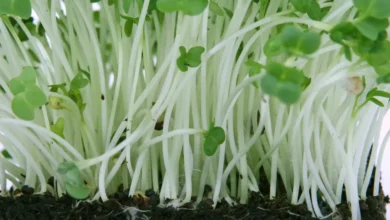
Healthy DWC roots are white or cream and smell fresh. The University of Kentucky describes root rot as roots turning soft, mushy and grayish-brown, often with stunting and wilting.
Helpful gear for this guide
Handy picks that match the advice above.
Links go to Amazon. Prices and availability change, so check reviews and fit for your setup before buying.
Quick Reference: DWC Hydroponics
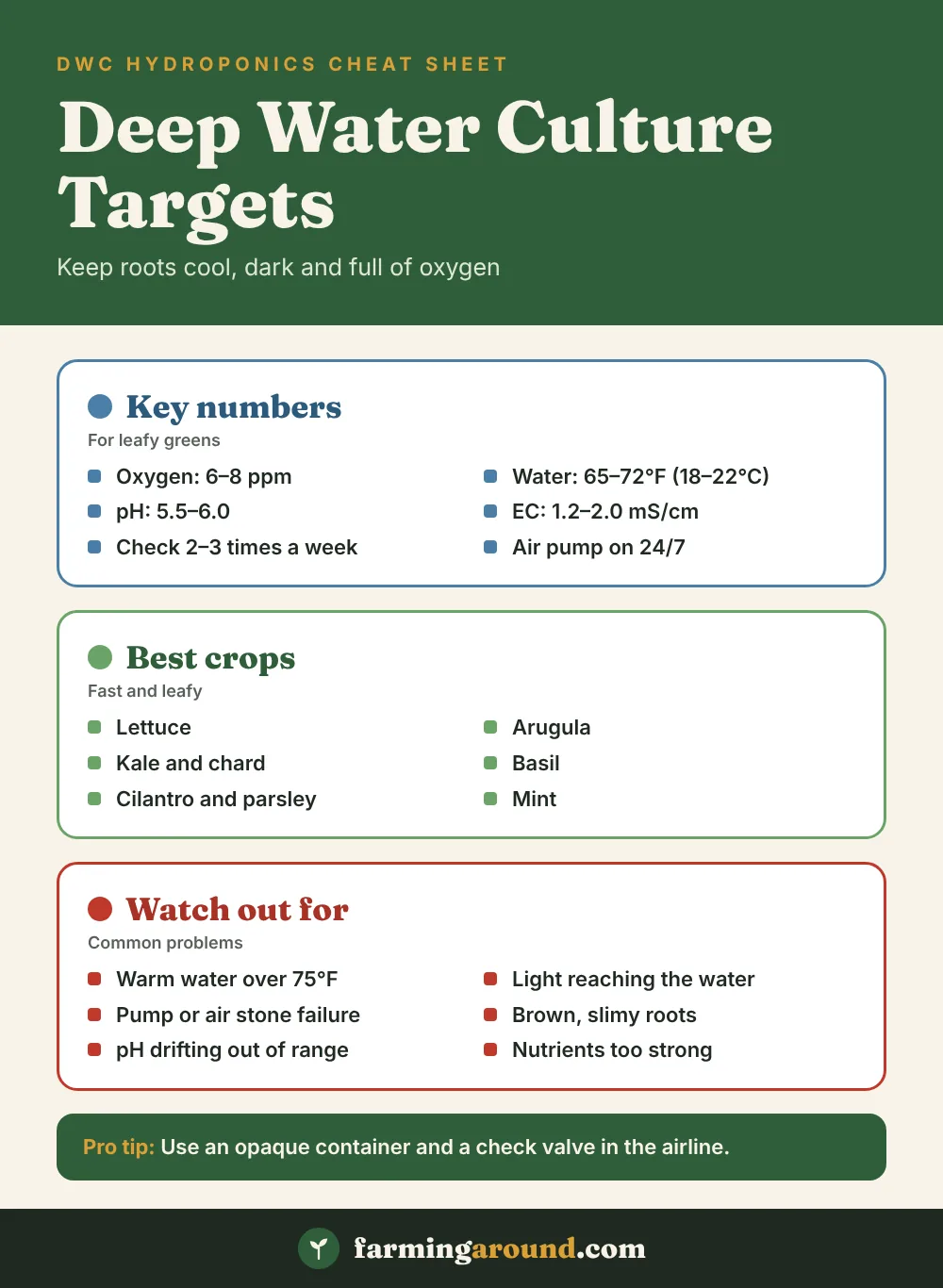
Keep these DWC targets handy.
FAQ
Is deep water culture good for beginners?
Yes. It is one of the simplest hydroponic systems: a container, an air pump, net pots and nutrients. The large water volume makes it forgiving, as long as you keep the air running and the water cool.
How often should I change the water in a DWC system?
Top up with plain water as plants drink, and many growers replace the whole solution every two to three weeks. Change it sooner if pH or EC keeps drifting or the water smells off.
Does DWC need an air pump?
Yes. Without aeration, roots run out of oxygen and rot. The passive Kratky method skips the pump by leaving an air gap as the water level drops, but it is a different technique.
What is the difference between DWC and Kratky?
DWC uses an air pump to oxygenate the solution continuously. Kratky uses no pump: the solution level falls as plants drink, and the exposed upper roots take oxygen from the air.
Can I grow microgreens in DWC?
Microgreens are usually grown on mats or trays instead, because they are harvested so young. See our guide to growing microgreens or a microgreens growing kit.
How long does lettuce take in DWC?
Lettuce is often ready about 3–5 weeks after transplanting into the system, depending on light, temperature and variety.
Sources
- Hydroponic Production of Edible Crops: Deep Water Culture (DWC) Systems (Virginia Cooperative Extension)
- Hydroponic Lettuce (University of Kentucky Center for Crop Diversification)
- Hydro Hints: Deep Water Culture (Oregon State University Extension)
- Hydroponic Leafy Greens (Cornell CEA, Greenhouse Product News)

One Comment