


Last updated: November 2026
The best chicken feeder keeps feed dry, stops hens from flicking it onto the ground, and keeps rats and wild birds out. For most backyard flocks, a treadle feeder (the lid opens only when a hen steps on the platform) is the best way to cut both waste and rodents. If rodents are not a problem, a no-waste port feeder or a simple hanging metal feeder works well and costs less.

Key takeaways
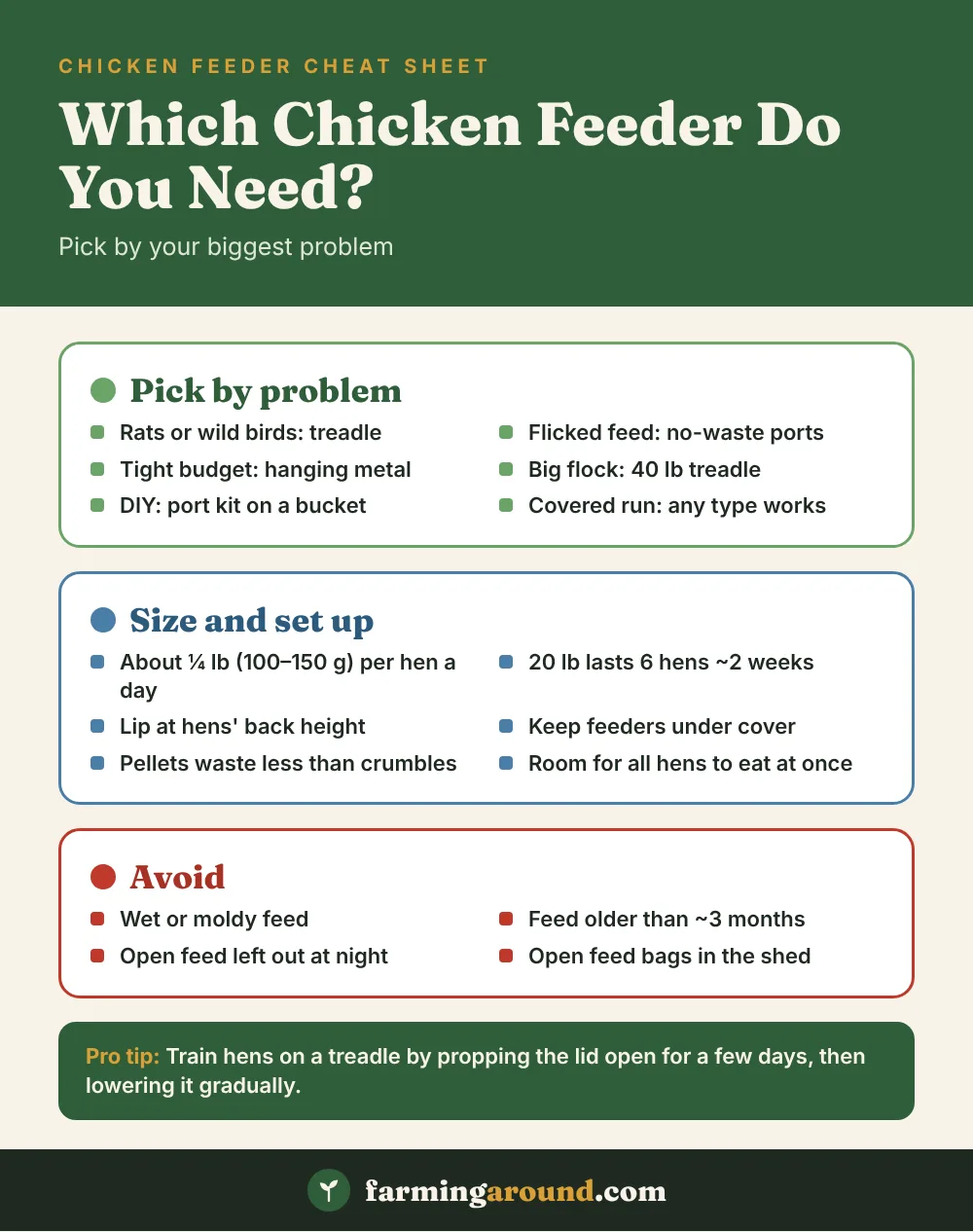
- Rats or wild birds? Choose a treadle feeder, which stays closed unless a hen stands on the step.
- Spilled feed? A no-waste port feeder stops hens flicking pellets out.
- Size it right: a laying hen eats about ¼ lb (100–150 g) of feed a day.
- Keep feed dry and fresh: store it in a metal bin and use it within about three months.
In this guide
Why your feeder matters
Feed is the biggest ongoing cost of keeping chickens, and an open feeder can lose a surprising share of it. Hens scratch and flick pellets onto the floor, wild birds help themselves all day, and spilled feed draws rats and mice into the run at night. A better feeder pays for itself by saving feed and keeping pests away from your flock.
As a rule of thumb, a standard laying hen eats about a quarter pound of feed a day, a bit more in cold weather. Use that to size your feeder so you are not refilling it every morning. For what to put in it, see what chickens can eat.
Quick picks
- Best rodent-proof feeder: Grandpa’s Feeders Automatic Treadle Feeder (20 lb)
- Treadle alternative: RentACoop Automatic Treadle Chicken Feeder
- Best no-waste feeder for small flocks: Omlet No Waste Chicken Feeder (12 lb)
- Best DIY port kit: RentACoop Chick2Chicken 4-Port Feeder Kit
- Best classic hanging feeder: Harris Farms Galvanized Hanging Poultry Feeder
Comparison at a glance
| Product | Type | Best for | Key feature |
|---|---|---|---|
| Grandpa’s Feeders (20 lb) | Galvanized treadle | Rats and wild birds | Lid opens only when a hen steps on it |
| RentACoop Treadle Feeder | Treadle | A second treadle option | Rat-proof design |
| Omlet No Waste Feeder (12 lb) | No-waste hood | Small flocks in covered runs | Stops flicking and spills |
| RentACoop 4-Port Kit | DIY port feeder | Budget and DIY | Turns a bucket into a feeder |
| Harris Farms Hanging Feeder | Galvanized tube | Inside the coop or covered run | Simple and durable |
| Little Giant Hanging Feeder | Metal tube | Small budget | Classic hanging design |
The main types of chicken feeders
1. Treadle feeders (best against rats)
A treadle feeder has a lid over the feed tray that opens only when a hen stands on the step. Rats and most wild birds are too light to open it, so the feed stays covered when chickens are not eating. Hens need a few days to learn it: prop the lid open at first, then lower it gradually.
Watch: Training chickens to use a treadle feeder
If your hens are nervous of the moving lid, this short video from the maker of Grandpa’s Feeders shows how to get them used to it.
Pros: best defense against rats and wild birds, keeps feed covered.
Cons: hens need a few days of training; larger and heavier than tube feeders.
Our pick: Grandpa’s Feeders Automatic Chicken Feeder, a well-known galvanized treadle design that also comes in a 40 lb size for bigger flocks. The RentACoop treadle feeder is another option to consider.
2. No-waste port feeders
Hens reach into small ports or under a hood to eat, so they cannot scratch or flick feed out. These are great for reducing waste in a covered run, but they do not stop rodents as well as a treadle.
Pros: cuts flicking and spills, keeps feed clean.
Cons: rodents can still reach ports at night.
Our pick: Omlet No Waste Chicken Feeder. If you prefer DIY, the RentACoop Chick2Chicken 4-port kit turns a bucket into a no-waste feeder.
3. Hanging metal feeders
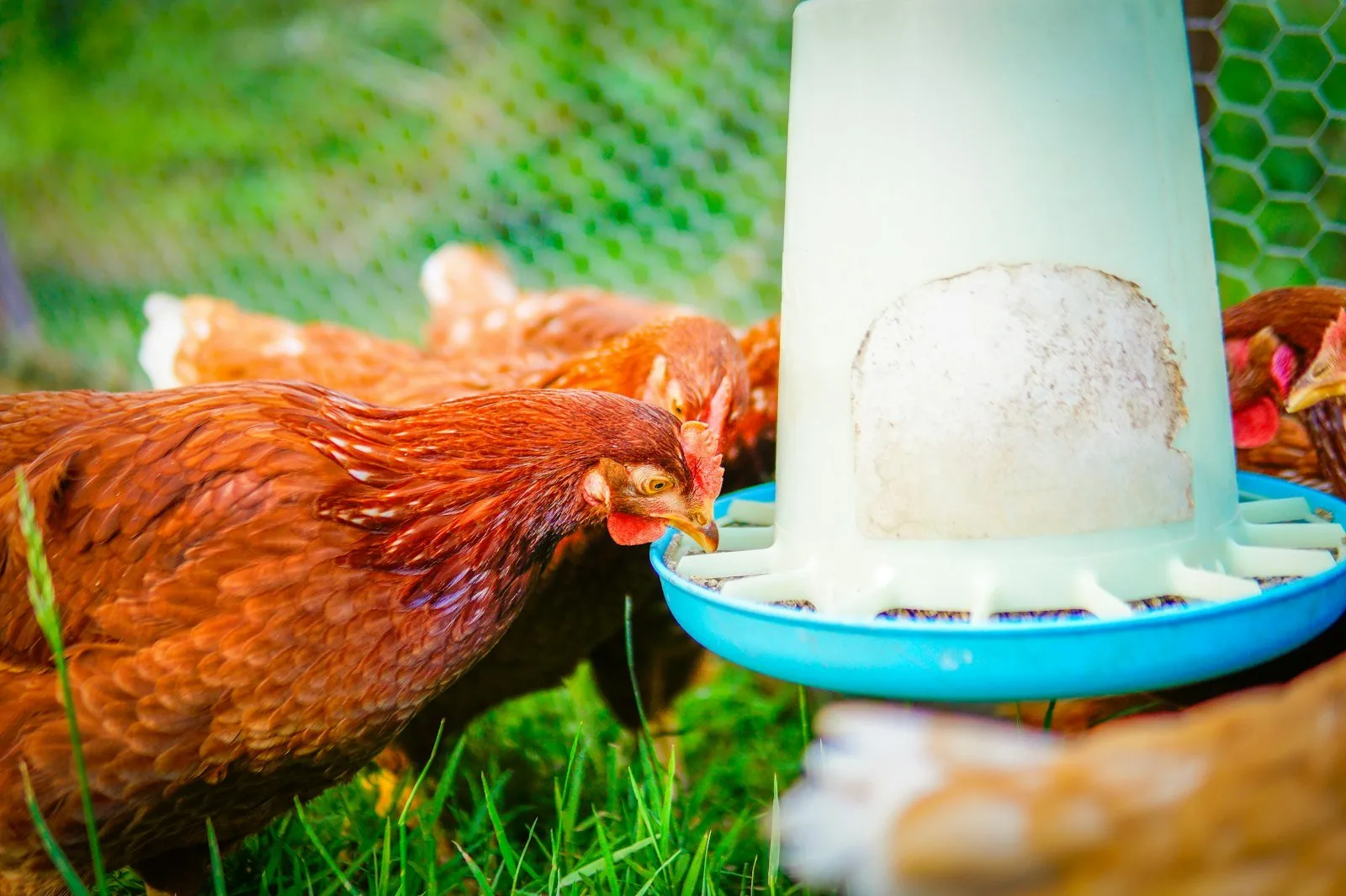
The classic tube feeder hangs from a chain so the lip sits at about the height of your hens’ backs, which cuts down on scratching. Galvanized metal lasts for years and cannot be chewed. They are simple and affordable, but they are open on top of the tray, so keep them inside the coop or a covered run.
Pros: cheap, durable, easy to clean.
Cons: open tray, so keep it under cover and away from rodents.
Our pick: Harris Farms Galvanized Hanging Poultry Feeder, or the Little Giant Hanging Metal Poultry Feeder.
How we chose
We looked for feeders built for poultry that reduce spilled feed, keep feed dry and, ideally, keep rodents out. We favoured metal or sturdy designs that last outdoors, and sizes that suit typical backyard flocks of 4 to 15 hens.
What to look for
- Rodent protection. If you have ever seen a rat in your run, choose a treadle feeder.
- Capacity. About a quarter pound per hen per day: a 20 lb feeder holds roughly 2 weeks of feed for 6 hens.
- Weather protection. Wet feed goes moldy fast. Keep feeders under cover or choose a design with a lid.
- Height. The feeding lip should be at about the height of your hens’ backs.
- Material. Galvanized metal outlasts plastic and cannot be chewed through.
Pro tip: Set the feeder so the bottom edge of the tray is about level with your hens’ backs, and give every bird room to eat at the same time. If birds are pushed away at mealtimes, add a second feeder.
Store feed safely too
A good feeder will not help if the feed bag in the shed is open to mice. Keep feed in a metal bin with a tight lid, such as a 31-gallon galvanized steel can with lid, and buy only what your flock uses in about a month so it stays fresh.
Throw out wet or moldy feed. Feed that gets damp can grow mold, and moldy feed isn’t safe for chickens. Discard any clumped, musty or discolored feed, clean the feeder, and move it somewhere drier. Alabama Extension advises using feed within about three months of its manufacture date.
Dry feed starts with a dry coop. Good airflow helps here too: see our guides to chicken coop ventilation and chicken coop plans if you are building or improving a coop.
Helpful gear for this guide
Handy picks that match the advice above.
Links go to Amazon. Prices and availability change, so check reviews and fit for your setup before buying.
Feeder Quick Reference
FAQ
What is the best way to stop chickens wasting feed?
Use a port or treadle feeder, hang open feeders at back height, and feed pellets rather than crumbles, which are easier to flick out.
How do I keep rats out of my chicken feeder?
Use a treadle feeder, store feed in metal bins, clean up spills and avoid leaving open feed out at night.
Should the feeder be inside the coop or in the run?
Either works as long as it stays dry. Many keepers put it in a covered run so the coop stays cleaner and drier.
Bottom line
For most backyard flocks, a treadle feeder like Grandpa’s Feeders is the best long-term choice because it saves feed and keeps rodents out. Pair it with a heated waterer for winter and an automatic coop door, and daily chores become a quick check. New to chickens? Start with raising chickens for beginners.
Sources
For questions about your flock’s diet or health, ask a poultry vet or your local extension office.
This guide contains affiliate links. As an Amazon Associate, FarmingAround earns from qualifying purchases, at no extra cost to you.


2 Comments