

Last updated: October 2026
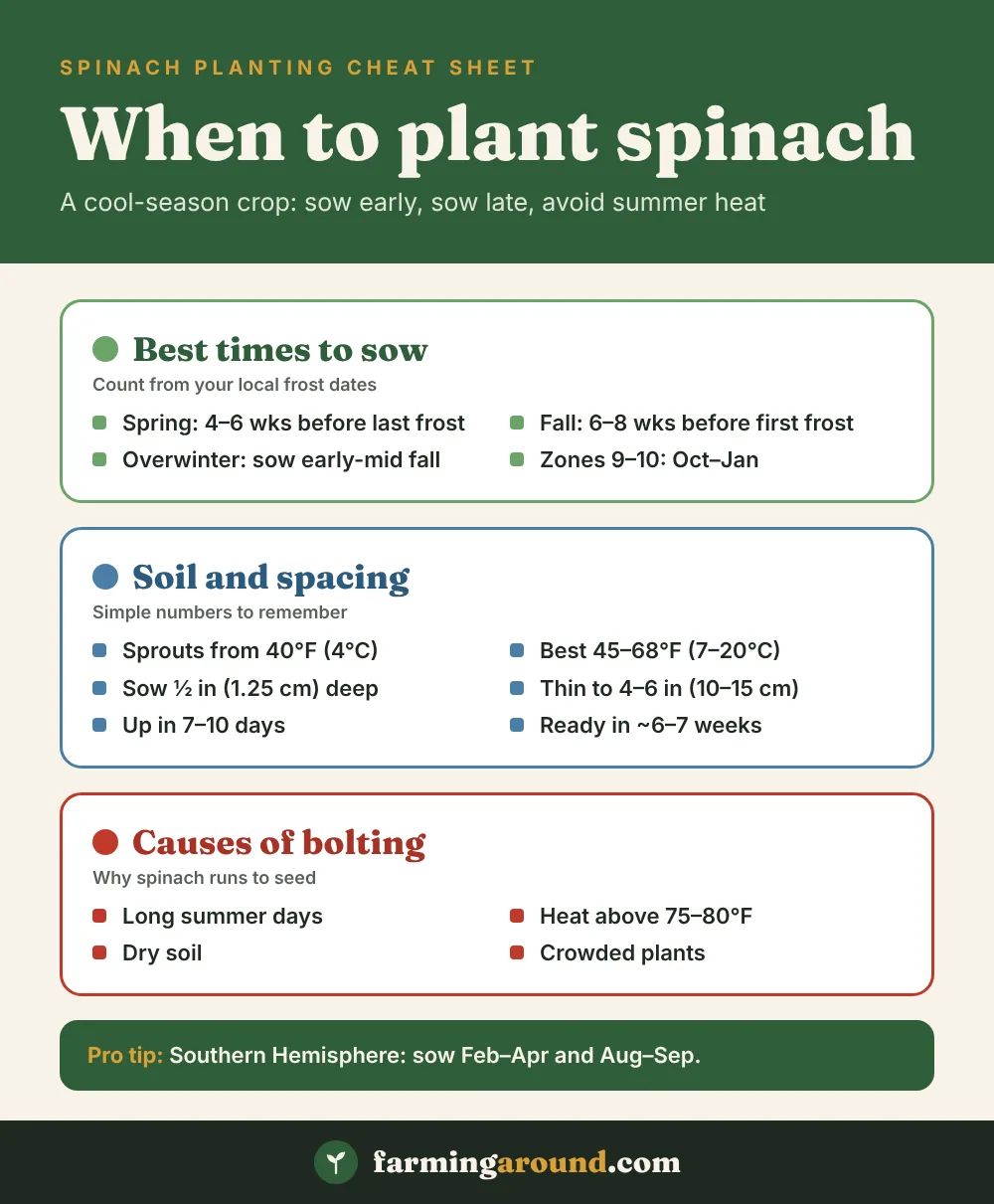
Plant spinach in early spring, about 4–6 weeks before your last frost date, as soon as the soil can be worked, and again in late summer, about 6–8 weeks before your first fall frost. Spinach is a cool-season crop: seeds sprout in soil as cold as about 40°F (4°C) and plants grow best between 50 and 60°F (10–16°C). Warm temperatures and long summer days make it bolt, so timing is everything.
Below you’ll find planting windows by USDA hardiness zone, the soil temperatures that matter, how to overwinter spinach for an early spring crop, and the most common timing mistakes. Gardeners in the Southern Hemisphere and frost-free climates will find their own section too.
Key takeaways
- Spring: sow 4–6 weeks before your average last frost, once soil is workable and at least 40°F (4°C).
- Fall: sow 6–8 weeks before your average first frost for a harvest that lasts into early winter.
- Bolting: long days plus heat above about 75–80°F (24–27°C) send spinach to seed, so finish spring crops early.
- Mild climates: in zones 8–10, spinach is mainly a fall-to-spring crop.
In this guide
- When to Plant Spinach: The Short Answer
- Spinach Planting Times by Zone
- Soil Temperature for Spinach
- Planting Spinach in Spring
- Planting Spinach in Fall and Overwintering
- Indoor Start vs Direct Sowing
- Succession Planting for a Longer Harvest
- Southern Hemisphere and Mild Climates
- Common Spinach Planting Mistakes
- Quick Reference
- FAQ
- Sources
When to Plant Spinach: The Short Answer
Spinach likes it cool. It shrugs off light frosts, and young plants can survive temperatures around 15–20°F (−9 to −7°C) with some protection. What it can’t handle is heat combined with long days. Once days lengthen in late spring and temperatures climb toward 80°F (27°C), plants switch from making leaves to sending up a flower stalk, and the leaves turn bitter.
That gives you two main planting windows in most of North America and Europe:
- Early spring, so you can harvest before summer heat arrives.
- Late summer to early fall, so plants mature in the cool, shortening days of autumn. In many areas, a fall sowing can also be overwintered for an extra-early spring harvest.
Most varieties are ready to harvest roughly 6–7 weeks after sowing, and you can pick baby leaves sooner. For other crops on the same schedule, see our vegetable planting calendar.

Spinach Planting Times by Zone
Use this table as a starting point, then adjust to your own average frost dates, which can vary a lot within a single zone. Your local extension office or a frost-date lookup by ZIP or postcode will give you the most accurate numbers.
| USDA zone | Typical last spring frost | Spring sowing | Fall sowing |
|---|---|---|---|
| 3 | Late May–early June | Late April–mid May | Mid July–early August |
| 4 | Mid–late May | Mid April–early May | Late July–mid August |
| 5 | Early–mid May | Late March–mid April | Early–late August |
| 6 | Mid–late April | Early–late March | Mid August–early September |
| 7 | Early–mid April | Late February–mid March | September; or October to overwinter |
| 8 | Mid–late March | January–February | Late September–November |
| 9–10 | Frost rare or none | Not recommended (too warm) | October–January for winter harvests |
Dates are approximate and based on typical frost dates for each zone. Always count back from your own local frost dates.
Soil Temperature for Spinach
Soil temperature is a better guide than the calendar. Spinach seed will germinate in soil as cool as about 40°F (4°C), but it sprouts best between about 45 and 68°F (7–20°C), usually in 7–10 days. In very cold soil, germination is slow and patchy. Above about 80°F (27°C), germination drops sharply, which is why late-summer sowings can be tricky.
A simple soil thermometer pushed 2 inches (5 cm) into the bed in the morning takes the guesswork out of it.
| Soil temperature | What happens |
|---|---|
| Below 40°F (4°C) | Very slow or no germination; wait or warm the soil |
| 40–45°F (4–7°C) | Germination possible but slow |
| 45–68°F (7–20°C) | Ideal; seedlings usually up in 7–10 days |
| Above 80°F (27°C) | Poor germination; shade the bed or start indoors |
Planting Spinach in Spring
For spring spinach, sow as soon as the soil has thawed and dried enough to work without forming sticky clods, typically 4–6 weeks before your average last frost. Early sowing is the key to a good spring crop, because every week you wait is a week closer to bolting weather.
- Prepare the bed. Loosen the soil and mix in compost. Spinach does best in fertile, well-drained soil with a pH of about 6.5–7.0.
- Sow ½ inch (1.25 cm) deep, about 2 inches (5 cm) apart, in rows 12–18 inches (30–45 cm) apart.
- Keep the soil evenly moist until seedlings emerge.
- Thin to 4–6 inches (10–15 cm) apart once seedlings are about 2 inches tall. Crowded plants bolt sooner.
In early spring, a floating row cover warms the soil a little and protects young plants from hard frosts. If your spring is short and warms up fast, choose slow-bolting, “long-standing” varieties. Raised beds also warm and drain earlier in spring; our raised bed vegetable garden guide explains how to set one up.
Pro tip: Fresh seed matters with spinach. Its germination rate drops quickly with age, so buy new seed each year or sow older seed more thickly.
Planting Spinach in Fall and Overwintering
Fall is often the easiest time to grow great spinach. Plants mature as days shorten and temperatures cool, so they are far less likely to bolt, and a touch of frost even sweetens the leaves.
- Timing: sow 6–8 weeks before your average first fall frost.
- Beat the heat: late-summer soil can be too warm for good germination. Sow in a shaded spot, water the row before and after sowing, or lay a board or shade cloth over the row until seedlings appear.
- Extend the harvest: row covers or a cold frame can keep you picking well into late fall and, in milder areas, through winter.
Overwintering spinach
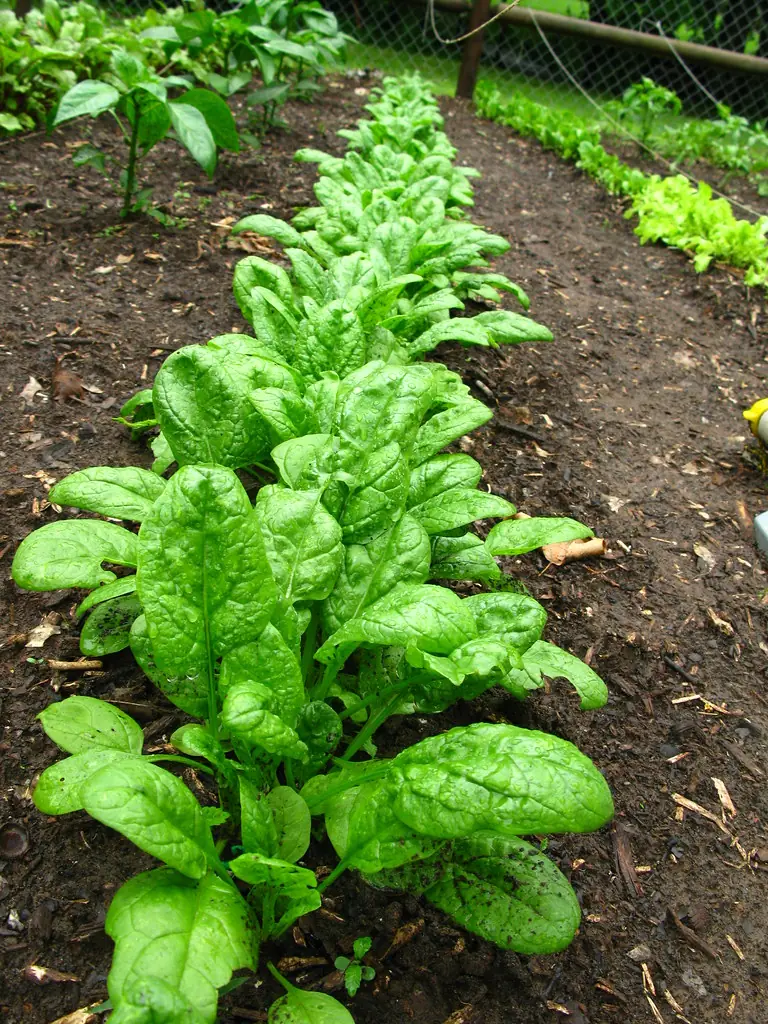
In zones 5–7 and similar climates, you can sow in early to mid fall and let young plants sit through winter for a very early spring harvest. Aim for plants with about 4–5 true leaves before the ground freezes. Mulch them with straw or cover with row cover after the first hard frosts, then uncover in late winter when growth resumes. These plants often give you spinach weeks before a spring sowing would. Spinach also pairs well with other cold-tolerant crops in our list of fall garden vegetables.
Watch: Sowing spinach early or late
Charles Dowding shows how sowing time and spacing affect how long spinach plants keep producing.
Indoor Start vs Direct Sowing
Spinach is usually direct sown. It grows quickly, and direct-sown plants develop strong roots without any transplant setback.
Starting indoors still has its uses:
- Late summer: when soil outside is too hot for germination, start seed in cell trays in a cooler spot and transplant 4–5 weeks later.
- Very early spring: transplants give you a head start when soil is still too cold or wet to sow.
If you transplant, handle seedlings gently, set them out at the same depth they were growing, and water them in well. Hardened-off spinach transplants can go out around your last frost date, or a little earlier under row cover.
Succession Planting for a Longer Harvest
A single sowing gives you a burst of spinach that tends to bolt all at once. For a steadier supply, sow a short row every 2–3 weeks through early spring, stopping about 6–8 weeks before your usual hot weather starts. Resume in late summer and keep sowing until about a month before your first frost.
You can also harvest the outer leaves one by one instead of cutting the whole plant. This keeps each plant producing longer.
Southern Hemisphere and Mild Climates
In the Southern Hemisphere, the seasons are reversed, so flip the timing by about six months. In temperate parts of Australia, New Zealand and South Africa, the main sowing windows are late summer through autumn (roughly February to April) and late winter to early spring (roughly August to September). In warm subtropical areas, grow spinach through the cooler months only.
The same applies to frost-free climates in the Northern Hemisphere, such as zones 9–10 in the southern United States: sow in fall and winter, and expect plants to bolt as spring warms up. In very hot areas, heat-tolerant leafy greens such as Malabar or New Zealand spinach (which are not true spinach) are easier summer substitutes.
Common Spinach Planting Mistakes
| Mistake | What happens | Fix |
|---|---|---|
| Sowing spring spinach too late | Plants bolt before you get a decent harvest | Sow 4–6 weeks before last frost; use long-standing varieties |
| Sowing into hot summer soil | Few seeds germinate | Shade the row, sow in the evening or start in trays |
| Not thinning | Small leaves and early bolting | Thin to 4–6 inches (10–15 cm) apart |
| Letting the soil dry out | Stress triggers bolting and bitter leaves | Water regularly and mulch to hold moisture |
| Using old seed | Patchy, slow germination | Buy fresh seed or sow more thickly |
Not sure what to grow beside your spinach? Our companion planting chart lists good neighbors for leafy greens.
Helpful gear for this guide
Handy picks that match the advice above.
Links go to Amazon. Prices and availability change, so check reviews and fit for your setup before buying.
Quick Reference
FAQ
Can you plant spinach in the fall?
Yes. Sow 6–8 weeks before your first fall frost. Fall spinach is often better than spring spinach because cool, shortening days keep it from bolting.
How cold can spinach tolerate?
Established plants handle frost well, and young plants can survive about 15–20°F (−9 to −7°C), especially with a row cover or mulch.
Is it too late to plant spinach in spring?
If your hot weather is less than about 6 weeks away, spring spinach will probably bolt. Wait and sow in late summer instead.
How long does spinach take to grow?
Most varieties are ready in roughly 6–7 weeks, with baby leaves earlier. Cold weather slows growth.
Why does my spinach bolt so fast?
Long days and warm temperatures are the main triggers. Dry soil and crowded plants make it worse.
Can I grow spinach in summer?
It’s difficult in most climates. Try shade and slow-bolting varieties, or grow heat-tolerant substitutes such as Malabar spinach.
Sources
- Penn State Extension: Growing Spinach, a Cool Season Vegetable
- Utah State University Extension: Spinach in the Garden
This guide contains affiliate links. As an Amazon Associate, FarmingAround earns from qualifying purchases, at no extra cost to you.
Get free farming guides in your inbox
Practical guides, seasonal tips and market updates. No spam, unsubscribe anytime.
Subscribe free


One Comment