
Compost Calculator: How Much You Need + Greens to Browns Ratio
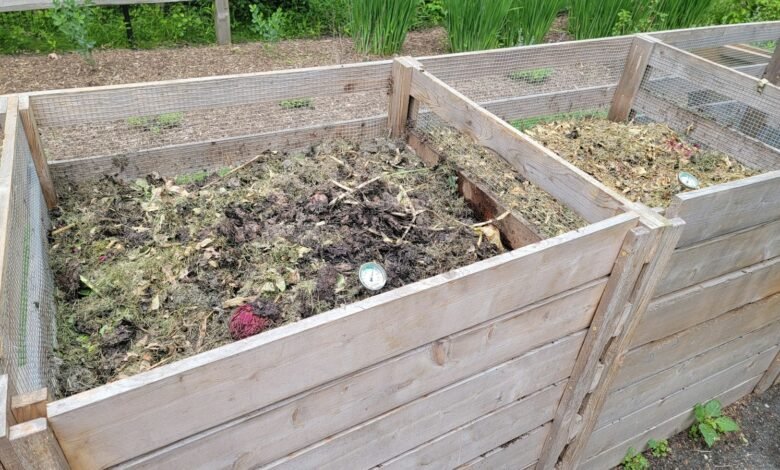
Two calculators in one: work out how much compost to buy or make for a bed, lawn or garden, then check whether your pile has the right balance of greens and browns.
1. How much compost do I need?
2. Is my compost mix balanced?
Add what goes into your pile. One “part” can be a bucket, a wheelbarrow or a pound, as long as you use the same measure for everything.
How much compost to use
| Job | Depth | Per 100 sq ft |
|---|---|---|
| Top-dress a lawn | 1/4 in | About 2 cubic feet |
| Feed an established vegetable or flower bed each year | 1 in | About 8 cubic feet (0.3 cubic yard) |
| Start a new bed in average soil | 2 in, mixed into the top 6–8 in | About 17 cubic feet (0.6 cubic yard) |
| Improve heavy clay or very sandy soil | 3 in, mixed in | 25 cubic feet (0.9 cubic yard) |
Cubic feet = length (ft) × width (ft) × depth (in) ÷ 12
Cubic yards = cubic feet ÷ 27
More is not better: compost is rich in salts and phosphorus, and very thick layers every year can overload the soil. For specific cases see our guides to compost for vegetable gardens, raised beds, clay soil and sandy soil.
Greens, browns and the carbon-to-nitrogen ratio
Compost microbes need carbon for energy and nitrogen to grow. They work fastest when the whole pile averages roughly 25 to 30 parts carbon to 1 part nitrogen. “Greens” are wet, nitrogen-rich materials. “Browns” are dry, carbon-rich ones. A simple rule that lands close to the target is 2 to 3 buckets of browns for every bucket of greens.
| Material | Type | Typical C:N ratio |
|---|---|---|
| Chicken manure | Green | about 8:1 |
| Vegetable and fruit scraps | Green | about 15:1 |
| Grass clippings | Green | about 17:1 |
| Coffee grounds | Green | about 20:1 |
| Cow manure | Green | about 20:1 |
| Hay | Green | about 25:1 |
| Horse manure with bedding | Green | about 30:1 |
| Dry leaves | Brown | about 55:1 |
| Corn stalks | Brown | about 60:1 |
| Straw, pine needles | Brown | about 80:1 |
| Shredded newspaper | Brown | about 175:1 |
| Cardboard | Brown | about 350:1 |
| Sawdust, wood chips | Brown | about 400:1 |
Ratios are typical published values and vary with moisture and source, so treat the result as an estimate and let the pile tell you the rest: a bad smell means add browns, a cold dry pile means add greens and water.
New to composting? Start with how to build a compost pile, and see whether coffee grounds belong in yours.
Free printable chart
Save these charts to Pinterest or print them for the shed, coop or fridge.

Save to Pinterest Open printable version
FAQ
How much compost do I need for a 4×8 raised bed?
To top up an existing 4 × 8 ft bed with 1 inch of compost you need about 2.7 cubic feet, or 3 bags of 1 cubic foot. To fill a new bed with a mix that is 30% compost at 12 inches deep, you need about 10 cubic feet. Our raised bed soil calculator does the full mix.
How many cubic feet of compost are in a yard?
One cubic yard is 27 cubic feet, enough to cover 324 square feet 1 inch deep.
What is the best greens-to-browns ratio?
By volume, about 2 to 3 parts browns to 1 part greens. That usually puts the carbon-to-nitrogen ratio near the 25 to 30:1 target.
Can I use too much compost?
Yes. One to two inches a year is plenty for most gardens. Very heavy applications can build up salts and phosphorus.