
Last updated: November 2026
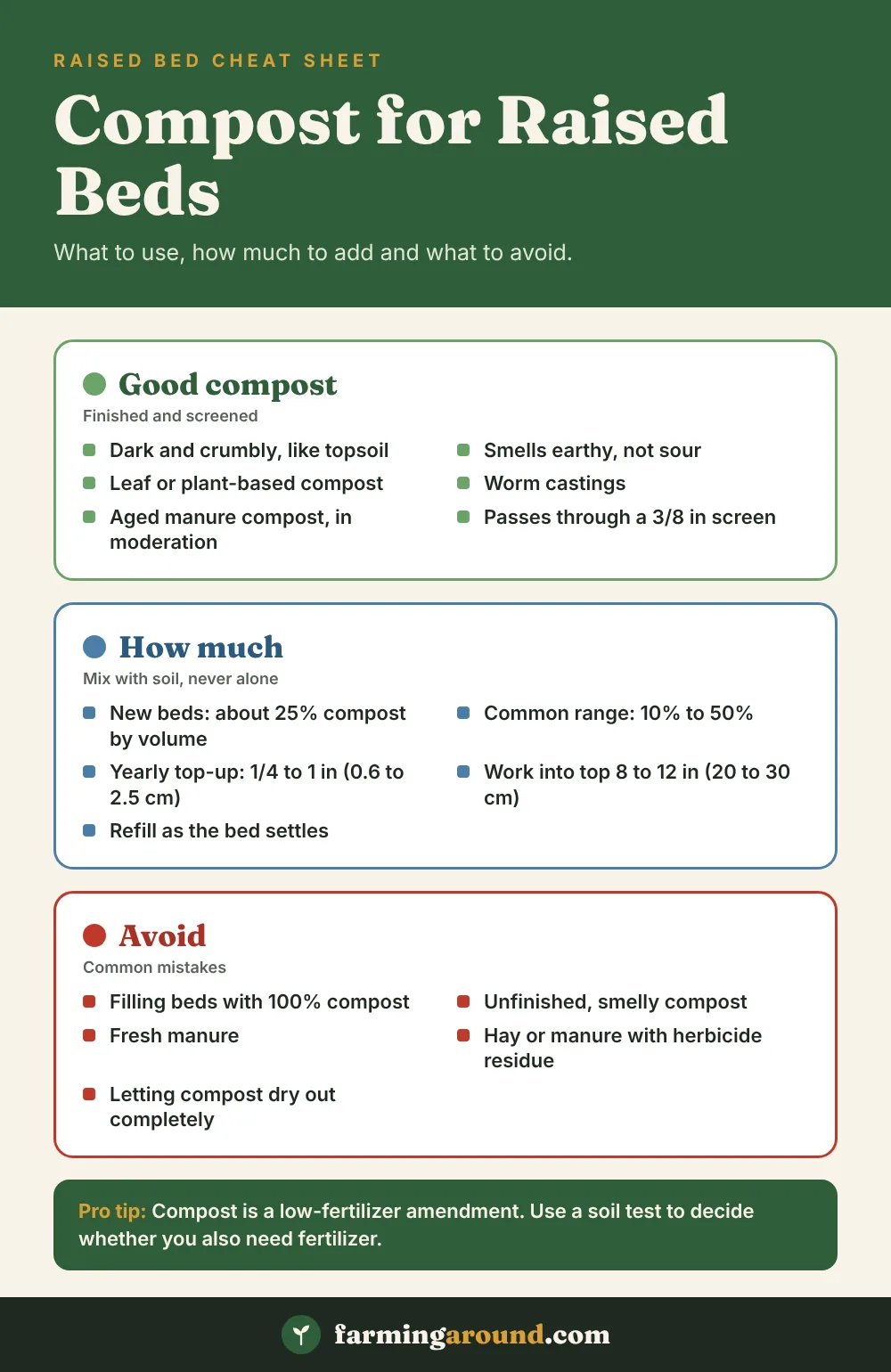
The best compost for raised beds is fully finished compost (dark, crumbly and earthy-smelling) mixed with soil rather than used on its own. For a new bed, a mix of roughly 25% compost by volume is a common, reliable starting point. After that, top the bed up with ¼ to 1 inch (0.6 to 2.5 cm) of compost each year.
This guide explains which types of compost work best, how much to add to new and established beds, when to apply it, how to tell good compost from bad, and the mistakes that quietly hold raised-bed plants back.
Key takeaways
- Mix, don’t fill: beds filled with 100% compost settle, dry out and can be too rich in salts.
- Start around 25%: most gardeners use 10% to 50% compost by volume, with 25% the most common.
- Top up yearly: add ¼ to 1 inch (0.6 to 2.5 cm) and work it into the top 8 to 12 inches.
- Quality matters: use finished compost and avoid fresh manure or herbicide-tainted material.
In this guide
Why Raised Beds Need Compost
Raised beds drain faster and warm up sooner than ground-level gardens, which plants love. The trade-off is that the soil works harder: frequent watering and heavy planting use up organic matter quickly, and the mix slowly sinks as it breaks down.
Compost keeps the bed healthy by:
- Improving structure: it loosens heavy soil and helps sandy mixes hold water.
- Feeding soil life: worms, fungi and microbes break organic matter down and release nutrients slowly.
- Holding moisture: organic matter acts like a sponge, which matters in quick-draining beds.
- Replacing volume: a yearly top-up refills the bed as the old mix settles.
Compost is a soil conditioner, not a complete fertilizer. It releases nutrients slowly, so hungry crops like tomatoes or squash may still need extra feeding early in the season when the soil is cool. A soil test tells you what is actually missing.

Best Types of Compost for Raised Beds
Almost any well-made, finished compost works. These are the most common options and what to know about each:
| Compost type | Best for | Watch out for |
|---|---|---|
| Homemade garden compost | All-purpose use, free and familiar | Make sure it’s fully finished and screened |
| Leaf mold / leaf compost | Improving structure and moisture holding | Low in nutrients, so pair it with richer compost |
| Bagged plant-based compost | Filling new beds quickly | Quality varies; check that it’s dark and fine |
| Aged manure compost | Hungry crops like tomatoes and squash | Higher in salts, phosphorus and potassium, so use less |
| Worm castings | Seedlings, top-dressing and potting mixes | Expensive in bulk; best used as a booster |
| Mushroom compost | Adding bulk to vegetable beds | Can be salty and alkaline; see our mushroom compost guide |
If you want to make your own, our step-by-step guide to building a compost pile covers the right mix of greens and browns. Kitchen extras like coffee grounds are a useful nitrogen source for the pile.
How Much Compost to Add to a Raised Bed
Filling a New Raised Bed
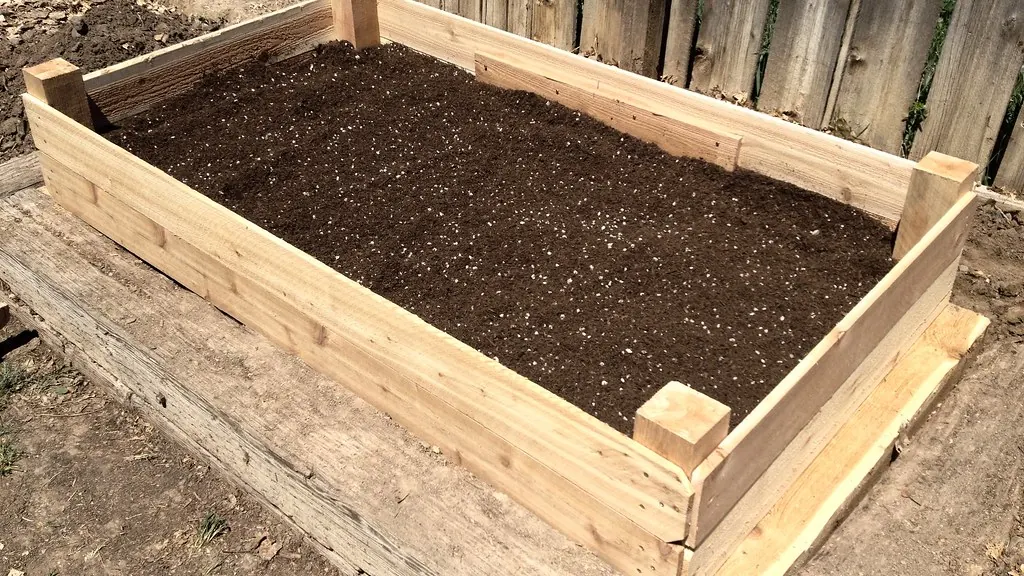
Don’t fill a raised bed with compost alone. Straight compost tends to pack down, shrink, dry out and repel water, and its nutrient balance can be off. Mix it with topsoil, native soil or a raised-bed soil blend instead.
- Typical mix: about 25% compost by volume, within a common range of 10% to 50%.
- Using rich manure compost: stay toward the lower end of the range.
- Using leaf or plant compost: you can go higher, since it is gentler.
- Before filling: loosen the ground under the bed and mix in 2 to 3 inches (5 to 7.5 cm) of compost or soil mix so roots can grow down.
As an example, a 4 × 8 ft bed filled 12 inches deep holds 32 cubic feet of mix, so a 25% blend uses about 8 cubic feet of compost. In metric, a 1.2 × 2.4 m bed filled 30 cm deep holds about 0.86 m³, so 25% is roughly 220 liters of compost.
Topping Up Every Year
Once a bed is established, add ¼ to 1 inch (0.6 to 2.5 cm) of compost a year and work it into the top 8 to 12 inches (20 to 30 cm), or simply spread it on top if you garden no-dig. Oregon State University Extension notes that one 1-cubic-foot bag covers about 12 square feet at 1 inch deep, and that 1 inch is the most you should add in a year. A 4 × 8 ft bed needs just under 3 cubic feet for a 1-inch layer.
Pro tip: Mark the soil level on the inside of a new bed. When the mix has sunk an inch or two below the mark, you know it’s time for a top-up.
When to Add Compost
The two best times are:
- Fall: spread compost after the last harvest, then cover it with mulch or a winter cover crop. It has months to settle before spring planting.
- Early spring: add compost two to four weeks before planting, once the soil is no longer soggy.
In cold regions (USDA zones 3 to 6), fall application is especially handy because spring soil is often too wet to work. In mild-winter zones 8 to 10, you can top up between each crop. In the Southern Hemisphere the seasons are reversed, so fall prep falls around April and May and spring planting around September and October.
You can also side-dress heavy feeders mid-season with a thin layer of compost around the plants.

How to Apply Compost Step by Step
- Clear the bed. Pull spent crops and weeds. Leave roots of legumes in place if you like.
- Check the compost. It should be dark, crumbly and earthy-smelling, with no recognizable food scraps.
- Measure it out. Spread an even ¼ to 1 inch layer for a top-up.
- Mix or leave on top. Use a garden fork to work it into the top few inches, or leave it on the surface in a no-dig bed.
- Water it in. Moisten the bed so the compost doesn’t dry out and repel water.
- Mulch. Cover with straw, shredded leaves or wood chips around plants to protect the soil.
Watch: How to add compost in the garden
This short video from a long-running gardening channel walks through adding compost to garden beds.
How to Tell Good Compost from Bad
Whether it’s homemade or bagged, check compost before it goes in the bed:
- Looks: dark brown to black, like rich topsoil, and crumbly rather than chunky or slimy.
- Smell: earthy. A sour, ammonia or rotten-egg smell means it isn’t finished.
- Texture: fine enough to pass through a ⅜-inch (about 1 cm) screen for vegetable beds.
- Moisture: damp like a wrung-out sponge. Soggy compost clumps; dusty compost is hard to mix in.
- Temperature: it shouldn’t still feel warm in the middle of the pile.
Watch for herbicide residue. Some weed killers survive composting in hay, grass clippings and manure. Distorted, cupped new growth on tomatoes, beans or cucumbers is a classic sign. Ask bulk suppliers where their material comes from and whether they test for herbicides.
Common Mistakes to Avoid
- Filling beds with compost only. The bed shrinks fast and the mix can be too rich in salts and phosphorus.
- Using unfinished compost. It can tie up nitrogen and harm seedlings while it keeps breaking down.
- Adding fresh manure. Compost it first. Raw manure can burn plants and carry pathogens onto food crops.
- Piling on too much every year. Over-applying compost can build up phosphorus and stress plants, much like too much fertilizer.
- Letting it dry out. Bone-dry compost becomes water-repellent, so the surface looks wet while the roots stay dry.
- Skipping the soil test. A test every few years tells you whether you need lime, sulfur or fertilizer as well.
For bed design, spacing and what to grow, see our raised bed vegetable garden guide. If your beds sit on heavy ground, our guide to compost for clay soil explains how to improve what’s underneath.
Helpful gear for this guide
Handy picks that match the advice above.
Quick Reference: Compost for Raised Beds
FAQ
Can I fill a raised bed with just compost?
It isn’t recommended. Pure compost settles a lot, dries out and can be too high in salts and nutrients. Mix it with soil, usually around 25% compost by volume.
What is the best compost for raised beds?
Fully finished compost that is dark, crumbly and earthy-smelling. Plant or leaf-based compost is the gentlest choice; aged manure compost works too, in smaller amounts.
How often should I add compost to raised beds?
Once a year is enough for most beds: add ¼ to 1 inch (0.6 to 2.5 cm) in fall or early spring. You can side-dress heavy feeders during the season.
Is bagged compost good for raised beds?
Yes, if it’s finished and good quality. Check that it’s dark and fine with an earthy smell, and mix it with soil rather than using it alone.
Do I still need fertilizer if I use compost?
Often, yes. Compost releases nutrients slowly, so heavy feeders may need extra feeding early in the season. A soil test shows what your bed needs.
Can I put compost on top without digging it in?
Yes. Spreading compost on the surface and covering it with mulch is a common no-dig approach. Worms and rain gradually work it into the soil.
Sources
- How to Use Compost in Gardens and Landscapes (Oregon State University Extension)
- Using Compost in Raised Beds and Containers (South Dakota State University Extension)
For advice specific to your soil and climate, contact your local extension office.
This guide contains affiliate links. As an Amazon Associate, FarmingAround earns from qualifying purchases, at no extra cost to you.