

Last updated: October 2026
Yes, coffee grounds are good for compost. Used grounds are a nitrogen-rich “green” ingredient, contain about 1–2% nitrogen and are close to neutral pH after brewing. The key is balance: keep coffee grounds to no more than about 20% of your compost pile by volume and mix them with plenty of carbon-rich browns like dry leaves or shredded paper.
This guide explains exactly how much coffee to add, how to mix it, when it is fine to spread grounds straight onto soil, and the common mistakes that can stunt plants. It also clears up a few popular myths about acidity and slugs.
Key takeaways
- Count grounds as a green: they are brown in color but act as a nitrogen source.
- Keep them to about 20% or less of the pile volume; too much can harm plants.
- Brewed grounds are near neutral (around pH 6.2–6.8), so they won’t meaningfully acidify soil.
- On bare soil, go thin: a thick layer crusts over, sheds water and can tie up nitrogen.
In this guide
- Are Coffee Grounds Good for Compost?
- Coffee Grounds at a Glance
- Green or Brown? Balancing Your Pile
- How Much Coffee to Add
- How to Compost Coffee Grounds Step by Step
- Using Grounds Directly on Soil or as Mulch
- Coffee Grounds in Worm Bins
- Acidity, Slugs and Other Myths
- Common Mistakes to Avoid
- Quick Reference
- FAQ
- Sources

Are Coffee Grounds Good for Compost?
Coffee grounds are one of the easiest compost ingredients to collect. They are finely ground, moist and free of weed seeds, and they break down quickly in an active pile. Many coffee shops give away used grounds for free, which makes them a handy nitrogen source when you are short on grass clippings or manure.
They are not a complete fertilizer, though. Grounds contain only small amounts of phosphorus and potassium, and much of their nitrogen is released slowly as microbes break them down. Think of them as a useful ingredient in a balanced compost recipe rather than a plant food on their own. If you are starting from scratch, our guide on how to build a compost pile covers the basics.
Coffee Grounds at a Glance
| Property | Used coffee grounds |
|---|---|
| Compost category | Green (nitrogen-rich) |
| Nitrogen content | About 1–2% |
| Carbon-to-nitrogen ratio | Roughly 20–25:1 |
| pH after brewing | About 6.2–6.8 (close to neutral) |
| Maximum share of a pile | About 20% by volume |
| Paper filters | Compostable (count as a brown) |
| Best partner materials | Dry leaves, straw, shredded cardboard or paper |
Green or Brown? Balancing Your Pile
Compost needs a mix of nitrogen-rich “greens” and carbon-rich “browns.” Despite their color, coffee grounds belong with the greens, alongside grass clippings, vegetable scraps and fresh manure. Their carbon-to-nitrogen ratio is roughly 20–25:1, while a hot compost pile works best at around 25–30:1 overall.
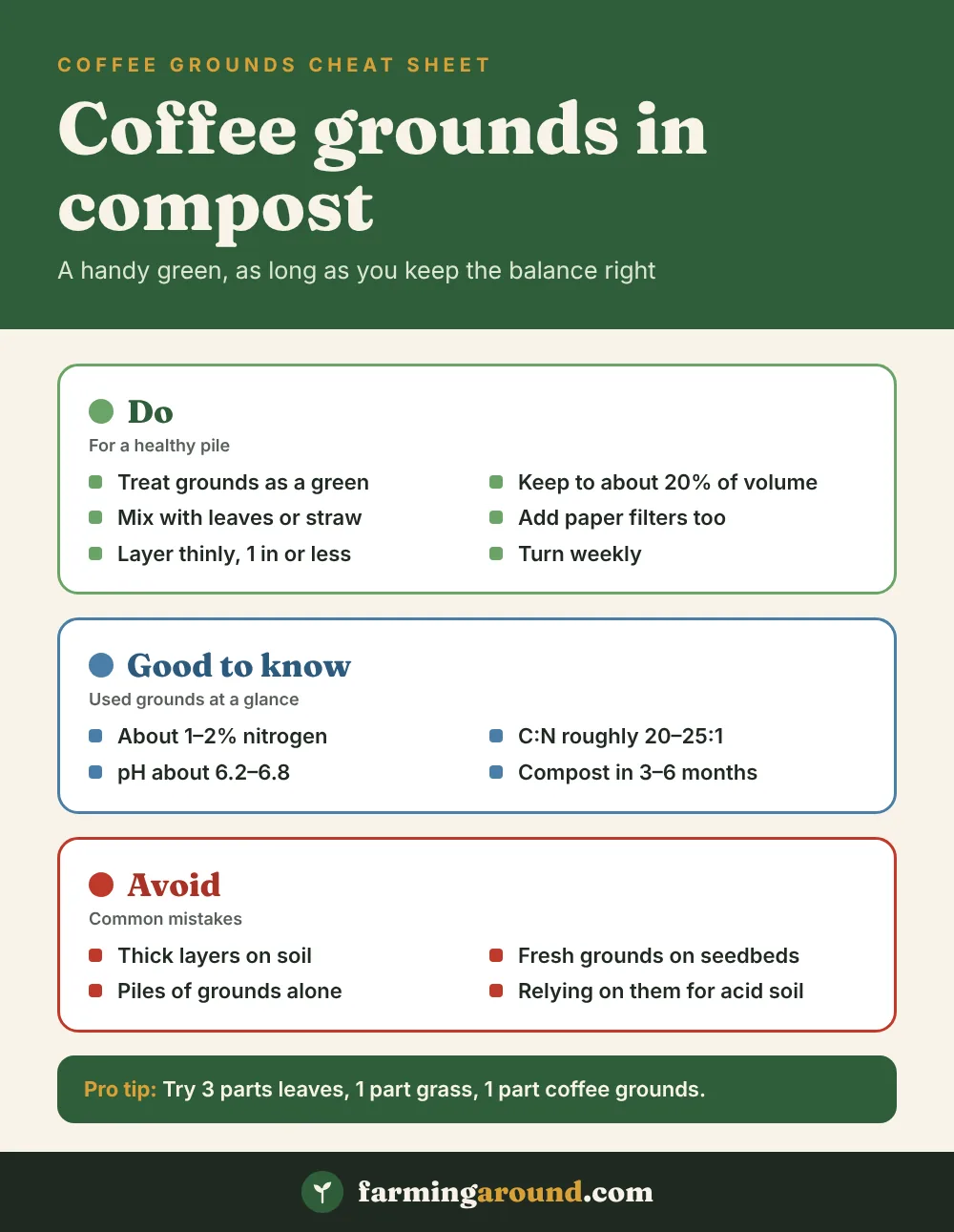
In practice, that means every bucket of coffee grounds should go in with a generous amount of browns. A simple recipe from Oregon State University Extension is:
- 3 parts dry leaves
- 1 part fresh grass clippings
- 1 part coffee grounds
Mix by volume, keep it as damp as a wrung-out sponge and turn it weekly. Finished compost is usually ready in about 3–6 months, depending on temperature and how often you turn it.
Pro tip: Store grounds in a lidded bucket or a kitchen compost caddy until you have enough for a layer. A little mold may form; it is harmless and will break down in the pile.
How Much Coffee to Add
More is not better. Keep coffee grounds to no more than about 20% of the total volume of your compost. Oregon State University Extension notes that higher amounts can be harmful to plants, and overuse has ruined more than one raised bed. Large loads of grounds can also pack down into a dense, airless layer that turns slimy and sour instead of composting.
| Pile size | Coffee grounds (max ~20%) | Browns to add alongside |
|---|---|---|
| Small bin, about 80 gal (300 L) | Up to about 16 gal (60 L) over time | Roughly three times as much dry leaves or shredded paper |
| Standard pile, 3×3×3 ft (about 1 m³) | Up to about 5 cu ft (0.15 m³) | Plenty of leaves, straw or cardboard |
| Kitchen-scale collection | One or two days of household grounds per layer | A double handful of browns each time |
Figures are approximate and based on the 20%-by-volume guideline.
Getting a lot of free grounds? If a café gives you several buckets a week, don’t dump them all in one place. Spread them through the pile in thin layers, and build a separate pile or share them with neighbors once you reach about 20%.
How to Compost Coffee Grounds Step by Step
- Collect used grounds in a lidded container. Paper filters can go in too.
- Add a layer of browns to the pile, such as dry leaves, straw or shredded cardboard.
- Sprinkle the grounds in a thin layer, about 1 inch (2.5 cm) or less, over the browns.
- Mix or cover with more browns so the grounds don’t form a dense mat.
- Keep the moisture right. The pile should feel like a wrung-out sponge.
- Turn regularly. Weekly turning keeps air moving and speeds things up. A compost thermometer shows whether the pile is heating up.

Watch: Using coffee grounds in the garden
This short guide from BBC Gardeners’ World Magazine covers practical ways to use coffee grounds around the garden.
Using Grounds Directly on Soil or as Mulch
Composting is the safest way to use coffee grounds, but you can add them straight to the garden in small amounts:
- Work them into the soil. Oregon State suggests mixing about ½ inch (1.25 cm) of grounds into the top 4 inches (10 cm) of soil, along with a nitrogen source such as composted manure or alfalfa meal to offset any nitrogen tie-up while they break down.
- As mulch, keep it thin. A thick layer of fine grounds dries into a crust that sheds water. Use a light dusting and cover it with leaves or bark mulch.
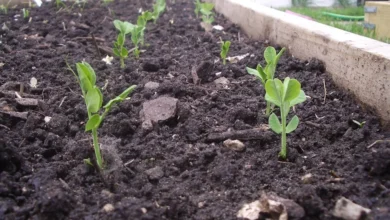
- Avoid seedbeds. Caffeine residues may slow seed germination and early growth, so keep fresh grounds away from newly sown rows and young seedlings.
If you are trying to improve difficult soil, finished compost does a better job than raw grounds. See our guides to compost for clay soil and compost for sandy soil.
Coffee Grounds in Worm Bins
Composting worms will eat coffee grounds, and many worm keepers add them regularly. As with a compost pile, moderation is the rule. Add grounds in small amounts mixed with moist bedding like shredded cardboard, and watch how quickly the worms process them before adding more. If the bin starts to smell sour or worms avoid an area, hold off on grounds and add more bedding.
Acidity, Slugs and Other Myths
“Coffee grounds make soil acidic”
Not really. Brewing removes most of the acidity, so used grounds sit around pH 6.2–6.8. Any change in soil pH is small and temporary, so they are not a reliable way to acidify soil for blueberries or azaleas. Use a soil test and proper amendments if you need to lower pH.
“Coffee grounds keep slugs away”
Research has found that caffeine solutions can repel and kill slugs and snails, but a sprinkling of used grounds is not a proven slug barrier. Treat grounds as a soil and compost ingredient, not pest control.
“Unbrewed coffee is just as good”
Unused grounds are more acidic and contain more caffeine than brewed grounds. If you have old, stale coffee to get rid of, add small amounts to an active compost pile rather than straight onto beds.
Common Mistakes to Avoid
| Mistake | Problem | Fix |
|---|---|---|
| Adding too many grounds | Dense, slimy pile; possible harm to plants | Keep grounds to about 20% of volume |
| Treating grounds as a brown | Too much nitrogen; smelly, wet compost | Pair with plenty of leaves, straw or cardboard |
| Thick layer on bare soil | Crust that sheds water | Use a thin layer and cover with mulch |
| Spreading on new seedbeds | Slower germination and growth | Compost grounds first, or keep them away from young plants |
| Relying on grounds to acidify soil | Little or no pH change | Test soil and use proper amendments |
Coffee grounds are just one of many compost materials. For a very different, ready-made option, read our guide to mushroom compost.
Helpful gear for this guide
Handy picks that match the advice above.
Links go to Amazon. Prices and availability change, so check reviews and fit for your setup before buying.
Quick Reference
FAQ
Can you put coffee grounds directly in the garden?
Yes, in small amounts. Work a thin layer into the soil or use a light dusting under mulch, and keep fresh grounds away from seedlings.
Are coffee filters compostable?
Paper coffee filters are compostable and count as a brown. Check that pods or filters labeled compostable are suitable for home compost; many plastic or mixed-material pods are not.
How much coffee grounds is too much for compost?
More than about 20% of the pile by volume. Above that, grounds can compact and may harm plants.
Do coffee grounds attract pests?
Not usually. Grounds are less attractive to rodents than food scraps. Burying them in the pile and covering with browns keeps flies away.
Are coffee grounds good for tomatoes?
Composted grounds are a fine part of a tomato bed. Avoid heavy fresh applications around young plants, and feed tomatoes with a balanced fertilizer as well.
Can I compost tea leaves and tea bags too?
Loose tea leaves are a good green. Remove staples, and check whether bags contain plastic before composting them.
Sources
- Oregon State University Extension: Coffee grounds boost soil health
- Texas A&M AgriLife Extension, Travis County: Grounds in the Garden
This guide contains affiliate links. As an Amazon Associate, FarmingAround earns from qualifying purchases, at no extra cost to you.
Get free farming guides in your inbox
Practical guides, seasonal tips and market updates. No spam, unsubscribe anytime.
Subscribe free

One Comment