


Last updated: November 2026
Breeding goats successfully comes down to timing and preparation. Breed does once they reach about 60–75% of their adult weight (usually 7–10 months old or older), watch for heat cycles that come every 18–22 days during the autumn breeding season, and plan for kids to arrive about 150 days later. Healthy, well-conditioned does, a sound buck and good records make the biggest difference.
This goat breeding guide covers when goats are ready to breed, the breeding season, signs of heat, choosing and managing a buck, preparing does, pregnancy care, kidding and newborn care, with a simple breeding calendar you can follow. If you’re just getting started, read our guide to farming goats first.
Key takeaways
- Breed by size, not just age: does should be 60–75% of adult weight at their first breeding.
- Know the cycle: heat returns every 18–22 days and lasts 12–36 hours, mostly from late summer to winter.
- Gestation is about 150 days: boost CDT 4–6 weeks before the due date and prepare a clean kidding pen.
- Colostrum is critical: kids need colostrum within the first couple of hours, and navels should be dipped right after birth.
In this guide
When Are Goats Ready to Breed?
According to Oklahoma State University’s meat goat program, does reach puberty at about 7–10 months, but they should be 60–75% of their adult weight before they are bred. Breeding a doe that is too small raises the risk of a difficult birth and can stunt her own growth. Many keepers wait until does are around a year old so they kid at about 17–18 months.
Bucks mature earlier. Buck kids can be fertile surprisingly young, so separate them from does (including their mothers and sisters) by about 4 months of age or castrate them. A young buck can sire kids at 8–10 months but should be used more lightly than a mature buck.
Avoid surprise pregnancies: Young bucklings can breed does before you expect it. Separate buck kids from females by about 4 months old, or plan to castrate any males you won’t use for breeding.
The Goat Breeding Season
Most goats are seasonal breeders that respond to shortening days. In the Northern Hemisphere, the breeding season usually runs from August or September through January, with peak activity from October to December. In the Southern Hemisphere, the same pattern falls roughly six months later, from about February or March to July.
Some breeds, including Nigerian Dwarfs, are known to cycle for much more of the year, which lets owners spread kidding out. Plan your breeding date backwards from when you want kids born. Many farms aim for kids in spring, when pasture is growing and the weather is mild.
Signs a Doe Is in Heat
A doe’s estrous cycle lasts 18–22 days, and she is in standing heat (willing to accept the buck) for about 12–36 hours. Watch for:
- Rapid tail wagging (“flagging”)
- A swollen, reddish vulva and sometimes a clear discharge
- Restlessness, more bleating and interest in the buck pen
- Mounting other goats or standing to be mounted
- A drop in milk yield in milking does
Pro tip: Rub a cloth on a buck’s scent glands behind his horns and keep it in a sealed jar. Holding it near a doe often triggers obvious heat behavior and makes heat easier to spot.
Choosing and Managing a Buck
The buck provides half the genetics for every kid, so choose carefully:
- Good records and parents: look for production records or at least see the buck’s dam and sire.
- No close relatives: breed bucks to unrelated does, and never to their own daughters.
- Breeding soundness exam: ask a vet to check the buck’s general health, feet, legs and reproductive organs before the season.
- Libido and condition: a buck that’s too thin or not interested won’t settle does.
A mature buck can cover many does in a season (Oklahoma State notes up to 50 for a full-grown, healthy buck), while young bucks should be given fewer. Bucks are strong and smelly in rut and should live in their own well-fenced pen with a companion, such as a wether. A marking harness with a crayon on the buck’s chest shows you which does have been mated and when.

Preparing Does for Breeding
- Body condition: aim for does that are neither thin nor fat. Thin does may not cycle well, and overweight does are at higher risk of pregnancy problems.
- Parasite check: use FAMACHA scores and fecal egg counts and treat only the does that need it.
- Hooves: trim before breeding so does are sound through pregnancy.
- Disease testing: many breeders test for CAE, CL and Johne’s disease before breeding, especially when bringing in a new buck.
- Nutrition boost: some producers raise the energy in the diet for a few weeks before and during breeding (called flushing). Ask your vet or extension office whether it suits your herd.
Breeding Methods
- Pen breeding: the buck runs with a group of does for at least two heat cycles (about six weeks). Simple, but you’ll only know due dates if you watch or use a marking harness.
- Hand breeding: you bring a doe in heat to the buck and record the exact date. This gives you accurate due dates and protects young does.
- Artificial insemination (AI): common with dairy goats and gives access to top genetics without keeping a buck, but needs training and precise heat detection.
Whatever method you use, write down every breeding date. If a doe comes back into heat 18–22 days later, she probably didn’t settle.
Pregnancy and Gestation
Goat gestation is about 150 days, or roughly five months. A vet can confirm pregnancy by ultrasound, and blood tests for pregnancy are also available. Most of the kids’ growth happens in the last six weeks, so that’s when does need the best feed.
- CDT booster: the American Dairy Goat Association recommends boosting does for CDT 4–6 weeks before the due date so kids get immunity through colostrum.
- Selenium: in selenium-deficient areas, ADGA suggests a vitamin E-selenium booster in mid to late pregnancy. Ask your vet whether your area is deficient.
- Late-pregnancy feeding: does carrying twins or triplets may need extra energy late in pregnancy. Sudden lack of appetite or weakness in a heavily pregnant doe is an emergency (possible pregnancy toxemia), so call your vet.
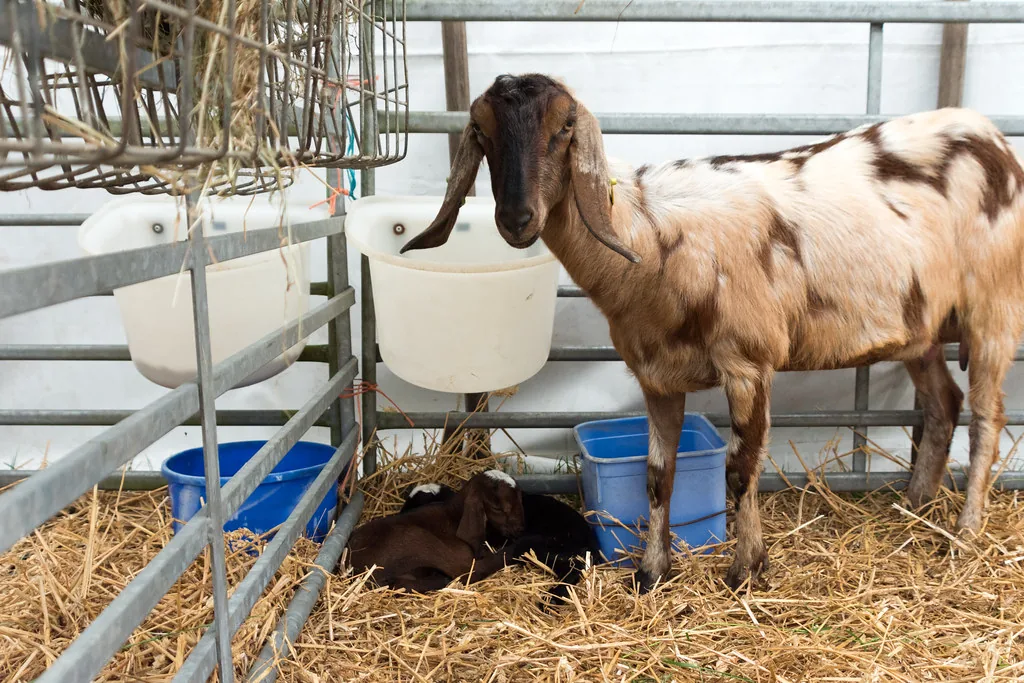
Kidding: What to Expect
As the due date nears, a doe will usually show some of these signs:
- The udder fills and becomes tight (“bagging up”)
- The ligaments on either side of the tail head soften and become hard to feel
- Thick discharge, a sunken look around the hips and restlessness
- Pawing at bedding, lying down and getting up, and talking to her belly
Move her to a clean, well-bedded kidding pen and have a kit ready: clean towels, disposable gloves and lubricant, navel dip, a bottle with kid nipples, and stored or replacement colostrum. Most does kid without help. If a doe strains hard for about 30 minutes with no progress, or you see a kid coming in an abnormal position, call your vet.
Watch: Beginners Guide to Breeding Goats
This video from You Can Farm walks through goat breeding for beginners.
Newborn Kid Care
- Clear the airways and let the doe lick the kid dry, or rub it with a towel.
- Dip the navel right after birth and again 12 hours later, as ADGA recommends.
- Colostrum first: make sure each kid nurses within the first couple of hours. ADGA advises feeding colostrum equal to about 10% of the kid’s body weight within 18 hours (for example, about 13 oz or 385 ml for an 8 lb or 3.6 kg kid).
- Heat-treated colostrum: herds working to prevent CAE often heat-treat colostrum to 135°F (57°C) and hold it there for one hour before bottle-feeding.
- Watch for weak kids: a kid that can’t stand, won’t suck or feels cold needs help warming up and feeding, and possibly a vet.
Plan what happens to the kids. Some will join your herd, and others might be sold. If you’re new to goats, our types of goats guide helps you choose breeds, and the Nigerian Dwarf goat profile covers a popular small breed for year-round kidding.
Goat Breeding Calendar
| Day | What to do |
|---|---|
| 4–6 weeks before breeding | Check body condition, hooves and parasites; test for diseases; buck soundness exam |
| Day 0 | Breeding. Record the date and buck |
| Day 18–22 | Watch for a return to heat (a sign she didn’t settle) |
| About day 30–60 | Ask your vet about a pregnancy check |
| About day 100 | Start improving feed for the last six weeks |
| About day 108–122 | CDT booster (4–6 weeks before kidding); selenium if your vet advises |
| About day 143 | Set up the kidding pen and kit; watch closely for signs |
| About day 150 | Kidding. Dip navels and make sure kids get colostrum |
Helpful gear for this guide
Handy picks that match the advice above.
Quick Reference: Goat Breeding Basics

FAQ
How long are goats pregnant?
About 150 days, or roughly five months. Most does kid within a few days either side of that.
At what age can a female goat be bred?
Does reach puberty at about 7–10 months, but they should be 60–75% of their adult weight before breeding. Many keepers wait until does are around a year old.
How do I know if my goat is in heat?
Look for rapid tail flagging, a swollen vulva, restlessness, extra bleating, interest in the buck and a drop in milk. Heat lasts 12–36 hours and returns every 18–22 days.
How many does can one buck breed?
A full-grown, healthy buck can cover a large group. Oklahoma State notes up to 50 does. Young bucks should be given far fewer.
Can goats breed all year round?
Most breeds breed mainly from late summer to winter. Some, such as Nigerian Dwarfs, cycle for much more of the year.
How many kids do goats usually have?
Twins are common, and singles and triplets also happen. Litter size depends on breed, age and the doe’s condition.
Sources
- Oklahoma State University Extension: Meat Goat Production, Bucks and Breeding
- American Dairy Goat Association: Dairy Goat Management Calendar
This guide is general information. For breeding plans, pregnancy problems or a difficult kidding, contact a veterinarian who treats goats or your local extension office.
This guide contains affiliate links. As an Amazon Associate, FarmingAround earns from qualifying purchases, at no extra cost to you.
Get free farming guides in your inbox
Practical guides, seasonal tips and market updates. No spam, unsubscribe anytime.
Subscribe free

One Comment