Last updated: November 2026
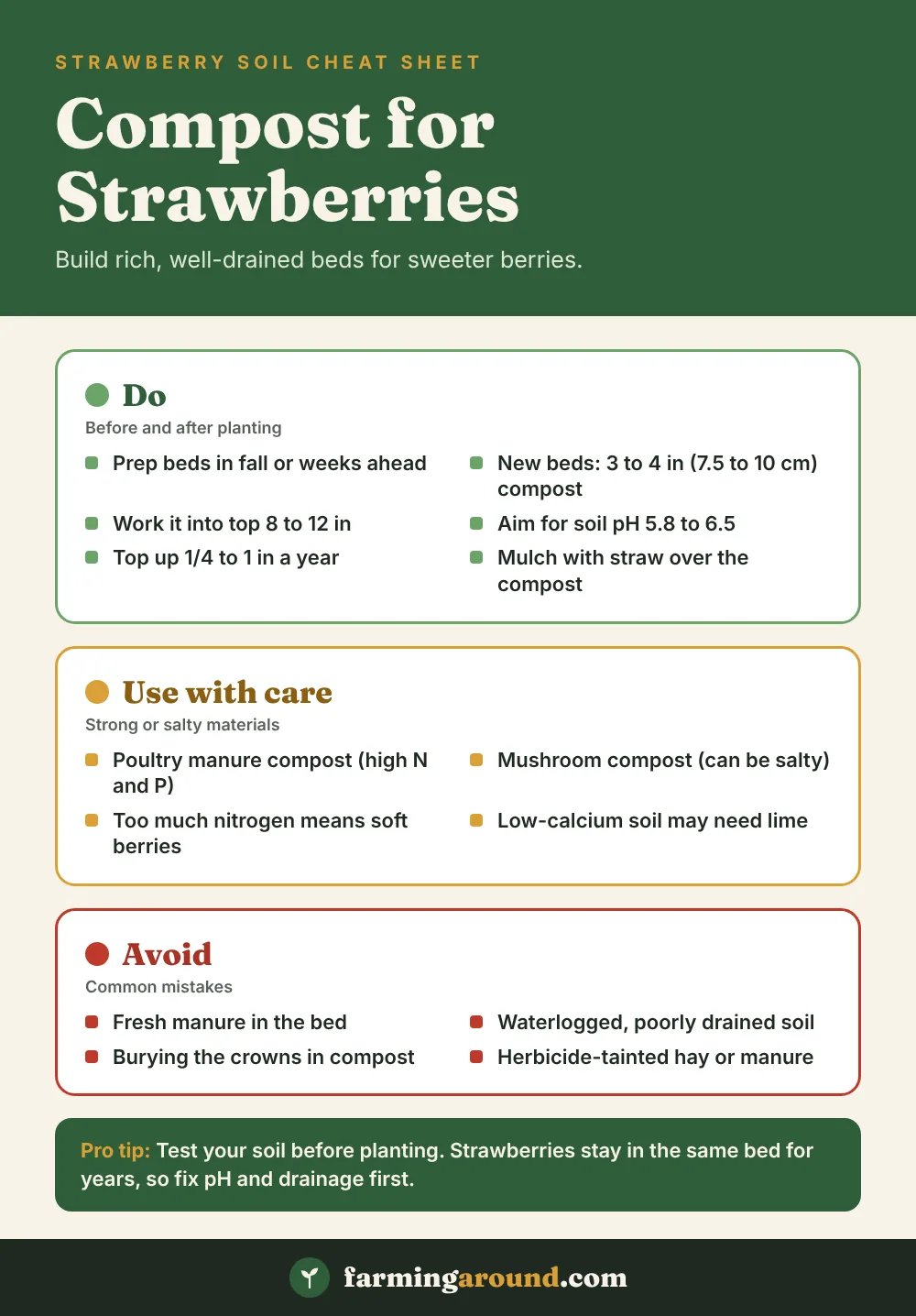
Strawberries do best in rich, well-drained, slightly acidic soil, and well-finished compost is the easiest way to build it. For a new bed, work about 3 to 4 inches (7.5 to 10 cm) of compost into the top 8 to 12 inches of soil before planting, aim for a pH of roughly 5.8 to 6.5, then top up with ¼ to 1 inch of compost each year.
This guide covers the best compost for strawberries, how much to use, when to apply it in each climate, how compost and fertilizer work together, and the common mistakes that lead to leafy plants and soft, moldy berries.
Key takeaways
- Prep before planting: mix 3 to 4 in (7.5 to 10 cm) of compost into new beds, ideally the fall before.
- Slightly acidic soil: strawberries like pH of about 5.8 to 6.5 and 4% to 6% organic matter.
- Top up yearly: add ¼ to 1 in (0.6 to 2.5 cm) of compost, for June-bearers right after renovation.
- Avoid fresh manure and excess nitrogen: they cause leafy growth, soft berries and food-safety risks.
In this guide
Why Compost Matters for Strawberries
Strawberries have shallow roots, and most of them sit in the top 6 inches (15 cm) of soil. They need soil that holds moisture but never stays waterlogged, because wet soil quickly rots their roots. A strawberry bed also stays in place for three or four years, so the soil you build at the start has to carry the plants for a long time.
Compost helps on every front:
- Better drainage in clay and better moisture holding in sand.
- More organic matter: the UMass small fruit guide gives 4% to 6% as the desirable range for strawberry soil.
- Slow, steady nutrients that don’t push the soft, leafy growth that strong fertilizers can.
- Healthier soil life, which helps roots spread through the bed.

Best Compost for Strawberries
The best choice is a mature, plant-based compost: dark, crumbly and earthy-smelling, with no recognizable scraps. Here is how the common options compare:
| Compost type | Good for strawberries? | Notes |
|---|---|---|
| Homemade garden compost | Yes | Ideal if fully finished and screened |
| Leaf mold | Yes | Great for structure; low in nutrients |
| Bagged plant-based compost | Yes | Check it’s dark, fine and not woody |
| Aged cow or horse manure compost | In moderation | Richer and saltier; use smaller amounts |
| Poultry manure compost | Use with care | High in nitrogen and phosphorus; too much gives soft berries |
| Mushroom compost | Use with care | Can be salty and alkaline; see our mushroom compost guide |
| Fresh manure | No | Can burn roots and carry pathogens onto fruit |
If you make your own, our guide to building a compost pile shows how to get it to finish properly. Additions like coffee grounds belong in the pile, not spread raw around the plants.
How Much Compost to Use
New Strawberry Beds
For a brand-new bed, spread 3 to 4 inches (7.5 to 10 cm) of compost and work it into the top 8 to 12 inches (20 to 30 cm) of soil, following Oregon State University Extension’s guidance for new garden beds. Add lime or fertilizer only if a soil test says you need it. If you use rich manure compost, use less and mix it with plant-based compost.
Raised Beds and Containers
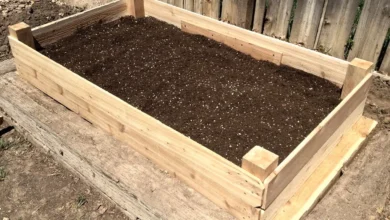
Don’t plant strawberries in straight compost. Mix it with soil or a potting mix so the blend drains well; around 25% compost by volume is a common choice. Containers also need drainage holes, and the mix should be refreshed every year or two.
Established Beds
Top up with ¼ to 1 inch (0.6 to 2.5 cm) of compost a year. Spread it around the plants, keeping it off the crowns, and let rain and worms work it in.
Keep the crowns clear. The crown is the short stem where leaves meet roots. Burying it in compost or soil invites rot. Leave it level with the soil surface.
Soil pH and Drainage
Strawberries like slightly acidic soil. The UMass small fruit guide recommends a pH of 5.8 to 6.2, and UC IPM suggests 6.0 to 6.5, so a target of roughly 5.8 to 6.5 suits most gardens. Test the soil before planting, since lime takes time to change pH. Low-calcium soils may need lime or gypsum, and dolomitic lime can help soils that are low in magnesium.
Drainage matters just as much. Choose a sunny spot that doesn’t puddle, or grow in raised beds or mounded rows if your ground is heavy. For heavy ground, our compost for clay soil guide explains how to open it up, and our sandy soil guide covers the opposite problem.
Pro tip: Prepare the bed in fall for a spring planting. The compost has time to settle and any lime has time to start working, so your plants go into ready soil.
When to Add Compost
- Before planting: ideally the fall before, or a few weeks before you set plants. Day-neutral beds can be prepared in spring or the previous fall.
- Cold climates (USDA zones 3 to 7): strawberries usually go in early in spring, as soon as the soil can be worked, often a few weeks before your last frost date. Prepare the bed the previous fall.
- Mild climates (zones 8 to 10): many gardeners plant in fall for a late-winter and spring harvest, so prepare beds in late summer.
- After harvest (June-bearers): top-dress with compost when you renovate the bed after the last picking.
- Southern Hemisphere: seasons are reversed, so spring planting falls around September and October and fall prep around March to May.
Watch: Planting strawberries, sun and soil
This video from Epic Gardening covers planting bare-root strawberries along with their sun and soil needs.
Compost vs Fertilizer for Strawberries
Compost improves the soil, but it’s a low-nutrient amendment. Strawberries often still need a modest amount of fertilizer, especially nitrogen, applied lightly rather than all at once. UC IPM suggests a starter fertilizer at planting and light, regular nitrogen afterward.
More is not better. Excess nitrogen, including from heavy doses of poultry manure, produces lush leaves, soft berries and more disease. Let a soil test kit or lab test guide how much you add.

How to Prepare a Strawberry Bed Step by Step
- Pick the site: full sun, good drainage, and ideally not where tomatoes, potatoes, peppers or eggplant grew recently, as they share some soil diseases.
- Test the soil: check pH and nutrients, then lime if needed.
- Clear weeds: perennial weeds are hard to remove once strawberries spread.
- Add compost: spread 3 to 4 inches and mix it into the top 8 to 12 inches.
- Shape the bed: raise it or mound rows if drainage is poor.
- Plant at the right depth: crowns level with the soil, roots spread out.
- Water and mulch: water in well, then mulch with straw or shredded leaves to keep berries clean and soil moist.
Prefer growing without soil? Our strawberry hydroponic system guide covers soilless setups.
Common Mistakes to Avoid
- Using fresh manure. Compost it first. Under USDA organic rules, raw manure must go on at least 120 days before harvesting crops that touch the soil, and strawberries do.
- Too much rich compost or nitrogen. This leads to leafy plants, soft fruit and more gray mold.
- Poor drainage. Waterlogged beds rot roots quickly, however good the compost.
- Burying crowns. Keep compost and mulch away from the crown.
- Legume cover crops before planting. The UMass guide notes that leguminous cover crops may increase nematodes that harm strawberries; Sudan grass is an option that can suppress them.
- Herbicide-tainted materials. Hay, straw, clippings or manure treated with persistent herbicides can damage plants. Know your source.
Helpful gear for this guide
Handy picks that match the advice above.
Quick Reference: Compost for Strawberries
FAQ
What is the best compost for strawberries?
A mature, plant-based compost that is dark, crumbly and earthy-smelling. Aged manure compost works in smaller amounts; fresh manure does not.
Can I plant strawberries in pure compost?
It’s not a good idea. Straight compost settles and can hold too much water or salt. Mix it with soil or potting mix.
Is mushroom compost good for strawberries?
Use it carefully. It can be salty and alkaline, which strawberries don’t like. Mix small amounts with other compost and check your soil pH.
When should I add compost to strawberries?
Before planting, ideally the fall before, and then once a year as a top-dressing. For June-bearing varieties, top-dress right after you renovate the bed post-harvest.
Do strawberries like coffee grounds?
Coffee grounds are best composted first. Spread raw, they can form a crust that sheds water. Composted, they add organic matter like any other compost.
How much compost do strawberries need each year?
About ¼ to 1 inch (0.6 to 2.5 cm) spread around the plants, kept off the crowns.
Sources
- Strawberries: New England Small Fruit Management Guide (UMass Amherst)
- Cultural Tips for Growing Strawberry (UC IPM)
- How to Use Compost in Gardens and Landscapes (Oregon State University Extension)
For advice specific to your soil and climate, contact your local extension office.
This guide contains affiliate links. As an Amazon Associate, FarmingAround earns from qualifying purchases, at no extra cost to you.