

Last updated: November 2026
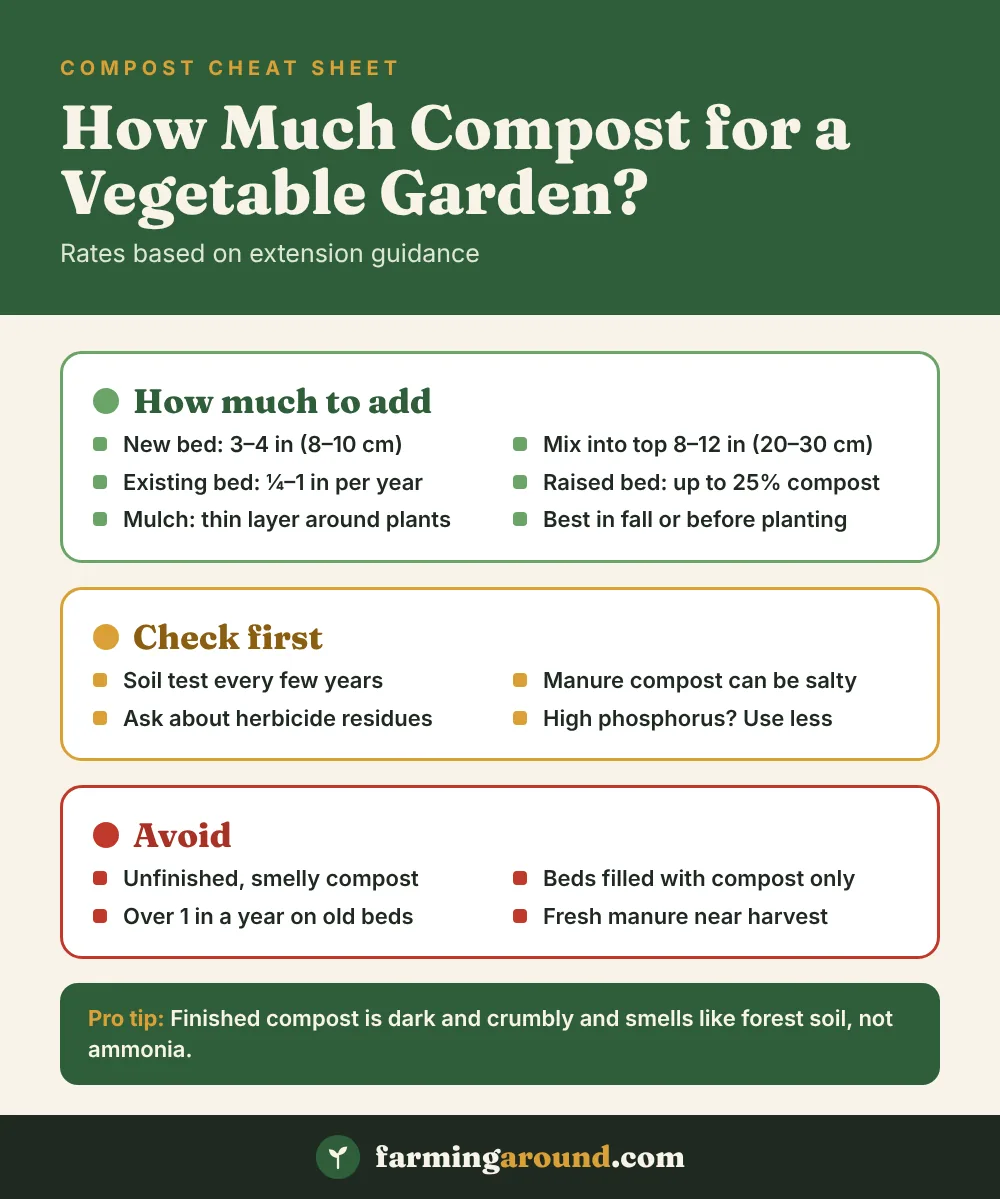
The best compost for a vegetable garden is fully finished compost: dark, crumbly and earthy-smelling, made from a mix of plant material and, ideally, well-aged manure. Work 3–4 inches (8–10 cm) into the top 8–12 inches (20–30 cm) of soil when you start a new bed, then add just ¼ to 1 inch (0.6–2.5 cm) a year to established beds. Fall, or a few weeks before spring planting, is the easiest time to apply it.
Below you’ll find the main types of compost and which suit vegetables, exactly how much to use, how to apply it in in-ground and raised beds, and the mistakes that can stunt plants or build up too many nutrients in your soil.
Key takeaways
- Use finished compost only: dark, crumbly and smelling like forest soil, not ammonia or rot.
- New beds: 3–4 in (8–10 cm), mixed into the top 8–12 in (20–30 cm) of soil.
- Established beds: ¼–1 in (0.6–2.5 cm) per year is enough. More isn’t better.
- Test first: a soil test every few years shows whether you’re piling up phosphorus.
In this guide
Why Vegetables Love Compost
Compost isn’t really a fertilizer. It’s a soil conditioner that happens to carry a modest amount of nutrients. Its main job is to add organic matter, and that does several things vegetable crops care about:
- Improves structure. It loosens heavy clay so roots can spread and water can drain, and it helps sandy soil hold on to moisture.
- Feeds soil life. Earthworms, fungi and bacteria break organic matter down and slowly release nutrients plants can use.
- Holds water and nutrients. Soil rich in organic matter dries out more slowly and loses fewer nutrients to leaching.
- Releases nutrients gradually. A little nitrogen, phosphorus and potassium becomes available over months rather than all at once.
Because the nutrient content is modest and variable, hungry crops like tomatoes, sweet corn and squash may still need some extra feeding during the season. Compost builds the foundation; fertilizer tops it up.
If your soil is at one extreme, see our dedicated guides to compost for clay soil and compost for sandy soil.

Types of Compost for Vegetable Gardens
| Type | What it is | Good for vegetables? |
|---|---|---|
| Homemade garden compost | Kitchen scraps, leaves, grass and garden waste | Yes, once fully finished. Nutrient levels vary. |
| Manure-based compost | Composted cow, horse, poultry or rabbit manure with bedding | Yes, richer in nutrients. Can be salty and high in phosphorus. |
| Leaf mold | Decomposed tree leaves | Yes, superb for structure, low in nutrients |
| Mushroom compost | Spent substrate from mushroom farms | Yes, in moderation. Often high in salts and lime. |
| Municipal or bagged compost | Commercial compost from green waste and other feedstocks | Usually, if it’s finished and you trust the source |
| Vermicompost (worm castings) | Material processed by worms | Yes, great as a top-dressing or in potting mixes |
For most home vegetable gardens, a blend of homemade compost and well-rotted manure compost is ideal. If you buy compost, ask the supplier what it’s made from and whether it’s tested. Our guide to mushroom compost explains how to use that type safely, and how to build a compost pile shows how to make your own.
How to Tell If Compost Is Finished
Unfinished compost can tie up nitrogen, harbor weed seeds and even harm young plants. Before you spread it, check that it:
- Looks like dark topsoil with a light, crumbly texture
- Smells earthy, like a forest floor. Ammonia or rotten-egg smells mean it isn’t done.
- Has no recognizable food scraps, and few large chunks of wood or stems
- Is no longer warm in the middle of the pile
- Feels moist but not soggy. Very wet compost clumps; very dry compost is dusty.
For vegetable beds, screening compost through a ½-inch or ⅜-inch mesh gives a fine, even texture that mixes easily. Put the chunky leftovers back in the pile.
Pro tip: A simple seed test tells you a lot. Sow a few radish or cress seeds in a pot of your compost mixed half and half with soil. If they sprout and grow normally within a week or two, the compost is ready to use.
How Much Compost Does a Vegetable Garden Need?
These rates come from Oregon State University Extension guidance for home gardens:
| Situation | How much compost | How to use it |
|---|---|---|
| New vegetable bed | 3–4 in (8–10 cm) | Mix into the top 8–12 in (20–30 cm) of soil |
| Established vegetable bed | ¼–1 in (0.6–2.5 cm) per year | Mix in or spread on top; don’t exceed 1 in a year |
| New raised bed | 2–3 in (5–8 cm) into the ground underneath; up to 25% compost in the fill | Don’t fill beds with compost alone |
| Mulch around crops | A thin layer | Spread around plants, not against stems |
Quick volume guide: 1 inch of compost over 100 sq ft (about 9.3 m²) is roughly 8.3 cubic feet, or about 0.3 cubic yards (around 0.24 m³). A 4 x 8 ft raised bed (32 sq ft) needs about 2.7 cubic feet for a 1-inch layer.
Why not just keep piling it on? Penn State Extension points out that heavy, repeated compost use can push phosphorus and other nutrients far beyond what crops need, and the excess can wash into streams. Their advice is that without a compost test, a light application every few years is plenty for established beds. A soil test is the best way to know where you stand.

When to Add Compost
- Fall: the most convenient time in most climates. Spread compost after harvest and either mix it in or leave it on the surface under a mulch of leaves. Worms and winter weather work it in for you.
- Early spring: add compost two to four weeks before planting, once the soil is dry enough to work without forming sticky clods.
- During the season: side-dress heavy feeders with a thin layer of compost around the base of plants, or use it to refresh a bed between crops.
Timing follows your frost dates, not the calendar. In USDA zones 3–5, fall applications often go on in September and October, while in zones 8–10 you may be adding compost between cool- and warm-season crops. Gardeners in the Southern Hemisphere can apply the same advice by season: autumn compost goes on around March to May, and spring compost around September and October. Our vegetable planting calendar helps you line it up with sowing dates.
How to Apply Compost to Vegetable Beds
In-ground beds
- Clear weeds and old crop debris.
- Spread compost evenly to the depth you need, using a garden fork or rake.
- For a new bed, mix it into the top 8–12 in (20–30 cm). For established beds, a light mixing or simply leaving it on the surface works.
- Water well and wait a week or two before planting if you added a lot.
Raised beds
Mix compost with good topsoil rather than filling the bed with compost alone. Pure compost settles a lot, can hold too much water and may be too rich in salts or nutrients. Top up each year with ¼–1 inch. See our raised bed vegetable garden guide for fill ideas.
No-dig beds
Many no-dig gardeners spread compost on the surface and plant straight into it without turning the soil. It works well, but keep an eye on the total amount you add each year for the nutrient reasons above.
Watch: Different composts and how much to spread
No-dig grower Charles Dowding compares different composts and talks through when and how much to spread on vegetable beds.
Compost Mistakes That Hurt Vegetables
- Using unfinished compost. It can rob nitrogen from young plants and may carry weed seeds or disease.
- Adding too much every year. Excess phosphorus and salts build up. Symptoms of overdoing it look like fertilizer burn: stunted or scorched plants.
- Ignoring salts in manure and mushroom compost. These can harm seedlings and salt-sensitive crops. Mix them well into soil and use moderate amounts.
- Using contaminated compost. Some persistent herbicides used on hay and pasture survive composting and can twist and cup the leaves of tomatoes, beans, peas and potatoes.
- Filling beds with compost only. Blend it with soil.
- Using fresh manure. Raw manure can burn plants and carry pathogens. Compost it properly first.
Watch for herbicide residues. If new growth on beans, peas, tomatoes or potatoes looks curled, cupped or twisted after you use bought compost or manure, the compost may contain persistent herbicide residues from treated hay or pasture. Ask suppliers whether they test for herbicide residues, and do the seed test above with a few bean seeds before spreading a large batch.
Helpful gear for this guide
Handy picks that match the advice above.
Links go to Amazon. Prices and availability change, so check reviews and fit for your setup before buying.
Compost at a Glance
FAQ
Can I plant vegetables directly in compost?
It’s better to mix compost with soil. Pure compost can be too rich, too salty, hold too much water and shrink as it breaks down. Most guidance recommends blending, with compost making up a quarter or so of a raised bed mix.
Is bagged compost good for vegetable gardens?
Usually, yes, if it’s labeled as finished compost and comes from a reputable producer. Check the ingredients, and ask whether it’s tested for contaminants and herbicide residues.
How often should I add compost to my vegetable garden?
Once a year at ¼–1 inch is plenty for established beds, and every few years is enough if a soil test shows high phosphorus.
Is compost better than fertilizer?
They do different jobs. Compost improves soil structure and life and supplies modest nutrients, while fertilizer delivers specific nutrients quickly. Most vegetable gardens do best with compost as the base and fertilizer as needed.
Can I use chicken manure compost on vegetables?
Yes, once it’s fully composted. It’s rich in nitrogen and phosphorus, so use it in moderation and follow food safety guidance on the gap between applying manure and harvesting.
Sources
- How to use compost in gardens and landscapes, EM 9308 (Oregon State University Extension)
- Less Is More: How to Apply Compost in Your Vegetable Garden (Penn State Extension)
For soil testing and local advice, contact your county or regional extension office.
This guide contains affiliate links. As an Amazon Associate, FarmingAround earns from qualifying purchases, at no extra cost to you.



One Comment