


Last updated: October 2026
The best compost for sandy soil is any well-finished, mature compost: homemade garden compost, leaf mold or composted manure all work. For a new bed, spread 1–3 inches (2.5–7.5 cm) and mix it into the top 6–8 inches (15–20 cm) of soil, then top up every year, because organic matter disappears fast in sand. Compost acts like a sponge between the loose sand grains, so the soil holds more water and nutrients instead of letting them drain straight through.
Below you’ll find which composts work best, exactly how much to add (with a quick volume calculation), how and when to apply it, how to keep that organic matter from vanishing, and the mistakes that can actually hurt your plants.
Key takeaways
- Use mature compost: garden compost, leaf mold and composted manure are all good choices for sand.
- New beds: mix 1–3 inches (2.5–7.5 cm) into the top 6–8 inches (15–20 cm) of soil.
- Top up every year, because organic matter breaks down quickly in warm, airy sandy soil.
- Never use fresh manure on beds with plants in them, and check bought compost for herbicide residues and high salts.
In this guide
Why Sandy Soil Needs Compost
Sand particles are the largest mineral particles in soil, so the gaps between them are big. Water and air move through those gaps quickly. That’s why sandy soil warms up early in spring, drains well after rain and is easy to dig. It’s also why it dries out within days and lets fertilizer wash below the roots soon after you apply it.
Compost fixes the weak spots without losing the good ones. The organic matter coats and binds sand grains into small crumbs, holds water like a sponge and holds on to nutrients so they stay in the root zone longer. Oregon State University Extension notes that organic additions boost both the water- and nutrient-holding capacity of sandy soils.
You can usually tell you have sandy soil by feel. Rub a pinch of moist soil between your fingers: sand feels gritty, and a squeezed handful falls apart as soon as you open your hand. For a clearer picture, a lab soil test through your local extension office or a private lab will also tell you your pH and organic matter level.
Best Types of Compost for Sandy Soil
Almost any finished compost helps sand. What matters most is that it’s fully broken down, smells earthy rather than sour, and doesn’t contain anything that could harm your plants.
| Compost type | Why it helps sandy soil | Watch out for |
|---|---|---|
| Homemade garden compost | Free, varied and full of fine organic matter | Make sure it’s finished, with no recognizable scraps |
| Leaf mold (composted leaves) | Excellent at holding water; light and crumbly | Low in nutrients, so pair it with another compost or fertilizer |
| Composted manure (cow, horse, chicken) | Adds organic matter plus nutrients | Use only composted manure; chicken manure is rich, so apply less |
| Mushroom compost | Cheap, bulky and widely available | Can be high in salts and lime; avoid around acid-loving plants |
| Bagged or municipal compost | Convenient for large areas | Ask whether it’s tested for herbicide residues |
| Worm castings | Very fine and rich | Usually too costly for whole beds; best as a top-up |
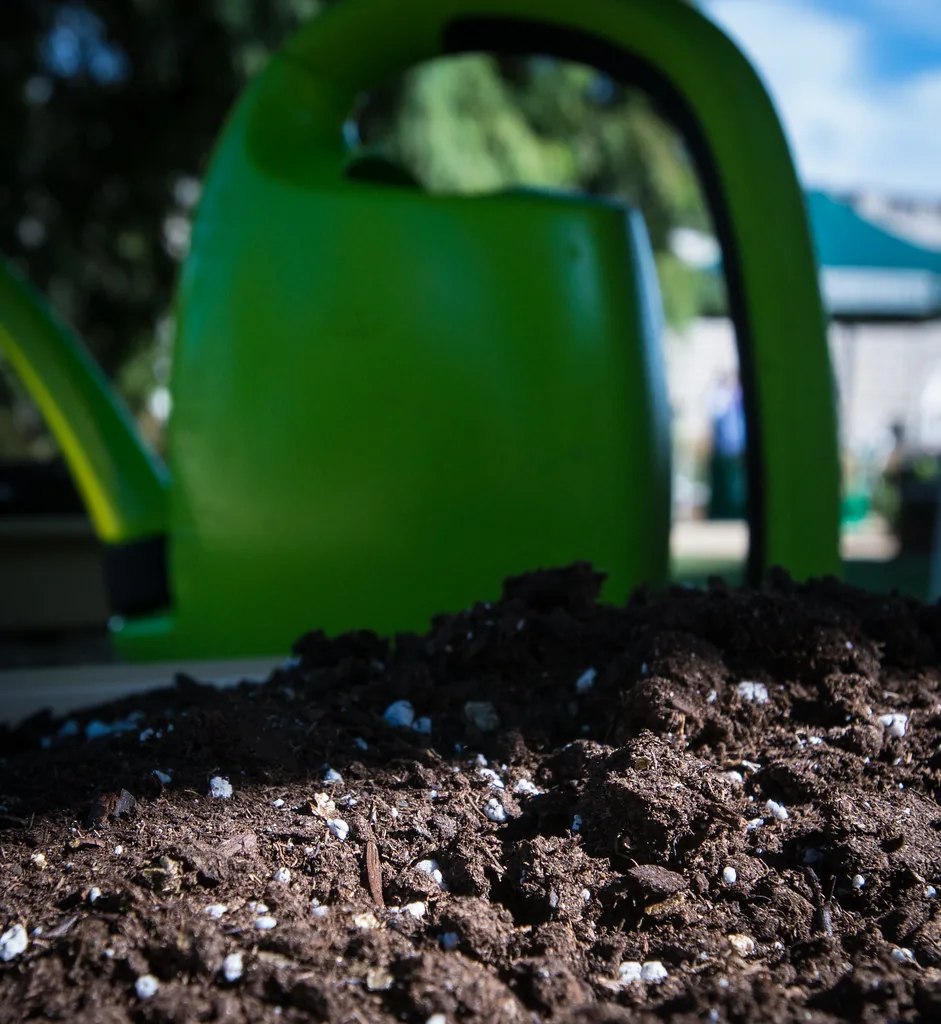
If you’re making your own, our guide on how to build a compost pile walks through the greens-to-browns balance and how to tell when it’s ready. If you’re thinking about bagged mushroom compost, read our mushroom compost guide first, because it isn’t right for every plant.
How Much Compost to Add
Extension guides give slightly different numbers, but they fall in the same range. Oregon State University Extension recommends 1–3 inches of compost mixed into the top 6–8 inches of soil. NC State Extension suggests up to 3–4 inches for very poor sand when you first prepare a bed. After that, the goal is a steady top-up every year rather than one huge dose.
| Situation | How much | How |
|---|---|---|
| New vegetable bed in sandy soil | 1–3 in (2.5–7.5 cm); up to 3–4 in (7.5–10 cm) in very poor sand | Mix into the top 6–8 in (15–20 cm) |
| Established vegetable bed | About 1 in (2.5 cm) at least once a year | Spread on top and lightly fork in, or leave as a top layer |
| Around trees, shrubs and perennials | About 1 in (2.5 cm), then mulch | Spread on the surface only; don’t dig near roots |
| Lawn on sandy soil | A thin layer, no more than about 1/4 in (6 mm) | Rake it in so the grass blades still show |
How much compost do you need to buy?
One inch of compost over 100 square feet takes about 8.3 cubic feet, which is roughly a third of a cubic yard. In metric, a 2.5 cm layer needs about 25 liters per square meter. So a 4 × 8 ft (1.2 × 2.4 m) raised bed needs about 2.7 cubic feet (75 liters) for a 1-inch top-up, or about 8 cubic feet (225 liters) for a 3-inch starting dose. Check the volume printed on the bag before you buy; bulk compost by the cubic yard is usually better value for bigger gardens.
How to Apply Compost to Sandy Soil
- Clear the area. Pull weeds and remove old crop debris.
- Water the soil lightly first if it’s bone dry. Damp sand mixes more evenly and doesn’t blow around.
- Spread the compost evenly with a rake, using the depths in the table above.
- Mix it in once. For a new bed, turn it into the top 6–8 inches (15–20 cm) with a digging fork or one or two passes with a tiller. More tilling than that speeds up the breakdown of the very organic matter you’re adding.
- Water it in well, then mulch the surface once your plants are in.
In established beds, you don’t need to dig at all. A layer of compost on the surface works its way down as worms and soil life pull it in, and you avoid disturbing roots.
Watch: Improving sandy soil
Bootstrap Farmer covers ways to amend sand soil for growing in this short video.
When to Add Compost
The best times are in early spring, a few weeks before planting, and in fall after you clear summer crops. Fall applications have the whole winter to settle in, which suits colder regions (roughly USDA zones 3–7) where you plant after the last spring frost in April to June. In warm regions (zones 8–11), where you may grow through winter, add compost between crops instead, as University of Florida IFAS Extension recommends for Florida’s sandy soils.
Avoid digging compost into frozen or waterlogged ground. In the Southern Hemisphere, flip the calendar: spring prep falls around September to October, and fall prep around March to May.
How to Keep Organic Matter in Sandy Soil
Sandy soil is well aerated and warms fast, so soil life burns through organic matter quickly, especially in hot climates. That’s why one big dose of compost rarely fixes sand for good. These habits help it last:
- Mulch every bed. 2–3 inches (5–7.5 cm) of straw, shredded leaves or wood chips around (not touching) plants slows evaporation and slowly feeds the soil as it breaks down.
- Grow cover crops. NC State Extension suggests crimson clover, hairy vetch or mustard over winter, and buckwheat, cowpeas or pearl millet in summer. See our list of winter cover crops for gardens.
- Dig less. Every round of tilling adds air and speeds up decomposition.
- Keep the soil covered with plants or mulch year-round so it doesn’t bake or blow away.
- Leave grass clippings on sandy lawns instead of bagging them.
Pro tip: Sandy soil drains so fast that overhead sprinklers waste a lot of water. A soaker hose or drip line under the mulch delivers water slowly, right at the roots, so more of it stays where your plants can use it.
Fertilizer also behaves differently in sand. Because nutrients wash through quickly, smaller doses applied more often work better than one large feeding, and slow-release organic fertilizers help too. If you garden on heavy ground elsewhere, compare this with our guide to compost for clay soil, where the problem is the opposite.
Common Mistakes to Avoid
- Adding unfinished compost. Half-rotted material can tie up nitrogen while it finishes breaking down, and it may carry weed seeds.
- Using fresh manure. Fresh manure can burn roots and may carry pathogens. Compost it first.
- Doing it once and stopping. Sand loses organic matter quickly, so plan on yearly top-ups.
- Burying compost too deep. Most feeder roots are in the top 6–8 inches (15–20 cm), so that’s where it’s needed.
- Adding more sand or clay. Mixing in clay rarely works on a garden scale and can create a dense, concrete-like layer. Compost is the practical fix.
- Ignoring salts and pH. Some manure-based and mushroom composts are salty or alkaline. Get a soil test every few years so you know where you stand.
Watch for herbicide residues. Some persistent herbicides used on hay and pasture can survive composting and damage tomatoes, beans and other crops. Ask your supplier whether their compost or manure is tested, and avoid manure from animals fed on treated hay unless you know it’s clean.
Helpful gear for this guide
Handy picks that match the advice above.
Links go to Amazon. Prices and availability change, so check reviews and fit for your setup before buying.
Quick Reference
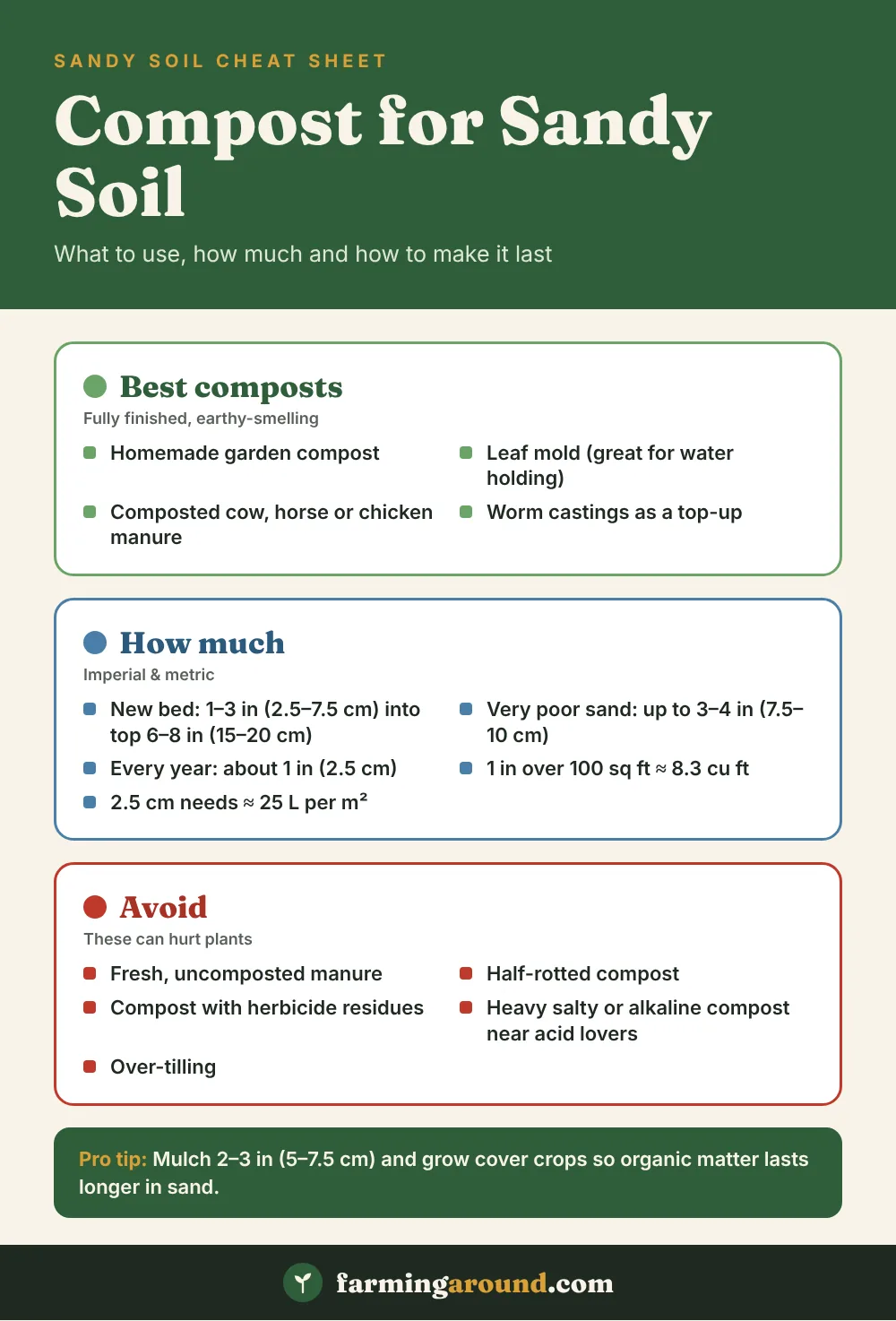
Keep this chart handy when you’re preparing beds:
FAQ
What is the best compost for sandy soil?
Any well-finished compost works. Homemade garden compost, leaf mold and composted manure are all excellent. Leaf mold is especially good at holding water, while manure-based composts add more nutrients.
How much compost should I add to sandy soil?
For a new bed, mix 1–3 inches (2.5–7.5 cm) into the top 6–8 inches (15–20 cm), or up to 3–4 inches in very poor sand. After that, add about an inch (2.5 cm) at least once a year.
Can you add too much compost to sandy soil?
Yes. Very heavy, repeated applications, especially of manure-based compost, can build up salts and nutrients such as phosphorus. Stick to yearly top-ups and test your soil every few years.
Is peat moss good for sandy soil?
It does hold water, but it adds almost no nutrients, makes soil more acidic and is a slow-renewing resource. Compost or leaf mold does the same job and feeds the soil too.
How long does it take to improve sandy soil?
You’ll notice better water holding in the first season. Building lasting organic matter takes several years of yearly compost, mulch and cover crops.
Should I use compost in raised beds on sandy ground?
Yes. Mix compost into the native sand below the bed as well as the fill, so roots that grow down find moisture and nutrients. Our guide to raised bed vegetable gardens covers soil mixes in detail.
Sources
- Oregon State University Extension: Add organic matter to improve most garden soils
- NC State Extension: Improving Sandy Soils
- UF/IFAS Extension: Florida Gardening 101, Soil Prep
For advice on your specific soil, contact your local extension office about a soil test.
This guide contains affiliate links. As an Amazon Associate, FarmingAround earns from qualifying purchases, at no extra cost to you.
Get free farming guides in your inbox
Practical guides, seasonal tips and market updates. No spam, unsubscribe anytime.
Subscribe free

3 Comments