

Last updated: October 2026
This guide contains affiliate links. As an Amazon Associate, FarmingAround earns from qualifying purchases, at no extra cost to you.
Chickens can eat a complete layer or grower feed as their main diet, plus most vegetables, fruits, cooked grains, herbs and insects as treats. Keep treats to about 10% of what they eat, and never feed avocado skins and pits, raw dried beans, chocolate, moldy food or salty leftovers.
This guide covers what chickens should eat every day, how many treats are safe, the best (and worst) foods from your kitchen and garden, what free-range birds find on their own, and a quick chart you can save.
Key takeaways
- Complete feed first: about 90% of the diet, roughly 1/4 lb (100–150 g) per laying hen per day.
- Treats stay under 10%: about 2 tablespoons per hen, or what the flock finishes in 15–20 minutes.
- Best treats: leafy greens, squash, cucumber, berries, melon, halved grapes, cooked rice or oats, and mealworms.
- Never feed avocado skin or pit, raw dried beans, green potato peels, rhubarb leaves, chocolate, moldy or very salty food.
In this guide
What Chickens Eat Every Day
Backyard chickens need a commercial complete feed as the base of their diet. It’s balanced for protein, energy, vitamins and minerals, which scraps and scratch grains can’t match on their own.
| Life stage | Feed | Protein (approx.) | Notes |
|---|---|---|---|
| Chicks, 0–6/8 weeks | Chick starter (medicated or unmedicated) | 18–20% | Crumbles sized for small beaks |
| Pullets, ~8 weeks to first egg | Grower or starter-grower | 16–18% | Low calcium; don’t switch to layer feed early |
| Laying hens | Layer pellets or crumbles | 16% | Extra calcium (about 3–4%) for strong shells |
| Mixed flocks, roosters, non-layers | All-flock feed | 16–20% | Offer oyster shell on the side for the layers |
A laying hen eats roughly 1/4 lb (100–150 g) of feed a day, about half a cup, a bit more in cold weather and less when she’s foraging on good pasture. Always follow the directions on your feed bag.
Water, Grit and Oyster Shell
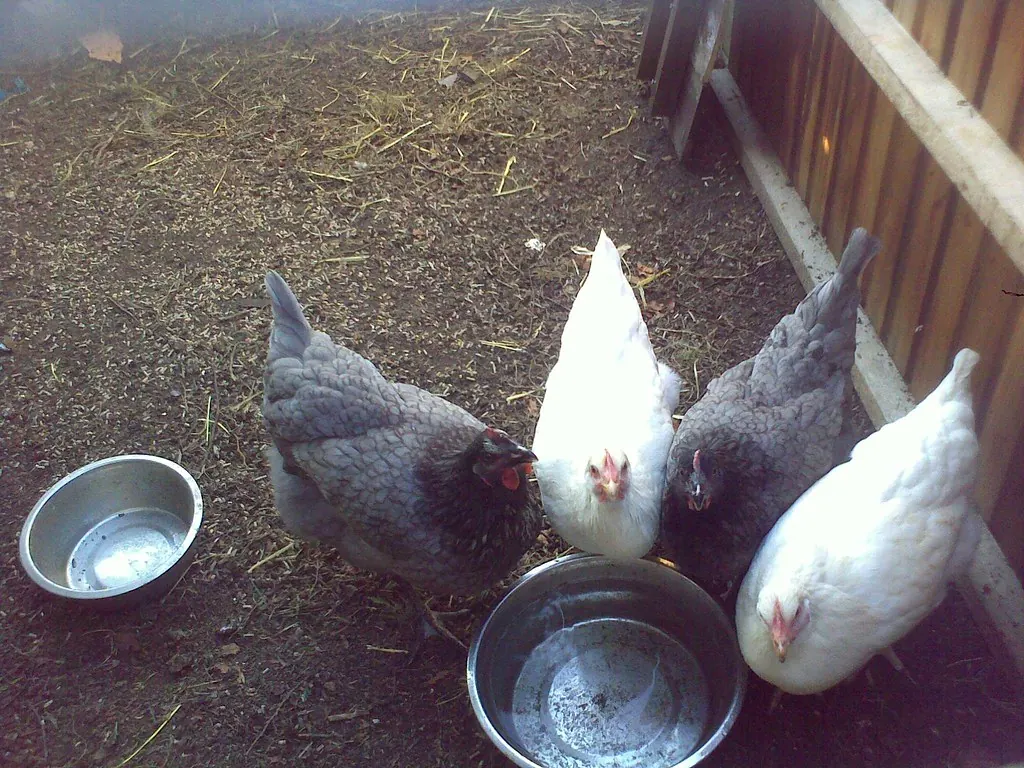
- Water: clean water at all times. Hens drink more than they eat, and egg laying drops fast without it.
- Grit: chickens grind food in their gizzard with small stones. Birds on feed alone don’t strictly need it, but offer insoluble grit free choice once they eat treats, grains or forage.
- Oyster shell: put crushed oyster shell in a separate dish for laying hens, so each bird takes what she needs.
How Many Treats Can Chickens Have?
Most feed companies and extension services use the 90/10 rule: at least 90% complete feed, no more than 10% treats, scraps and scratch. In practice that’s about 2 tablespoons of treats per hen per day, or as much as the flock cleans up in 15–20 minutes.
Fill hens up on treats and they eat less of their balanced feed. The usual results are fewer eggs, thin shells, and overweight birds.
Pro tip: Give treats in the afternoon, after hens have filled up on feed in the morning. A handful of scratch thrown just before dusk also brings the flock back to the coop at lock-up time.
Healthy Treats Chickens Can Eat
| Food | Safe? | How to serve |
|---|---|---|
| Leafy greens (lettuce, kale, chard, spinach) | Yes | Whole leaves or hung as a “cabbage piñata”; romaine beats iceberg |
| Pumpkin and winter squash | Yes | Halved, seeds and all |
| Cucumber and zucchini | Yes | Halved lengthwise; great in hot weather |
| Carrots, beets, broccoli | Yes | Grated, chopped or lightly cooked |
| Watermelon and cantaloupe | Yes | Chunks or rinds with some flesh left on |
| Berries | Yes | Whole, in small amounts (sugar) |
| Grapes | Yes | Cut in half or quarters to prevent choking |
| Apples | Yes (flesh) | Chopped, with the core and seeds removed |
| Bananas | Yes | Peeled and sliced, as an occasional treat |
| Cooked rice, pasta, oats | Yes | Plain, unsalted, in small amounts |
| Corn and scratch grains | Yes | A handful only; it’s low in protein |
| Mealworms, black soldier fly larvae | Yes | Dried or live; extra useful during molt |
| Cooked eggs | Yes | Scrambled or hard-boiled and chopped |
| Herbs (parsley, oregano, mint, thyme, basil) | Yes | Fresh sprigs or chopped into treats |
Watch: Chicken Treats to Feed and Avoid
Prefer video? This one from a long-running backyard chicken channel walks through popular treats.
Foods Chickens Should Never Eat
Toxic foods: Chickens will peck at almost anything, so don’t rely on them to avoid what’s bad for them. Keep the foods below out of the run and the compost pile they can reach.
| Food | Why it’s a problem |
|---|---|
| Avocado skin and pit | Contain persin, which is toxic to birds |
| Raw or undercooked dried beans | Contain hemagglutinin (a lectin); cook beans fully or skip them |
| Green potato peels, green tomatoes, potato and tomato leaves | Contain solanine |
| Rhubarb leaves | High in oxalic acid and anthraquinones |
| Chocolate, coffee grounds, tea | Theobromine and caffeine are toxic to poultry |
| Moldy or rotten food | Molds can produce mycotoxins |
| Salty, sugary or greasy leftovers | Excess salt and fat cause health problems |
| Apple seeds and fruit pits | Contain cyanogenic compounds; remove before feeding |
| Onions and garlic in quantity | Can flavor eggs; large amounts of onion are best avoided |
| Lawn clippings sprayed with pesticide | Chemical residues |
Many garden and ornamental plants are also harmful, including azalea, rhododendron, oleander, sago palm, castor bean, jimsonweed and milkweed. If your hens free-range, check what grows along fences and borders.
What Free-Range Chickens Eat
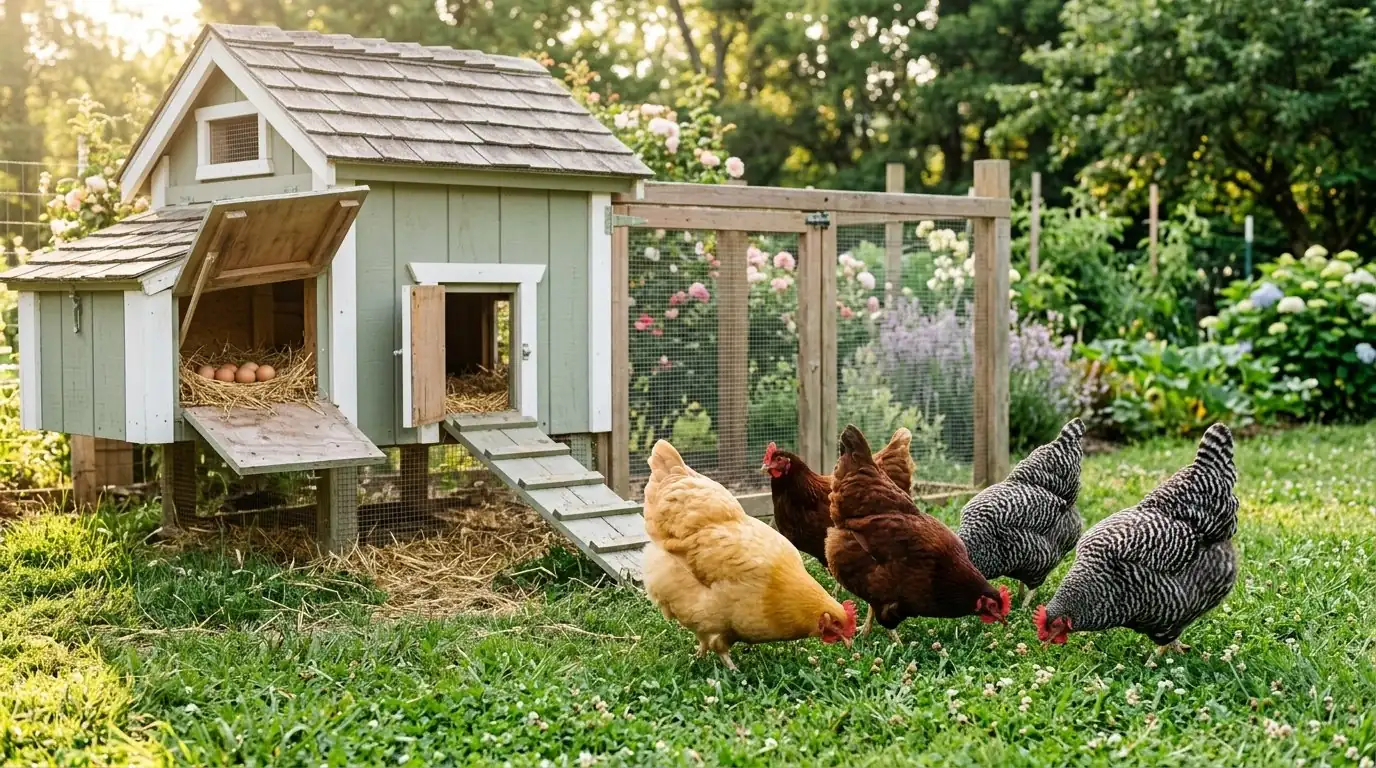
Let out on grass, chickens forage for clover, grass tips, dandelions, chickweed and other weeds, plus seeds, worms, beetles, grasshoppers and grubs. Forage is great for yolk color and boredom, but it doesn’t replace feed. Keep a feeder available so laying hens get enough protein and calcium.
During spring and autumn migration, feed and water your flock under cover so wild birds can’t share it. Our guide to protecting backyard chickens from bird flu explains why.
Can Chickens Eat Kitchen Scraps?
In the US, Canada and many other countries, backyard keepers commonly feed fruit and vegetable trimmings as treats. Rules aren’t the same everywhere, though:
- UK: it’s illegal to feed catering waste, kitchen scraps, meat or meat products to farmed animals, and that includes backyard hens kept as pets. Check current Defra/APHA guidance before feeding anything other than poultry feed.
- Elsewhere: check your national and state or provincial rules, especially for anything containing meat.
Whatever the flock doesn’t eat in 20 minutes, remove it so it doesn’t spoil or draw rats. Peels and trimmings they won’t eat can go straight into a compost pile.
What Can Baby Chicks Eat?
Chicks should eat chick starter only for their first couple of weeks, with fresh water they can’t drown in. After that, you can offer tiny amounts of soft treats like finely chopped greens, scrambled egg or a few mealworms. Give chick-sized grit as soon as they eat anything besides starter. Starting from scratch? Our guide to raising chickens for beginners covers brooder setup step by step.
Quick Reference: What Chickens Can Eat
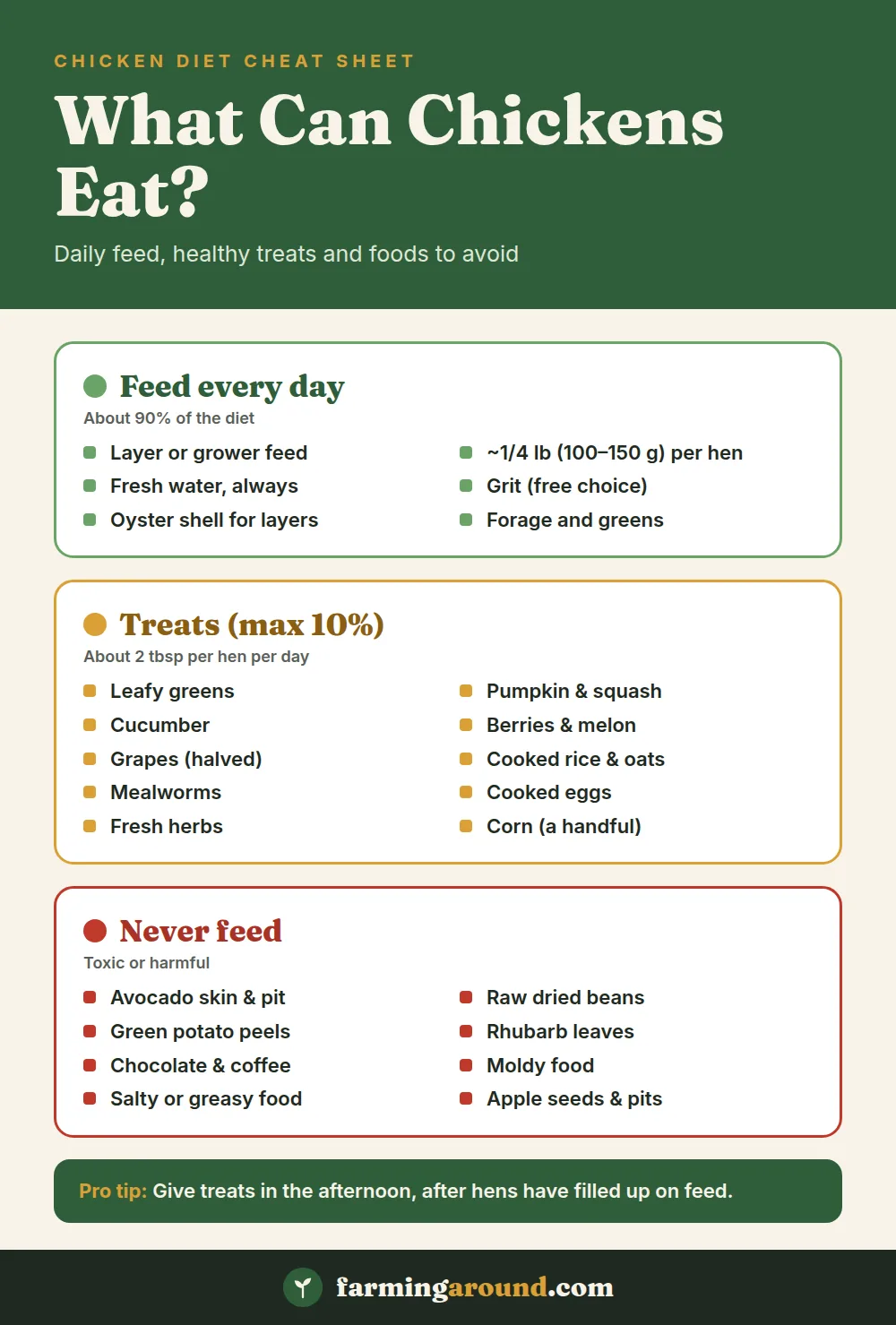
| Feed daily | Treat (≤10%) | Never feed |
|---|---|---|
| Layer or grower feed, fresh water, grit, oyster shell (layers), forage | Greens, squash, cucumber, carrots, berries, melon, halved grapes, cooked rice or oats, corn, mealworms, cooked eggs, herbs | Avocado skin/pit, raw dried beans, green potato peels, rhubarb leaves, chocolate, coffee, moldy food, salty or greasy food |
Keeping ducks or turkeys too? See what ducks eat and what turkeys eat for their slightly different needs.
Helpful gear for this guide
Handy picks that match the advice above.
Links go to Amazon. Prices and availability change, so check reviews and fit for your setup before buying.
FAQ
What is the best thing to feed chickens?
A complete layer feed (or grower feed for young birds) is the best everyday food because it’s balanced. For treats, leafy greens, squash, berries and mealworms are healthy choices.
Can chickens eat bread?
Small amounts of plain bread won’t hurt, but it’s low in nutrition and easy to overdo. Never feed moldy bread.
Can chickens eat tomatoes?
Ripe tomatoes are fine in moderation. Keep the leaves, stems and unripe green fruit away from your flock because they contain solanine.
Can chickens eat rice?
Yes. Cooked rice and uncooked rice are both safe; the idea that dry rice swells and harms birds is a myth. Keep it a small treat.
Do chickens need scratch grains?
No. Scratch is a treat, not a feed. It’s mostly corn and low in protein, so feed only a small handful, and don’t mix it into their regular feed.
How much should I feed my chickens per day?
Plan on about 1/4 lb (100–150 g) of complete feed per hen per day, plus up to about 2 tablespoons of treats. Many keepers simply keep the feeder full and limit treats.
Sources
- Feeding the Laying Hen (Alabama Cooperative Extension System)
- Feeding Chickens for Egg Production in Small and Backyard Flocks (Poultry Extension)
- What Can Chickens Eat? (Purina Animal Nutrition)
- List of Forbidden Foods for Chickens (Ask Extension)
This guide is general information. For a sick bird or a special diet, talk to a poultry vet or your local extension office.

2 Comments