


Last updated: October 2026
Yes, ducks can eat peanuts in moderation, as long as they’re plain, unsalted, fresh and broken into small pieces. Peanuts are rich in protein and fat, so they make a good occasional treat, but they should never replace a complete waterfowl feed. Avoid salted, flavored, sugar-coated or moldy peanuts, and skip the shells.
The biggest hidden risk is mold. Peanuts can carry aflatoxins, and the Merck Veterinary Manual lists ducklings among the poultry most susceptible to aflatoxin poisoning. Below you’ll find the benefits, the risks, how much to feed and safer treat ideas.
Key takeaways
- Yes, in moderation: plain, unsalted peanuts are a safe occasional treat for adult ducks.
- Crush or chop them and always offer water nearby so ducks can swallow easily.
- Never feed moldy, salted, flavored or chocolate-coated peanuts. Ducklings are especially sensitive to aflatoxins from moldy nuts.
- Keep all treats to about 10% of the diet, with a complete waterfowl feed making up the rest.
In this guide
Can Ducks Eat Peanuts? The Short Answer
| Type of peanut | Safe for ducks? |
|---|---|
| Raw or dry-roasted, unsalted, shelled | Yes, in small, crushed amounts |
| Salted or seasoned peanuts | No, too much salt |
| Honey-roasted, candied or chocolate-coated | No; chocolate is toxic to birds and sugar adds nothing useful |
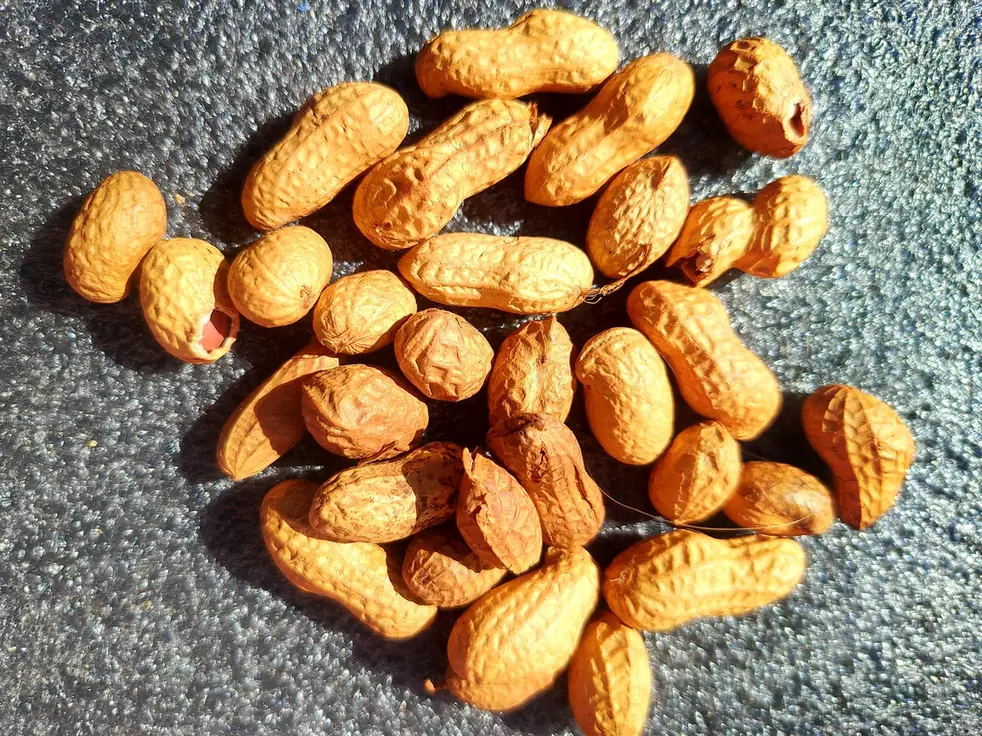
| Peanuts in the shell | Best avoided; shells are hard to digest and can harbor mold |
| Moldy, damp or rancid peanuts | Never; aflatoxin risk |
| Plain, natural peanut butter | Only a tiny amount, thinned or mixed into feed; it’s sticky and very fatty |
Benefits of Peanuts for Ducks
Peanuts are energy-dense. By weight, they’re roughly a quarter protein and about half fat, according to USDA nutrient data, plus fiber, vitamin E, niacin and minerals such as magnesium and phosphorus.
- Protein supports feather growth, especially during molting.
- Healthy fats provide concentrated energy in cold weather.
- Niacin and vitamin E are useful nutrients for waterfowl, though a complete waterfowl feed should already supply what ducks need.
- Training treats: ducks love them, which makes a few pieces handy for calling the flock back to the pen at night.
Because they’re so rich, the benefits come from small amounts. A few peanuts go a long way.
Risks of Feeding Peanuts to Ducks
Aflatoxins and mold
Peanuts and corn are well-known sources of aflatoxins, which are produced by Aspergillus molds on crops stored in warm, damp conditions. The Merck Veterinary Manual lists ducklings, turkeys and pheasants as highly susceptible to aflatoxicosis, which damages the liver and causes poor growth, reduced egg production and, in serious cases, death.
Never feed moldy, shriveled, discolored or musty-smelling peanuts. Buy peanuts sold for human consumption or labeled as tested for aflatoxins, store them in a cool, dry, airtight container, and throw out any that look or smell off. Don’t feed peanuts to ducklings at all.
Choking
Ducks swallow food whole. Whole peanuts can be a choking risk, especially for smaller breeds. Crush or chop them and offer water at the same time, since ducks use water to help wash food down.
Salt, sugar and coatings
Salted bar peanuts, seasoned nuts and sweet coatings add salt and sugar ducks don’t need. Chocolate-coated peanuts are dangerous because chocolate contains theobromine, which is toxic to birds.
Too much fat
Overdoing high-fat treats can lead to overweight ducks and an unbalanced diet. Ducks that fill up on treats eat less of their balanced feed.
How Much and How Often
Follow the standard poultry guideline: treats of all kinds should make up no more than about 10% of a duck’s daily diet. For peanuts specifically, keep it small:
- Adult duck: a small pinch of crushed peanuts, roughly a teaspoon (about 5 g), as an occasional treat.
- How often: once or twice a week is plenty, rather than every day.
- Ducklings: skip peanuts. Stick to a duckling or waterfowl starter feed.
- Laying ducks: keep treats small so layer feed still supplies the calcium and protein they need.
For the full picture of a healthy diet, see our main guide on what ducks eat.
How to Prepare Peanuts for Ducks
- Choose plain peanuts: raw or dry-roasted, unsalted and unflavored.
- Check every batch for mold, discoloration or a musty smell.
- Remove the shells.
- Crush or chop into small pieces, about the size of a pea or smaller.
- Serve with water. Scatter pieces in a shallow pan of water or sprinkle them on top of regular feed, with a waterer close by.
- Clear away leftovers the same day so they don’t get wet and moldy.
Pro tip: Ducks love foraging in water. Toss a few crushed peanuts or peas into a shallow tub of water and let them dabble for them. It slows them down and makes swallowing easier.
Watch: How and What to Feed Ducks
The Happy Chicken Coop covers the basics of feeding ducks in this video.
Safer Treat Alternatives
If you want treats you can offer more freely, these are lower in fat and easy for ducks to eat:
| Treat | Why ducks like it | How to serve |
|---|---|---|
| Peas (thawed frozen) | Bite-sized and loved by most ducks | Float them in a shallow pan of water |
| Leafy greens (lettuce, kale, chard) | Low-calorie and hydrating | Chop or tear into small pieces |
| Dried mealworms or soldier fly larvae | High protein, great during molt | A small handful, scattered |
| Cucumber, zucchini, melon | Juicy and refreshing in hot weather | Chopped or halved |
| Cooked plain rice or oats | Easy energy | Small amounts, unsalted |
| Sweetcorn | Popular and easy to eat | Thawed kernels in moderation |
Keeping a mixed flock? Our guides on what chickens can eat and what turkeys eat cover treats for other poultry.
What About Wild Ducks?
It’s better not to feed wild ducks. Regular handouts can crowd birds together, spread disease, pollute ponds and make ducks dependent on people, and many parks don’t allow it. If you do feed wild ducks where it’s permitted, offer small amounts of plain, crushed peanuts, peas or chopped greens rather than bread, and don’t leave food lying in the water.
Helpful gear for this guide
Handy picks that match the advice above.
Links go to Amazon. Prices and availability change, so check reviews and fit for your setup before buying.
At a Glance
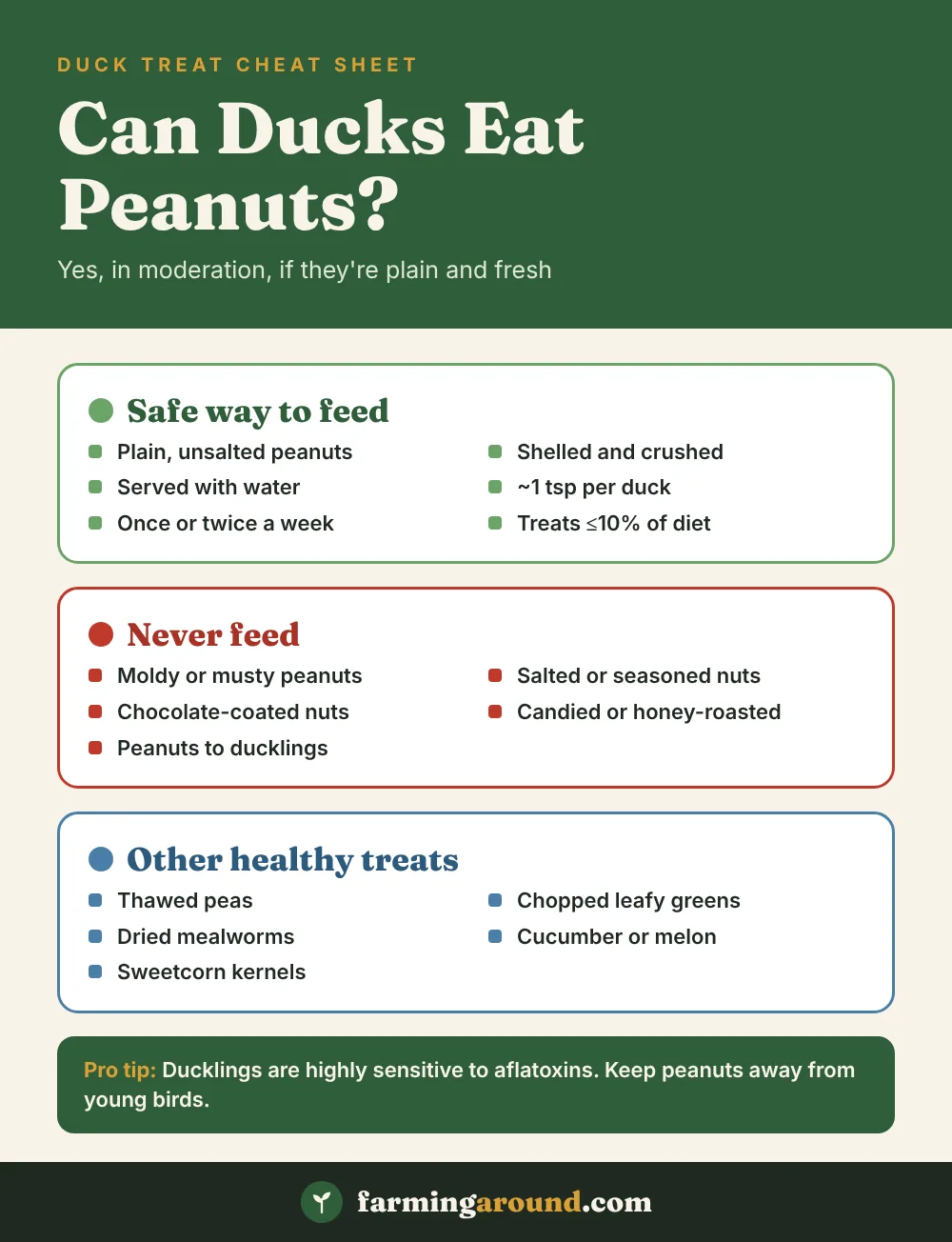
Save this chart for quick reference:
FAQ
Can ducks eat peanuts in the shell?
It’s best not to. Shells are tough to digest, add little nutrition and can harbor mold. Shell the peanuts and crush them first.
Can ducklings eat peanuts?
No. Ducklings are among the poultry most sensitive to aflatoxins, and whole or large pieces are a choking risk. Feed them a duckling or waterfowl starter instead.
Can ducks eat salted peanuts?
No. Salted peanuts contain more salt than ducks should have. Only offer plain, unsalted peanuts.
Can ducks eat peanut butter?
Only a tiny amount of plain, natural peanut butter with no added salt, sugar or sweeteners. It’s thick and sticky, so mix a little into feed rather than offering a spoonful.
Are raw or roasted peanuts better for ducks?
Either is fine if they’re plain, unsalted and fresh. Dry-roasted peanuts without oil or salt are a convenient choice. Freshness and freedom from mold matter more than whether they’re raw or roasted.
What nuts should ducks avoid?
Avoid salted, flavored or moldy nuts of any kind, and anything coated in chocolate. Large whole nuts should always be chopped before feeding.
Sources
Every flock is different. For questions about your ducks’ diet or health, consult a vet or your local extension office.
This guide contains affiliate links. As an Amazon Associate, FarmingAround earns from qualifying purchases, at no extra cost to you.
Get free farming guides in your inbox
Practical guides, seasonal tips and market updates. No spam, unsubscribe anytime.
Subscribe free

One Comment