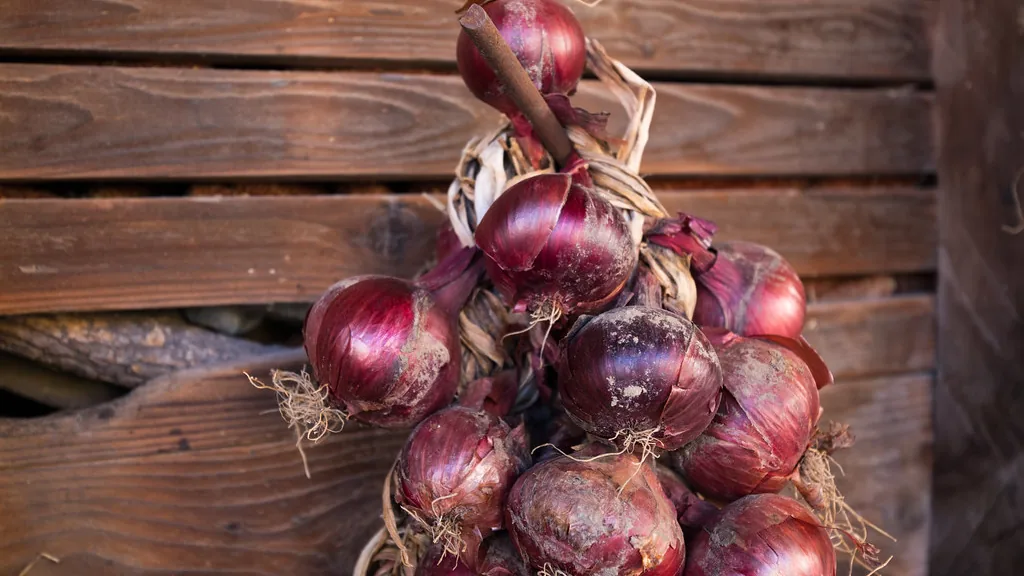

Last updated: October 2026
This guide contains affiliate links. As an Amazon Associate, FarmingAround earns from qualifying purchases, at no extra cost to you.
Store whole, dry onions in a cool, dark, well-ventilated place in mesh bags, baskets or braids, not in plastic and not in the fridge. The ideal is close to 32–40°F (0–4°C) with moderate humidity of 65–70%, where good storage varieties keep for several months. Refrigerate onions only once they’re cut or peeled, and freeze chopped onions for longer keeping.
Below you’ll find each method step by step: pantry and cellar storage, the fridge, the freezer, drying and safe canning, plus how to cure homegrown onions so they last and how to tell when an onion has gone bad.
Key takeaways
- Whole onions: cool, dark, dry and airy, ideally 32–40°F (0–4°C) at 65–70% humidity, in mesh bags, baskets or braids.
- Cut onions: sealed in an airtight container in the fridge and used within about a week.
- Frozen onions: no blanching needed; best used within about 8 months, in cooked dishes.
- Pick keepers: pungent storage onions last months, while sweet onions last only a few weeks.
In this guide
Onion Storage Methods Compared
| Method | How long it keeps | Best for |
|---|---|---|
| Cool, dark, airy storage (32–40°F / 0–4°C) | Several months for good keepers | Cured homegrown onions and bulk buys |
| Kitchen counter or pantry, room temperature | A few weeks | Onions you’ll use soon |
| Fridge, cut or peeled, airtight | About a week | Leftover halves and prepped onion |
| Freezer, chopped | Best within about 8 months | Soups, stews, sauces and casseroles |
| Dried (dehydrated) | Many months in an airtight jar | Onion flakes and homemade onion powder |
| Pickled or pressure canned | Shelf-stable when made with a tested recipe | Relishes, pickled onions, pantry stock |
Choose Onions That Store Well
Not all onions are built to last. Pungent yellow and red storage onions with thick, papery skins keep for months, while sweet, mild onions have more water and thinner skins and last only a few weeks. Iowa State University Extension lists ‘Copra’ and ‘Stuttgarter’ as good keepers and sweet types such as ‘Walla Walla’ and ‘Candy’ as poor keepers.
- Firm and heavy for their size, with no soft spots.
- Dry, tight necks. Thick or green necks mean the onion won’t store well, so use those first.
- Dry, papery skins with no dark powdery patches, mold or wet spots.
- No sprouts poking out of the top.
How to Cure Homegrown Onions
Curing dries the necks and outer skins so onions seal themselves for storage. Skip it and even good storage varieties can rot within weeks.
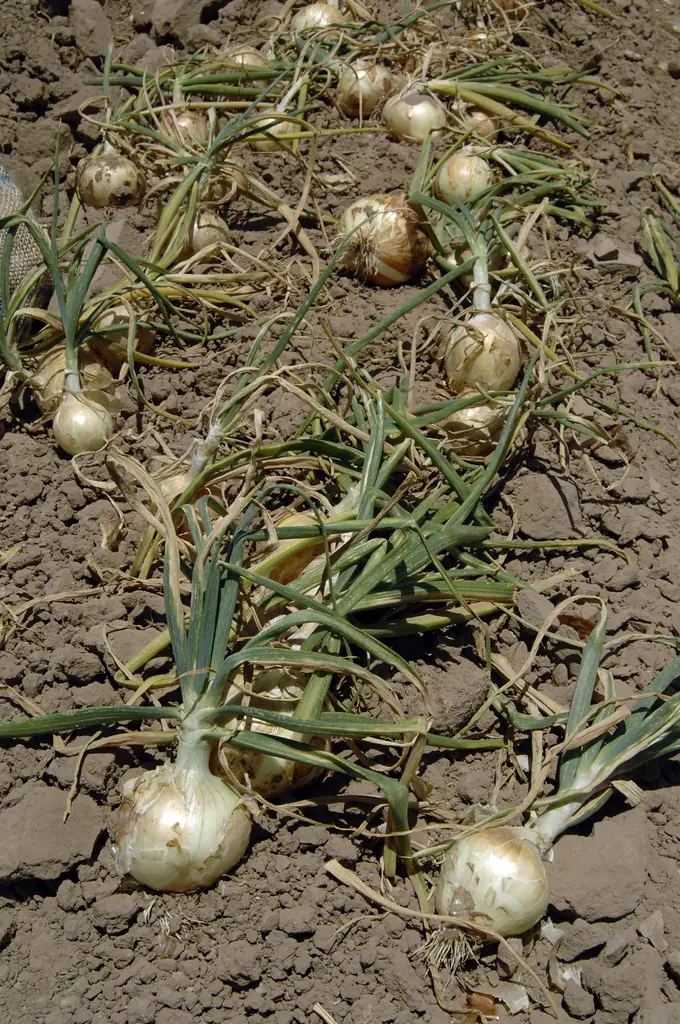
- Harvest when most tops have fallen over and begun to dry. Pull or dig the bulbs with the tops still attached. (See our guide to when to harvest vegetables for timing other crops.)
- Spread them in a single layer somewhere warm, dry and well ventilated, such as a shed, garage, covered porch or on screens out of direct sun.
- Cure for 2 to 4 weeks, until the necks are tight and dry and the outer skins rustle. UMass Extension notes skin color is best when curing temperatures are 75–90°F (24–32°C).
- Trim the tops to about 1 inch (2.5 cm) and the roots short, unless you plan to braid them.
- Sort as you go. Eat thick-necked, bruised or damaged bulbs first and store only the best.
Watch: How to harvest and store onions
This video from GrowVeg walks through harvesting and curing onions in the garden before storage.
How to Store Whole Onions Long Term
Iowa State University Extension recommends storing cured onions at 32–40°F (0–4°C) with 65–70% relative humidity, in a basement, cellar or garage. Move them out of an unheated garage before temperatures drop below freezing.
- Use breathable containers. Mesh bags, wire or wicker baskets, slatted crates or old nylon stockings all let air move around the bulbs. Never store whole onions in sealed plastic bags.
- Keep them dark. Light encourages sprouting and greening.
- Keep them dry. Damp air leads to mold and rot, which is also why whole storage onions don’t belong in the fridge’s humid crisper drawer.
- Store them apart from potatoes. Potatoes like cold and moist conditions, while onions like cold and dry, so they keep better separately.
- Check them every few weeks and remove any that soften or sprout before they affect the rest.
Braiding onions
If you leave the dry tops on, you can braid onions and hang them from a rafter or hook in a cool, airy spot. Braids keep onions separated so air can reach each bulb, and you simply snip one off when you need it.
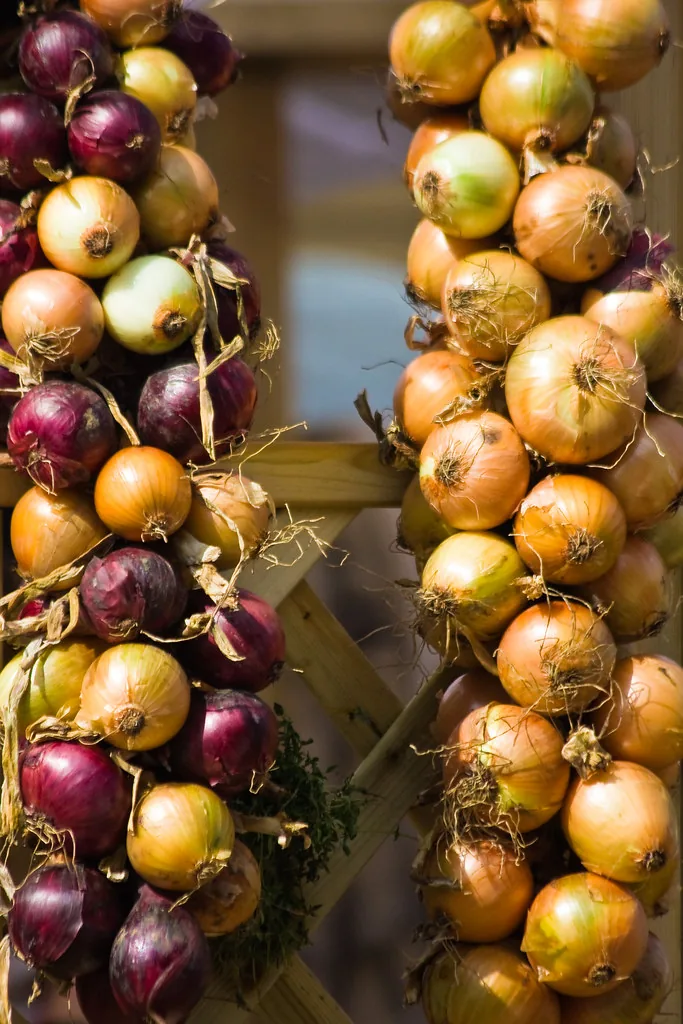
Pro tip: Hang an onion braid or mesh bag where you’ll see it every time you walk past. You’ll notice a soft or sprouting bulb early, before it spoils its neighbors.
No cellar? A cool closet, an unheated spare room or an insulated garage that stays above freezing often works. For other crops, our guide on how to store vegetables explains which ones prefer cold and moist versus cool and dry conditions.
How to Store Onions in the Fridge
The fridge is the right place for onions that have been cut, peeled or chopped.
- Wrap cut halves tightly or seal pieces in an airtight container. This keeps them from drying out and stops the smell spreading to other foods.
- Keep them at 40°F (4°C) or below.
- Use them within about a week. Throw them out if they turn slimy, moldy or smell off.
Sweet onions are the exception to the “no fridge for whole onions” rule. Because they spoil quickly at room temperature, many cooks keep them whole in the fridge, each wrapped in a paper towel so they stay dry.
How to Freeze Onions
Freezing is the easiest way to save a big harvest or a sale-price sack. The University of Nebraska–Lincoln Extension notes that onions don’t need blanching.
- Peel, rinse and chop or dice the onions into ¼–½ inch (6–12 mm) pieces.
- Spread them on a tray and freeze for about an hour so the pieces stay loose, or pack them straight into freezer bags and freeze them flat.
- Press out as much air as possible and seal. Double-bag or overwrap to contain the smell.
- Label and keep at 0°F (−18°C) or below. Use within about 8 months for the best quality.
Frozen onions soften when they thaw, so use them in cooked dishes such as soups, stews, sauces and casseroles, usually straight from frozen.
Drying, Pickling and Canning Onions
Drying: Penn State Extension recommends slicing peeled onions ⅛–¼ inch (3–6 mm) thick and drying them in a food dehydrator until brittle, which usually takes 3 to 9 hours. No blanching is needed. Store dried onion in airtight jars, or grind it into onion powder.
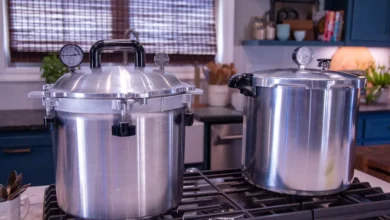
Canning: Onions are a low-acid food, so plain onions must be pressure canned using a tested recipe and processing time. Pickled onions and onion relish with enough vinegar can be processed in a boiling-water canner, but only when you follow a tested recipe exactly. Our pressure canning guide for beginners explains the basics.
Onions in oil need the fridge. Homemade onion or garlic in oil can support the bacteria that cause botulism at room temperature. Oregon State University Extension advises refrigerating vegetables in oil and using them within 4 days, or freezing them.
How to Tell If an Onion Has Gone Bad
- Soft, mushy or wet spots, especially around the neck.
- Mold: fuzzy patches or black, powdery mold under the outer skin. Discard onions with mold that goes past the outer dry layers.
- A sour or unpleasant smell rather than a sharp onion smell.
- Sprouting: sprouted onions are still safe to eat if they’re firm, but the texture and flavor decline. Use them quickly.
Onions and garlic store in very similar conditions. If you grow both, our guide to growing garlic covers curing and storing bulbs, and our ginger storage guide covers another kitchen staple that keeps well in the freezer.
Helpful gear for this guide
Handy picks that match the advice above.
Links go to Amazon. Prices and availability change, so check reviews and fit for your setup before buying.
Quick Reference
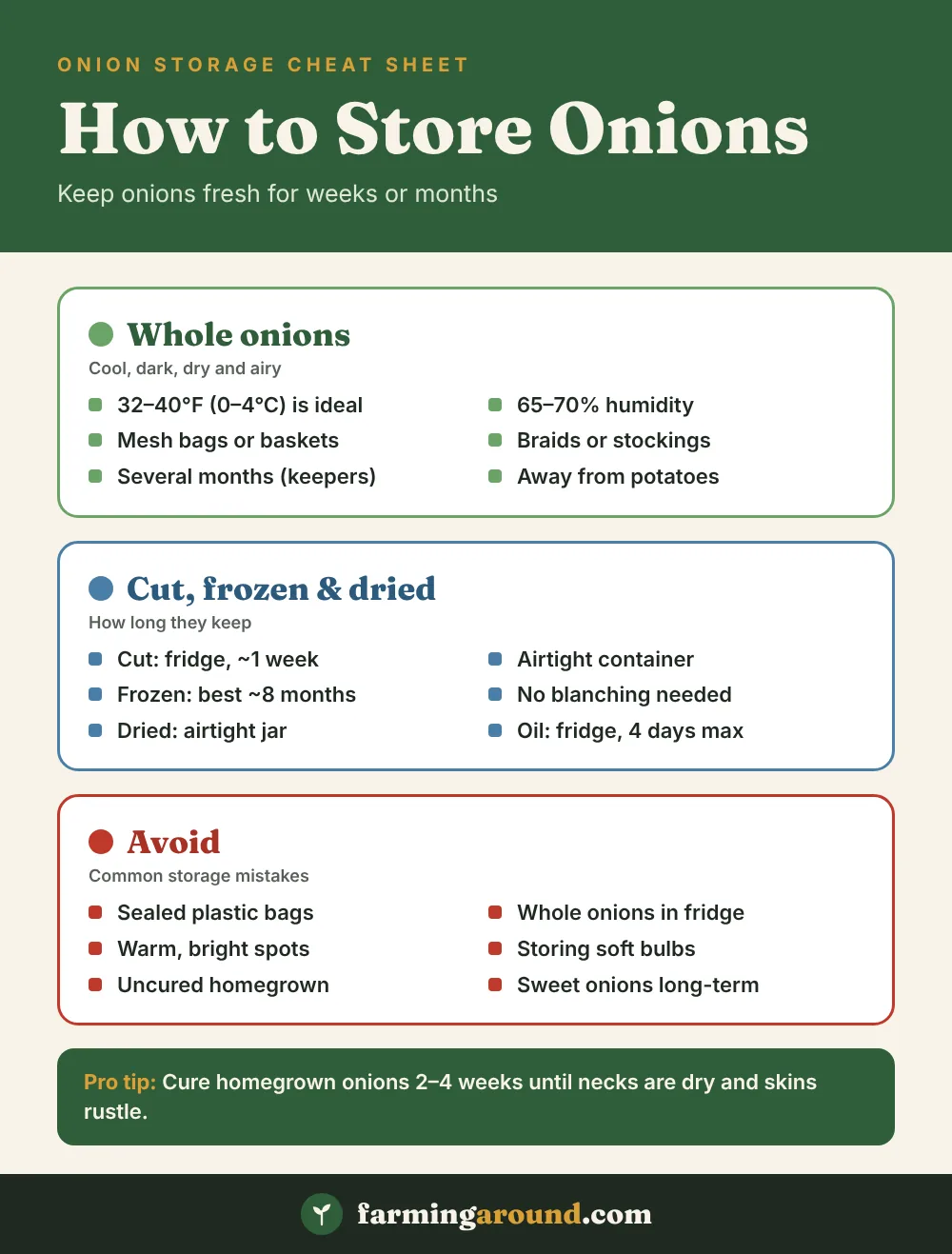
Save this chart for your next onion harvest or bulk buy:
FAQ
Should onions be stored in the fridge?
Not whole storage onions. The fridge is too humid and they can turn soft or moldy. Refrigerate cut or peeled onions and, if you like, whole sweet onions wrapped in paper towels.
How long do onions last?
Good storage varieties last several months in cool, dry, dark conditions. Sweet onions last a few weeks, cut onions about a week in the fridge, and frozen onions are best within about 8 months.
Can you store onions and potatoes together?
It’s better not to. Potatoes keep best cold and moist and onions cold and dry, so storing them separately helps both last longer.
Do you need to blanch onions before freezing?
No. Just peel, chop, bag and freeze. Use frozen onions in cooked dishes.
Why are my stored onions sprouting?
Usually because they’re too warm, too bright or reaching the end of their natural storage life. Cooler, darker storage slows sprouting, and sweet varieties sprout sooner than storage types.
Is it safe to eat an onion with black mold?
If the black powder is only on the outer dry skins, peel those away, cut off the affected area and rinse. If mold has spread into the fleshy layers or the onion is soft, throw it out.