

Last updated: October 2026
This guide contains affiliate links. As an Amazon Associate, FarmingAround earns from qualifying purchases, at no extra cost to you.
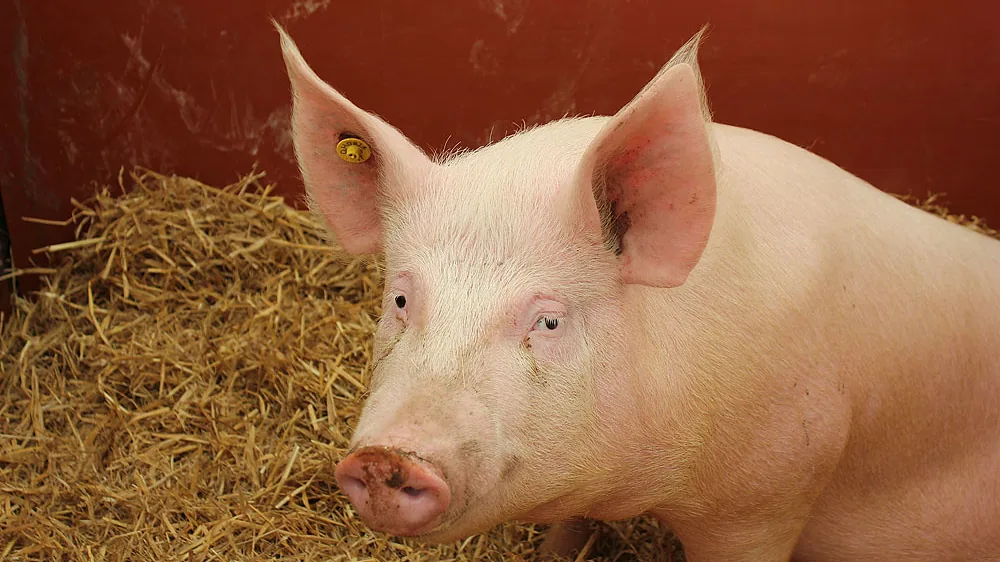
Show pigs are market hogs raised by youth exhibitors (and some adults) to compete at county fairs, state fairs and livestock shows. Most are crossbreds or purebreds from breeds like Duroc, Hampshire, Yorkshire and Berkshire, bought as young feeder pigs and fed to a finished weight of roughly 250–280 lb (113–127 kg) by show day. Judges look for a pig that’s heavily muscled, lean, structurally sound and moves well.
This profile covers the common show pig breeds, what judges reward, how to pick a prospect, and the feeding, housing and training a show pig needs, plus the honest pros and cons of a swine project.
Key takeaways
- Muscle comes first: a good show pig looks square and wide from behind, with a full ham.
- Most show pigs are crossbreds, which benefit from hybrid vigor and usually grow faster.
- Plan backwards from show day: a pig gaining about 1.7–2 lb a day needs months of steady growth to finish at weight.
- Daily handling matters: a calm, trained pig is far easier to drive in the ring.
In this guide
Show Pig Quick Facts
| Trait | Typical show pig |
|---|---|
| Purpose | Youth livestock projects (4-H, FFA, Young Farmers), market hog shows, breeding gilt shows |
| Common breeds | Duroc, Hampshire, Yorkshire, Berkshire, Chester White, Spotted, Poland China, Landrace and crossbreds |
| Sex | Barrows (castrated males) or gilts (young females) |
| Typical finished weight | About 250–280 lb (113–127 kg), depending on show rules |
| Expected gain | About 1.7–2.0 lb (0.8–0.9 kg) per day |
| Feed intake | About 5–6 lb (2.3–2.7 kg) per day when growing |
| Space needed | At least 16 sq ft (1.5 m²) per pig with a dry sleeping area |
| Temperament | Varies; regular handling makes most pigs calm and easy to drive |
History of Showing Pigs
Showing hogs grew out of agricultural fairs, where farmers compared breeding stock and market animals to improve their herds. Youth programs such as 4-H and FFA later made market hog projects one of the most popular ways for young people to learn animal husbandry, record keeping and responsibility.
Over time, the “ideal” show pig has followed what the pork industry wants: a lean, heavily muscled hog that grows efficiently. University of Florida Extension describes an industry target of about 270 lb by 156 days of age, with a feed efficiency of 2.4 lb of feed per lb of live weight, around 0.70 in (1.8 cm) of backfat and a 6.5 sq in (42 cm²) loin eye. Show judges reward pigs that come close to that picture.
Show Pig Breeds and Appearance
Many shows have separate classes for purebreds and crossbreds, so knowing the breeds helps you choose. Kansas State University’s swine project guide describes the main breeds like this:
| Breed | Color and ears | Known for |
|---|---|---|
| Duroc | Red, drooping ears | Excellent terminal sire breed |
| Hampshire | Black with a white belt, erect ears | Terminal sire breed, lean and muscular |
| Yorkshire | White, erect ears | Highly prolific maternal breed |
| Landrace | White, drooping ears | Large litters |
| Berkshire | Black with six white points, erect ears | Meat quality |
| Chester White | White, drooping ears | Durable, prolific maternal breed |
| Poland China | Black with six white points, drooping ears | Big-framed, long-bodied, muscular |
| Spotted | Black and white spotted | Growth and carcass quality |
Crossbreds, from two or more breeds, make up most market hog classes. UF Extension notes that crossbreds bred from purebred parents often have an edge for lean growth thanks to hybrid vigor, so purebreds can be at a disadvantage when shows divide classes only by weight.
Temperament and Handling
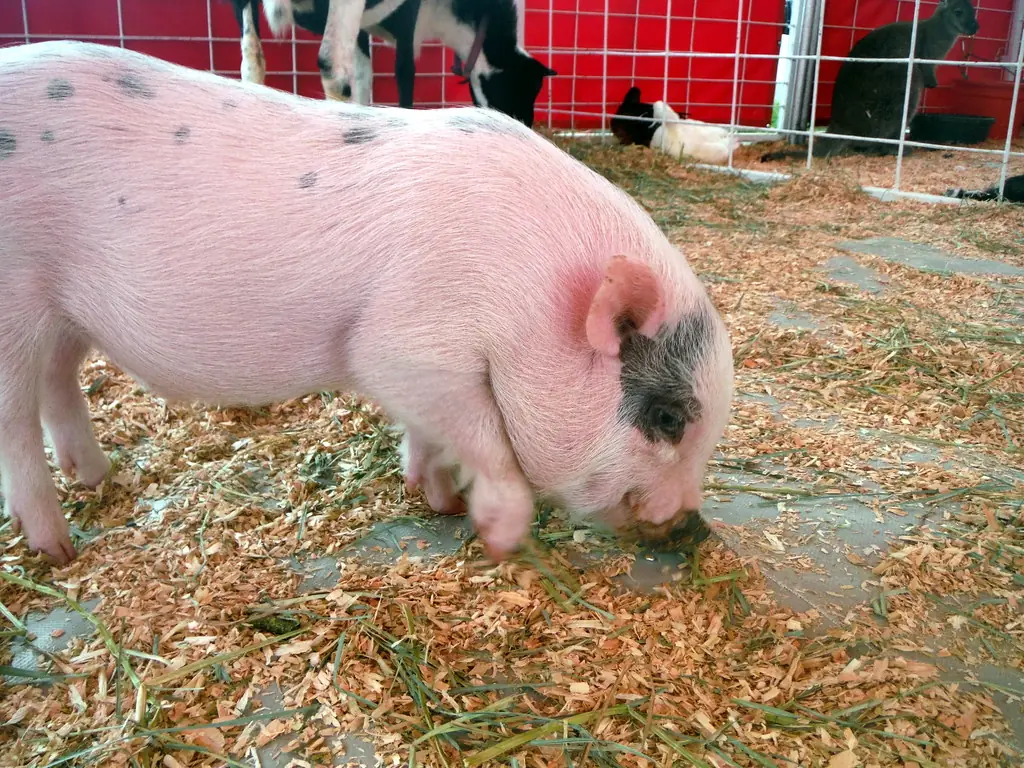
A pig’s personality depends a lot on how much time you spend with it. Kansas State recommends spending the first 30 days building trust by feeding, washing and brushing your pig. Pigs that are handled daily learn to accept a person walking beside them, which is exactly what you need in the show ring.
- Use the same driving tool (show stick or whip) at home that you’ll use at the show.
- Practice with obstacles so the pig learns to move around other pigs and people.
- Never strike the pig hard. Light taps guide; hitting makes pigs nervous and gets you marked down.
- Keep your pig off the fence and about 10 ft (3 m) from the judge so it can be seen.
Watch: Selecting a Show Pig
In this video from the Oklahoma Pork Council, a show pig breeder talks through how she selects show prospects.
How to Choose a Show Pig
UF Extension’s guide to selecting pigs for youth shows ranks traits in roughly this order:
- Muscle. The most important trait. A heavily muscled pig looks square from behind, with a deep groove down its top and a full hip and ham. A light-muscled pig looks like an upside-down “V”.
- Growth and frame. Very small or very large frames tend to grow slower than medium frames. Rule out pigs with ruptures (hernias) or a humped back.
- Leanness. A pig carrying noticeable fat at under 3 months and under 90 lb (41 kg) is likely to finish too fat.
- Soundness and design. Look for a level topline when walking, head held up, clean joints and feet set squarely under each corner.
- Health. Avoid pigs that cough, scratch or look unthrifty, and ask about vaccinations and parasite control.
Barrow or gilt?
UF Extension notes that barrows generally grow faster, while gilts tend to stay lean to heavier weights. Either can win; choose based on your timeline and your show’s classes.
Working out purchase weight
Work backwards from your show date: subtract the expected gain (days on feed × daily gain) from the target weight. For example, 100 days × 2.0 lb a day = 200 lb of gain, so a pig aimed at 270 lb should weigh about 70 lb when you buy it. UF suggests using a conservative daily gain, about 1.7 lb (0.8 kg), because slowing a pig down is easier than speeding it up.
Pro tip: Ask the breeder for the pig’s farrowing date, current weight and, if possible, to see the sow or boar. Buying directly from a reputable producer is lower risk than buying at a sale where pigs mix with animals from many farms.
Feeding and Care
Feeding
Kansas State’s swine project guide recommends a diet with 1.25–1.35% total lysine from about 50 to 150 lb (23–68 kg), dropping to about 0.90–1.0% lysine from 150 lb to show day. Growing pigs typically gain 1.7–2.0 lb a day and eat 5–6 lb of feed a day. At a 3:1 feed-to-gain ratio, a pig started at 50 lb needs roughly 600 lb (272 kg) of feed to reach 250 lb.
- Provide fresh feed and clean water at all times, and clean water containers weekly.
- Never restrict water to control weight; it quickly makes pigs look stale and is a welfare problem.
- If a pig is heading over the weight limit, hold it at or slightly above maintenance feeding, never below, and ask your extension agent or feed supplier for a holding plan.
- Check your show’s rules on feed additives. If you buy a prospect, ask whether it has been fed any additives such as ractopamine.
Housing
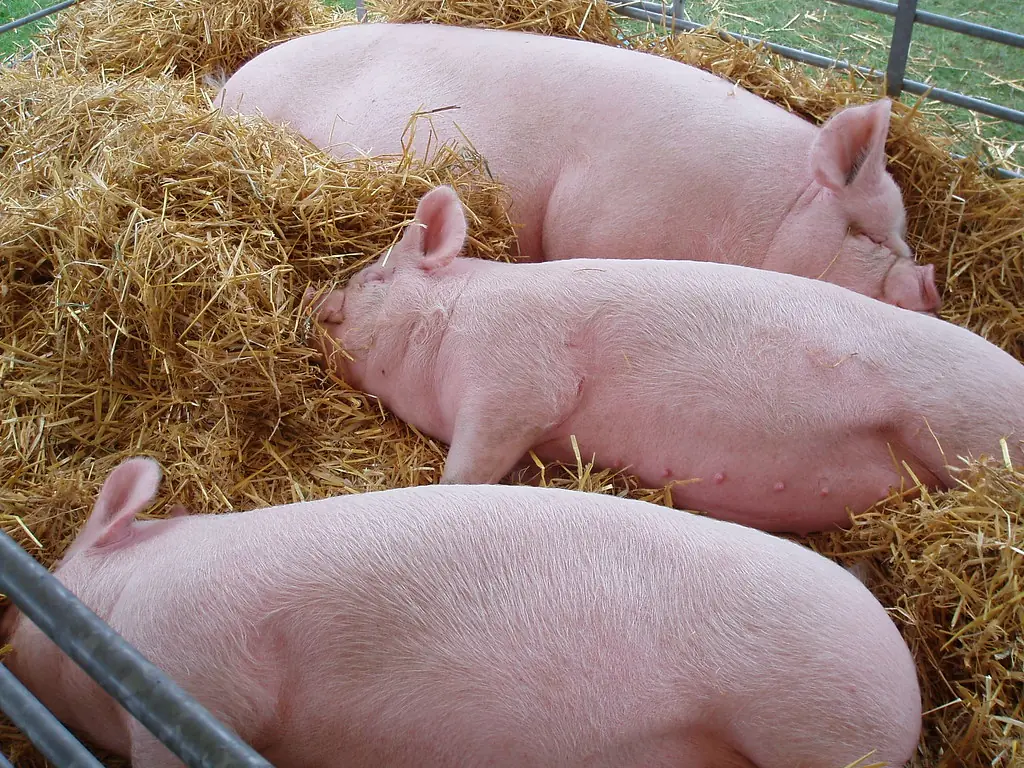
Give each pig at least 16 sq ft (1.5 m²) with a dry, draft-free sleeping area. In hot weather, dampened sand or shavings help pigs stay cool; heavy straw holds heat. White pigs sunburn easily, so give them shade. For more on pens, fencing and space, see our guide to raising pigs.
Health
Check your pig every day for coughing, a rough coat, lameness or a poor appetite. Work with a vet on vaccinations and a parasite control program, and keep records of every treatment and its withdrawal time, since show pigs are market animals that enter the food chain.
Washing and exercise
Wash your pig weekly with a mild soap and brush it front to back. Kansas State suggests starting exercise at about 150 lb, walking the pig one or two times a week for 10–15 minutes, and stopping if it’s lame, sick or injured.
Practice good fair hygiene. Pigs and people can pass influenza viruses to each other. At shows, wash your hands after handling pigs, don’t eat or drink in the barns, and keep pigs that look sick at home. Isolate pigs for a few weeks when they come back from a show before mixing them with others.
Pros and Cons of a Show Pig Project
| Pros | Cons |
|---|---|
| Short project, usually a few months from purchase to show | Daily feeding, cleaning and handling, with no days off |
| Teaches feeding, record keeping and animal care | Feed is the biggest cost, and quality prospects can be expensive |
| Pigs grow fast, so progress is easy to see | Hitting a weight window takes careful planning |
| Many fairs offer youth premium or market sales | Pigs are strong and can be hard to manage untrained |
| Fits a small space compared with cattle | Most market pigs go to slaughter, which can be hard for young exhibitors |
Who Show Pigs Suit
A show pig is a great first livestock project for a young person who can commit to daily chores for several months and has a family willing to help. It suits families with a small barn or shed and a little outdoor space. If you’re weighing pigs against other small-farm animals, our guide to the most profitable farm animals compares costs and returns, and our overview of homesteading on an acre shows how livestock fits a small property.
Show rules, entry deadlines and ID requirements vary by fair, state and country. In the UK, Australia, Canada and New Zealand, agricultural shows run their own pig classes with local registration and movement rules, so check with the show organizer or your local agricultural department before you buy.
Helpful gear for this guide
Handy picks that match the advice above.
Links go to Amazon. Prices and availability change, so check reviews and fit for your setup before buying.
At a Glance
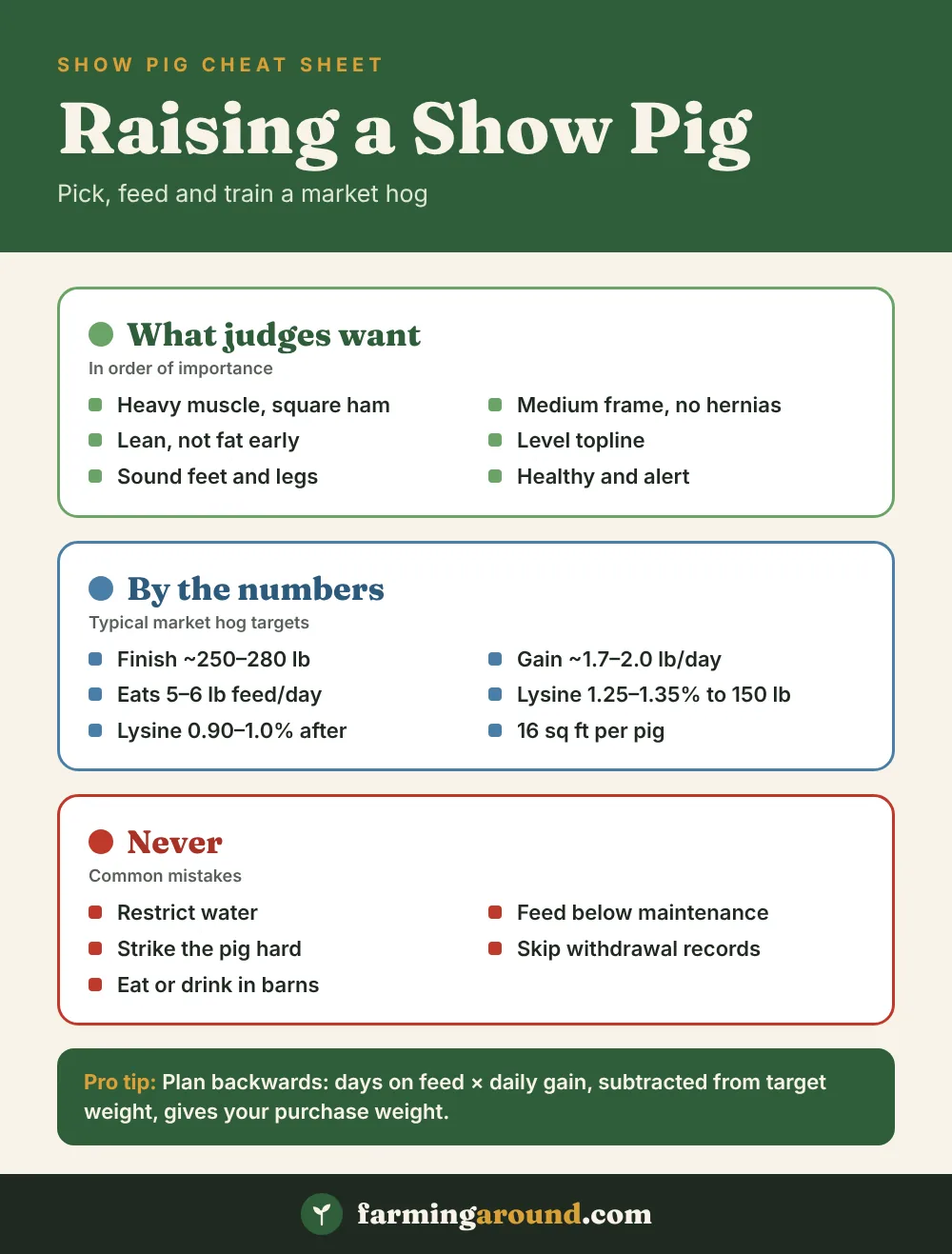
Keep this chart handy through your project:
FAQ
What breed is best for a show pig?
There’s no single best breed. Most market classes are won by well-muscled crossbreds, often with Duroc, Hampshire or Yorkshire breeding. If your show has breed classes, pick a purebred whose color and type match the breed standard.
How much should a show pig weigh?
Most market hogs finish around 250–280 lb (113–127 kg), but every show sets its own weight limits. Check your rules before you buy.
How long do you raise a show pig?
Typically a few months. Work backwards from show day using the pig’s current weight and an expected gain of about 1.7–2.0 lb a day.
Should I show a barrow or a gilt?
Barrows usually grow faster; gilts tend to stay leaner to heavier weights. Both are shown in market classes, and gilts can also go on to breeding.
How do you train a show pig?
Build trust first with daily feeding, washing and brushing, then walk it regularly with the same show stick or whip you’ll use in the ring. Practice keeping it moving, off the fence and in view of the judge.
Can show pigs be kept as pets afterwards?
Most market show pigs are sold for meat because they are bred to grow very large. If you want a pig long term, consider a breeding gilt project or a smaller breed instead.
Sources
- University of Florida IFAS Extension: Selecting Pigs for Youth Swine Shows
- Kansas State University: Swine Project Guide (PDF)
- CDC: Influenza in Swine and People
For feeding plans, vaccinations and health questions, consult a veterinarian or your local extension office.

One Comment