

Last updated: October 2026
This guide contains affiliate links. As an Amazon Associate, FarmingAround earns from qualifying purchases, at no extra cost to you.
The best way to store ginger root is unpeeled in the refrigerator, wrapped in a paper towel inside a plastic bag, where it keeps for about 2–3 weeks. For longer storage, freeze it whole or grated: frozen ginger stays good for up to about 6 months and you can grate it straight from the freezer. Leave ginger on the counter only if you’ll use it within a few days.
Below you’ll find each method step by step, how to choose ginger that lasts, safe ways to preserve it (and one popular method that isn’t safe at room temperature), plus how to store ginger you’ve grown yourself.
Key takeaways
- Fridge: unpeeled, wrapped in a paper towel in a plastic bag, for about 2–3 weeks.
- Freezer: whole or grated, for up to about 6 months; grate it while still frozen.
- Keep it whole and unpeeled until you need it. Cut surfaces dry out and spoil faster.
- Ginger in oil must be refrigerated and used within 4 days, or frozen, because of botulism risk.
In this guide
Ginger Storage Methods Compared
| Method | How long it keeps | Best for |
|---|---|---|
| Counter (cool, dry, out of sun) | A few days | Ginger you’ll use this week |
| Refrigerator, unpeeled and wrapped | About 2–3 weeks | Everyday cooking |
| Freezer, whole or grated | Up to about 6 months | Bulk buys and homegrown harvests |
| Dried slices or ground ginger | Several months in an airtight jar | Teas, baking and spice blends |
| Fresh ginger in oil | 4 days in the fridge only | Short-term flavoring, or freeze for longer |
How to Choose Ginger That Lasts
Storage starts at the store or the garden. Fresh, healthy ginger lasts much longer than ginger that’s already tired.
- Firm and heavy: it should feel solid with no soft or spongy spots.
- Smooth, tight skin: a little wrinkling is fine, but deep shriveling means it’s already drying out.
- Clean break: a good knob snaps crisply and smells sharp and spicy.
- No mold: skip pieces with fuzzy patches, especially around cut ends.
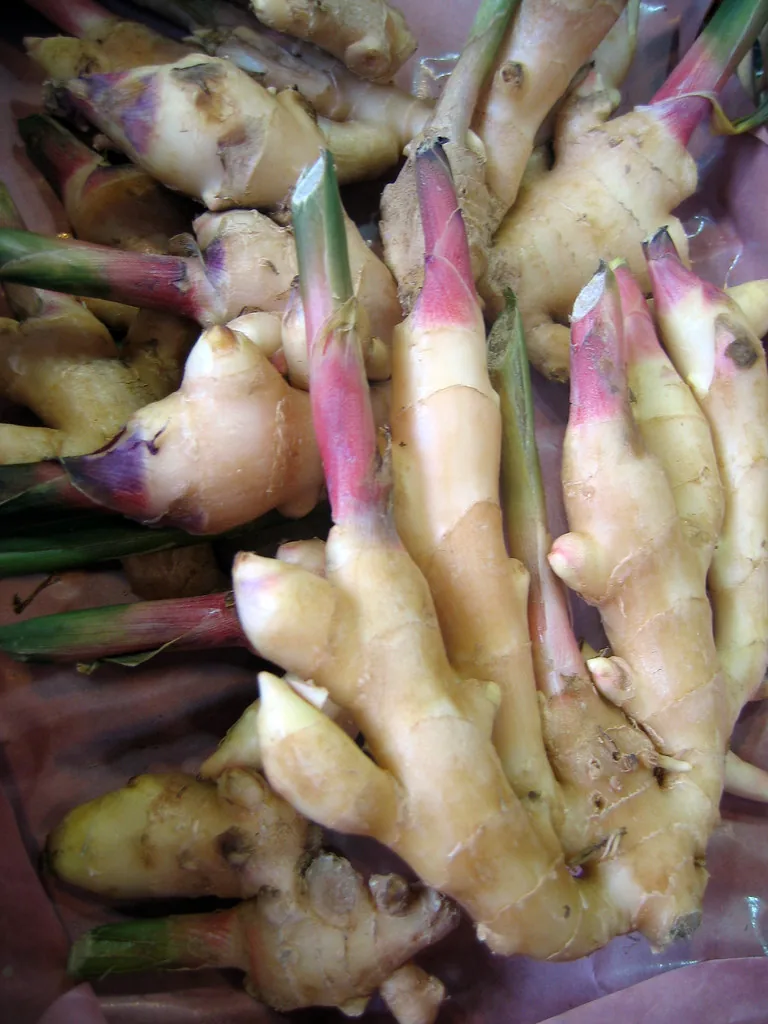
Mature ginger has tough, papery skin that you’ll want to peel before using. Young ginger, often sold at farmers’ markets in late summer and fall, has thin, pale skin with pink tips. It doesn’t need peeling, but it’s more perishable, so refrigerate or freeze it promptly.
Storing Ginger on the Counter
Whole, unpeeled ginger can sit at room temperature for a few days in a cool, dry spot away from direct sun. Keep it in an open bowl or basket rather than a sealed container so moisture doesn’t build up. Once it starts to wrinkle or soften, move it to the fridge or freezer.
Don’t store cut or peeled ginger on the counter. The exposed flesh dries out quickly and is more likely to mold.
How to Store Ginger in the Refrigerator
The USDA’s SNAP-Ed produce guide recommends wrapping ginger root in a paper towel and placing it in a plastic bag in the refrigerator, where it keeps for 2–3 weeks. Texas A&M AgriLife Extension also recommends keeping it unpeeled for up to 3 weeks in the fridge.
- Don’t wash it first. Extra moisture encourages mold. Brush off any dirt instead.
- Leave the skin on. The skin protects the flesh from drying out.
- Wrap it in a dry paper towel to absorb condensation.
- Seal it in a zip-top bag with most of the air pressed out.
- Store it in the crisper drawer and check it every few days. Replace the paper towel if it gets damp.
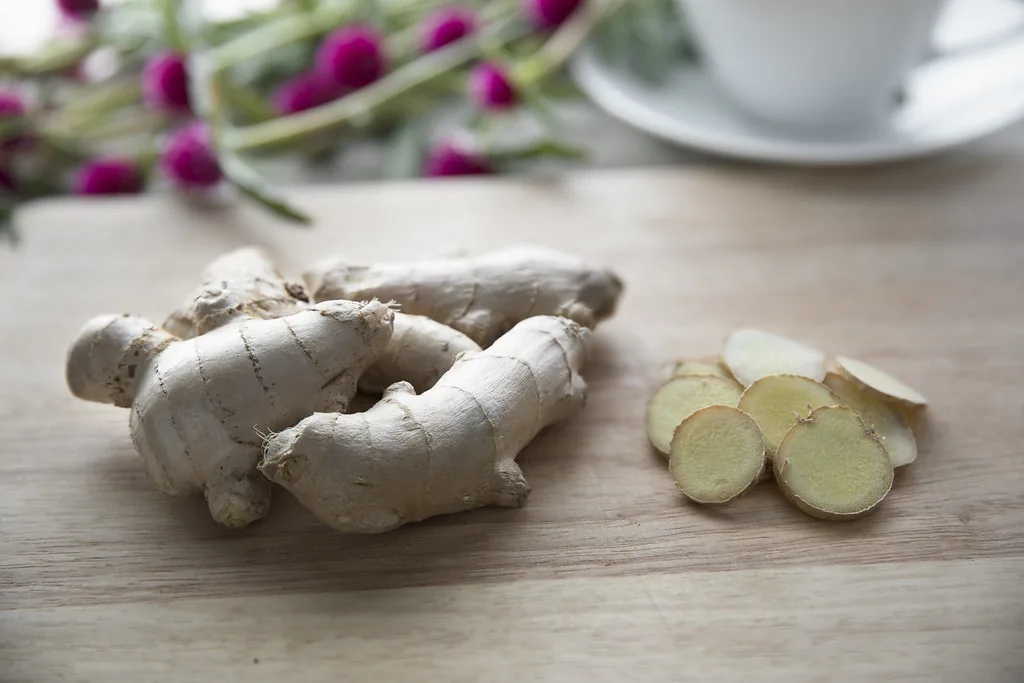
Pro tip: Break off just the piece you need and put the rest back whole. A small cut end dries and seals over, while a peeled or sliced root spoils much faster.
How to Freeze Ginger
Freezing is the easiest way to keep ginger for months. Texas A&M AgriLife Extension says frozen ginger keeps for up to 6 months. Its texture softens after thawing, so frozen ginger is best for cooking, baking, smoothies and tea rather than garnishes.
Freezing whole ginger
- Brush the root clean and pat it completely dry.
- Peel it or leave the skin on. Unpeeled is fine, since frozen skin grates away easily.
- Seal it in a freezer bag or airtight container, pressing out the air.
- Grate what you need straight from frozen with a fine grater, then return the rest to the freezer.
Freezing grated or minced ginger
- Peel the ginger and grate or mince it.
- Spoon it in 1-teaspoon (5 ml) or 1-tablespoon (15 ml) mounds onto a lined tray, or press it into an ice-cube tray.
- Freeze until solid, then move the portions into a labeled freezer bag.
- Drop a portion straight into stir-fries, soups and curries.
Watch: Preserving Ginger From the Farm
Waardenburg Family Farm shares how they preserve their homegrown ginger harvest in this video.
Other Long-Term Ways to Preserve Ginger
Drying and grinding
Slice peeled ginger thinly and evenly, then dry it in a food dehydrator on its vegetable setting until the pieces are brittle and snap cleanly. Store the dried slices in an airtight jar in a cool, dark cupboard, or grind them into powder. Dried ginger is stronger and more pungent than fresh, so use less.
Pickled ginger
Thin slices of young ginger can be made into refrigerator pickles with rice vinegar, sugar and salt. Keep them in the fridge in a clean, covered jar. If you want to can pickled ginger for shelf storage, only use a tested recipe from a source such as the National Center for Home Food Preservation; don’t adapt a refrigerator recipe for canning.
Candied ginger
Ginger simmered in sugar syrup and dried keeps well in an airtight container at room temperature. Store it somewhere cool and dry so it doesn’t turn sticky.
Don’t store ginger in oil at room temperature. Fresh low-acid vegetables and herbs in oil create the low-oxygen conditions where Clostridium botulinum can grow. Oregon State University Extension advises refrigerating homemade vegetable- or herb-in-oil mixtures and using them within 4 days, or freezing them for longer storage. Treat ginger in oil the same way.
Storing Homegrown Ginger
If you grow your own, Texas A&M AgriLife Extension says ginger can be harvested at any stage, but the best time is when the plant is 8–10 months old. Ginger is a tropical plant, so outside frost-free areas (roughly anywhere colder than USDA zone 9) gardeners usually grow it in pots and harvest before the first fall frost, usually October or November in the Northern Hemisphere. In the Southern Hemisphere, the same harvest window falls around April to May.
- Brush off soil and let the rhizomes surface-dry in the shade for a few hours before storing.
- Refrigerate or freeze your harvest using the methods above. Fresh-dug young ginger is tender and should be used or frozen within a couple of weeks.
- Save planting pieces separately. Choose plump pieces with visible buds and replant them promptly rather than storing them long-term. Keep them out of the fridge, as ginger is a warm-climate crop.
For storage tips on the rest of your harvest, see our main guide on how to store vegetables, and our guide to when to harvest vegetables for timing other crops.
How to Tell If Ginger Has Gone Bad
| What you see | What it means | What to do |
|---|---|---|
| Light wrinkling, still firm | Starting to dry out | Use soon, or freeze it now |
| Soft, mushy or wet spots | Rotting | Throw it away |
| Fuzzy white, green or black mold | Mold growth | Throw it away; don’t just cut off the moldy part of a soft root |
| Dry, fibrous flesh with little aroma | Old ginger that has lost flavor | Safe, but weak; use more or replace |
| Small green sprouts on firm ginger | Sprouting | Still usable, or plant it in a pot |
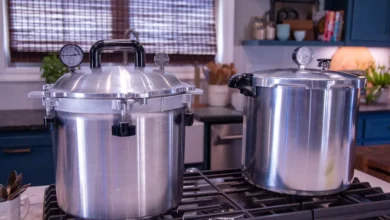
Ginger from the store keeps well alongside other kitchen staples. If you’re stocking up for winter, our guides on fall garden vegetables and pressure canning for beginners can help you plan the rest of your pantry.
Helpful gear for this guide
Handy picks that match the advice above.
Links go to Amazon. Prices and availability change, so check reviews and fit for your setup before buying.
Quick Reference
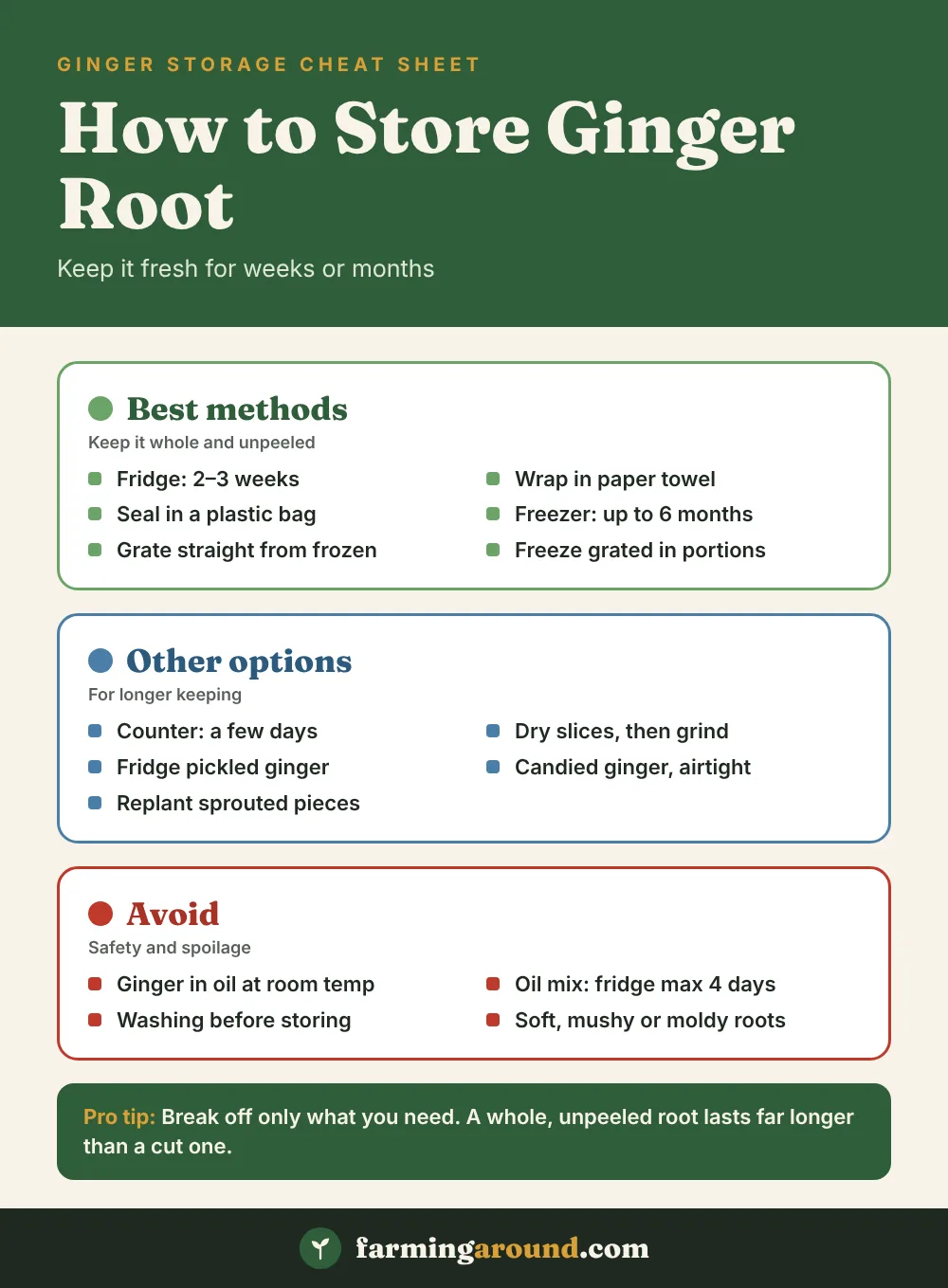
Save this chart for the next time you buy a big hand of ginger:
FAQ
Should you refrigerate fresh ginger?
Yes, if you won’t use it within a few days. Wrapped unpeeled in a paper towel inside a plastic bag, it keeps for about 2–3 weeks in the fridge.
Can you freeze ginger root without peeling it?
Yes. Freeze it whole and unpeeled in a freezer bag, then grate it from frozen. The skin grates off easily, and frozen ginger keeps for up to about 6 months.
How do you store peeled or cut ginger?
Wrap it tightly, refrigerate it and use it within a few days, or freeze it. Peeled ginger dries out and molds faster than whole, unpeeled root.
Is it safe to store ginger in oil?
Only in the fridge for up to 4 days, or in the freezer. Like garlic in oil, homemade ginger in oil can support botulism bacteria at room temperature.
Can you eat ginger that has sprouted?
Yes, as long as it’s still firm and free of mold. Sprouted ginger is often a little drier, but you can also plant it to grow your own.
Why does my ginger go moldy in the fridge?
Usually because of trapped moisture. Don’t wash ginger before storing it, wrap it in a dry paper towel and replace the towel if it gets damp.


One Comment