

Last updated: October 2026
This guide contains affiliate links. As an Amazon Associate, FarmingAround earns from qualifying purchases, at no extra cost to you.
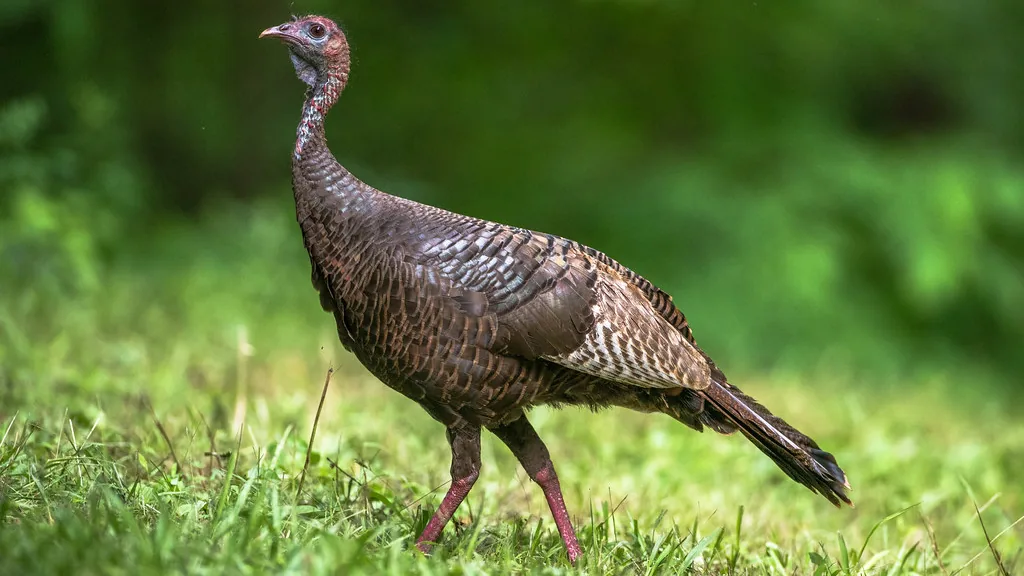
Yes, turkeys can fly, but it depends on the kind of turkey. Wild turkeys are strong fliers over short distances and fly up into trees every evening to roost. Heritage domestic breeds can usually fly well enough to clear a fence or reach a low branch. The big-breasted turkeys raised for supermarket meat are a different story: they grow so heavy that they can’t get off the ground.
This guide explains how and why wild turkeys fly, what to expect from heritage and commercial birds on a homestead, when young poults first take to the air, and how to keep your own flock from flying off.
Key takeaways
- Wild turkeys fly: they’re fast in short bursts and roost in trees at night to stay safe from predators.
- Heritage breeds can fly too: Bourbon Reds, Narragansetts, Bronzes and similar birds can clear fences and roost up high.
- Broad Breasted turkeys can’t fly: their weight and body shape keep them on the ground.
- Clipping one wing or roofing the run is the usual way to keep flighty birds at home.
In this guide
Do Turkeys Fly? The Quick Answer
Here’s how the main types of turkey compare:
| Type of turkey | Can it fly? | What it looks like in practice |
|---|---|---|
| Wild turkey | Yes | Short, fast flights; flies up to roost in trees every night |
| Heritage breeds (Bourbon Red, Narragansett, Standard Bronze, Royal Palm, Midget White) | Yes, to a degree | Can hop fences, fly onto roofs and roost on high perches, especially lighter hens |
| Broad Breasted White and Broad Breasted Bronze | No | Too heavy and front-heavy to get airborne once they’re grown |
| Young poults (any type) | Not at first | Wild poults can’t fly until about 2 weeks old |
So when someone says “turkeys can’t fly,” they’re usually thinking of the white commercial bird on the Thanksgiving table. Its wild ancestor is a very capable flier.
How Wild Turkeys Fly
Wild turkeys spend most of their day on the ground, walking and scratching for food. They have short, broad wings built for short, rapid flight rather than long-distance travel. When they do fly, they launch almost straight up with a burst of loud wingbeats, then glide.
That burst can be impressively fast. The University of Maryland Extension notes that wild turkeys can fly up to 50 mph (80 km/h) for short distances, and the Florida Fish and Wildlife Conservation Commission reports observed speeds of up to 55 mph (89 km/h). They don’t keep that up for long, though. A wild turkey would rather walk or run away from trouble and saves flight for emergencies, crossing obstacles such as rivers, and getting to and from the roost.
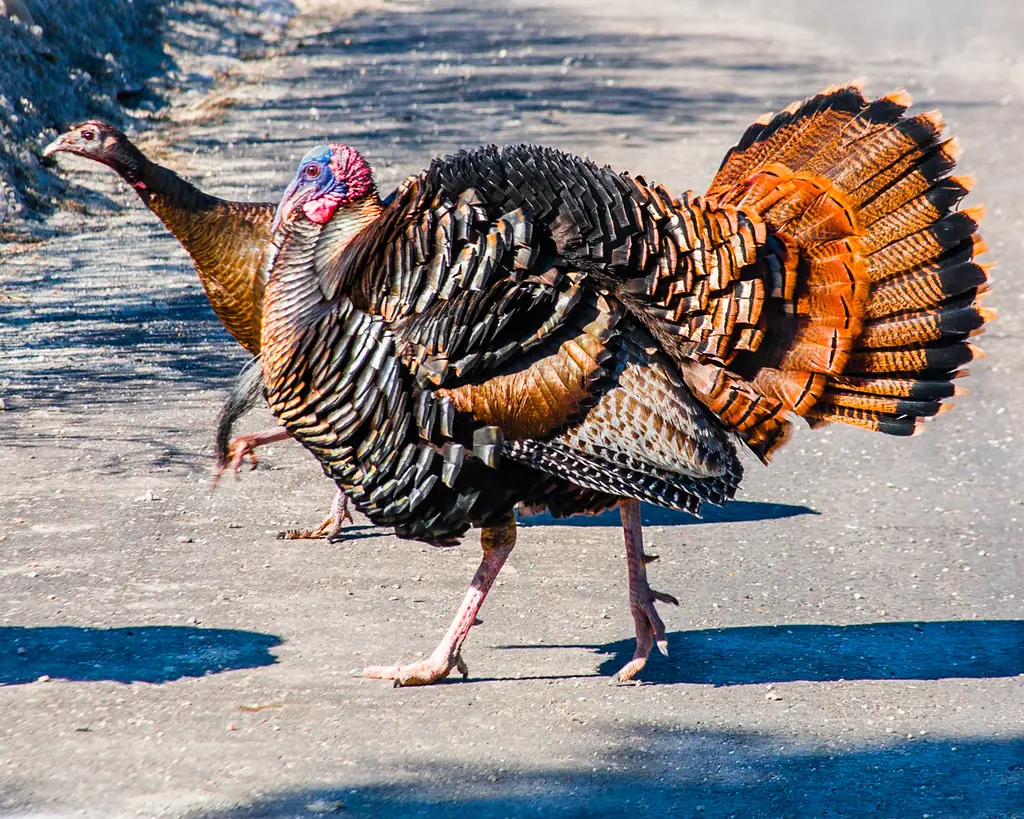
Size plays a part. Adult wild toms typically weigh about 16–25 lb (7–11 kg) and hens about 9–12 lb (4–5.5 kg), according to Massachusetts wildlife officials. That’s heavy for a flying bird, which is why turkey flights are short and powerful rather than long and soaring.
Why Turkeys Fly Up to Roost
The most reliable time to see a wild turkey fly is at dusk. Adult turkeys roost in trees at night to avoid predators such as coyotes, foxes and bobcats. They fly up into large trees in the evening and fly back down to the ground in the morning.
- They prefer big trees. Large, sturdy limbs give them a safe perch and shelter from wind and weather.
- Flocks often share roosts. In winter, turkeys commonly gather in large communal roosts, often in trees along streams and rivers.
- Suburban birds improvise. Where trees are scarce, wild turkeys will roost on rooftops, railings and even parked vehicles.
Roosting habits are also why a group of turkeys is easy to spot at dusk. If you’re curious what to call them once they’re gathered together, see our guide to what a group of turkeys is called.
When Do Baby Turkeys Learn to Fly?
Turkey chicks, called poults, can’t fly when they hatch. Florida wildlife officials say wild poults can’t fly until they’re about 2 weeks old, and at about 4 weeks they can fly up into low branches and small trees. Until then, they roost on the ground tucked under the hen’s wings and tail.
Those first weeks are the most dangerous time of a wild turkey’s life. Poult losses are high until the young birds are strong enough to fly and roost off the ground.
Domestic poults develop on a similar schedule, so expect heritage poults to start fluttering onto feeders, waterers and the edges of the brooder within a few weeks.
Can Domestic Turkeys Fly?
Heritage breeds
Heritage turkeys are closer to their wild ancestors in shape and growth rate. According to The Livestock Conservancy, a true heritage turkey must mate naturally, live a long productive life outdoors and grow slowly. That slower, leaner build means many heritage birds keep a fair amount of flying ability.
In practice, heritage hens are often the best fliers in a backyard flock because they’re lighter than the toms. Expect them to perch on fence posts, coop roofs and tree branches if you let them.
Broad Breasted turkeys
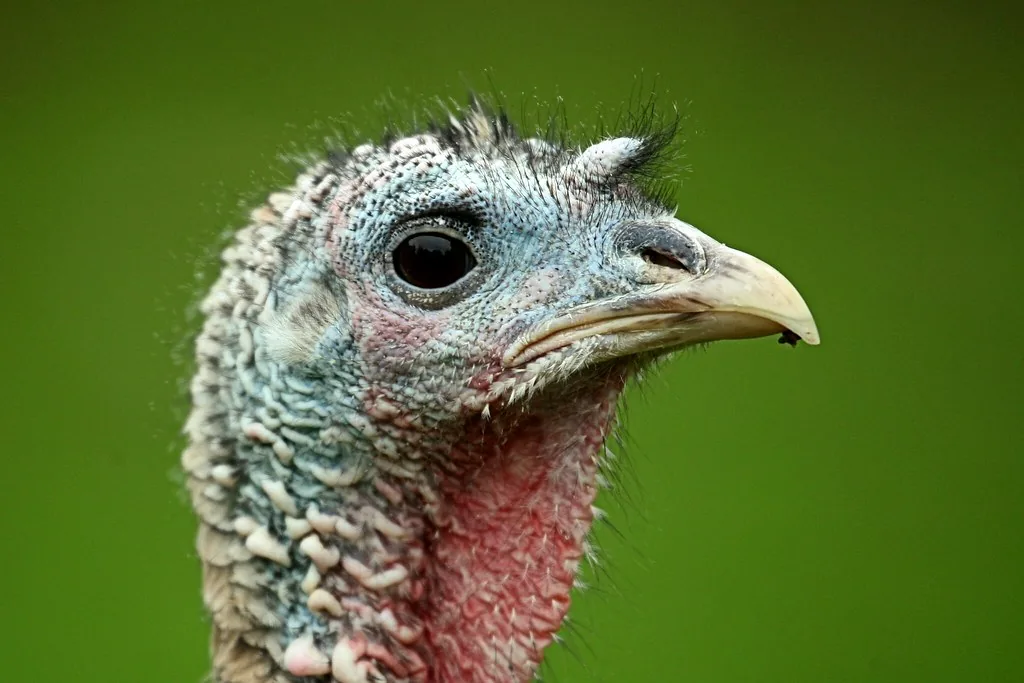
Broad Breasted White and Broad Breasted Bronze turkeys were bred for fast growth and a very large breast. The Livestock Conservancy notes that their conformation, including a shorter keel and shorter legs, stops toms from mating naturally, so these birds need artificial insemination to produce fertile eggs. The same heavy, front-loaded body keeps grown birds firmly on the ground.
Young Broad Breasted poults may flap and hop a little, but by the time they reach market weight they can’t fly. That makes them easy to fence, but it also means they can’t escape predators or roost high, so they rely on you for a secure shelter at night. Our guide on what turkeys eat covers how to feed both types.
How to Keep Turkeys From Flying Away
If you keep heritage turkeys, plan for the fact that they can leave the yard. A few practical options:
- Clip one wing. Trim the long primary flight feathers on one wing only. This throws the bird off balance so it can’t get lift. Cut only the feather shaft beyond the living part of the feather, never into blood feathers, and repeat after each molt because the feathers grow back.
- Roof the run. A netted or covered run keeps turkeys in and also keeps hawks and owls out.
- Give them a high roost inside. Turkeys want to sleep up high. A sturdy, low-to-medium roost bar inside a secure shelter gives them somewhere better to go than the nearest tree.
- Feed and settle them at home. Turkeys that are well fed, have company and come into a predictable shelter each evening are less likely to wander.
Pro tip: Clip wings in the evening when birds are calm and easy to catch on the roost. Have a helper hold the bird snugly with its wings folded while you work.
Watch: Clipping a Turkey’s Wing
This step-by-step video from Ready, Set, Homestead! shows how homesteaders clip turkey wings to stop them flying out.
Watch for wild bird contact. Free-range turkeys that fly onto roofs and into trees mix more easily with wild birds, which can carry avian influenza. Keep feed and water under cover and read our guide to bird flu in backyard flocks for biosecurity basics that apply to turkeys too.
Common Myths About Turkeys and Flying
- “Turkeys can’t fly.” Only true of heavy commercial breeds. Wild and many heritage turkeys fly well over short distances.
- “Turkeys only glide.” Wild turkeys take off with powerful wingbeats and can fly fast before gliding to land.
- “Turkeys sleep on the ground.” Adult wild turkeys roost in trees at night. Only very young poults sleep on the ground, under the hen.
- “Domestic turkeys are all the same.” A slow-growing heritage bird and a Broad Breasted White behave very differently, including in how well they fly.
Outside North America, the same rules apply. Domestic turkeys raised in the UK, Australia, New Zealand and South Africa behave according to their breed type, and feral flocks that have gone wild in places like New Zealand roost and fly much like wild turkeys do.
Helpful gear for this guide
Handy picks that match the advice above.
Links go to Amazon. Prices and availability change, so check reviews and fit for your setup before buying.
At a Glance
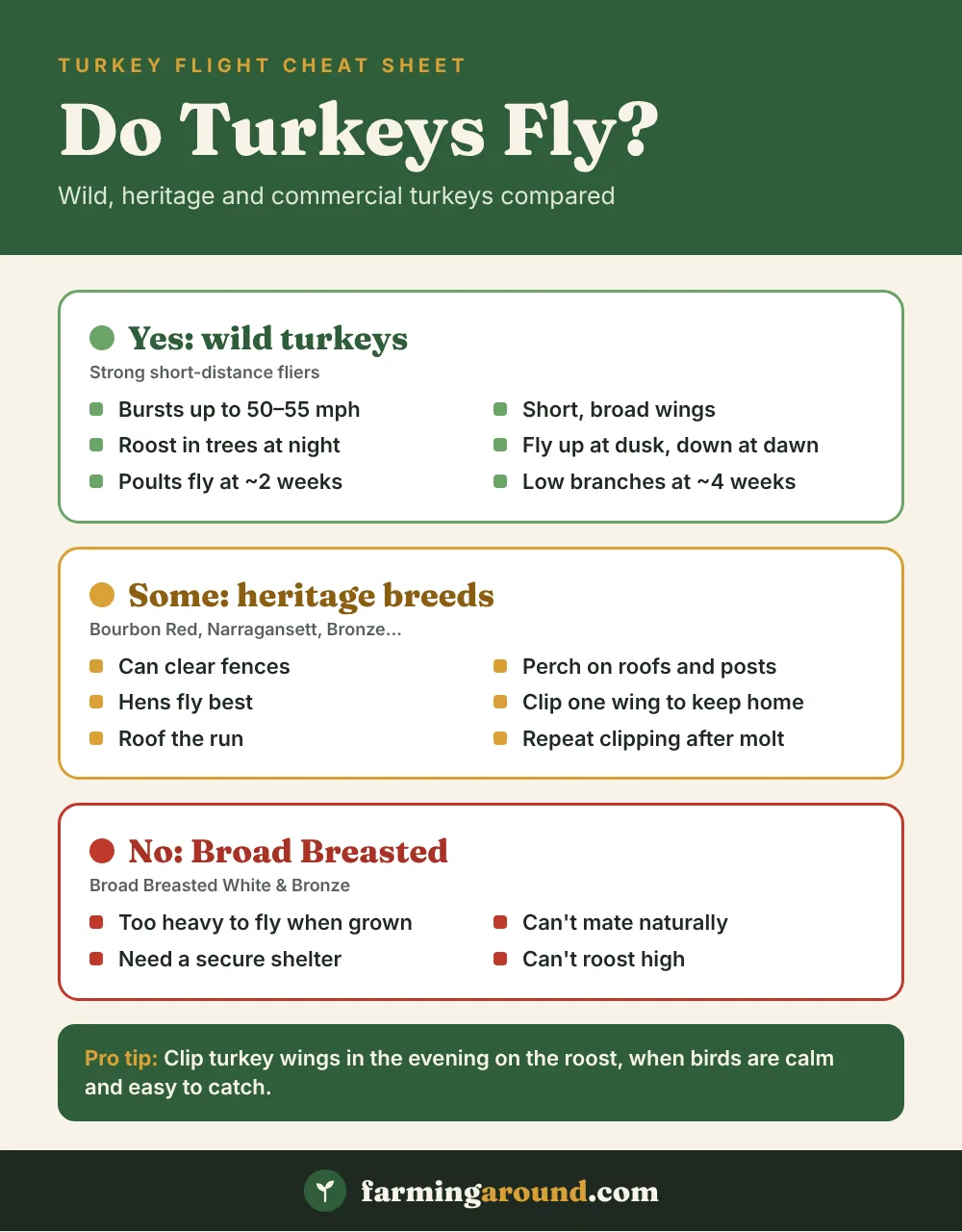
Here’s the short version to save or share:
FAQ
How fast can a turkey fly?
Wild turkeys can reach about 50–55 mph (80–89 km/h) in short bursts, according to the University of Maryland Extension and Florida wildlife officials. They can’t keep that speed up over long distances.
Can turkeys fly over a fence?
Wild and heritage turkeys often can, especially lighter hens. Clip one wing or use a covered run if you need to keep heritage birds in. Grown Broad Breasted turkeys can’t fly over fences.
Why can’t Broad Breasted turkeys fly?
They were bred for rapid growth and a very large breast. By market age they’re too heavy and front-heavy to lift off, and the same body shape stops them mating naturally.
Do turkeys sleep in trees?
Yes. Adult wild turkeys fly up into large trees to roost every night for protection from predators. Domestic heritage turkeys will do the same if you let them, so give them a secure roost in a shelter instead.
At what age can baby turkeys fly?
Wild poults can’t fly until about 2 weeks old and can reach low branches at around 4 weeks. Until then they sleep on the ground under the hen.
Does clipping a turkey’s wing hurt?
Clipping done correctly is like trimming hair, because you only cut the dead part of the flight feathers. Avoid growing “blood feathers,” which have a dark, blood-filled shaft, and the bird won’t feel it.
Sources
- Florida Fish and Wildlife Conservation Commission: Wild Turkey
- University of Maryland Extension: Woodland Wildlife Spotlight, Eastern Wild Turkey
- Massachusetts Division of Fisheries and Wildlife: Learn About Turkeys
- The Livestock Conservancy: Heritage Turkey Definition
For questions about your own flock’s health, talk to a poultry vet or your local extension office.

2 Comments