

Last updated: October 2026
This guide contains affiliate links. As an Amazon Associate, FarmingAround earns from qualifying purchases, at no extra cost to you.
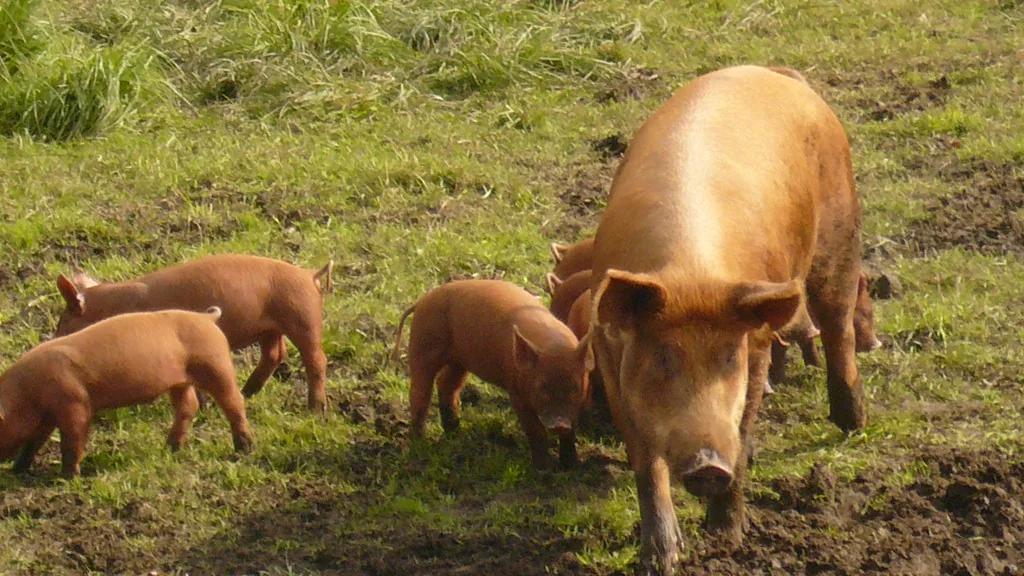
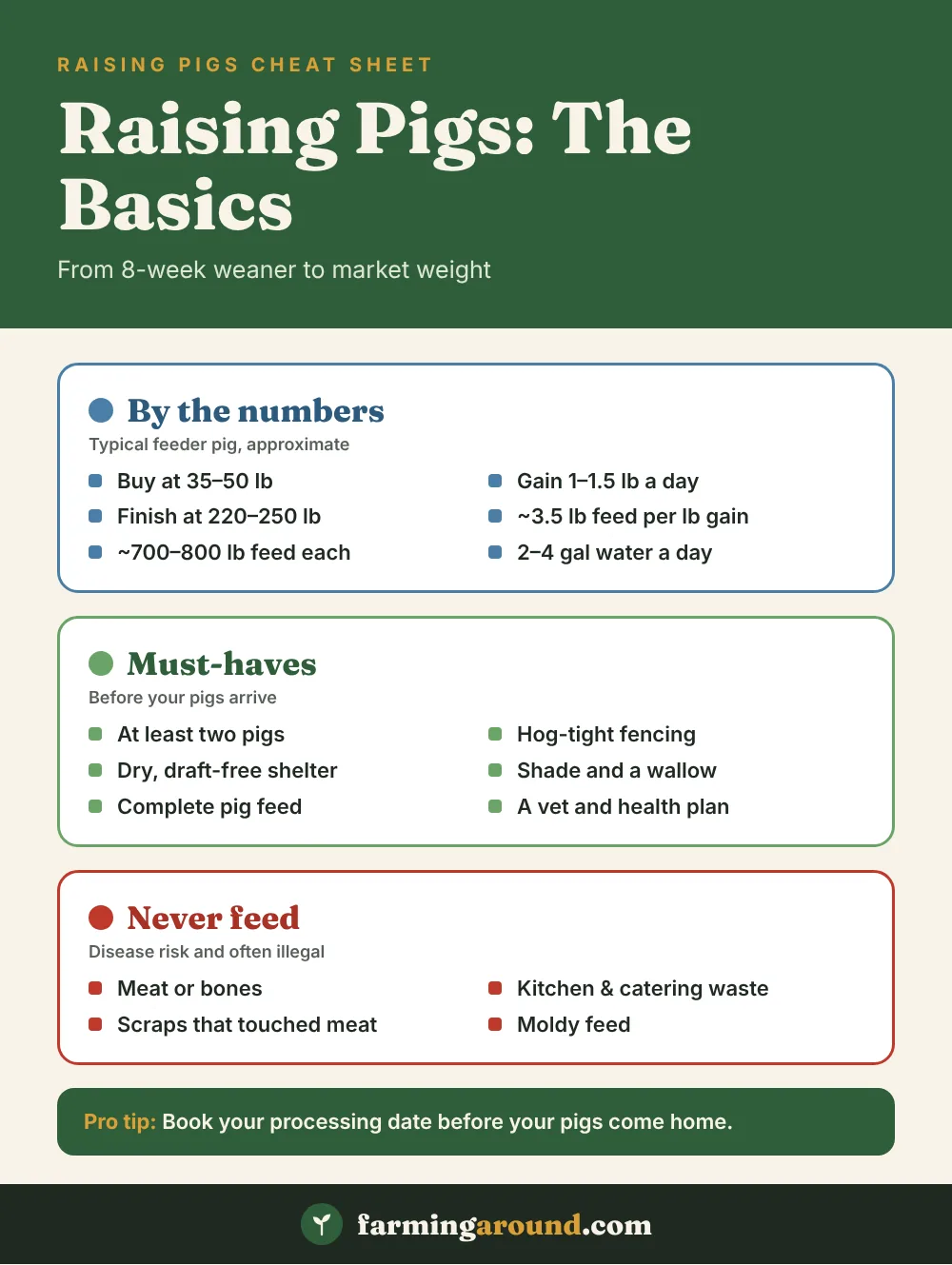
Raising pigs for meat is one of the quickest livestock projects for a small farm or homestead. Most beginners buy two weaned feeder pigs at about 8 weeks old and 35–50 lb (16–23 kg), and raise them for about four to five months to a market weight of roughly 220–250 lb (100–115 kg). They need secure fencing, a dry shelter with shade, a complete pig feed, plenty of fresh water, and a basic health plan worked out with a vet.
This guide covers what it really takes: setup and running costs, housing and fencing, how much pigs eat and drink, health care, the rules on feeding scraps, and a realistic first-year plan.
Key takeaways
- Start with two feeder pigs, not one; pigs are social and do better in company.
- Feed is the biggest cost: expect roughly 3.5 lb of feed per lb of gain, or about 700–800 lb (320–360 kg) of feed per pig from weaner to market.
- Water and shade are non-negotiable: pigs drink about 2–4 gallons (8–15 L) a day and can’t cool themselves by sweating.
- Never feed meat or kitchen scraps that have touched meat; in many places it’s illegal because it spreads serious diseases.
In this guide
Is Raising Pigs Right for You?
Pigs are intelligent, curious and strong. They grow fast, turn feed into meat efficiently, and can clear rough ground by rooting. On the other hand, they’re escape artists, they need daily care, and a muddy pen can upset neighbors.
Before you buy, check:
- Local rules: zoning, livestock limits and setbacks. In the UK you need a County Parish Holding (CPH) number and a herd mark before pigs arrive, and pig movements must be reported. Other countries have their own registration and movement rules.
- Processing: book a slot with a licensed slaughterhouse or butcher early, often months ahead. Many small processors fill up in the fall.
- Space and neighbors: think about smell, noise and runoff, and keep pens away from wells and streams.
- Time: plan on at least two short checks a day for feed, water and fencing.
If you’re still choosing your first livestock, our comparison of the most profitable farm animals and our guide to homesteading on an acre can help you weigh the options.
Costs of Raising Pigs
Prices vary widely by country, region and season, so get local quotes before you commit. These are the costs to budget for.
Setup costs
- Feeder pigs (two or more)
- Fencing: woven wire hog panels, or electric fencing with an energizer, posts and insulators
- Shelter: a three-sided shed, hut or converted stall
- Feeder and waterer (a nipple drinker on a barrel is a popular choice)
- A way to transport pigs, such as a livestock trailer or crate
Running costs
- Feed: by far the largest cost. In Oklahoma State University’s budget example, feed made up most of the cost of putting weight on a pig.
- Bedding (straw or wood shavings)
- Dewormer, vet visits and any vaccines your vet recommends
- Electricity for the fence energizer and any heat lamps
- Slaughter, butchering, curing and packaging
Pro tip: Work out your feed budget before buying pigs. Multiply the weight you plan to add (for example, 250 lb − 40 lb = 210 lb) by about 3.5 to estimate pounds of feed, then price that at your local feed store.
Buying Feeder Pigs
Feeder pigs (weaners) are young pigs that have been weaned from the sow and are ready to grow out. Buy from a reputable breeder with a clean, well-run farm.
- Age and weight: Oklahoma State University suggests an 8-week-old pig should weigh at least 35 lb (16 kg) and a 12-week-old pig at least 60 lb (27 kg). Avoid pigs under 30 lb (14 kg).
- Signs of health: bright, alert and active, with a smooth coat and clean skin. Walk away from pigs with rough coats, wrinkled skin, sores or scabs, swollen joints, ruptures (hernias), diarrhea, or a lot of coughing and sneezing.
- Size: choose larger, well-muscled pigs from the litter rather than the runt.
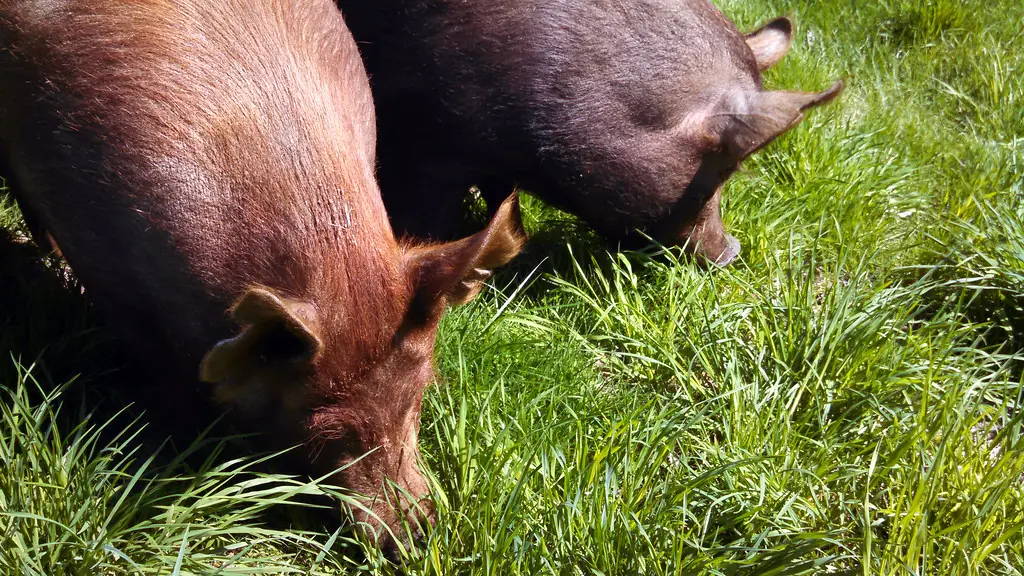
- Breed: commercial crossbreds grow fastest. Heritage breeds such as Tamworth, Berkshire, Gloucestershire Old Spot and Large Black are popular for pasture and tend to grow more slowly.
- Males: buy barrows (castrated males) or gilts (young females). Meat from intact boars can have an unpleasant odor.
When the pigs get home, keep them away from any other pigs for at least three weeks and watch them closely for signs of illness.
Housing and Fencing
Shelter
Pigs need a dry, draft-free shelter with deep bedding in cold weather and shade in hot weather. A simple three-sided shed facing away from the prevailing wind works well. In cold climates, add extra straw so they can bury themselves; young pigs may need supplemental heat in winter.
Space
| Pig weight | Minimum indoor floor space per pig |
|---|---|
| 30–50 lb (14–23 kg) | About 4 sq ft (0.4 m²) |
| 50–80 lb (23–36 kg) | About 5 sq ft (0.5 m²) |
| Market weight | About 10–12 sq ft (0.9–1.1 m²) |
These are minimums for shelter or pen floor. Pigs kept outdoors need far more room to root and exercise, and rotating them between paddocks keeps the ground from turning into mud.
Fencing
Pigs test fences constantly. Use sturdy woven-wire hog panels with a board or a strand of electric wire low at the bottom to stop digging, or a well-built electric fence once the pigs have been trained to it in a small, solid pen. Check the fence daily, especially the bottom strand, which vegetation can short out.
Heat and shade
Pigs have very few working sweat glands, so they overheat and sunburn easily, especially light-skinned breeds. In warm weather they need shade, cool water and a wallow or sprinkler so they can coat themselves in mud or water. On very hot days, misting or fogging helps.
Heat stress warning: heavy breathing, lying flat and refusing feed on a hot day are danger signs. Get the pig into shade, wet it down with cool (not ice-cold) water, and call your vet.
Feeding Pigs
The simplest and safest way to feed pigs is a complete commercial pig feed matched to their stage of growth:
- Starter for newly weaned pigs
- Grower from roughly 40–50 lb (18–23 kg)
- Finisher for the last stretch to market weight
Follow the directions on your feed bag for each stage, and change feeds gradually over several days to avoid upset stomachs. Most small-scale growers let pigs eat freely from a self-feeder, which gives the fastest growth. Allow roughly one feeder space for every four pigs.
How much feed does a pig need?
A well-managed feeder pig gains about 1–1.5 lb (0.45–0.7 kg) a day. Oklahoma State University estimates it takes about 3.3–3.7 lb of feed for every pound of gain, depending on start and finish weights. Growing a pig from 40 lb to 250 lb (210 lb of gain) therefore takes roughly 700–780 lb (320–355 kg) of feed. Pasture, hay and garden produce can supplement this, but they won’t replace a balanced ration.
Can pigs eat kitchen scraps?
Fresh fruit, vegetables and garden surplus that have never been in a kitchen alongside meat can be fed as treats in some places. However, feeding food waste is tightly controlled because it spreads devastating diseases such as African swine fever and foot-and-mouth disease:
- United States: under the federal Swine Health Protection Act, food waste that contains meat or has touched meat may only be fed by licensed operators after cooking at 212°F (100°C) for 30 minutes, and many states, including Iowa, Illinois, Michigan, New York, Oregon, Virginia and Wisconsin, ban it entirely.
- UK and EU: feeding catering waste or kitchen scraps to pigs is illegal, including scraps from vegetarian and vegan kitchens.
- Australia: “swill” (meat, meat products and anything that has been in contact with them) is prohibited pig feed in every state and territory.
Never feed pigs: meat, bones, dairy or restaurant and kitchen waste that has been near meat, plus moldy feed, raw potatoes in quantity, or plants that are toxic to livestock. When in doubt, leave it out.
Water
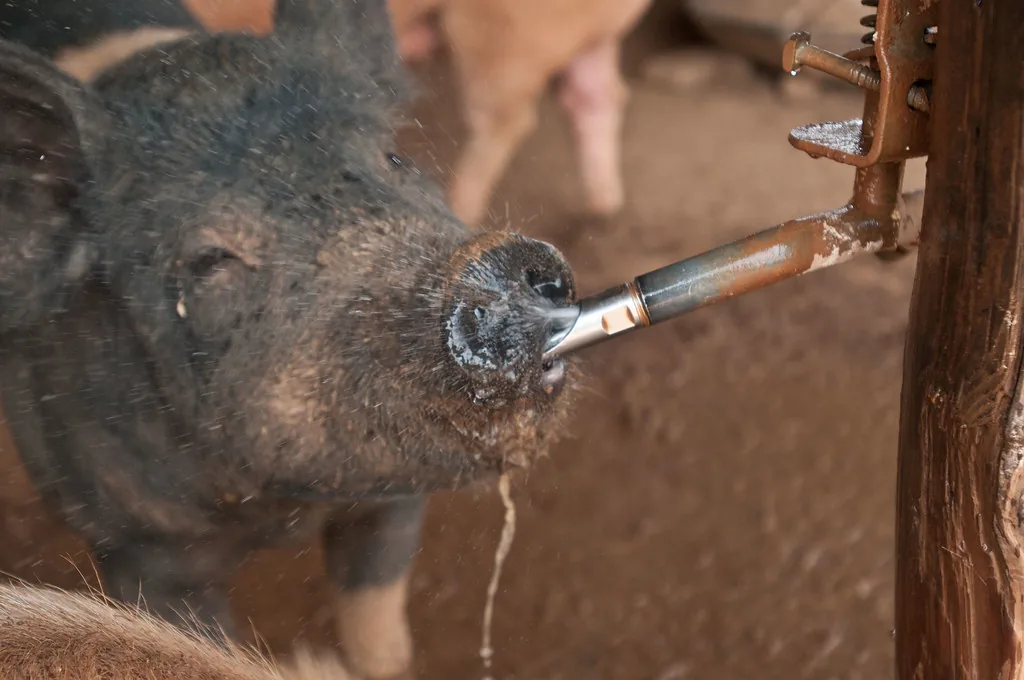
Pigs need clean water at all times. A growing pig drinks around 2–4 gallons (8–15 L) a day, and more in hot weather or when eating dry feed. Nipple drinkers on a barrel or tank keep water cleaner than open troughs, which pigs love to tip over and wallow in. In winter, check twice a day that lines and nipples haven’t frozen.
Health Care
- Find a vet first. Before you bring pigs home, find a vet who treats pigs and agree on a basic health plan, including any vaccines suited to your area.
- Parasites: deworm new pigs soon after arrival and repeat as your vet advises. Always follow label withdrawal times before slaughter.
- External parasites: check for lice and mange (itching, scratching, crusty skin) and treat with an approved product.
- Biosecurity: quarantine new pigs, keep visitors out of the pen, use dedicated boots, and keep wild pigs and other pigs away.
- Daily checks: a healthy pig is alert, eats eagerly and has firm droppings. Loss of appetite, coughing, diarrhea, limping or isolating itself are reasons to call the vet.
- Weight checks: without a scale, estimate weight with a tape: heart girth (in inches) × heart girth × body length ÷ 400 gives approximate pounds.
Report any sudden deaths or unusual illness to your vet promptly. Some pig diseases are notifiable by law.
Watch: Raising Healthy Pigs on a Homestead
The Fall Line Ridge homestead shares how they raise healthy, low-maintenance pigs.
A Realistic First-Year Plan
- 2–3 months before: check local rules and registrations, build the fence and shelter, line up a feed supplier and a vet, and book a processing date.
- Arrival (week 0): collect two feeder pigs of about 35–50 lb. Keep them in a small, secure pen for the first week or two while they settle in and learn to respect the fence.
- Weeks 1–6: starter, then grower feed; deworm as planned; watch them closely and track weight with a tape.
- Weeks 6–16: grower then finisher feed; rotate paddocks if you have them; keep up with shade, wallows and fence checks.
- Around months 4–6: at about 220–250 lb (100–115 kg), take the pigs to your booked processor. Spring-bought pigs usually finish in the fall.
Southern Hemisphere note: if you buy weaners in spring (September to November), they’ll finish in autumn, avoiding the hottest midsummer stretch at their heaviest. Wherever you live, plan for shade and water during the warmest months.
Like the idea of raising your own meat? Our guide to raising meat chickens covers a faster, smaller-scale option.
Raising Pigs at a Glance
Helpful gear for this guide
Handy picks that match the advice above.
Links go to Amazon. Prices and availability change, so check reviews and fit for your setup before buying.
FAQ
How long does it take to raise a pig to butcher weight?
Starting from a weaned feeder pig of about 40 lb, most commercial crossbreds reach 220–250 lb in about four to five months, or around six months of age. Heritage breeds on pasture often take longer.
How much land do you need to raise pigs?
Two feeder pigs can be raised in a well-built pen with a shelter, but they do better with outdoor space to root. If you keep them on pasture, rotate them between paddocks so the ground can recover.
Is it cheaper to raise your own pig?
Sometimes, but not always. It depends on local feed, piglet and processing prices. Many people raise pigs for the quality of the meat and knowing how it was raised, rather than to save money. Price out feed and processing first.
Can you raise just one pig?
You can, but it isn’t recommended. Pigs are social animals; a single pig is often more stressed, noisier and more likely to try to escape. Two pigs also grow better because they compete at the feeder.
What do pigs need in winter?
A dry, draft-free shelter with deep straw bedding, extra feed for energy, and water that doesn’t freeze. Young pigs may need supplemental heat in very cold weather.
Can pigs live on grass alone?
No. Pasture provides useful forage, but growing pigs still need a balanced pig feed to get enough protein, energy, vitamins and minerals.
Sources
- Buying and Managing Feeder Pigs (Oklahoma State University Extension)
- Human Food Waste and Swine (USDA APHIS)
- Raising Pigs at Home (The Pig Site, adapted from University of New Hampshire Extension)
- Pig Feed: What You Can and Can’t Feed Pigs (DPIRD Western Australia)
This guide is general information. Talk to a vet who treats pigs about vaccines, parasite control and any health concerns, and check your local regulations before getting pigs.

One Comment