
Last updated: October 2026
Cattle breeds fall into three main groups: beef breeds raised for meat (such as Angus, Hereford and Charolais), dairy breeds raised for milk (such as Holstein and Jersey), and dual-purpose breeds that do a bit of both (such as Dexter and Milking Shorthorn). Within beef cattle, British breeds are moderate in size and easy-keeping, Continental breeds are bigger and more heavily muscled, and Brahman-type breeds handle heat and insects best.
The cattle breeds chart below compares 20 common breeds at a glance: origin, color, horns, size and what each does best. After that you’ll find a closer look at each group and a simple way to match a breed to your climate, land and goals.
Key takeaways
- Beef, dairy or dual-purpose: decide what you want from your cattle first; it narrows the list fast.
- British beef breeds (Angus, Hereford, Red Poll) are moderate-framed, docile and finish well on grass, making them popular with beginners.
- Hot, humid climates favor Brahman and Brahman crosses (Brangus, Santa Gertrudis); cold, rough country suits Highland, Galloway and Angus.
- Small farms and homesteads often do best with smaller, calm breeds such as Dexter, Jersey or Red Poll.
In this guide
Cattle Breeds Chart
Frame sizes and traits follow breed descriptions from the University of Kentucky’s animal science extension; dairy cow weights are typical mature weights from the same source.
| Breed | Type | Origin | Color | Horns | Size | Known for |
|---|---|---|---|---|---|---|
| Angus | Beef | Scotland | Solid black | Polled | Moderate | Marbling, calving ease, hardiness |
| Red Angus | Beef | British Isles | Red | Polled | Moderate | Marbling, calving ease; red coat handles sun better |
| Hereford | Beef | England | Red with white face | Horned or polled lines | Moderate | Docility, foraging ability, fertility |
| Red Poll | Beef / dual | England | Red | Polled | Small–moderate | Gentle, good mothers, efficient on forage |
| Shorthorn | Beef | England | Red, white or roan | Short horns | Moderate | Versatile British breed |
| Belted Galloway | Beef | Scotland | Black, red or dun with white belt | Polled | Medium | Thrifty, shaggy coat, harsh climates |
| Highland | Beef | Scotland | Mostly red; also black, dun, yellow | Long horns | Medium | Docile, very hardy, long-lived |
| Charolais | Beef | France | White to cream | Horned or polled | Medium–large | Fast growth, heavy muscling |
| Limousin | Beef | France | Golden red | Horned or polled | Medium–large | Muscling, high carcass yield |
| Simmental | Beef / dual | Switzerland | Red-gold with white; many now black | Horned or polled | Large | Growth, muscling, milk |
| Gelbvieh | Beef | Germany | Red to black | Horned or polled | Medium–large | Growth, fertility, mothering |
| Brahman | Beef | USA (from Indian zebu) | Gray, red or near black | Horned | Moderate | Heat, insect and parasite tolerance |
| Brangus | Beef | USA | Black | Polled | Moderate | Heat tolerance plus Angus carcass traits |
| Santa Gertrudis | Beef | USA (Texas) | Cherry red | Horned or polled | Moderate | Heat and tick resistance, good mothers |
| Wagyu | Beef | Japan | Black or brown | Horned | Moderate | Exceptional marbling |
| Holstein | Dairy | Netherlands | Black and white or red and white | Usually dehorned | Large, about 1,500 lb (680 kg) | Highest milk volume |
| Jersey | Dairy | Isle of Jersey | Fawn | Usually dehorned | Small, about 1,000 lb (450 kg) | Rich milk, high in solids |
| Guernsey | Dairy | Isle of Guernsey | Fawn and white | Usually dehorned | About 1,200 lb (545 kg) | Golden, beta-carotene-rich milk; calm |
| Brown Swiss | Dairy | Switzerland | Solid brown | Usually dehorned | Large, about 1,500 lb (680 kg) | Docile, sturdy, good milk volume |
| Dexter | Dual-purpose | Ireland | Mostly black; red or dun | Horned or polled | Small, cows under 750 lb (340 kg) | Milk and beef on small acreage |
Size and color vary within every breed. Many breeds now include polled (naturally hornless) and black-coated lines.
Beef Cattle Breeds
British breeds
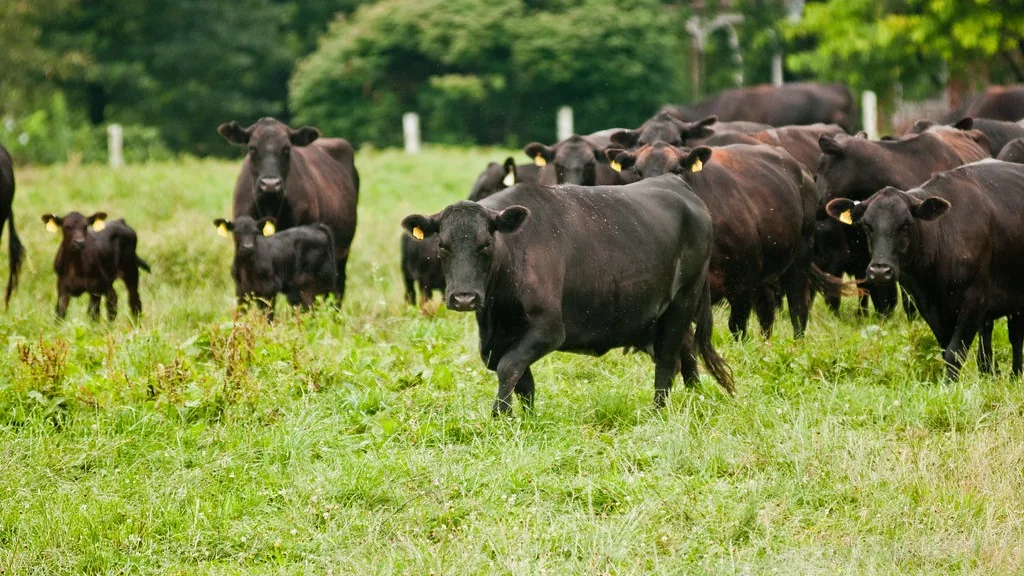
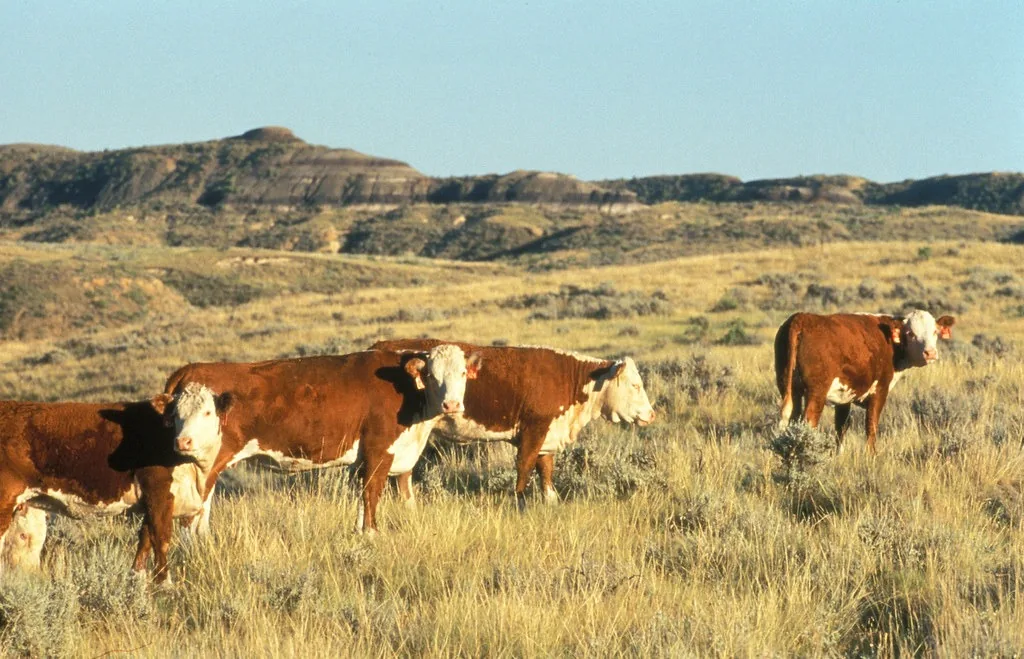
Angus, Hereford, Shorthorn, Red Poll and Galloway were developed in Britain to thrive on grass in a cool, damp climate. They are moderate in frame, mature early, fatten readily on pasture and are generally easy calvers. That’s why they’re the backbone of many commercial herds and a common choice for first-time cattle owners. Angus is prized for marbling and calving ease; Hereford for its docile nature and foraging ability. Crossing the two produces the familiar black baldy, valued for hybrid vigor.
Continental breeds
Charolais, Limousin, Simmental, Gelbvieh and Maine-Anjou come from mainland Europe, where many were once draft or dual-purpose animals. They’re larger and more heavily muscled, grow fast and produce lean, high-yielding carcasses. The trade-off is bigger feed requirements, later maturity and, in some lines, harder calving. They are most often used as terminal sires on British-type cows.
Brahman and heat-tolerant breeds
Brahman cattle were developed in the US from Indian Bos indicus (zebu) cattle. Their loose skin, short coat and sweat glands make them tolerant of heat and humidity, and they resist insects and parasites well. Composite breeds blend that toughness with British carcass quality: Brangus is 3/8 Brahman and 5/8 Angus, and Santa Gertrudis, developed on the King Ranch in Texas, is about 5/8 Shorthorn and 3/8 Brahman. These breeds dominate in the US Gulf Coast, northern Australia and other hot regions.
Dairy Cattle Breeds
Dairy breeds are bred to turn feed into milk rather than muscle, so they look angular and lean. The main ones you’ll meet:
- Holstein: the black-and-white (or red-and-white) giant of commercial dairies, with the highest milk volume of any breed. Mature cows weigh about 1,500 lb (680 kg).
- Jersey: small (about 1,000 lb / 450 kg), efficient and known for rich milk high in butterfat and protein. A favorite family cow.
- Guernsey: about 1,200 lb (545 kg), calm, with golden milk high in beta-carotene.
- Brown Swiss: large (about 1,500 lb / 680 kg), sturdy and docile.
- Ayrshire: about 1,250 lb (565 kg), red-and-white, valued for strong udders.
- Milking Shorthorn: about 1,400 lb (635 kg), fairly heat tolerant and useful for beef as well.
Pro tip: A dairy cow is a twice-a-day commitment, every day, for most of the year. If you want milk but can’t milk on a strict schedule, look into calf-sharing, where the calf stays with the cow and you take only part of the milk.
Small and Dual-Purpose Breeds
For a few acres, smaller breeds make a lot of sense: they eat less, are easier to handle and are gentler on pasture.
- Dexter: Ireland’s small dual-purpose breed. Under the American Dexter Cattle Association standard, cows stand 36–42 in (91–107 cm) at the shoulder and weigh under 750 lb (340 kg). Oklahoma State University notes cows give about 1.5–2.5 gallons (5.7–9.5 L) of milk a day.
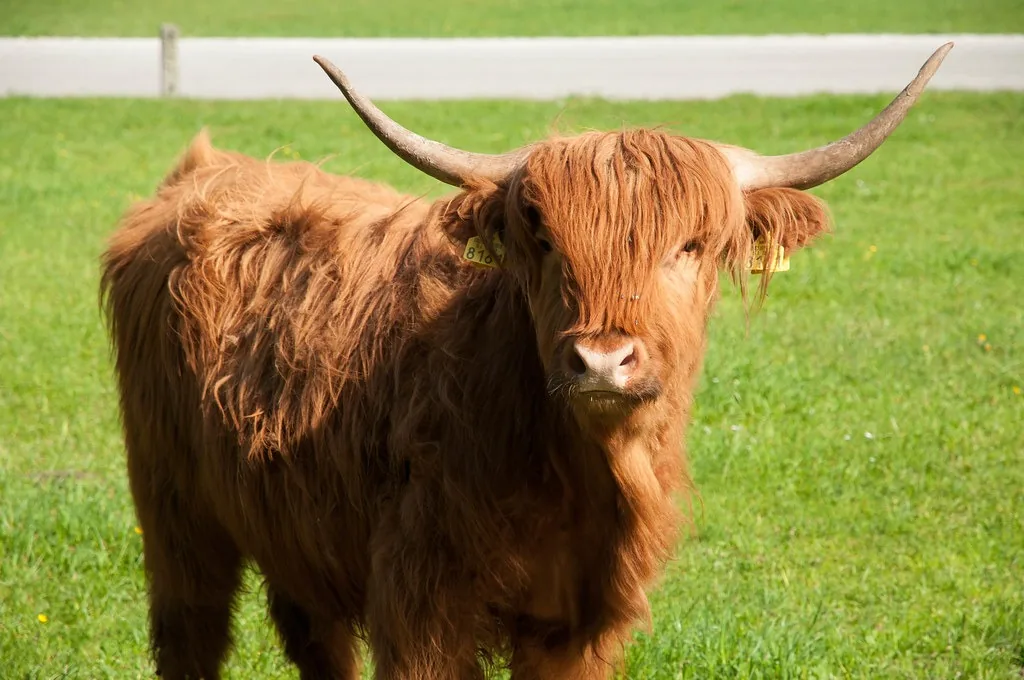
- Highland: hardy, long-lived and docile, with a shaggy coat that copes with cold, wet winters. Slow-growing, but they thrive on rough grazing.
- Red Poll and Milking Shorthorn: traditional dual-purpose breeds that give some milk and a good beef calf.
- Belted Galloway: thrifty and weather-proof; popular for conservation grazing and grass-fed beef.
How to Choose a Cattle Breed
- Purpose. Beef calves to sell, beef for your freezer, milk for the family, or grazing to manage land? Each points to a different group.
- Climate. In hot, humid areas (roughly USDA zones 9–11, northern Australia, much of Africa), choose Brahman-influenced cattle or heat-tolerant red or light-colored breeds. In cold northern areas (zones 3–5, Scotland-like climates), pick thick-coated, hardy breeds like Highland, Galloway or Angus.
- Land and feed. Smaller, moderate-framed breeds finish better on grass alone. Big Continental breeds usually need richer feed to reach their potential.
- Temperament and handling. Beginners should favor known docile breeds (Hereford, Red Poll, Dexter, Jersey, Brown Swiss) and buy calm animals from reputable breeders.
- Market. If you’ll sell calves or beef, see what local buyers want. Black-hided cattle often sell well at US auctions, while direct-to-customer grass-fed sales reward flavor and marbling.
- Availability. A breed you can buy nearby, with a bull or AI service available, is far easier than a rare one.
If cattle are part of a bigger plan, compare them with other stock in our guide to the most profitable farm animals, and see how they fit a small property in homesteading on an acre.
Watch: choosing a family cow
Homesteady compares breeds for a family milk cow in this video, a helpful companion if you’re leaning toward dairy or dual-purpose cattle.
Breed Groups: Pros and Cons
| Group | Pros | Cons | Best for |
|---|---|---|---|
| British beef (Angus, Hereford, Red Poll) | Docile, easy calving, finish on grass, widely available | Less heat tolerant (especially black coats) | Beginners, grass-fed beef, temperate climates |
| Continental beef (Charolais, Limousin, Simmental) | Fast growth, big lean carcasses | Higher feed needs, later maturity | Commercial herds, crossbreeding |
| Brahman and composites | Heat, humidity, insect and tick tolerance | Can be more alert and flighty; less cold hardy | Hot, humid regions |
| Dairy (Holstein, Jersey, Guernsey) | Milk; Jerseys are small and efficient | Daily milking; less beef value | Family milk, small dairies |
| Small and heritage (Dexter, Highland, Galloway) | Hardy, thrifty, easy to handle | Slower growth, smaller carcass | Homesteads, small acreage, rough land |
Safety first: even the calmest breed can be dangerous. Never turn your back on a bull, a dairy-breed bull in particular, or a cow with a new calf, and use proper handling facilities rather than working cattle in the open.
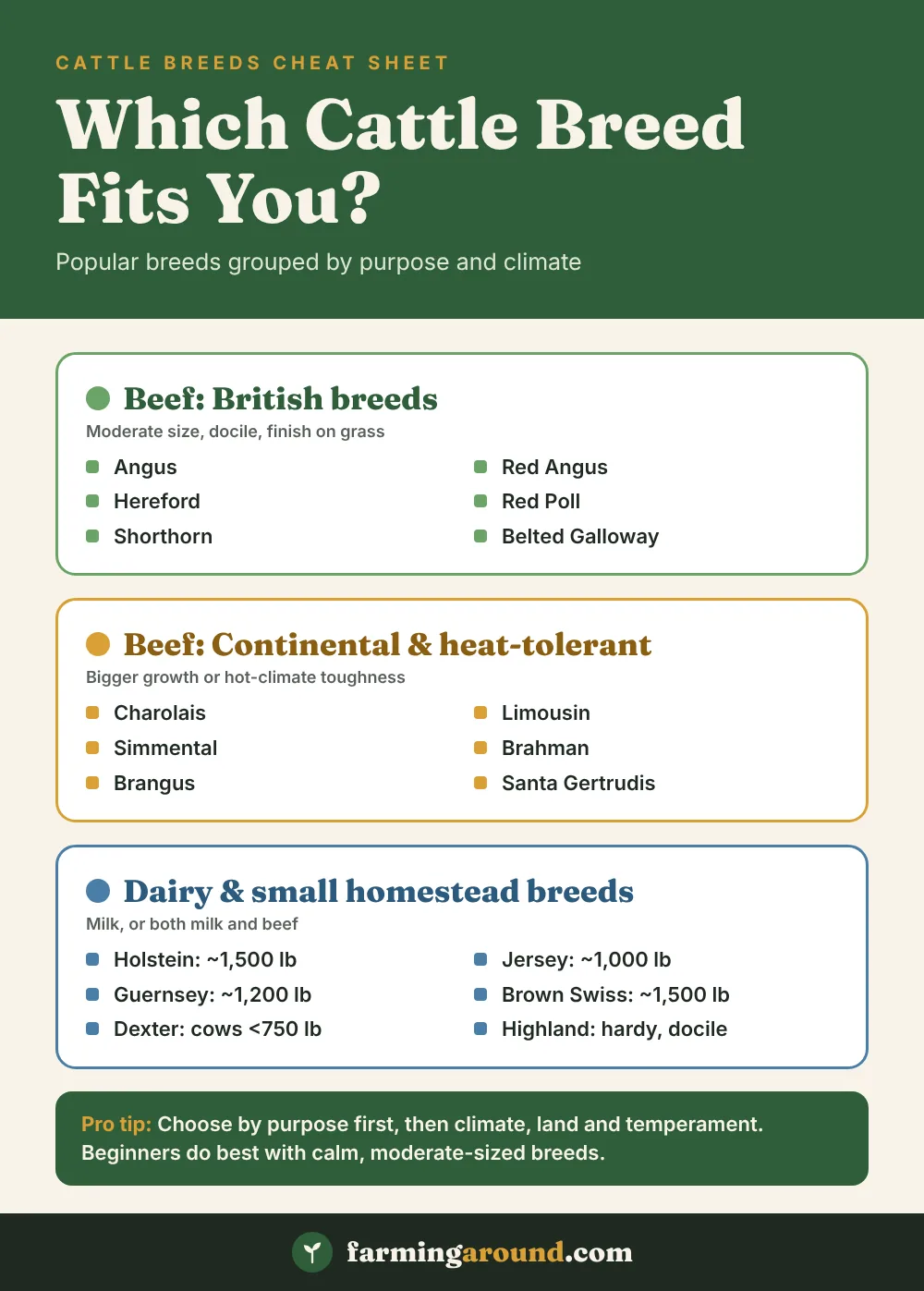
Cattle Breeds at a Glance
A quick visual summary of which breeds suit which goals.
FAQ
What is the most common cattle breed?
In the US, Angus is the most common beef breed and Holstein dominates dairy herds. Both are also widespread in Canada, the UK, Australia and New Zealand.
What is the best cattle breed for beginners?
Docile, moderate-sized breeds are easiest: Hereford, Angus and Red Poll for beef; Jersey for milk; Dexter for both on a small farm.
Which cattle breeds are best for hot climates?
Brahman and Brahman crosses such as Brangus and Santa Gertrudis handle heat, humidity and insects best. Lighter-colored breeds like Charolais also cope better than black cattle.
What is the smallest cattle breed?
Dexter is the smallest standard breed commonly raised, with cows under about 750 lb (340 kg). Miniature lines of other breeds, such as miniature Herefords, are smaller still.
How many cattle can I keep per acre?
It depends heavily on rainfall, soil and pasture management, so it ranges from a couple of acres per cow on productive, well-watered pasture to many acres per cow on dry rangeland. Your local extension office can give a stocking rate for your area.
Sources
- Beef Cattle Discovery: Breeds (University of Kentucky)
- Dairy Cattle Discovery: Breeds (University of Kentucky)
- Dexter Cattle (Oklahoma State University Breeds of Livestock)
Before buying cattle, talk to a large-animal vet and your local extension office about health testing, fencing and stocking rates for your area.
Featured image: USDAgov / Public Domain Mark via Flickr.
Get free farming guides in your inbox
Practical guides, seasonal tips and market updates. No spam, unsubscribe anytime.
Subscribe free