
Bird Flu and Backyard Chickens: How to Protect Your Flock This Fall

Last updated: October 2026
This guide contains affiliate links. As an Amazon Associate, FarmingAround earns from qualifying purchases, at no extra cost to you.
Autumn is peak season for bird flu risk. As wild ducks and geese migrate south, they can carry highly pathogenic avian influenza (HPAI) into backyard flocks, and detections are already rising. On September 22, 2026, Iowa officials confirmed HPAI in a multi-species backyard flock in Boone County, the state’s seventh case of the year. If you keep chickens, ducks or turkeys, now is the time to tighten your biosecurity. This guide explains how bird flu spreads, the warning signs, and the practical steps that protect your flock this fall.
Key takeaways
- Wild waterfowl are the main carriers, and autumn migration brings them close to backyard coops.
- Sudden deaths, a sharp drop in laying, swelling and purple combs or wattles are key warning signs.
- Cover runs, feed and water, use dedicated coop boots and quarantine new birds for at least 30 days.
- Report suspected cases right away (in the US, your State Veterinarian or USDA at 1-866-536-7593) and don’t move birds or eggs.
In this guide
- Why Fall Is High-Risk for Backyard Flocks
- Signs of Bird Flu in Chickens
- 10 Biosecurity Steps to Protect Your Flock This Fall
- Special Tips for Duck and Mixed Flocks
- What to Do If You Suspect Bird Flu
- Is It Safe to Eat Eggs From My Flock?
- Can People Catch Bird Flu From Chickens?
- Fall Flock Checklist
- At a Glance: Bird Flu Biosecurity
- FAQ: Bird Flu and Backyard Chickens
- Sources
Why Fall Is High-Risk for Backyard Flocks
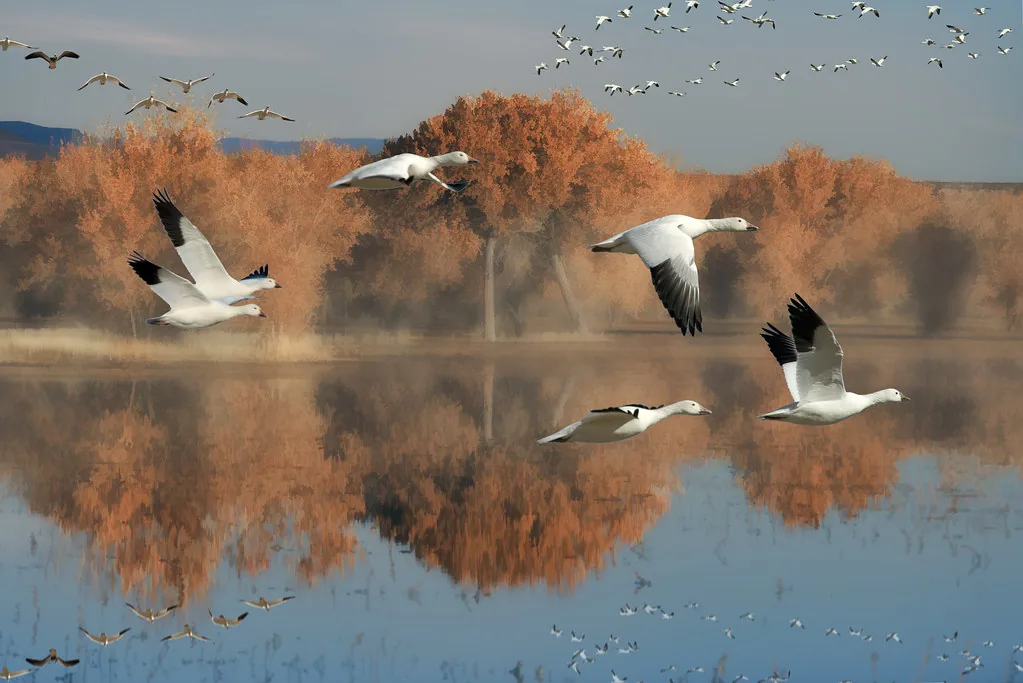
- Migration: wild waterfowl are the main natural carriers of avian influenza, and they move in huge numbers in autumn and spring.
- Shared spaces: wild birds visit ponds, fields and feeders near backyard coops, leaving droppings and feathers that can carry the virus.
- Cooler weather: the virus survives longer in cold, damp conditions.
- Tracking it in: people, boots, tools, vehicles and even pets can carry contaminated material into the coop.
Signs of Bird Flu in Chickens
HPAI can move fast. Watch for:
- Sudden death, often several birds, without earlier signs of illness
- Lethargy, lack of energy and appetite
- A sharp drop in egg production, or soft-shelled and misshapen eggs
- Swelling around the head, eyes, comb, wattles or hocks
- Purple or blue discoloration of the comb, wattles and legs
- Coughing, sneezing, nasal discharge or difficulty breathing
- Diarrhea
- Lack of coordination, twisted neck or other nervous signs
These signs can also match other poultry diseases, which is exactly why unexplained illness or deaths should be reported rather than guessed at.
10 Biosecurity Steps to Protect Your Flock This Fall
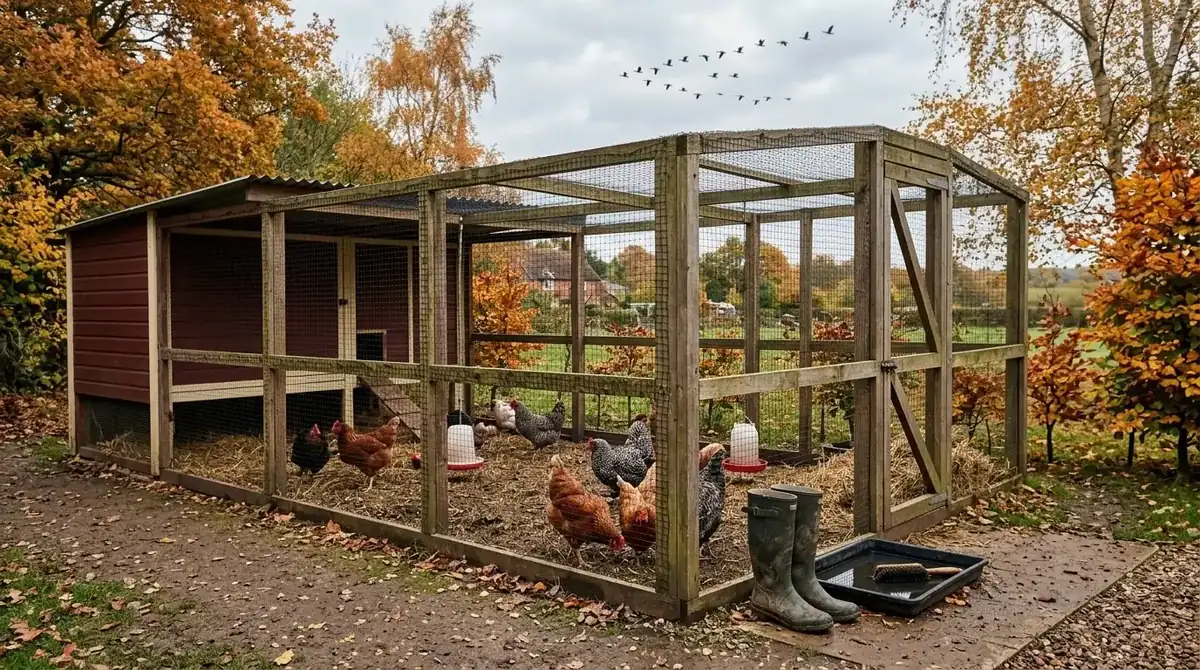
- Keep wild birds away. Cover runs with netting or a solid roof, and don’t let your flock share ponds or open water with wild ducks and geese. (Planning a new run? Our chicken coop plans include covered designs.)
- Cover feed and water. Keep feeders and waterers inside the coop or under cover, and clean up spilled feed that attracts wild birds and rodents.
- Take down wild bird feeders near your coop during high-risk periods.
- Use dedicated coop boots and clothing. Keep a pair of boots only for the coop, or use disposable boot covers, and change clothes after visiting other farms or poultry.
- Set up a boot dip or wash station at the coop entrance, and replace the disinfectant regularly.
- Limit visitors. Don’t let people who keep birds, have been to poultry shows, or hunt waterfowl into your coop.
- Quarantine new birds for at least 30 days, well away from your flock, and buy only from reputable sources.
- Clean and disinfect equipment such as crates, feeders and tools, especially anything borrowed or brought back from shows.
- Control rodents and insects, which can move contamination around the farm.
- Wash your hands before and after handling birds, eggs or equipment.
Pro tip: write your routine down. USDA APHIS recommends keeping a simple written biosecurity plan, and its free “Defend the Flock” checklists make it easy to post the rules by the coop door so everyone follows them.
Watch: HPAI Biosecurity Best Practices
This short extension video covers biosecurity best practices for keeping avian influenza and other diseases out of a flock.
Special Tips for Duck and Mixed Flocks
Domestic ducks and geese can carry avian influenza with few or no symptoms, so mixed flocks need extra care. Keep waterfowl in covered areas where possible, provide water in tubs or troughs you can clean rather than open ponds wild birds visit, and watch your chickens closely for any change.
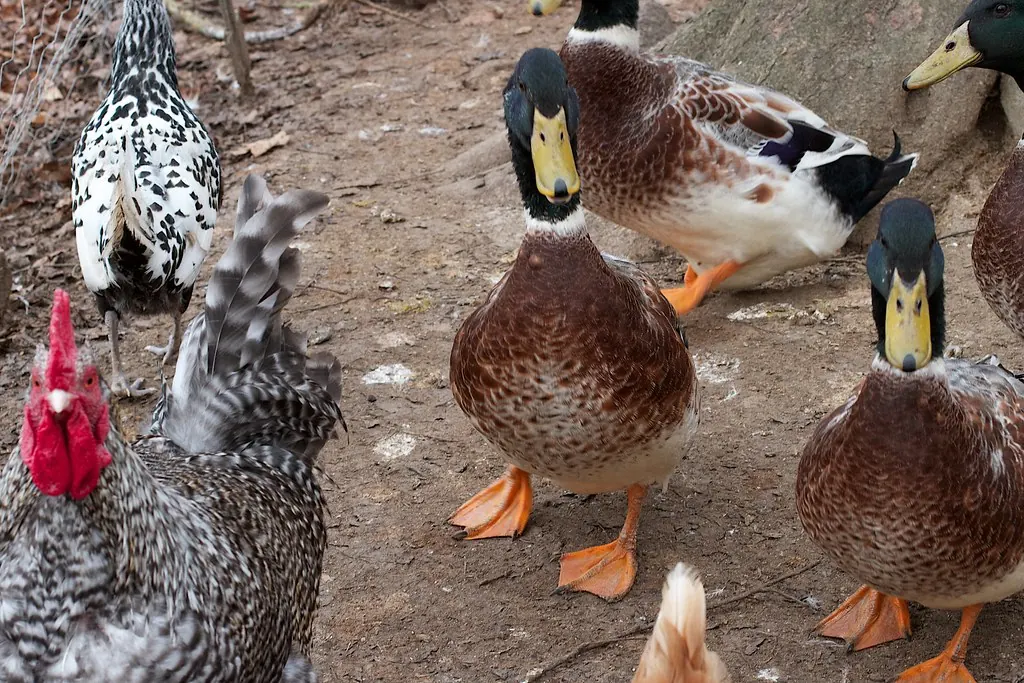
Feeding under cover matters for ducks too. Our guide to what ducks eat covers safe everyday feed and treats for waterfowl.
What to Do If You Suspect Bird Flu
- Don’t move birds, eggs or equipment off your property.
- Limit contact: wear gloves and a mask if you must handle sick or dead birds, and wash thoroughly afterwards.
- Report it right away:
- United States: your State Veterinarian, or the USDA at 1-866-536-7593
- United Kingdom: in England, the Defra Rural Services Helpline on 03000 200 301 (devolved governments have their own contacts)
- Canada: your local Canadian Food Inspection Agency (CFIA) district office
- Australia: the Emergency Animal Disease Watch Hotline on 1800 675 888
- Don’t try to treat it yourself. Follow official instructions for testing and next steps.
Is It Safe to Eat Eggs From My Flock?
Birds infected with HPAI stop producing normally and should never enter the food chain. For healthy flocks, normal kitchen hygiene and cooking eggs and poultry thoroughly remain the standard food safety advice. If your flock is under investigation or confirmed infected, follow official guidance before using any eggs or meat.
Can People Catch Bird Flu From Chickens?
Human infections are uncommon but have occurred, mostly in people with close, unprotected contact with infected birds or animals. That’s why protective gloves, masks and good hygiene matter when handling sick or dead birds. Check your national public health agency for current guidance.
Handling sick or dead birds? The CDC advises wearing disposable gloves, eye protection, an N95 respirator (or a well-fitting mask if you don’t have one) and boots or boot covers, keeping used gear out of the house, and watching yourself for symptoms for 10 days afterwards.
Fall Flock Checklist
| Task | Done? |
|---|---|
| Run covered with netting or roofing | ☐ |
| Feed and water moved under cover | ☐ |
| Dedicated coop boots and boot wash in place | ☐ |
| Visitor rules set | ☐ |
| Quarantine area ready for new birds | ☐ |
| Vet and reporting phone numbers saved | ☐ |
| Coop winterized (see our guide) | ☐ |
Biosecurity works best alongside good winter housing. Read our step-by-step guide on how to winterize a chicken coop, and if you’re new to keeping hens, start with raising chickens for beginners.
At a Glance: Bird Flu Biosecurity
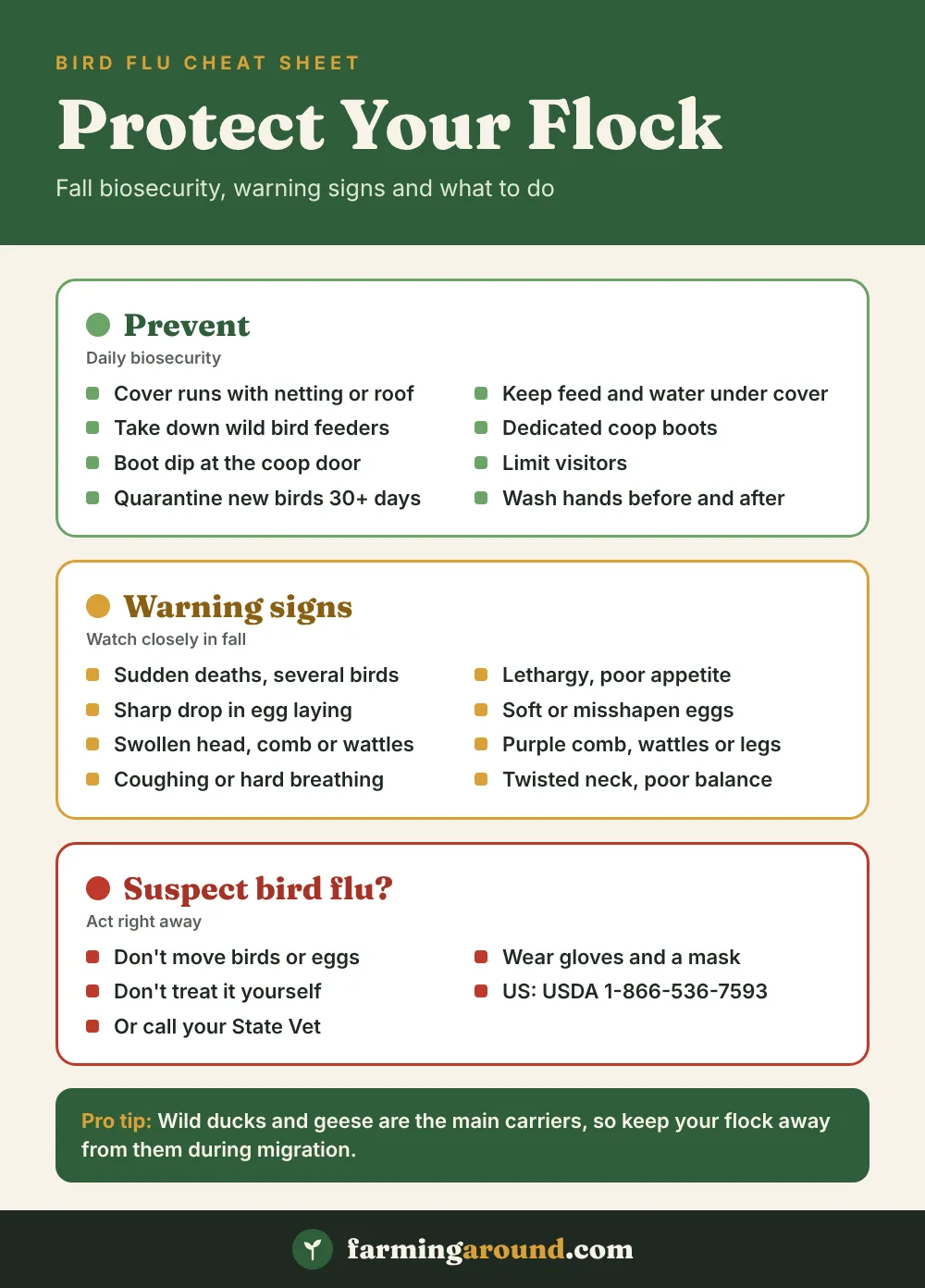
Save this cheat sheet for the key prevention steps, warning signs and what to do if you suspect bird flu.
Helpful gear for this guide
Handy picks that match the advice above.
Links go to Amazon. Prices and availability change, so check reviews and fit for your setup before buying.
FAQ: Bird Flu and Backyard Chickens
How does bird flu get into backyard flocks?
Most often through contact with wild waterfowl or their droppings, or on contaminated boots, equipment, feed and vehicles.
Should I keep my chickens inside during bird flu season?
Keeping birds in a covered run or coop during high-risk periods greatly reduces contact with wild birds. Some areas issue official housing orders, so follow any that apply to you.
Is there a bird flu vaccine for backyard chickens?
Vaccine policies differ by country and change over time. Check with your national agriculture authority and your vet for current rules.
Can I still take my birds to poultry shows?
Check with organizers and local authorities; events may be restricted during outbreaks. Always quarantine birds returning from shows.
This article is for general information. Always follow guidance from your local agriculture authority and veterinarian.
Sources
- KCRG: HPAI detected in Boone County backyard flock (Sept 22, 2026)
- USDA APHIS: Confirmed HPAI detections in commercial and backyard flocks
- AVMA: Avian influenza in pets and backyard flocks
- USDA APHIS: Protect Your Poultry From Avian Influenza (PDF)
- CDC: Backyard Flock Owners: Protect Yourself from Bird Flu
- University of Arkansas Cooperative Extension: Hobby and Backyard Poultry Biosecurity Practices (PDF)
Bird flu is a reportable disease. If your birds fall sick or die suddenly, don’t wait: call your vet, State Veterinarian or national agriculture authority right away, and talk to your doctor if you feel unwell after handling sick birds.

6 Comments