

Last updated: September 2026
This guide contains affiliate links. As an Amazon Associate, FarmingAround earns from qualifying purchases, at no extra cost to you.
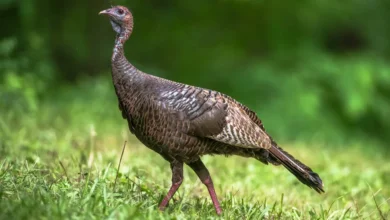
Domestic turkeys eat a high-protein turkey or game bird feed as their main diet, topped up with grass, greens, insects and small amounts of fruit and vegetables. Wild turkeys forage for acorns and other nuts, seeds, grasses, berries and insects. Whether you’re raising a few birds for the holidays or keeping heritage breeds, the rule is simple: the right feed for their age first, treats second.
Turkeys grow fast and need more protein than chickens, especially as poults. This guide explains what to feed turkeys at each age, the best treats, the foods to avoid, and a quick chart you can save.
Key takeaways
- Poults need a high-protein starter (typically 24–30%) for their first 6–8 weeks; ordinary chick starter is too low.
- Protein steps down with age: grower feed from about 8 weeks, then a maintenance or layer feed around 16% for adults.
- Treats stay under 10%: greens, pasture, pumpkin, melon, berries and mealworms are good picks.
- Never feed avocado, chocolate, raw beans, green potatoes, rhubarb leaves or moldy food.
In this guide
What Do Wild Turkeys Eat?
Wild turkeys are omnivores that feed mostly on the ground, in flocks. According to the Cornell Lab of Ornithology, their diet changes with the seasons:
- Fall, winter and early spring: acorns, beech nuts, hickory nuts, pecans and seeds.
- Deep snow: buds, evergreen ferns, club mosses and other plant material they can reach.
- Spring and summer: grass and sedge seeds, berries and fruit, plus insects, snails and even small salamanders.
Young wild poults eat a lot of insects in their first weeks, which gives them the protein they need to grow. That’s the pattern a good backyard diet copies.
Feeding Backyard Turkeys by Age
A complete commercial feed gives turkeys the right balance of protein, energy, vitamins and minerals. Protein levels vary by brand and country, so read the bag, but most feeding programs follow this pattern:
| Age | Feed | Protein (approx.) | Notes |
|---|---|---|---|
| 0–8 weeks (poults) | Turkey or game bird starter | 24–30% | Crumbles; many US starters are 28–30% |
| 8–16 weeks | Turkey grower | About 19–22% | Protein steps down as growth slows |
| 16 weeks to adult | Finisher or maintenance feed | About 16% | For meat birds up to processing, and adult non-breeders |
| Breeding and laying hens | Layer or breeder feed | About 16%, with extra calcium | Start several weeks before laying season; offer oyster shell on the side |
Always follow the feeding directions on your specific feed bag.
Getting Poults Eating
Poults can be slow to find food and water in their first days. Scatter a little starter on a paper towel or shallow tray so they see it, use shallow waterers, and gently dip a few beaks in the water when they arrive so the rest of the group follows. Keep feed fresh: the University of Maine Cooperative Extension advises using feed stored somewhere cool and dry for no more than about four weeks, to limit mold.
Watch: What Turkeys Eat
This short video from Farm & Food Care looks at what farm-raised turkeys eat.
How Much Do Turkeys Eat?
Turkeys eat a lot, and the amount depends heavily on breed. Broad-breasted meat turkeys are bred to grow very fast and eat far more than slower-growing heritage breeds like Bourbon Red or Narragansett. As a guide, the University of Maine estimates that a poult eats about 11 lb (5 kg) of starter in its first 8 weeks, and intake climbs steeply after that.
Most keepers keep feed available through the day and store it away from rodents at night. Treats should be no more than about 10% of the daily diet, or the birds fill up on low-protein food instead of their balanced feed.
Healthy Treats Turkeys Love
| Food | Safe? | How to serve |
|---|---|---|
| Grass, clover and weeds | Yes | Free-ranging or fresh-cut (not lawnmower clippings, which mat together) |
| Leafy greens (lettuce, kale, chard, cabbage) | Yes | Chopped, or hung whole as a pecking toy |
| Pumpkin and winter squash | Yes | Split open; seeds and flesh are both fine |
| Watermelon and cantaloupe | Yes | Chunks or rinds, great in hot weather |
| Berries | Yes | Whole, in small amounts |
| Apples and pears | Yes (flesh) | Chopped, seeds and core removed |
| Cucumber and zucchini | Yes | Halved or sliced |
| Mealworms, black soldier fly larvae, crickets | Yes | High-protein treat, especially for growing birds |
| Cracked corn, oats, sunflower seeds | In moderation | Energy-rich; best in cold weather, not a staple |
| Cooked plain rice or pasta | Occasionally | Small amounts, no salt or sauce |
Pro tip: scatter treats on clean ground or in a shallow tray instead of a pile. Turkeys spend more time foraging, and the bossiest birds can’t hog it all.
Foods Turkeys Should Never Eat
| Food | Why it’s a problem |
|---|---|
| Avocado (skin, pit and flesh) | Contains persin, which is toxic to birds |
| Chocolate, coffee, tea, caffeine | Theobromine and caffeine are toxic |
| Raw or dried beans | Contain lectins that are toxic until fully cooked |
| Green potatoes, potato peels, tomato and potato leaves | Contain solanine |
| Rhubarb leaves | High in oxalic acid |
| Apple seeds and stone-fruit pits | Contain compounds that release cyanide |
| Moldy or spoiled food and feed | Molds can produce mycotoxins and cause respiratory disease |
| Salty, sugary or greasy food | Poultry can’t handle much salt; junk food crowds out real nutrition |
| Onions and garlic in large amounts | Can damage red blood cells; don’t feed them on purpose |
Ate something toxic? If a turkey has eaten moldy feed, avocado, chocolate or a large amount of anything on this list, and seems weak, wobbly or stops eating, call a vet who treats poultry straight away.
Grit, Water and Free-Ranging
- Grit: turkeys grind food in the gizzard with small stones. Birds on pasture find their own; confined turkeys eating anything besides complete feed need insoluble grit offered free choice.
- Water: provide clean water at all times, and clean and disinfect waterers at least weekly to stop slime building up.
- Pasture: turkeys are good foragers and will eat grass, weeds, seeds and insects. Pasture lowers feed costs a little, but it doesn’t replace a complete feed for growing birds.
- Biosecurity: during migration seasons, feed and water under cover so wild birds can’t share it. Our guide to protecting backyard flocks from bird flu covers the steps, and they apply to turkeys too.
Can Turkeys Eat Chicken Feed?
Adult turkeys can eat an all-flock or layer feed, and heritage hens often do well on the same layer ration as chickens during laying season. Poults are different: chick starter is usually only 18–20% protein, which is too low for fast-growing turkeys. Use a turkey or game bird starter for the first 8 weeks.
There’s also a health reason to keep the two species apart where you can. Chickens can carry blackhead disease (histomoniasis) without getting sick, while it can be deadly for turkeys, and the University of Maine advises that turkeys shouldn’t be raised with other poultry. If you also keep hens, our guide to raising chickens for beginners covers setting up their side of the yard, and our guide to what ducks eat covers waterfowl.
Helpful gear for this guide
Handy picks that match the advice above.
Links go to Amazon. Prices and availability change, so check reviews and fit for your setup before buying.
Quick Reference: What Turkeys Can Eat
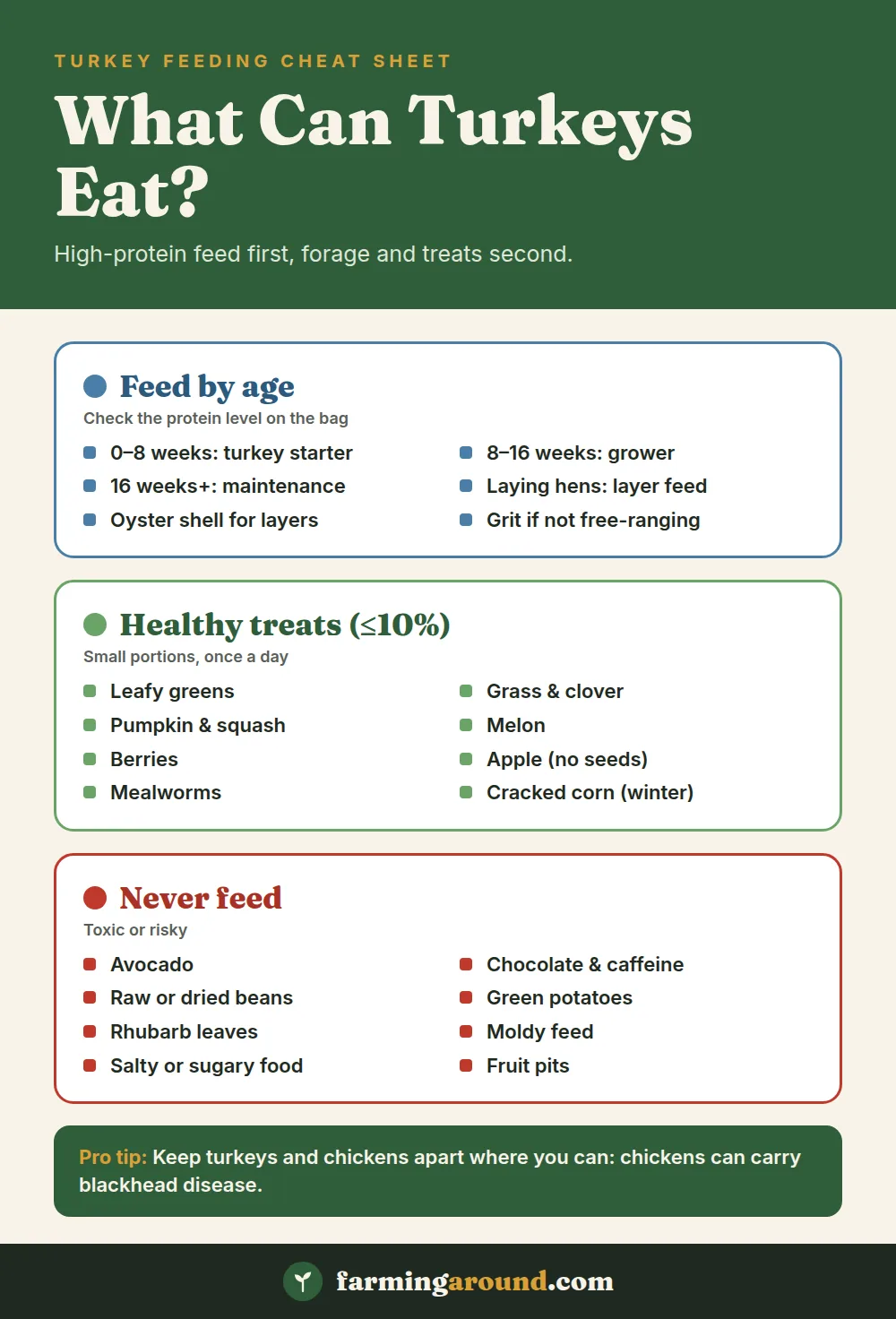
| Feed daily | Treat (≤10%) | Never feed |
|---|---|---|
| Turkey starter, grower or maintenance feed for their age, fresh water, grit, oyster shell (layers), pasture | Greens, grass and clover, pumpkin and squash, melon, berries, apple (no seeds), mealworms, cracked corn in winter | Avocado, chocolate, caffeine, raw beans, green potato, rhubarb leaves, fruit pits, moldy feed, salty or sugary food |
FAQ
What is the best thing to feed turkeys?
A complete turkey feed matched to their age: a high-protein starter for poults, then grower and maintenance feeds. Fresh greens, pasture and insects make the best treats.
What do baby turkeys eat?
Poults eat turkey or game bird starter crumbles with around 24–30% protein, plus plenty of clean water in shallow drinkers. Hold off on treats for the first couple of weeks.
Can turkeys eat bread?
A small piece won’t harm an adult bird, but bread is filling and low in the protein turkeys need. Moldy bread should never be fed.
Do turkeys eat meat or insects?
Yes. Turkeys are omnivores and happily eat insects, worms, snails and grubs. Mealworms and black soldier fly larvae are excellent protein treats.
Can turkeys eat pumpkin seeds?
Yes. Pumpkin and squash seeds and flesh are both safe, which makes leftover fall pumpkins a popular turkey treat.
What do wild turkeys eat in winter?
Acorns and other nuts, seeds, buds, evergreen ferns and leftover grain in fields. In deep snow they rely on whatever plant material they can reach.
Sources
- Maine Poultry Facts: Turkey Brooding and Management (University of Maine Cooperative Extension)
- Wild Turkey Life History (Cornell Lab of Ornithology)
- Backyard Turkey Basics (Purina Animal Nutrition)
This guide is general information. For sick birds or a special diet, talk to a vet who treats poultry or your local extension office.

2 Comments