

Last updated: September 2026
This guide contains affiliate links. As an Amazon Associate, FarmingAround earns from qualifying purchases, at no extra cost to you.
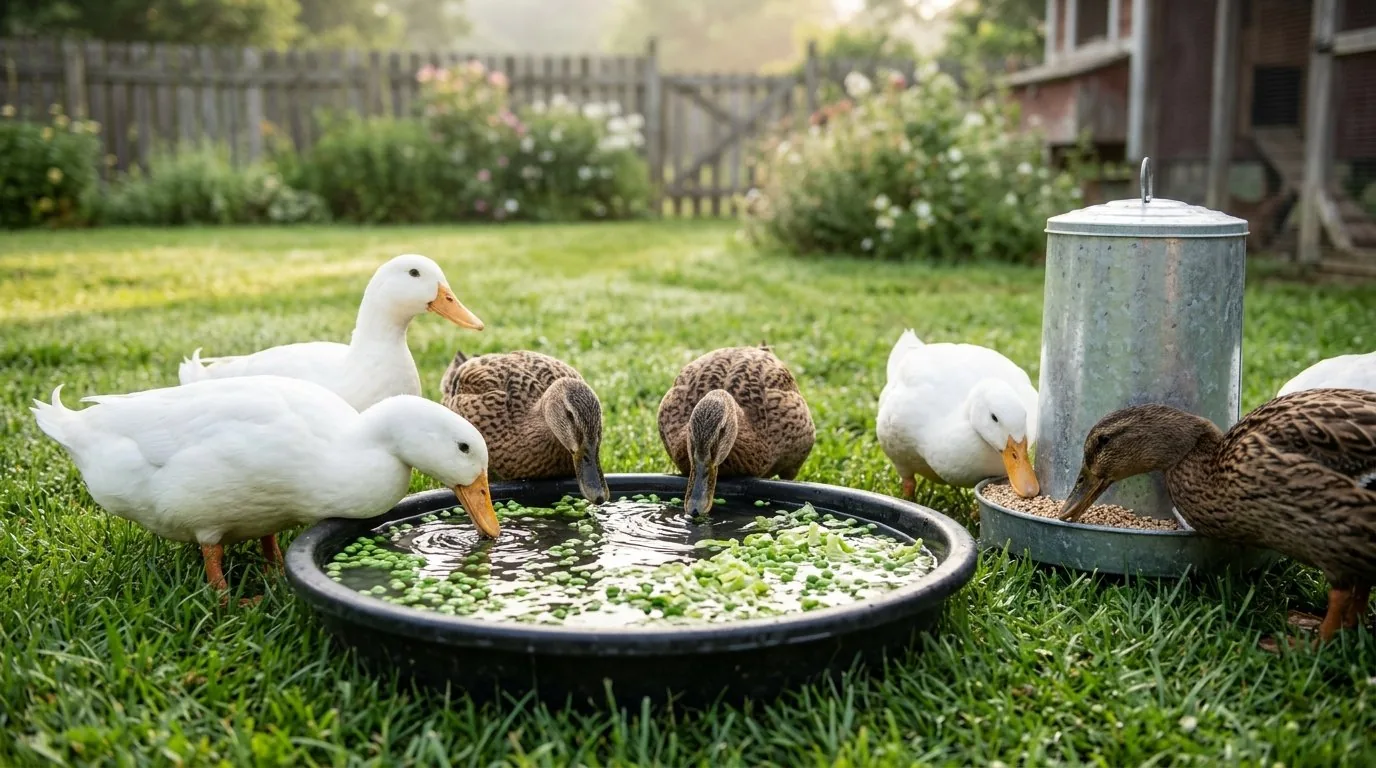
Domestic ducks eat a balanced waterfowl or poultry feed as their main diet, plus greens, insects, worms and small amounts of fruit and vegetables as treats. Wild ducks forage for aquatic plants, seeds, insects, snails and small fish. Whether you keep a backyard flock or just feed ducks at the pond, the rule is the same: real feed first, treats second, and never a diet of bread.
This guide covers what ducks and ducklings should eat every day, the healthiest treats, the foods that are dangerous, and a quick chart you can save.
Key takeaways
- 90% of the diet should be a complete waterfowl or poultry feed, with fresh water next to it.
- Ducklings need extra niacin if they eat chick feed (brewer’s yeast is the common fix).
- Treats stay under 10%: peas, greens, melon, halved grapes, oats and worms are the best picks.
- Never feed bread, avocado, chocolate, raw beans, green potatoes or moldy food.
In this guide
What Do Ducks Eat in the Wild?
Wild ducks are omnivores and opportunists. Depending on the species and season, they eat:
- Aquatic plants: duckweed, pondweed, algae, roots and tender shoots
- Seeds and grains: wild rice, grass seeds, waste grain in harvested fields
- Invertebrates: insects and larvae, worms, snails, slugs, freshwater shrimp
- Small animals: tadpoles, small fish and fish eggs (especially diving ducks)
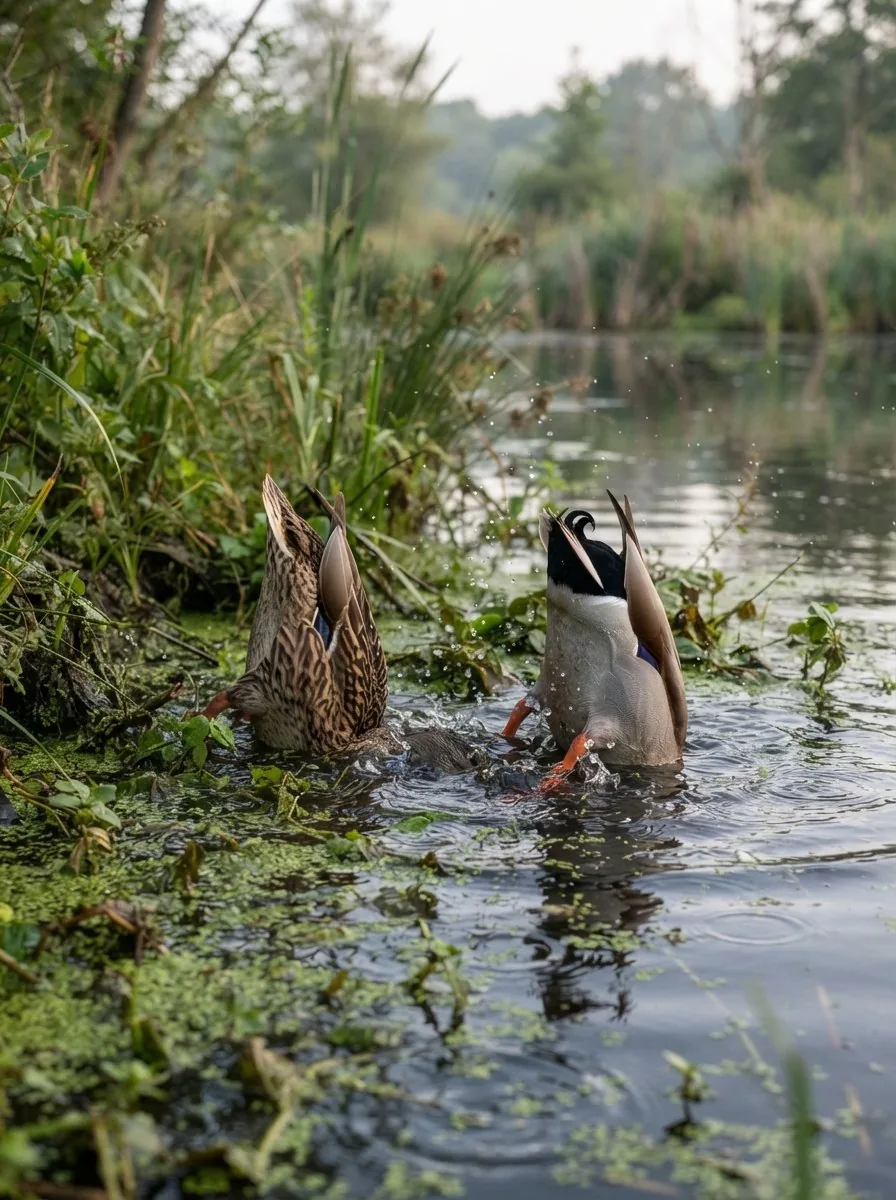
Ducks feed by dabbling (tipping forward to reach food under the water), grazing on land, or diving. That varied diet is high in protein and minerals, and it’s what a good backyard diet tries to copy.
What to Feed Backyard Ducks Every Day
For pet and farm ducks, the base of the diet should be a complete commercial feed. It is formulated with the right balance of protein, energy, vitamins and minerals, which treats and scraps can’t provide on their own.
| Life stage | Main feed | Protein (approx.) | Notes |
|---|---|---|---|
| Ducklings, 0–2 weeks | Waterfowl starter or unmedicated chick starter | 18–20% | Add niacin (see below); crumbles moistened with water are easier to eat |
| Ducklings, 2–16 weeks | Waterfowl grower or unmedicated grower | 15–16% | Too much protein at this age can cause leg and wing problems |
| Adult laying ducks | Waterfowl layer or poultry layer pellets | 16% | Offer oyster shell on the side for strong eggshells |
| Adult non-laying ducks / drakes | Waterfowl maintenance or all-flock feed | 14–16% | Layer feed is fine if drakes live with laying hens |
Always follow the feeding directions on your specific feed bag.
Niacin for Ducklings
Ducklings need more niacin (vitamin B3) than chicks. A shortage causes weak legs and bowed joints. If you use chick feed rather than a waterfowl feed, a common approach is to add brewer’s yeast to the feed (many keepers use about 1 tablespoon per cup of feed) or niacin in the drinking water, following the product label. Waterfowl-specific feeds usually have enough niacin already.
Water Is Part of the Meal
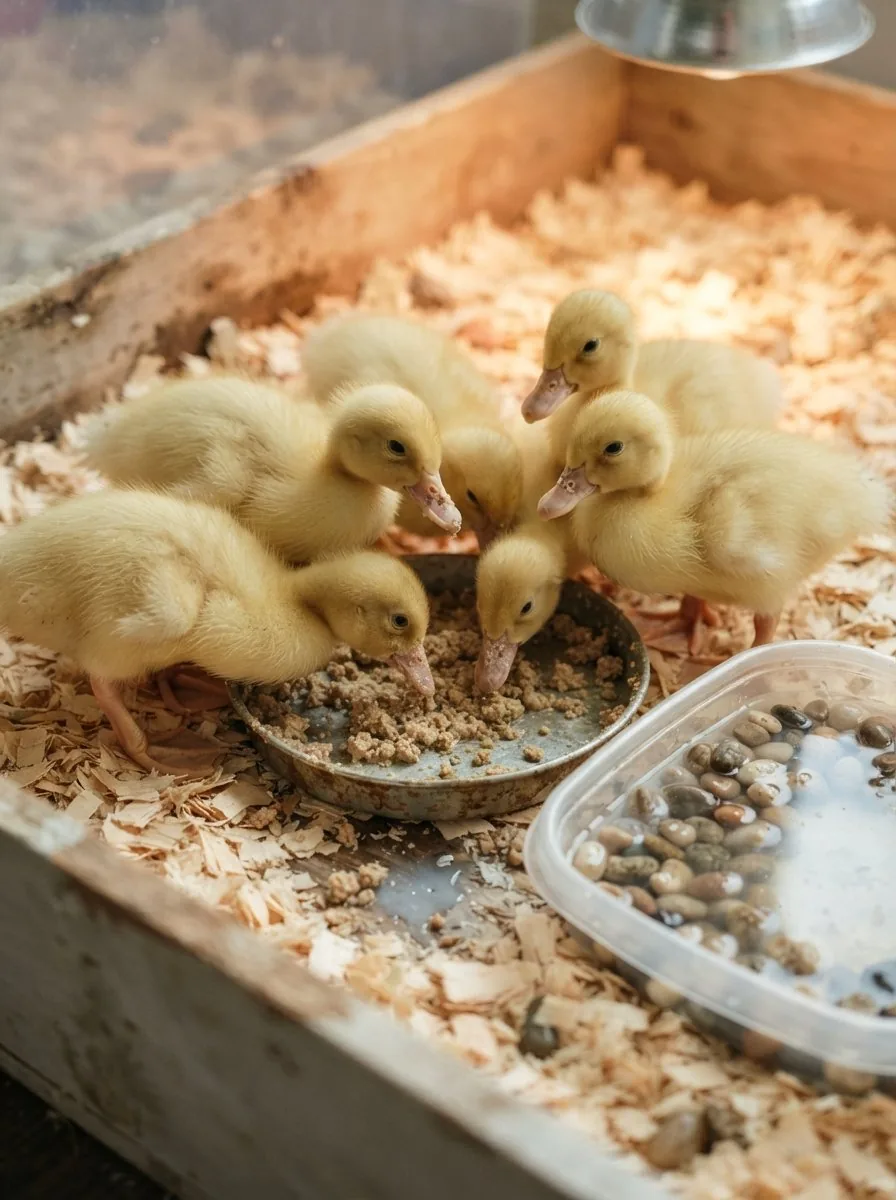
Ducks don’t have teeth or much saliva. They take a bite of food, then a drink, and they need water deep enough to dip their whole bill and rinse their nostrils. Always place clean water right next to the feeder. Ducklings under about 3–4 weeks old should have shallow water they can’t drown in; add pebbles to the dish if needed.
Grit and Calcium
- Grit: ducks grind food in their gizzard with small stones. Free-ranging ducks pick up grit naturally; confined ducks eating anything besides commercial feed need insoluble grit offered free choice.
- Oyster shell: give laying ducks crushed oyster shell in a separate dish so each bird can take what it needs.
Watch: How and What to Feed Ducks
Prefer to see it? This short video walks through feeding ducks at home, from everyday feed to treats.
How Much Do Ducks Eat?
An adult duck of a medium breed typically eats roughly 6–8 oz (170–225 g) of feed per day, more in cold weather and during heavy laying, less when free-ranging on good pasture. Heavy breeds like Pekins eat more than light breeds like Runners or Call ducks. The simplest method is to keep feed available during the day and remove it at night so it doesn’t attract rodents.
Treats should be no more than about 10% of the daily diet. More than that and ducks fill up on low-nutrient food instead of their balanced feed.
Healthy Treats Ducks Love
| Food | Safe? | How to serve |
|---|---|---|
| Peas | Yes | Thawed frozen peas, scattered in a shallow tub of water |
| Leafy greens (romaine, kale, chard, dandelion) | Yes | Chopped or torn; float them in water |
| Lettuce | Yes | Romaine and leaf lettuces are better than iceberg, which is mostly water |
| Cucumber and zucchini | Yes | Halved or sliced |
| Watermelon and cantaloupe | Yes | Chunks or rinds with a little fruit left on |
| Berries (strawberries, blueberries) | Yes | Whole or halved, in small amounts (sugar) |
| Grapes | Yes | Always cut in half or quarters to prevent choking |
| Bananas | Yes | Peeled, sliced, in small amounts |
| Apples | Yes (flesh) | Chopped, with the seeds and core removed |
| Carrots | Yes | Shredded or cooked soft |
| Corn | Yes | Cracked, cooked or thawed; a winter energy treat, not a staple |
| Oats | Yes | Rolled or quick oats, dry or soaked |
| Rice | Yes | Cooked plain rice is fine; the “rice makes birds explode” story is a myth |
| Tomatoes | Ripe fruit only | Chopped; never the leaves, stems or green fruit |
| Mealworms, earthworms, black soldier fly larvae | Yes | Great protein, especially during molt |
| Slugs and snails | Yes | Ducks are excellent garden slug control |
| Cabbage and broccoli | Yes, in moderation | Chopped or hung whole as a pecking toy |
| Plain popcorn | Occasionally | Air-popped, no salt or butter |
| Bird seed | Occasionally | Fine as a small treat, but not a balanced diet |
Pro tip: drop treats into a shallow tub of water. Ducks love to dabble, it keeps food clean, and it gives them natural exercise.
Foods Ducks Should Never Eat
| Food | Why it’s a problem |
|---|---|
| Bread, crackers, chips, cereal | Filling but almost no nutrition; linked to malnutrition and “angel wing” in young birds; soggy leftovers rot and pollute water |
| Avocado (skin, pit and flesh) | Contains persin, which is toxic to birds |
| Chocolate, coffee, tea, caffeine | Theobromine and caffeine are toxic |
| Onions and garlic in large amounts | Can damage red blood cells; small amounts in mixed scraps are usually not an issue, but don’t feed them on purpose |
| Raw or dried beans | Contain lectins that are toxic until the beans are fully cooked |
| Green potatoes, potato peels, tomato and potato leaves | Contain solanine |
| Rhubarb leaves | High in oxalic acid |
| Apple seeds and stone-fruit pits (cherry, peach, apricot) | Contain compounds that release cyanide |
| Moldy or spoiled food | Molds can produce aflatoxins and cause respiratory disease |
| Salty, sugary or processed food | Ducks can’t handle much salt; sugar crowds out real nutrition |
| Citrus (oranges, lemons, grapefruit) | Many keepers avoid it because it is acidic and may affect calcium use; if offered, keep it to a rare, small taste |
| Spinach in large amounts | Oxalates can bind calcium; fine as an occasional mixed green |
Ate something toxic? If your duck has eaten avocado, chocolate, moldy feed or a large amount of anything on this list, and seems weak, wobbly or stops eating, call a vet who treats poultry right away.
What to Feed Ducks at the Pond
If you feed wild ducks, skip the bread. Good options, in small handfuls, are:
- Thawed frozen peas or sweetcorn
- Rolled oats
- Chopped lettuce or greens
- Halved grapes
- Waterfowl or duck pellets (many pet and feed stores sell small bags)
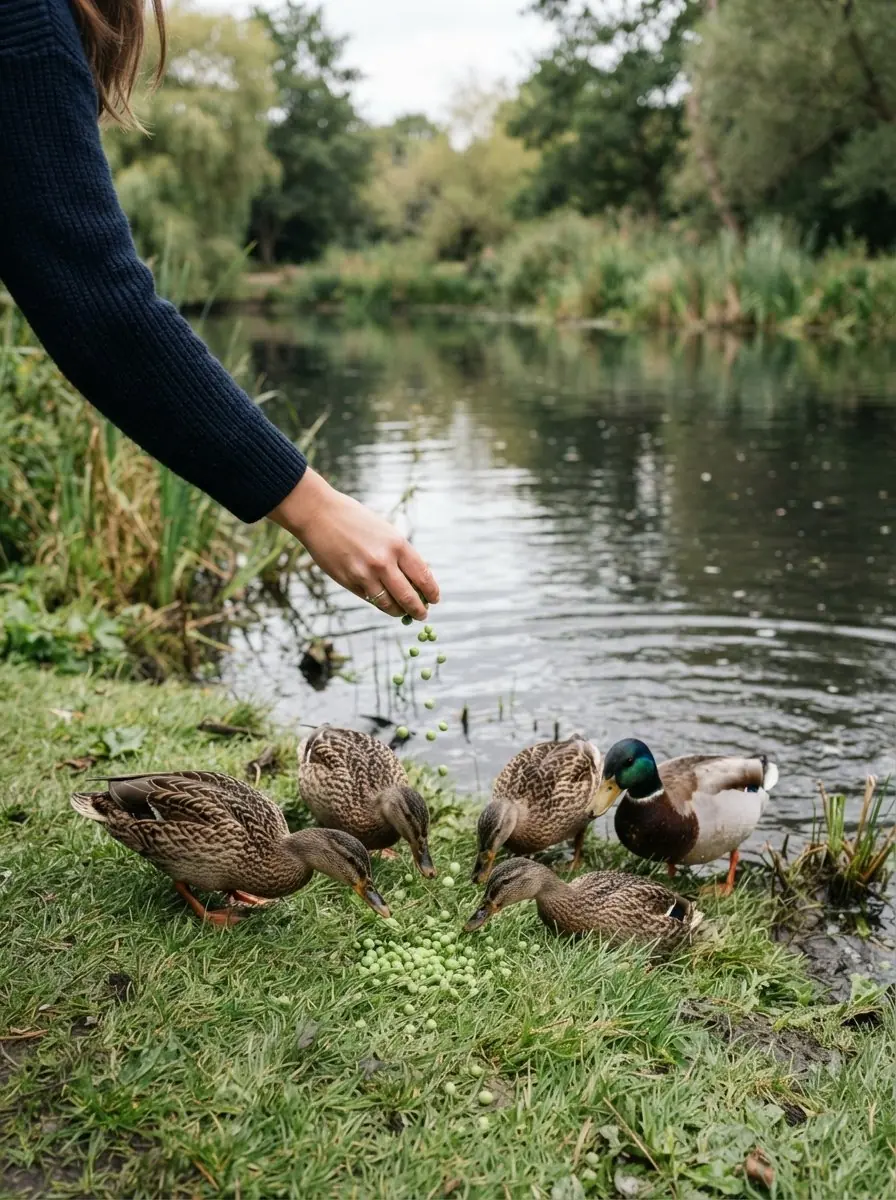
Throw only what the birds eat straight away, since leftovers rot and feed algae. And check local rules: many parks in the US, UK, Canada and Australia discourage or ban feeding wildlife because crowds of fed ducks spread disease and damage ponds.
Feeding Ducks Through the Seasons
- Winter: ducks burn more energy staying warm. Offer a little cracked corn or extra feed in the evening, and make sure water doesn’t freeze.
- Spring and laying season: keep layer feed and oyster shell available at all times.
- Molt (late summer and fall): feathers are about 85% protein, so extra mealworms or a higher-protein feed helps.
- Bird flu season: during autumn and spring migration, feed and water ducks under cover so wild birds can’t share it. See our guide on protecting backyard flocks from bird flu; the biosecurity steps apply to ducks too.
Can Ducks Eat Chicken Feed?
Yes. Adult ducks do well on unmedicated chicken layer or all-flock feed, which is why mixed flocks can share a feeder. For ducklings, add niacin to chick feed as described above. Choose pellets over mash where possible, because fine mash can clog ducks’ nostrils. Keeping chickens too? Our guide to raising chickens for beginners covers setting up a shared flock.
Quick Reference: What Ducks Can Eat
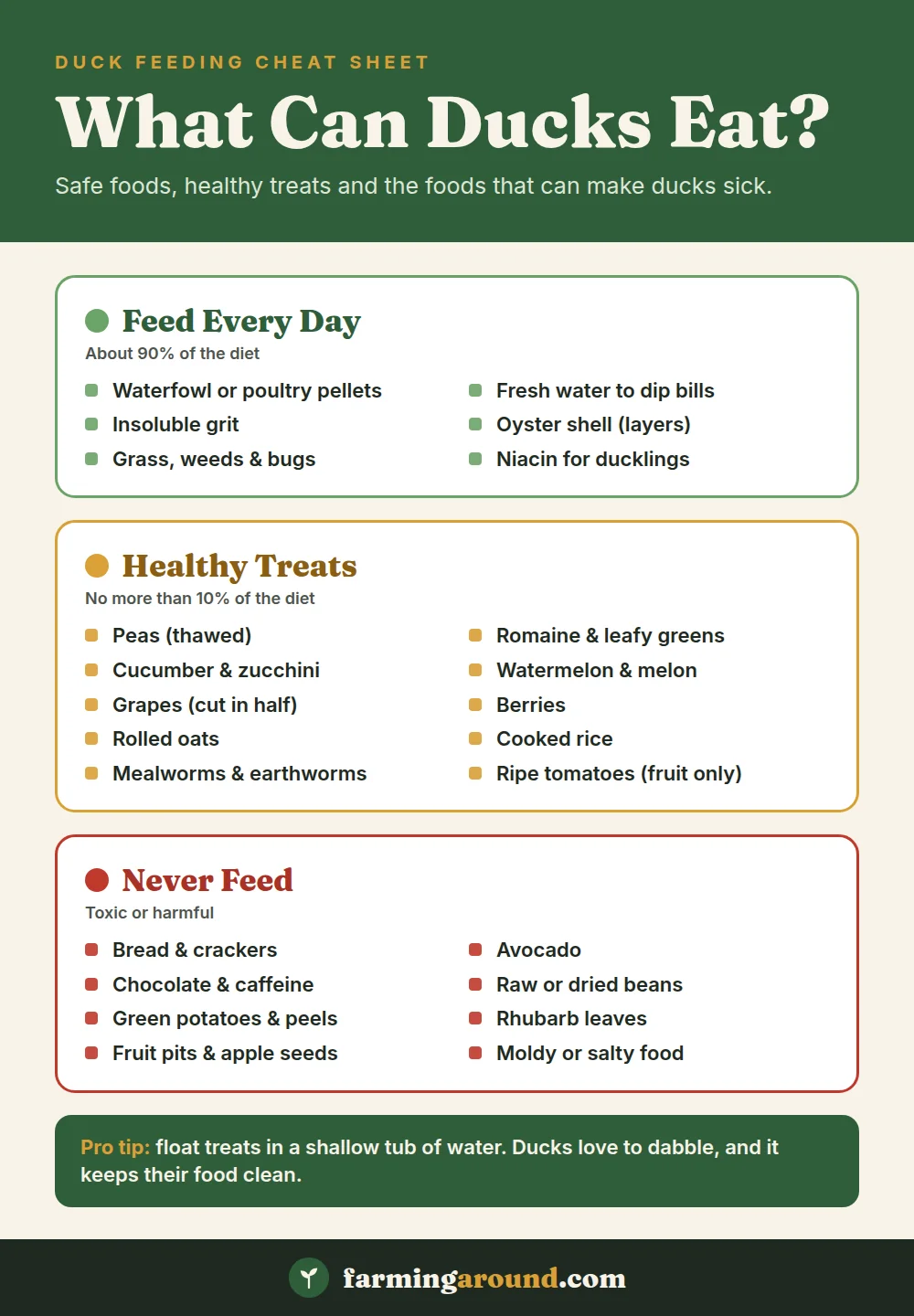
| Feed daily | Treat (≤10%) | Never feed |
|---|---|---|
| Waterfowl or poultry feed, fresh water, grit, oyster shell (layers), forage | Peas, greens, lettuce, cucumber, melon, berries, halved grapes, oats, corn, cooked rice, worms, mealworms | Bread, avocado, chocolate, caffeine, raw beans, green potato, rhubarb leaves, fruit pits, moldy food, salty snacks |
Helpful gear for this guide
Handy picks that match the advice above.
Links go to Amazon. Prices and availability change, so check reviews and fit for your setup before buying.
FAQ
What is the best thing to feed ducks?
A complete waterfowl or poultry pellet is the best everyday food because it’s balanced. For treats and pond feeding, thawed peas, oats, chopped greens and halved grapes are all healthy choices.
Why is bread bad for ducks?
Bread fills ducks up without providing the protein, vitamins and minerals they need. Young ducks raised on high-calorie, low-nutrient food can develop angel wing, a wing deformity, and uneaten bread rots in the water.
Can ducks eat bird seed?
Yes, as an occasional treat. Seed mixes are high in fat and don’t contain the protein and calcium ducks need, so they shouldn’t replace feed.
What do baby ducks eat?
Ducklings eat waterfowl starter or unmedicated chick starter with extra niacin, plus plenty of shallow drinking water. Introduce treats like chopped greens after the first week or two, in tiny amounts.
Can ducks eat tomatoes?
Ripe tomato fruit is safe in moderation. The leaves, stems and unripe green fruit contain solanine and should be kept away from ducks.
How often should you feed ducks?
Most keepers leave feed out during the day and take it in at night. Offer treats once a day, keeping them to about 10% of the diet.
Sources
- Feeding Ducks (eXtension, via Ohio State University 4-H)
- Niacin for Ducks (Metzer Farms)
- Niacin Deficiency in Pet Ducks (DuckDVM)
This guide is general information. For a sick duck or a special diet, talk to a vet who treats poultry or waterfowl.

2 Comments